

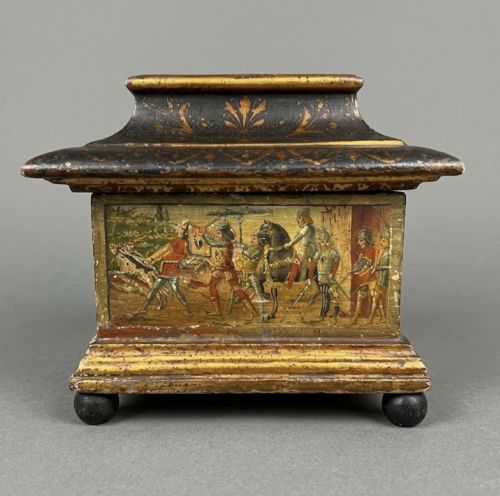


Small Painted Coffer
A small painted coffer is a compact storage chest finished with pigment, offering character and practical utility for modern interiors.
Small Painted Coffer
When you search for a small painted coffer, you are looking at compact timber storage pieces designed for domestic containment and decorative effect. These containers range from domestic chests and strong boxes to log bins and artisan trunks, scaled down for tight spaces.
The versions you are most likely to meet on this page hail primarily from the nineteenth century, including Victorian examples alongside continental pieces. They cross regional styles from Welsh vernacular work to Scandinavian, Hungarian, and Italian traditions.
Forms vary from dome-top boxes and sarcophagus shapes to boxes raised on stands. Despite their different origins, they share a compact footprint and a finished surface that relies on paint, pigment, or gesso rather than bare polished wood.
Materials and construction
Construction relies heavily on pine as a primary wood, selected for stability and availability across European and British workshops. Carpenters built these chests with box joints, dovetailed corners, or boarded construction depending on whether the piece served as a light storage box or a heavier strong box.
Metal reinforcement frequently appears in the form of iron or brass bands, hinges, and corner brackets to protect the joints of working trunks and dome-top boxes. These functional additions contrast with the softer decorative layers applied to the timber.
Surfaces are finished with paint, gesso, and gold leaf, utilising traditional pigments to create folk art motifs and regional colour schemes. Over decades, these layers have settled into the grain of the pine, showing authentic wear from everyday handling.
Small Painted Coffer Retail Price Guide 2026
Typical asking prices for small painted coffer among the pieces listed under this phrase on Sellingantiques today, from the lower quarter to the upper quarter. They describe what is for sale here now, not the wider market.
Listings feature pine as the primary timber, enhanced with iron, brass, gesso, and gold leaf across nineteenth-century forms.
Judging quality and finish
Quality in a small painted coffer rests on the integrity of the original surface and the proportion of the piece. Untouched pigment and early painted decoration separate pieces retaining their historical character from those with later or overpainted surfaces.
Construction details also dictate the tier of a piece, such as the neatness of dovetailing, the weight of the iron or brass hardware, and the presence of integrated stands. Stronger boxes feature robust metal banding and secure locking mechanisms rather than purely decorative fixings.
The Small Painted Coffer Glossary
- Dome top
- A rounded lid construction that sheds dust and provides extra interior height for bulky textiles or garments. This shape is common on nineteenth-century travel trunks and strong boxes.
- Gesso
- A plaster-like material applied to wood as a smooth base for painting or gilding. It provides a crisp ground for decorative brushwork.
- Sarcophagus box
- A container featuring an inverted, pedestal-like profile with canted sides reminiscent of classical monumental forms. This sophisticated shape appears on select nineteenth-century decorative boxes.
Small Painted Coffer: Frequently Asked Questions
What were small painted coffers used for?
These compact chests served multiple domestic purposes, from storing household documents and textiles to holding valuables in domestic settings. Their portable nature allowed owners to move them easily between rooms or take them on journeys.
In artisan workshops or rural homes, smaller versions kept specialised tools or personal effects safe. Today, their enclosed storage makes them practical for organising modern clutter while adding decorative presence to a room.
How do I style a painted coffer at home?
A small painted coffer works well placed at the foot of a bed, positioned on top of a larger sideboard, or used as a functional side table in a living space. Their painted surfaces introduce colour and texture without requiring heavy furniture.
Because they provide enclosed storage, you can use them to hide away everyday items while keeping surfaces clear. Placing one in a hallway provides a handy spot for small accessories as you enter the house.
How can I tell a nineteenth-century box apart?
Nineteenth-century boxes often display characteristic timber shrinkage, hand-forged iron hardware, and worn layers of traditional pigment. Examining the underside and interior boards reveals older hand-saw marks and construction methods distinct from modern manufacturing.
Hardware styles, such as cast brass or wrought iron hinges, also point to the manufacturing period. The natural patina of the paintwork develops over generations of cleaning and handling.
Are these boxes suitable for heavy daily use?
While many started as robust storage containers or strong boxes, antique pieces benefit from gentle treatment to preserve their historic paint and timber. Strong boxes reinforced with iron bands generally handle more interaction than delicate decorative caskets.
For everyday storage of lightweight items, they remain entirely functional. Avoid overloading fragile or structurally light examples to ensure the old joints and hinges stay secure.