


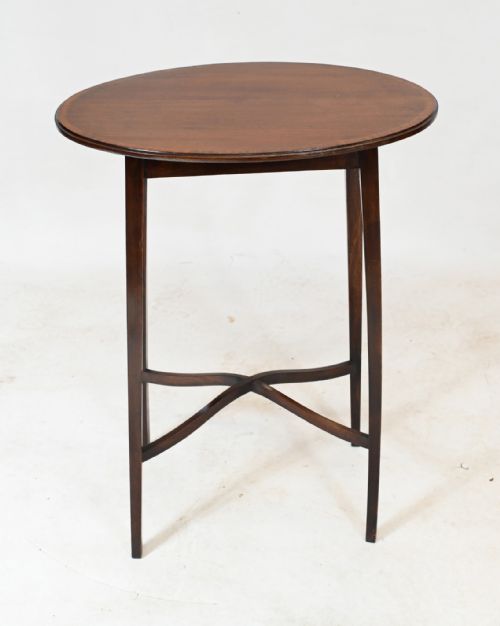
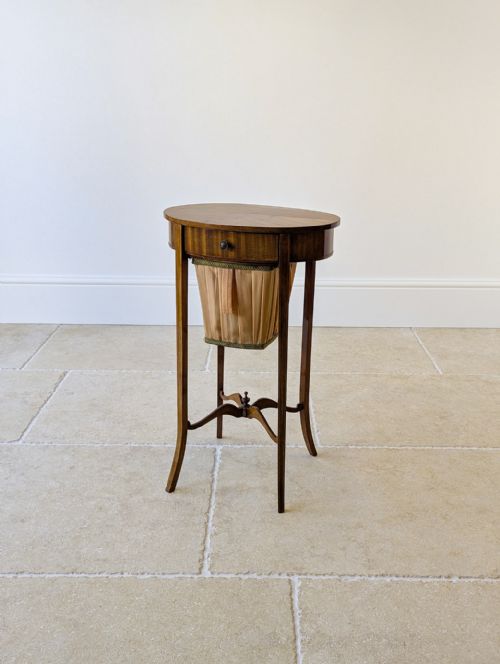
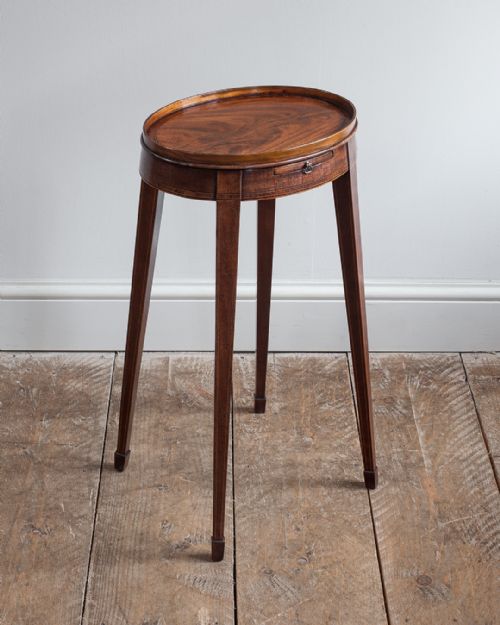


Small Oval Mahogany Table
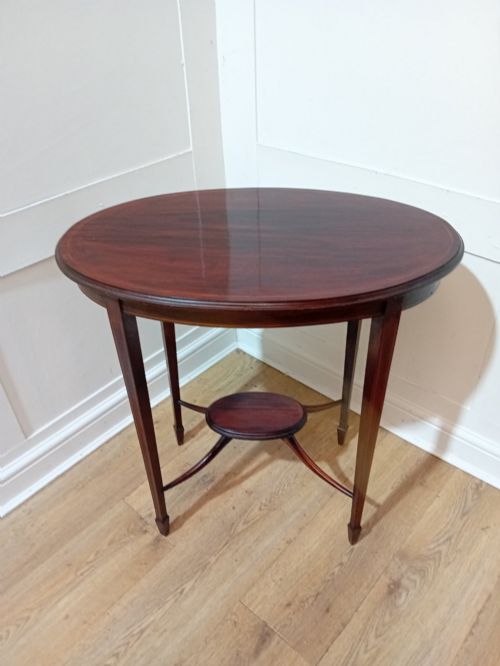
A small oval mahogany table brings warmth and functional surface area to a corner or beside a chair without crowding the room.
Small Oval Mahogany Table
A small oval mahogany table serves varied domestic purposes, appearing frequently as an occasional piece, side table, or writing desk across the Georgian, Victorian, and Edwardian periods. Buyers encounter these versatile surfaces in formats ranging from simple wine tables and urn stands to drop-leaf pembroke and sutherland tables.
The selection leans heavily toward Edwardian examples alongside 18th-century and 19th-century pieces, reflecting periods of refined cabinet making. Compact proportions define the group, allowing these wooden items to fit comfortably in smaller spaces while providing a stable platform for lamps, books, or writing materials.
How they were made
Cabinet makers constructed these pieces primarily from solid mahogany and flame mahogany veneer, sometimes selecting satinwood for contrasting details. Workshops frequently incorporated wood inlay and brass hardware to accentuate the curved oval tops and supporting legs.
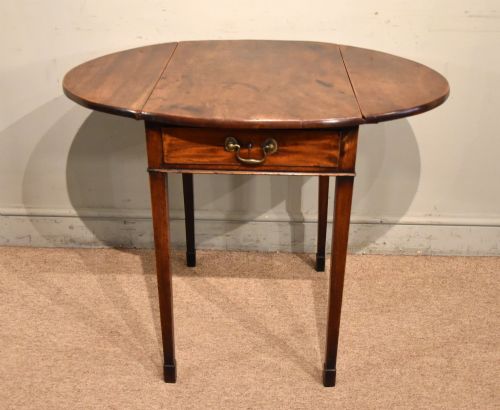
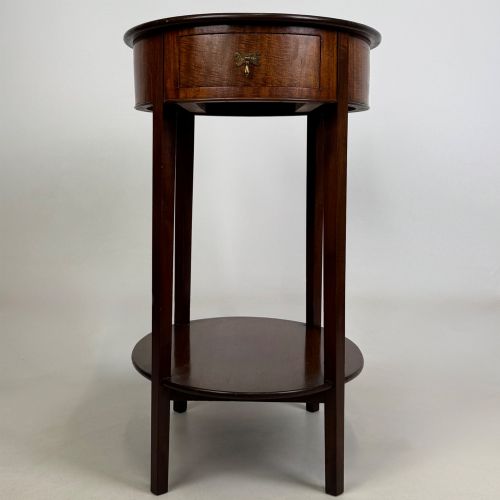
Drop-leaf and gateleg versions utilised hinged mechanisms to allow the surface area to expand or contract according to domestic needs. Tables designed for writing or sewing often included integrated drawers fitted with fine brass pulls and occasional leather inserts.
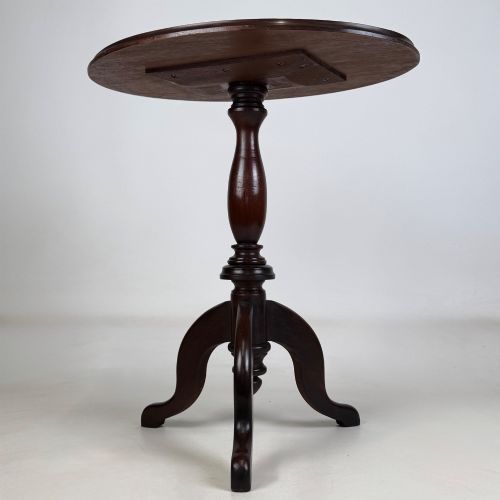
The forms recorded include pembroke tables, wine tables, occasional tables, and writing desks.
What varies in quality
Quality reveals itself in the selection of the timber grain, particularly where figured flame mahogany veneer or delicate wood inlay has been applied to the oval top. Superior examples display precise joinery and balanced proportions that maintain stability across tripod bases or four-legged frames.
The refinement of the turning on legs and the crispness of any inlaid decoration distinguish workshop execution. Original brass fittings and the smooth operation of drop-leaf actions or writing drawers further separate standard production from finer work.
The Small Oval Mahogany Table Glossary
- Pembroke table
- A small table with hinged drop leaves on either side, often featuring a single drawer and slender legs. This form gained popularity during the Georgian period for breakfast or light writing use.
- Sutherland table
- A narrow drop-leaf table where the leaves comprise a large portion of the top surface, supported by swinging gate legs. When folded down, the entire assembly occupies minimal floor space.
- Wine table
- A small, usually single-pillar occasional table with a tripod base designed to hold a bottle and glasses. These compact pieces date from the 18th century onward.
- Flame mahogany veneer
- A thin slice of wood cut from timber where the branch meets the trunk, producing a distinctive flickering flame pattern. Cabinet makers used this to create decorative visual movement on table tops.
- Urn stand
- A tall, slender occasional table designed to hold a tea urn during formal gatherings. Their diminutive oval surfaces require careful structural balance.
Small Oval Mahogany Table: Frequently Asked Questions
Where should I place a small oval mahogany table?
These compact surfaces fit well beside an armchair or sofa to hold a lamp or book. Their curved shape also allows them to soften awkward corners in hallways or bedrooms.
Because the footprint remains small, they occupy minimal space while adding a functional wooden surface to a room.
How do I tell an 18th-century table from an Edwardian reproduction?
Examination of the timber beneath the top and inside drawer construction often reveals the age of the piece. Hand-cut dovetails and timber shrinkage patterns point to earlier 18th-century origins, whereas later revival pieces show uniform machine working.
Style details also offer clues, as Sheraton Revival furniture from around 1900 frequently employs brighter satinwood inlay alongside darker mahogany.
How do I care for mahogany surfaces?
Regular dusting with a soft, dry cloth preserves the polished finish of the mahogany timber. Avoid placing the table in direct sunlight or near heat sources to prevent the wood from drying out.
A gentle application of traditional wax polish occasionally will nourish the grain and maintain the natural lustre of the material.