
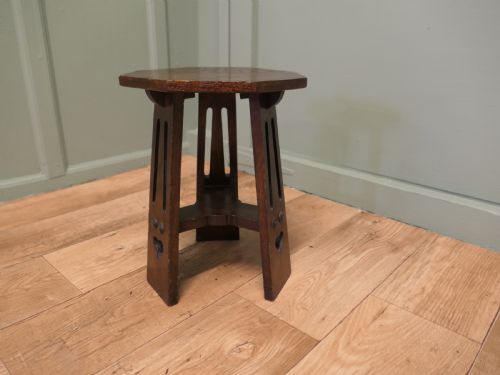
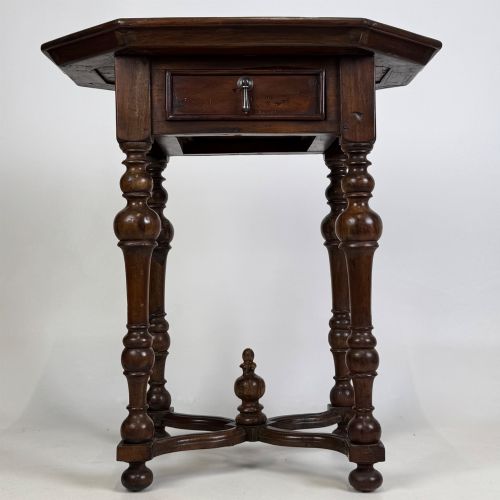
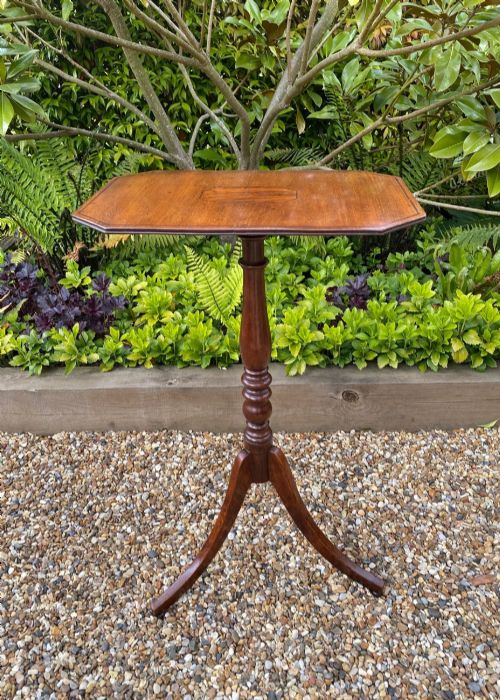
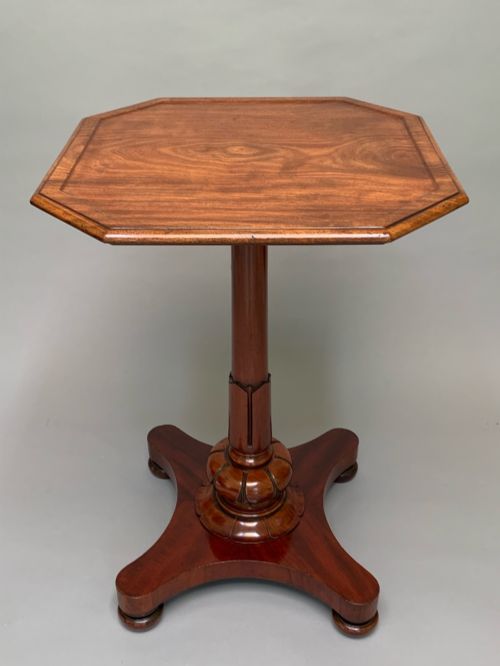
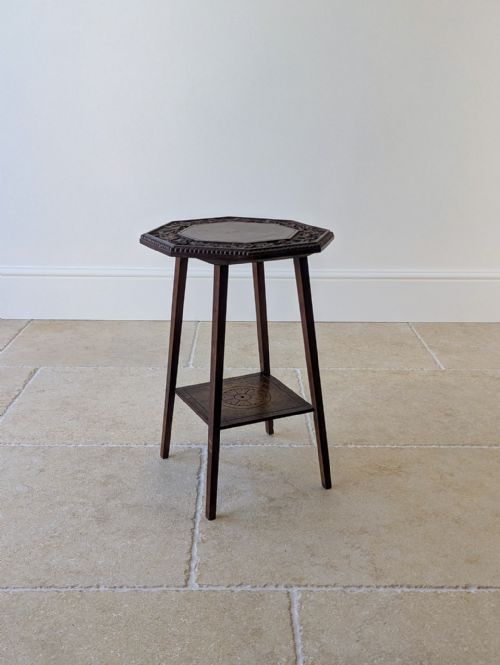
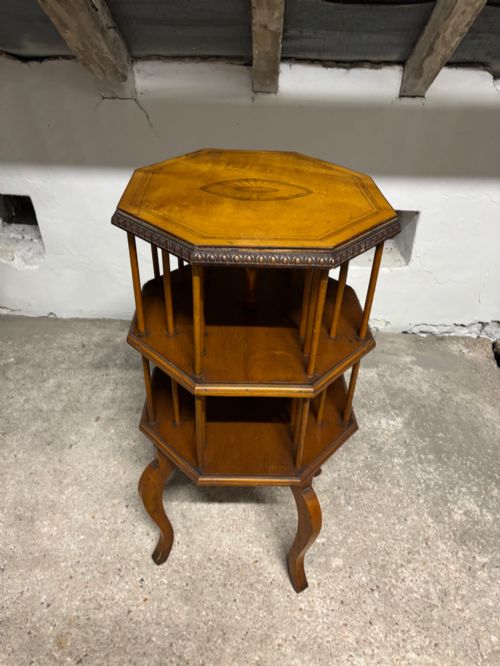
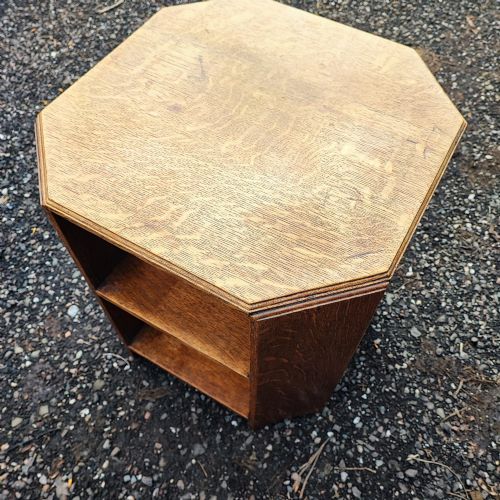
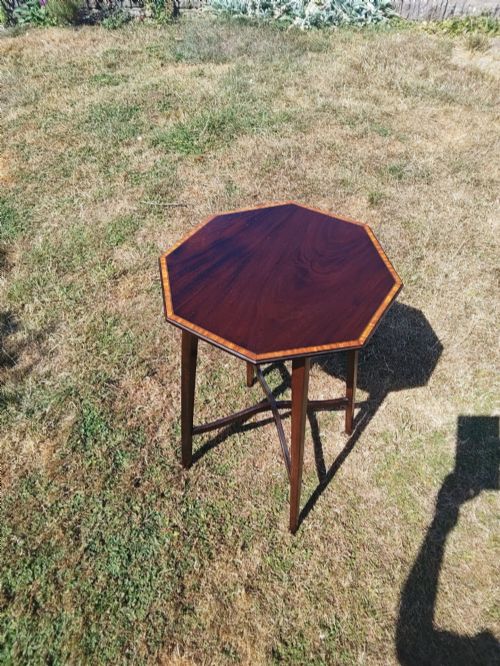

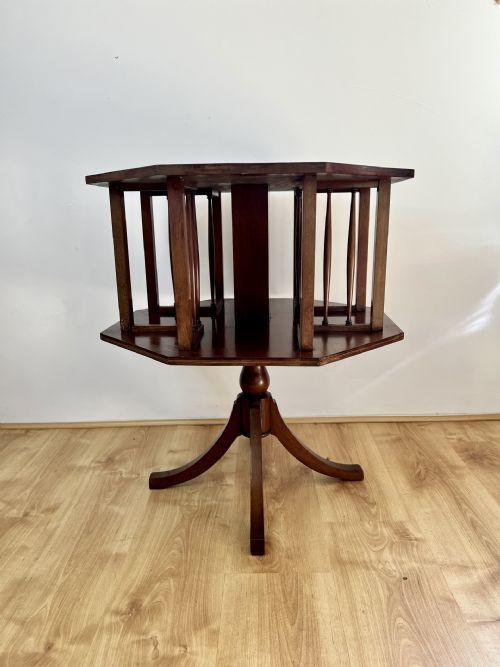
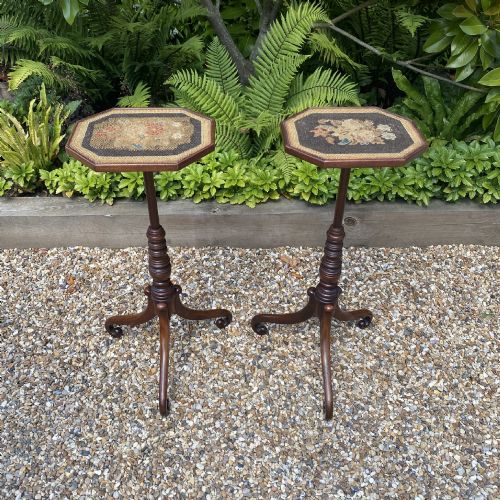
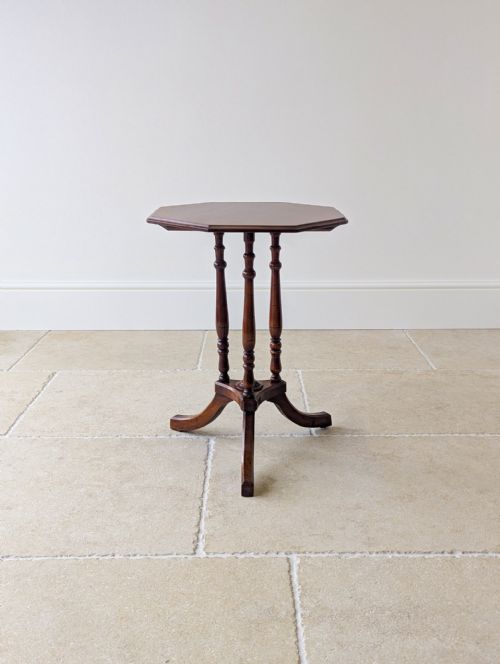
Small Octagonal Table
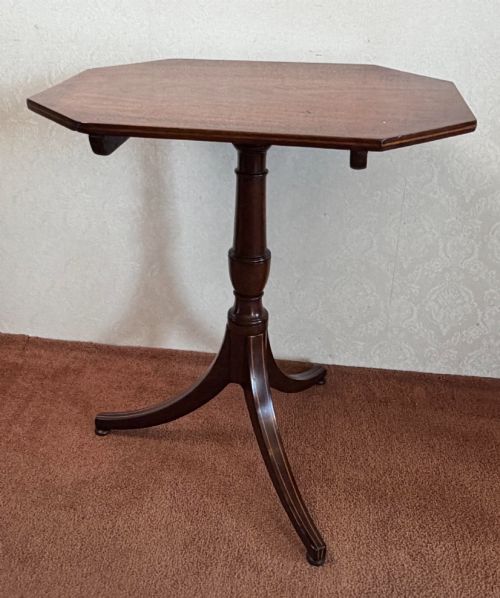
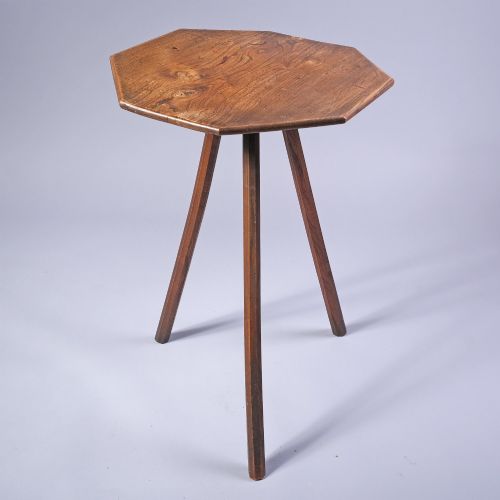
A small octagonal table offers a compact surface with eight distinct sides, serving well beside a chair or in a tight corner.
Small Octagonal Table
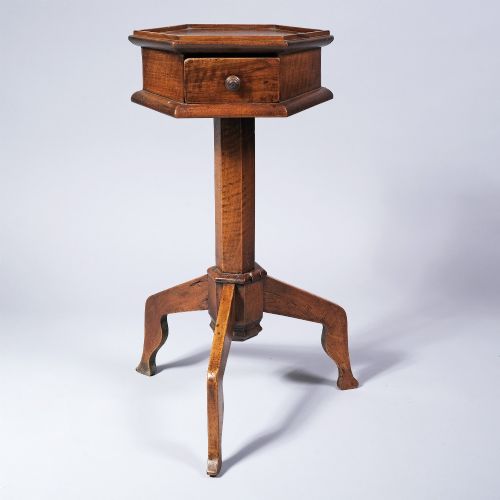
When you search for a small octagonal table, you encounter compact occasional furniture designed for specific domestic duties like holding a lamp, book or wine glass. The forms span side tables, wine tables, drum tables and plant stands.
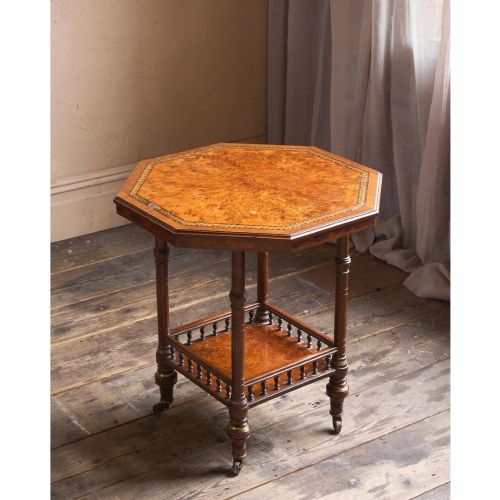
You are most likely to meet Victorian, Edwardian and Georgian examples rendered in mahogany, oak or walnut. Many incorporate geometric shaping, tripod bases or inlaid surfaces suited to sitting rooms and halls.
How they were made
Cabinet makers utilised solid timbers alongside veneered panels, selecting mahogany, oak, walnut, satinwood and teak for their durability and grain. Timber preparation involved seasoning and sawing boards to form stable table tops and sturdy pillar supports.
Decoration relied on wood inlay, boxwood stringing, brass accents and bone detailing, often set into the top surface or along the edges. Joinery techniques included mortise and tenon joints for frames and turned pedestals for tripod bases.
The listings show pieces spanning the 18th Century through the 1930s, constructed in mahogany, oak, walnut, satinwood, teak and brass.
What varies in quality
Quality rests upon the selection of timber grain, the precision of the inlay work and the stability of the central pillar or legs. Superior examples display crisp carving, balanced proportions and seamless joints that endure decades of daily use.
Simpler versions rely on plain surfaces and standard turning, whereas finer pieces integrate complex marquetry, banded borders or specialist regional timbers like amboyna and rosewood.
Gillows·John Taylor Edinburgh·Heals
The Small Octagonal Table Glossary
- Tripod base
- A support structure comprising three legs radiating from a central pillar. This format provides stability on uneven floors.
- Inlay
- The technique of embedding contrasting pieces of wood, bone or metal into a recessed surface to create patterns. It defines much of the decorative work on Edwardian and Georgian tables.
- Drum table
- A circular or octagonal table with a deep cabinet or drawer band beneath the top. It resembles the shape of a drum.
- Stringing
- A thin, narrow strip of contrasting wood inlaid into the surface in straight lines or geometric borders. It outlines table tops and drawers.
- Occasional table
- A small, moveable table intended for specific, intermittent tasks rather than constant dining use. These pieces populate parlours and bedrooms.
Small Octagonal Table: Frequently Asked Questions
What is a small octagonal table used for?
These tables function as side stands, lamp tables, wine surfaces or plant pedestals in domestic interiors. Their eight-sided tops fit neatly beside seating or within corners.
Historically they held tea services, books or decorative ornaments in reception rooms.
How do I date a mahogany octagonal table?
Dating relies on timber characteristics, construction methods and decorative styles recorded across Georgian, Regency and Victorian eras. Georgian and Regency pieces often feature simpler structural geometry and hand-cut joinery.
Later Victorian and Edwardian examples frequently introduce machine-sawn elements, denser inlay work and varied wood finishes.
What timbers were used for these tables?
Cabinet makers utilised mahogany, oak, walnut, satinwood, teak and fruitwood depending on the period and origin. Indigenous woods like oak appeared frequently in earlier centuries and Arts and Crafts pieces.
Imported timbers such as mahogany and satinwood dominated refined Georgian and Edwardian drawing-room furniture.
Are these tables sturdy enough for daily use?
Solid construction in hardwoods like oak and mahogany provides dependable stability for everyday placement. Tripod bases and central pedestals distribute weight evenly across the floor.
Careful handling of inlaid surfaces and veneered tops ensures the longevity of decorative elements.