




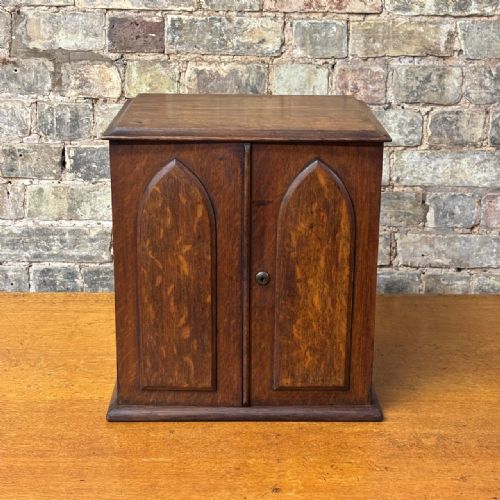


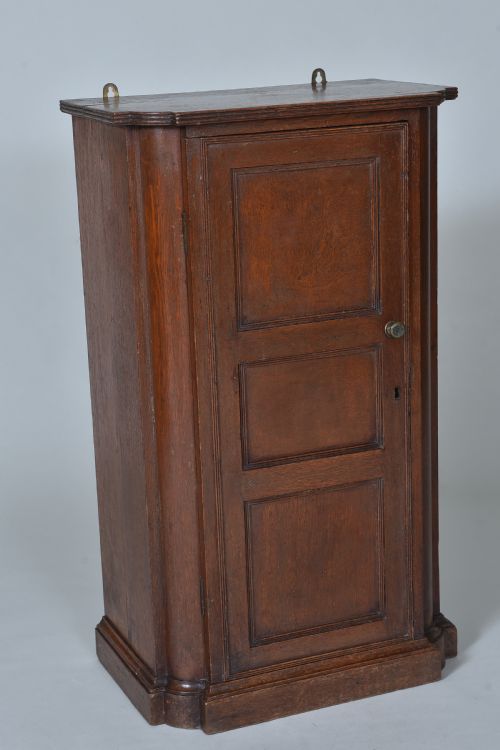

Small Oak Medicine Cabinet
A small oak medicine cabinet offers compact storage with the rich grain and warm tone characteristic of early timber work.
Small Oak Medicine Cabinet
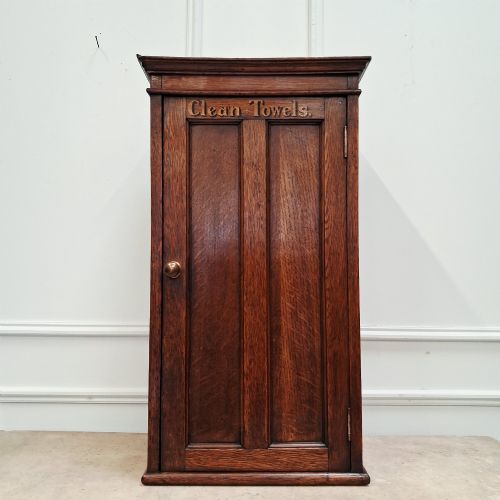
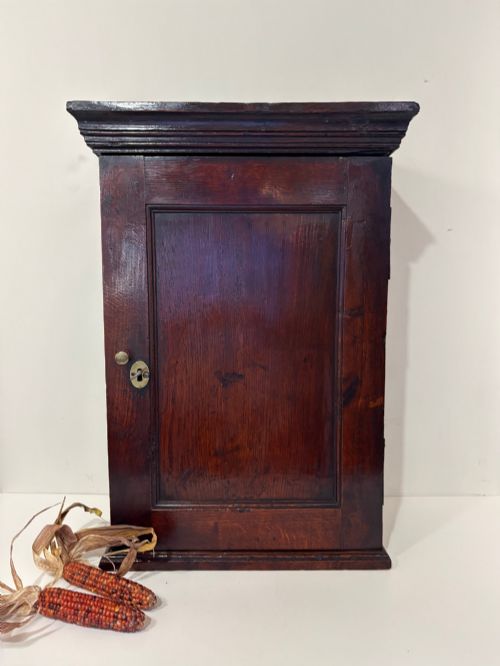
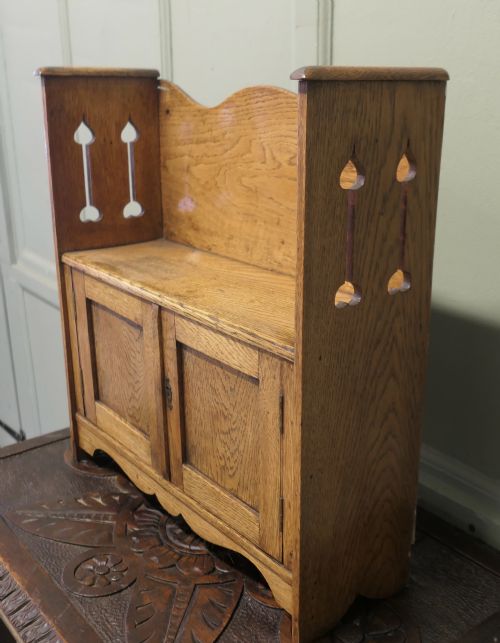
When you search for a small oak medicine cabinet, you encounter sturdy wall cupboards, spice cupboards, and table cabinets originating primarily from the eighteenth and nineteenth centuries. These compact storage pieces span Georgian, Victorian, and Arts and Crafts styles, reflecting utilitarian domestic needs across various British and European traditions.
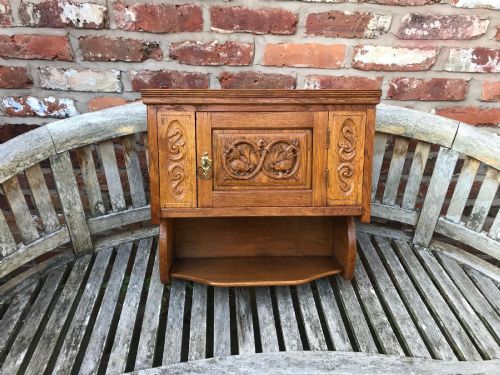
The most common forms on this page include wall-hanging spice cupboards and carved oak wall cupboards designed to hold household provisions or small supplies. They typically feature single panelled doors, brass hinges, and internal shelving suited for confined spaces.
Materials and construction methods
These cabinets rely principally on solid oak, selected for its durability and prominent grain pattern, sometimes accented with ebonised wood details or glass panels. Iron and brass hardware, such as latches and hinges, secure the doors and provide structural reinforcement.
Joinery techniques involve traditional framing and panel construction, often enhanced by hand-carved decorative motifs reflecting Gothic Revival, Aesthetic Movement, or French Country influences.
Materials appearing across the inventory include solid oak paired with brass, glass, iron, and ebonised wood details.
Distinctions in quality
Quality rests upon the crispness of the hand-carving and the integrity of the original timber framing rather than surface embellishment alone. Superior examples display thoughtful proportions, integrated mouldings, and minimal modern timber replacement.
The character of the hardware and the retention of original brass or iron fixtures distinguish finer pieces from those with later replacements, while estate-made items show individual regional quirks in their construction.
The Small Oak Medicine Cabinet Glossary
- Spice cupboard
- A small wall-hanging or table-top cabinet originally built to store valuable culinary spices and herbs. These feature multiple internal drawers or small shelves behind a single door.
- Gothic Revival
- A design style inspired by medieval architecture, characterised in these pieces by pointed arch panels and deep relief carving. It gained popularity during the nineteenth century.
- Ebonised wood
- Timber treated with a chemical stain or finish to imitate true ebony, frequently utilised for dark contrast mouldings or decorative highlights on Victorian furniture.
- Estate made
- A term denoting furniture constructed on a landed estate by resident craftsmen for local use rather than in a commercial urban workshop. Such pieces often display unique regional joinery.
Small Oak Medicine Cabinet: Frequently Asked Questions
What were small oak cabinets originally used for?
These pieces served as secure storage for household spices, provisions, or medical supplies in domestic settings.
Their compact size allowed them to be hung on walls or placed on counters to keep contents dry and accessible.
How do I hang a wall cabinet safely?
Most wall-hanging cupboards feature original fixing points or sturdy internal framing that can support their weight when properly anchored.
Consult a professional to ensure wall fixings match the specific timber backing and age of the cabinet.
How do I date an antique oak cabinet?
Dating relies on observing construction marks, hardware types, and stylistic indicators such as Georgian mouldings or Victorian Gothic panels.
Examining the grain and the tools used on the interior timber helps confirm the period of origin.
How should I care for antique oak furniture?
Maintain the timber by keeping it away from direct heat sources and sudden humidity changes to prevent splitting.
Apply a traditional beeswax polish sparingly to nourish the grain without building up heavy residues.