


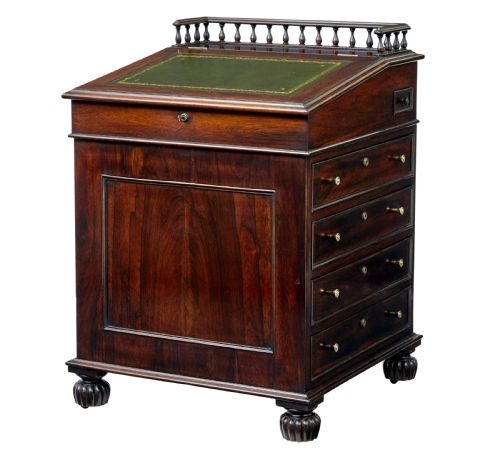

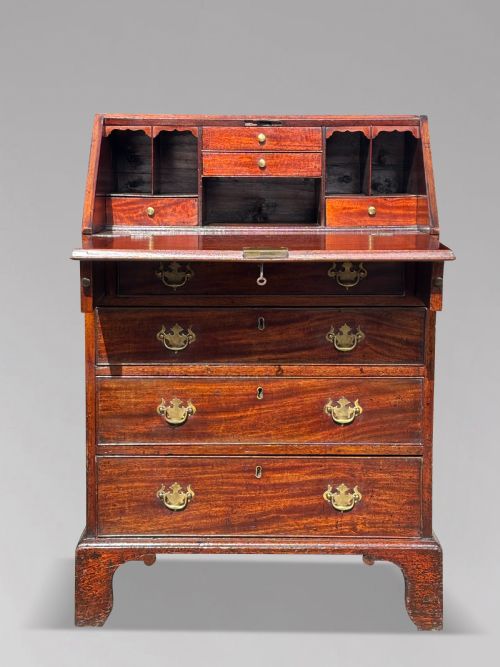


Small Mahogany Slant Desk
A small mahogany slant desk offers a compact writing slope with fitted interior compartments, combining practical workspace with rich timber grain.
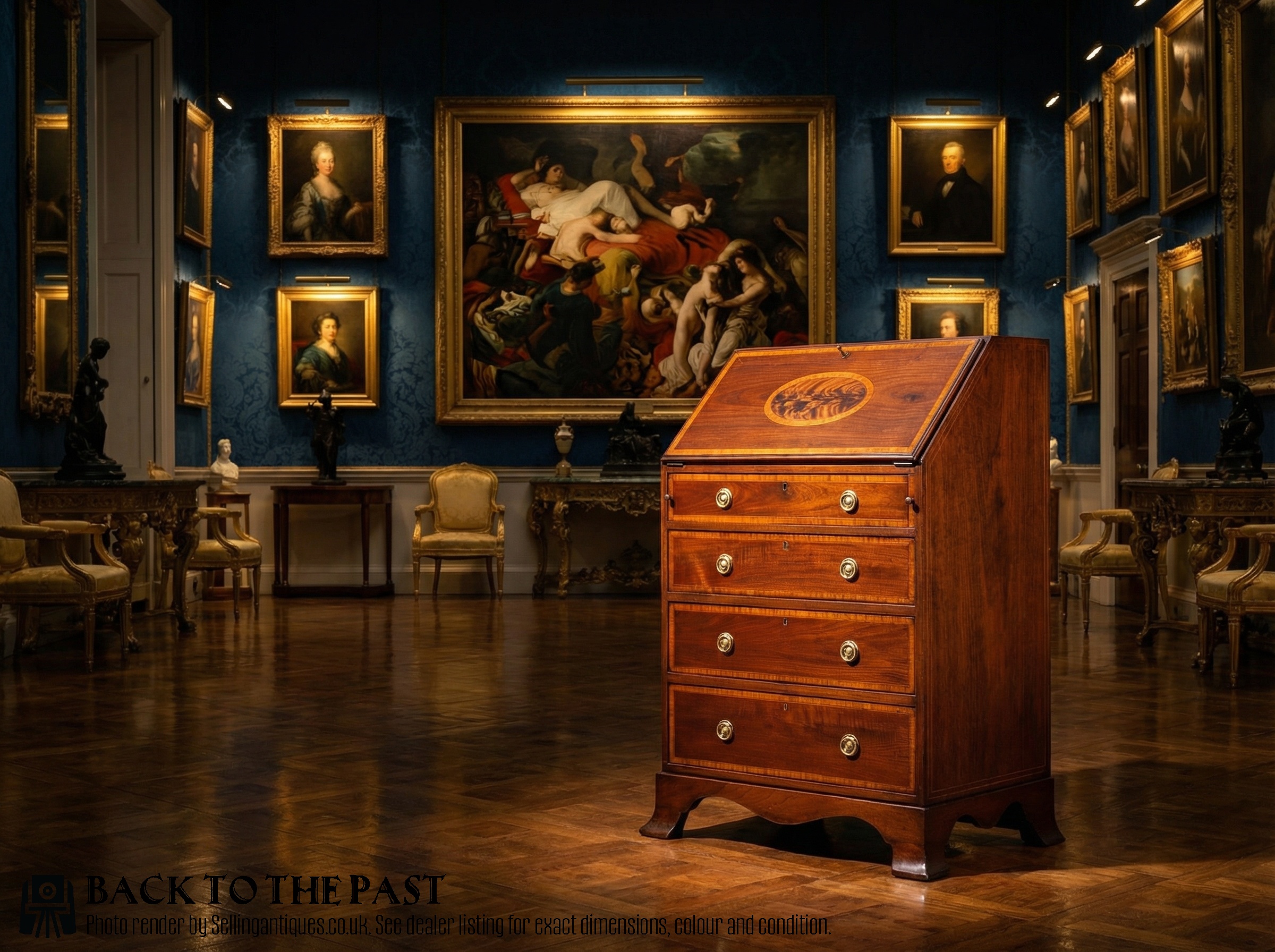
Small Mahogany Slant Desk
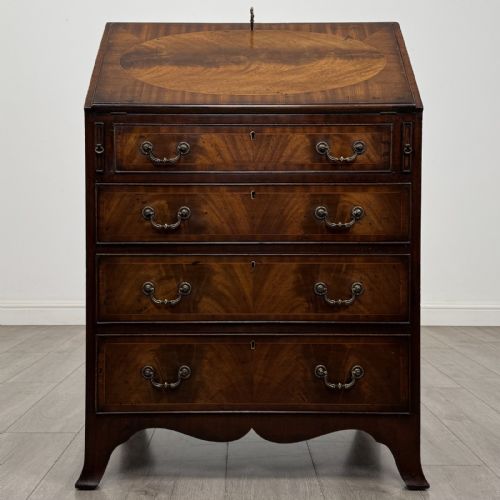
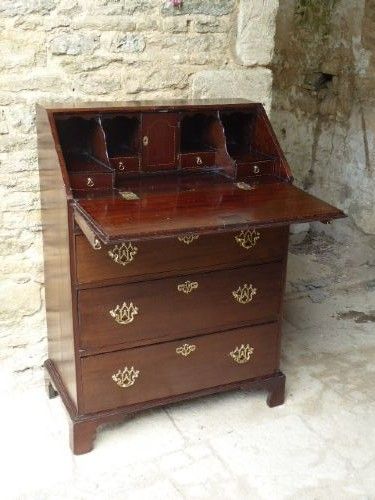
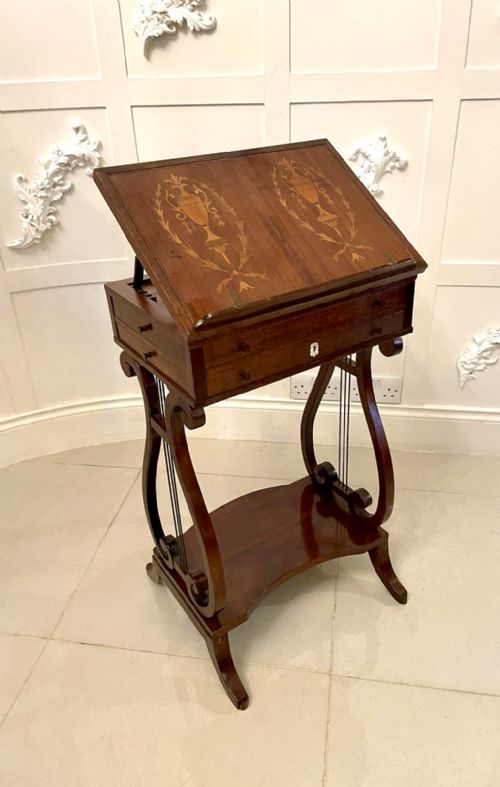
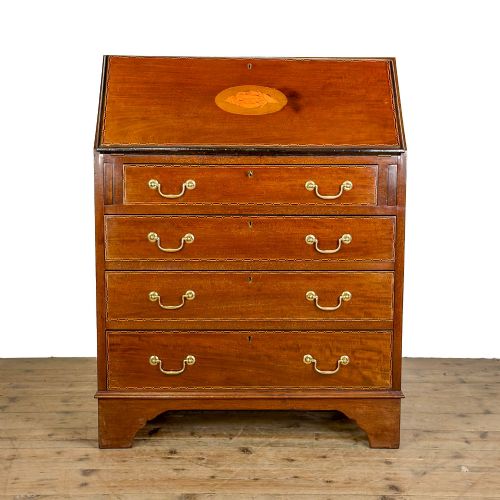
A small mahogany slant desk is primarily encountered as an 18th century bureau or a Victorian davenport, built with compact proportions for domestic writing. These pieces range from George II and George III examples to Edwardian and Regency variations, featuring fall fronts or slanted writing surfaces that conceal drawers and pigeonholes.
The selection on this page centres heavily on diminutive bureaux and davenports constructed from rich timbers, often designed to fit modest chambers while providing dedicated storage for correspondence and documents. Buyers searching for a small mahogany slant desk will find numerous period iterations spanning the Georgian, Victorian, and Edwardian eras.
Proportion and timber figuring
Quality rests significantly on the choice of timber, where intensely figured flame mahogany or carefully matched satinwood inlay elevates the visual presence of a piece. The crispness of the dovetail construction and the retention of original brass fittings and working keys further distinguish superior examples from standard workshop output.
Proportion dictates desirability, particularly in miniature or diminutive formats designed to occupy minimal floor space without compromising structural integrity. The survival of fitted internal drawers and tidy writing heights marks the division between utilitarian furniture and exceptional cabinet work.
Listings feature periods spanning from early 18th century George II examples through to Edwardian satinwood-inlaid writing tables.
Gillows·James Shoolbred
The Small Mahogany Slant Desk Glossary
- Bureau
- A writing desk with a sloping fall front that opens to reveal internal compartments and small drawers. This form became a staple of domestic interiors during the eighteenth century.
- Davenport
- A compact desk featuring a top-mounted sloping writing surface above a pedestal of drawers. It gained popularity in the nineteenth century for use in smaller drawing rooms.
- Flame mahogany
- A veneer cut from timber where the branch meets the trunk, producing a distinctive rippled flame pattern. Cabinet makers reserved this highly decorative wood for prominent exterior surfaces.
- Satinwood inlay
- A contrasting light-coloured exotic timber set flush into the mahogany surface to form geometric borders or decorative motifs. It provides a bright visual accent against dark primary woods.
- Fall front
- The hinged writing flap on a desk or bureau that lowers to a horizontal position for writing. When closed, it conceals the interior stationery fittings.
- Tally desk
- A specialised writing desk used for commercial record keeping and counting tallies. These utilitarian pieces feature compact dimensions suited to office environments.
Small Mahogany Slant Desk: Frequently Asked Questions
What is a davenport desk?
A davenport is a compact pedestal desk featuring a sloping, hinged writing surface attached above a set of drawers. They typically include side drawers or stationary compartments tailored for drawing rooms.
First emerging in the nineteenth century, these pieces suit smaller spaces where a full-sized bureau proves too large.
How do I date a mahogany bureau?
Dating relies on examining construction techniques, such as hand-cut dovetails on internal drawers, timber selection, and overall stylistic proportions. Georgian pieces tend to exhibit understated bracket feet and cockbeaded drawer edges.
Later Victorian and Edwardian examples incorporate richer flame veneers or satinwood inlay alongside factory-made hardware components.
How do I maintain leather writing surfaces?
Leather inserts benefit from occasional cleaning with a slightly damp cloth followed by a neutral leather cream to prevent drying and cracking. Avoiding direct sunlight helps preserve the gilt tooling and dyed colour.
Careful maintenance keeps the writing surface supple while retaining its historic character.