

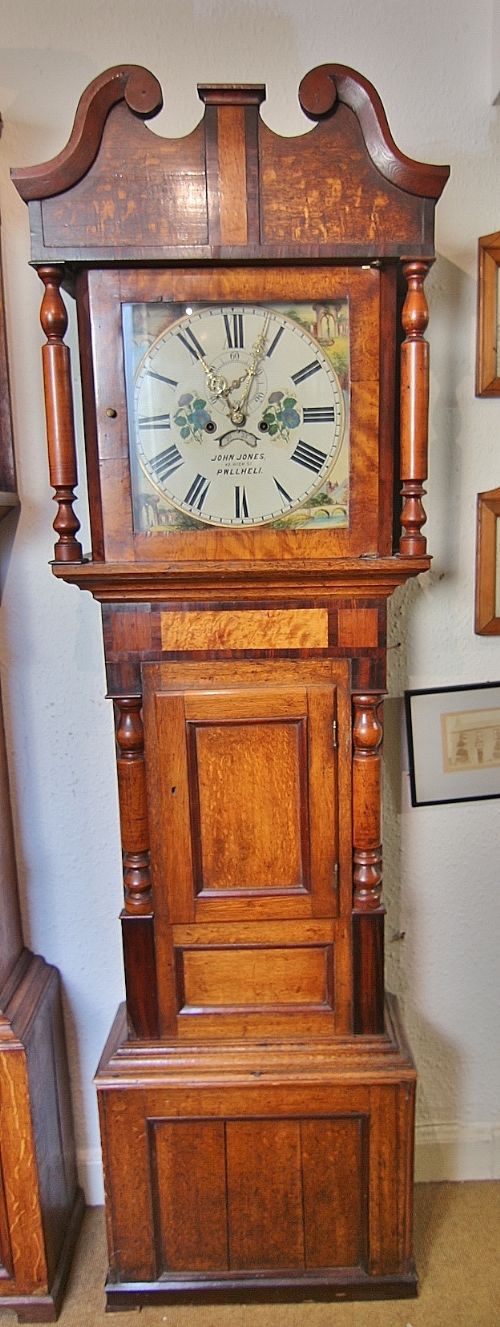
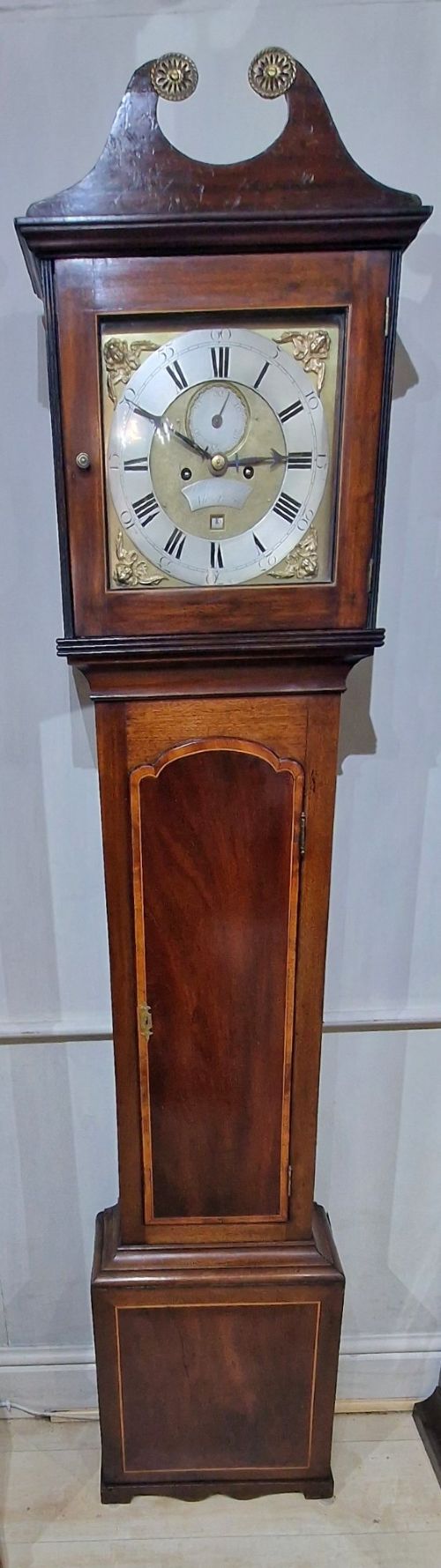

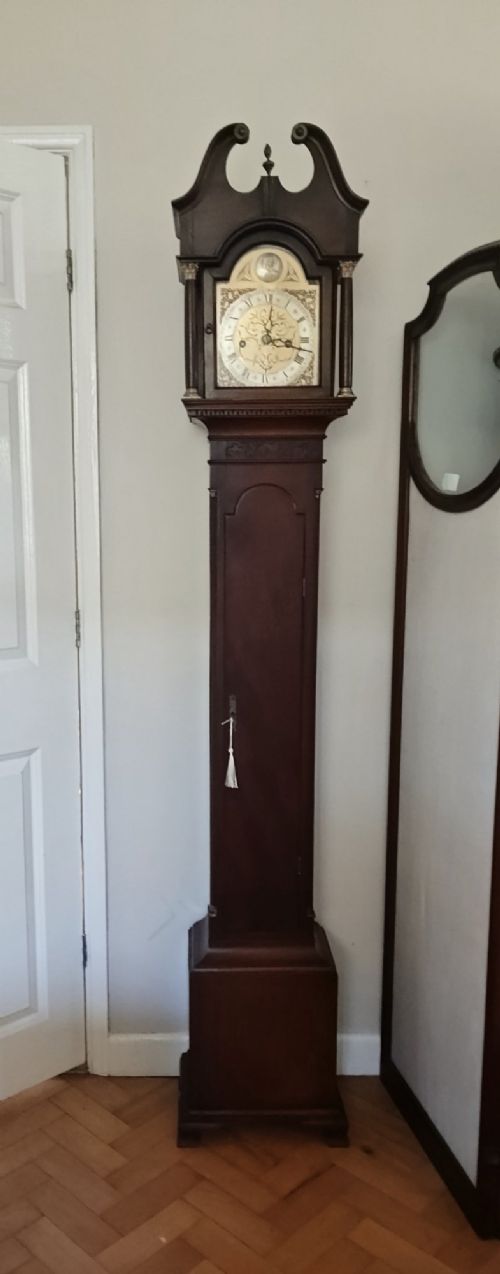
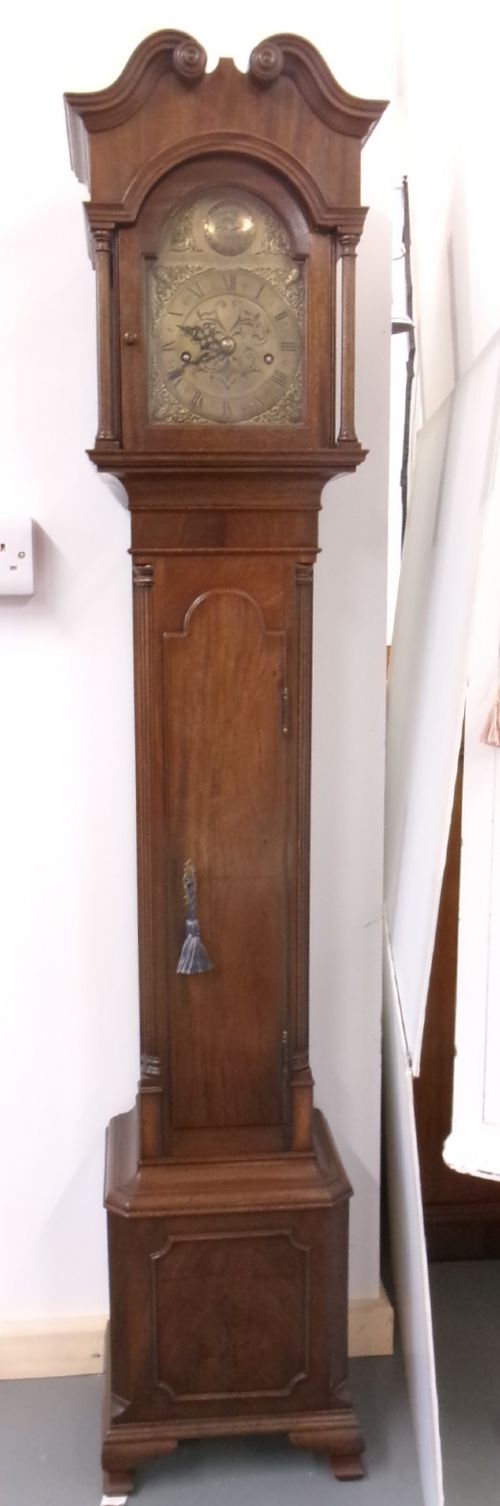


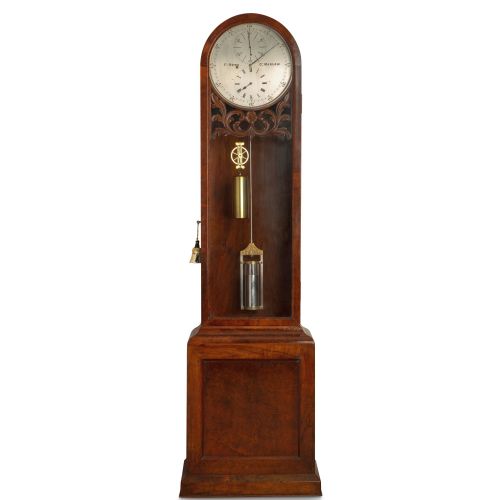


Small Mahogany Longcase Clock
A small mahogany longcase clock offers the stately presence of a traditional floor-standing timekeeper scaled down for domestic rooms.
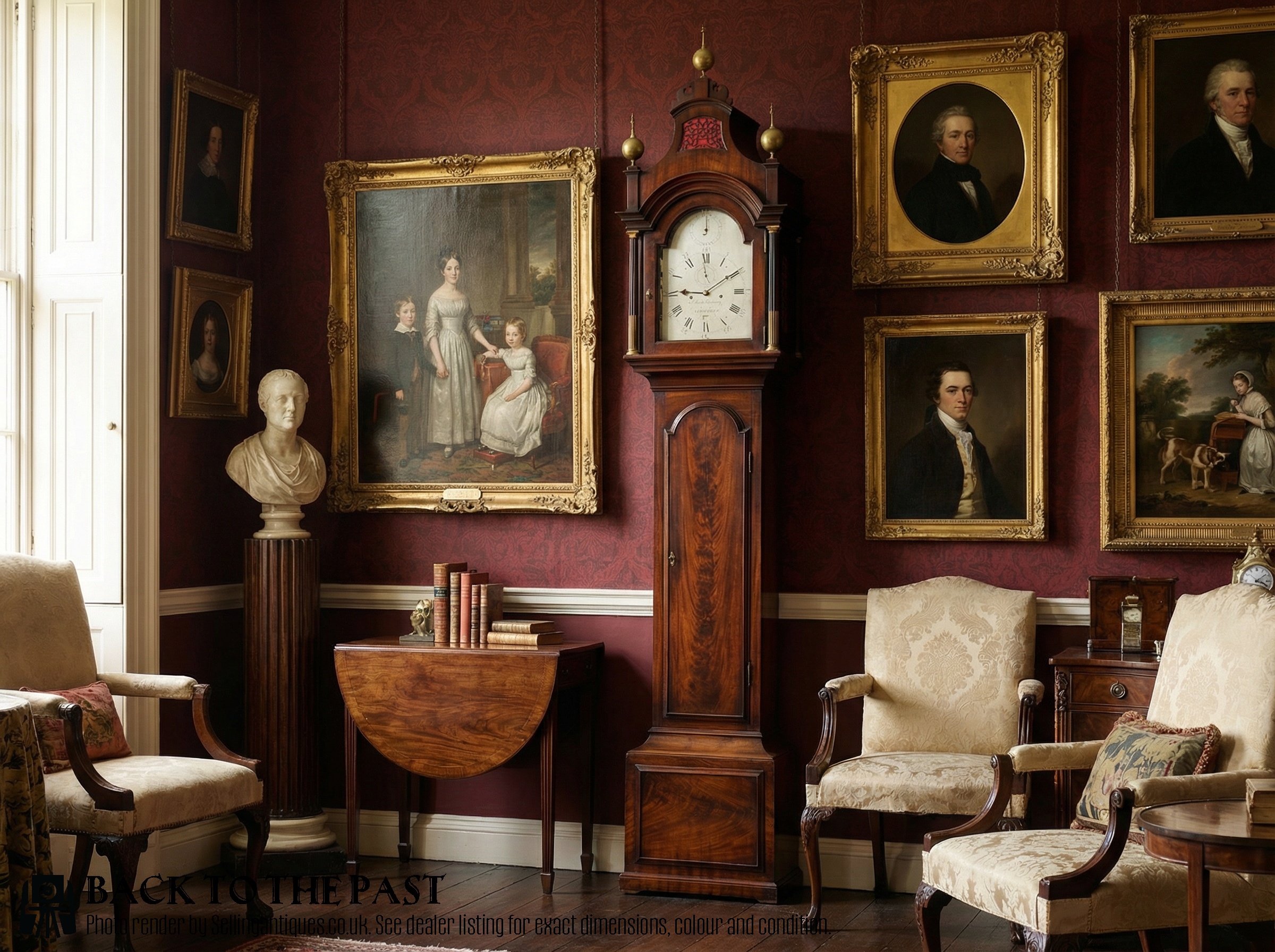
Small Mahogany Longcase Clock
A small mahogany longcase clock is a tall, floor-standing timekeeper scaled down in height and proportion, often referred to alternatively in the evidence as a grandmother, granddaughter, or miniature clock. These pieces range across centuries from the Georgian era through the Victorian period and into the twentieth century, reflecting shifting domestic tastes for more compact furniture.
The objects present diverse regional and stylistic traits, encompassing plain cases alongside those displaying Chippendale influence, elaborate Edwardian detailing, or musical chiming mechanisms. Buyers encounter everything from early provincial work by named makers to later revival pieces designed for domestic utility.
How They Were Made
Cases combine solid mahogany or flame mahogany veneers applied over secondary woods, frequently embellished with brass dials, silvered metal chapter rings, and glass viewing doors. Structural integrity relies on traditional cabinet-making joins scaled carefully to maintain slender proportions without sacrificing housing stability for the movement.
Internal engineering utilises heavy brass gear trains, iron weights, and complex escapements such as the deadbeat or anchor systems to regulate time and drive quarter-chimes, musical cylinders, or simple hour strikes. The precision of these brass movements determines the functional reliability of the clock.
Small Mahogany Longcase Clock Retail Price Guide 2026
Typical asking prices for small mahogany longcase clock among the pieces listed under this phrase on Sellingantiques today, from the lower quarter to the upper quarter. They describe what is for sale here now, not the wider market.
Certain models feature a rocking ship on the dial that dips and rolls with the pendulum swing.
What Varies In Quality
Originality of components heavily influences distinction, particularly where dials, movements, and cases have remained together without extensive replacement. Signed dials from known provincial or London makers carry additional historical weight compared to unmarked commercial examples.
Dent of London·Hampston Prince and Cattles·Frederick Rowe of Great Marlow·Rowning of Newmarket·John Morse of Malmesbury·Summerhayes of Taunton·Clare and Son Bedford·Handy of Uxbridge·R Stewart Glasgow·John Wallace of Leven·Maple London
The Small Mahogany Longcase Clock Glossary
- Grandmother clock
- A term applied to a small longcase clock, typically shorter than a standard grandfather clock but sharing identical mechanical functions. These pieces became particularly popular during the early twentieth century revival periods.
- Deadbeat escapement
- A precision clock mechanism that stops recoil in the pendulum, improving timekeeping accuracy by maintaining an even impulse. It is frequently found in high-grade regulators.
- Regulator
- A high-precision clock designed for exact time measurement, often featuring a simplified dial layout for clear reading. Examples in the evidence include specialised workshop productions.
- Chippendale style
- A furniture design style drawing on mid-eighteenth-century aesthetics, characterised by carved fretwork and classical proportions. Revival pieces frequently adopt these decorative motifs.
- Twin fusee
- A mechanical arrangement using cones and chains or cords to equalize the pull of the driving springs as they unwind. This ensures consistent power delivery to the movement.
Small Mahogany Longcase Clock: Frequently Asked Questions
What is a grandmother clock?
A grandmother clock is simply a smaller version of the traditional grandfather longcase clock, built with reduced dimensions to fit more compact rooms while retaining a weight-driven or spring-driven mechanical movement.
These pieces were produced across various periods, from the eighteenth century onwards, with revival examples appearing frequently in the early twentieth century.
How do I wind the clock?
Winding involves using a specialised key to draw up the weights or tension the springs inside the trunk, depending on whether the movement uses a weight-driven or fusee setup.
Care must be taken not to overwind the mechanism, ensuring the weights or springs reach their designated limits without placing undue strain on the brass gear train.
Where should I place it?
These clocks require a stable, dry interior wall away from direct sunlight, central heating vents, and exterior doors where vibrations might disrupt the pendulum's swing.
Because of their slender proportions, securing the case plumb against the wall ensures the pendulum hangs freely and the escapement beats evenly.
How do I date a case?
Dating relies on examining the timber choice, such as flame mahogany versus plain mahogany, alongside construction methods, dial styling, and secondary wood types.
Georgian examples display different proportions and brass casting styles compared to Edwardian or later revival interpretations found in the record.