

Small Mahogany Drop Table
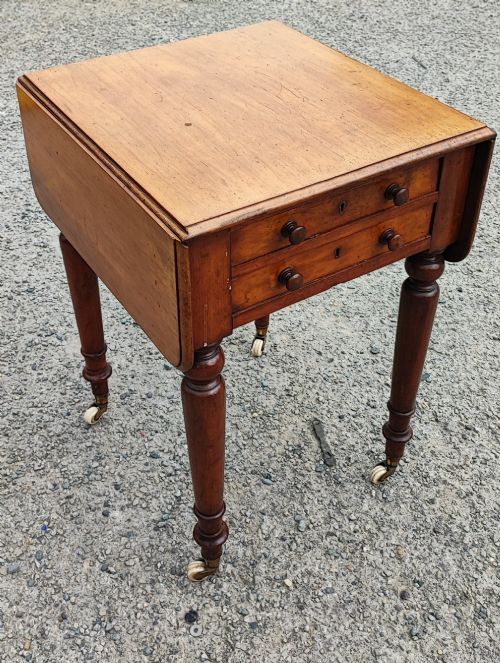
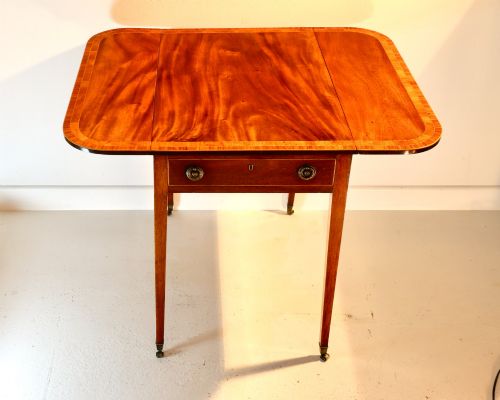
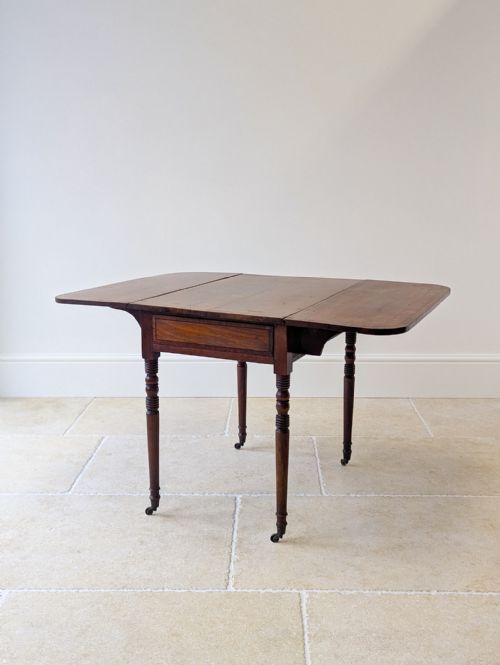
When you search for a small mahogany drop table, you are looking at versatile folding tables built for compact spaces across the Georgian, Regency, Victorian and Edwardian periods.
Small Mahogany Drop Table
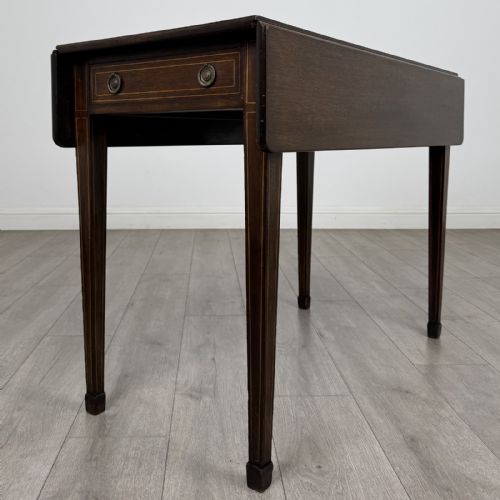
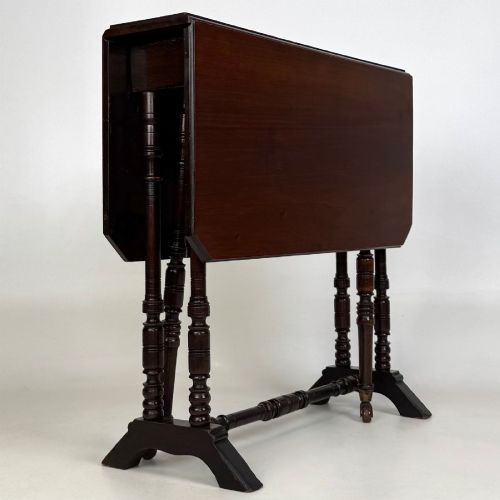
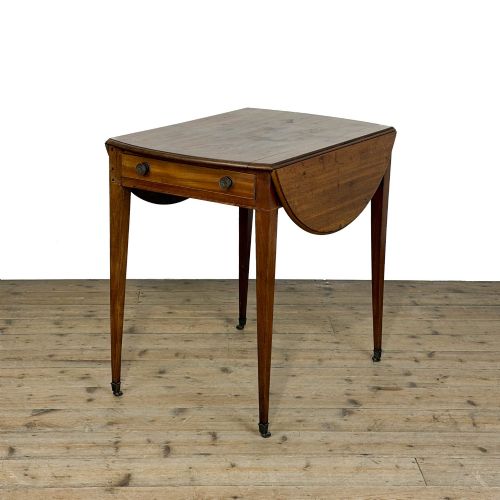
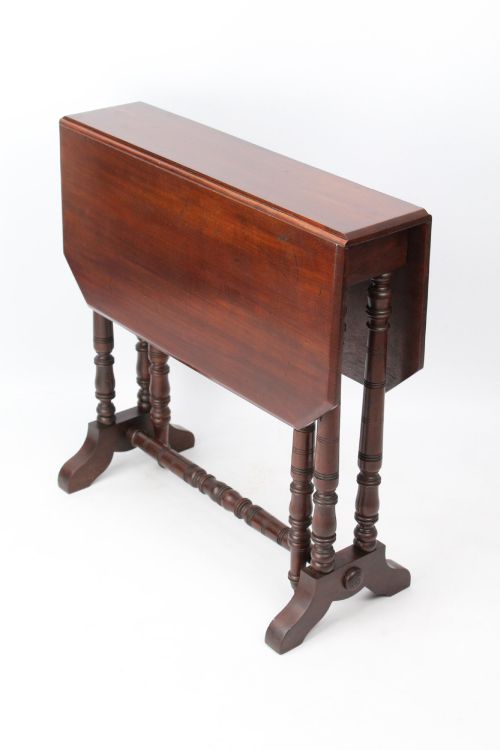
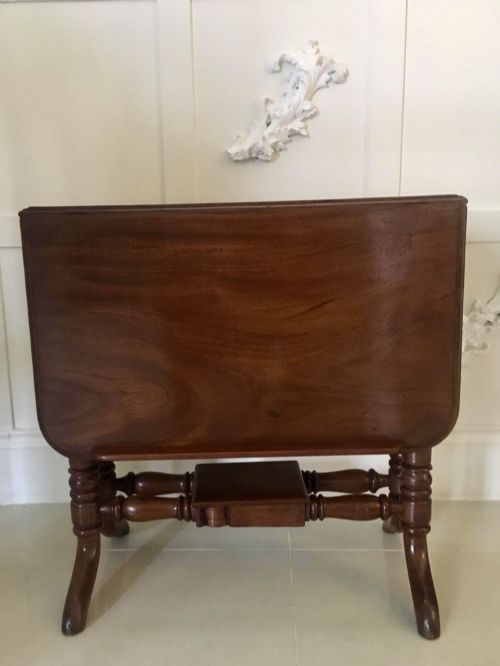
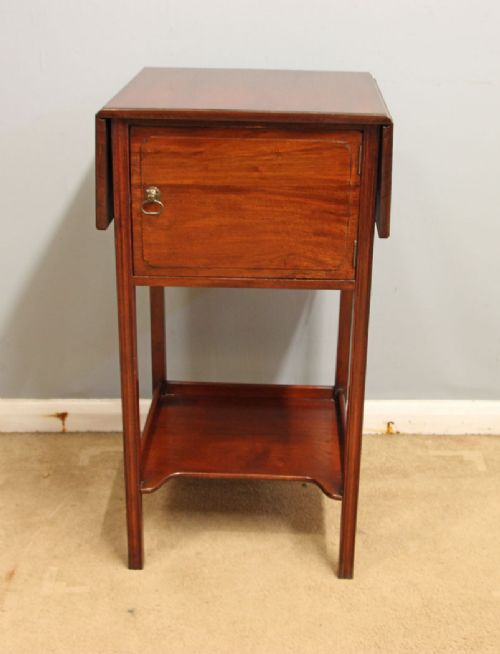
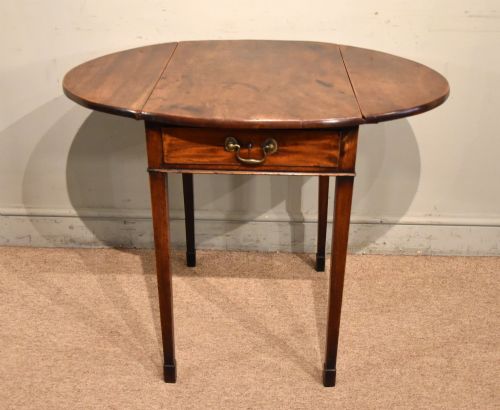
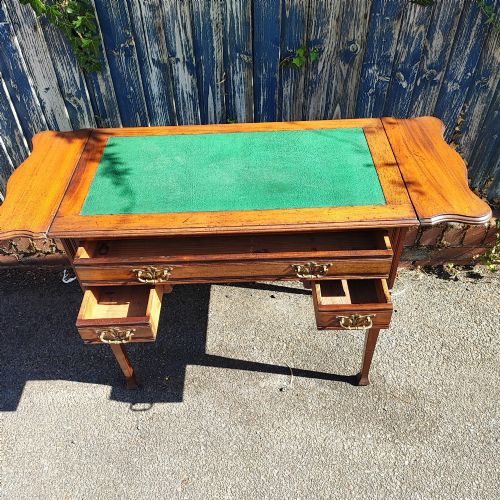
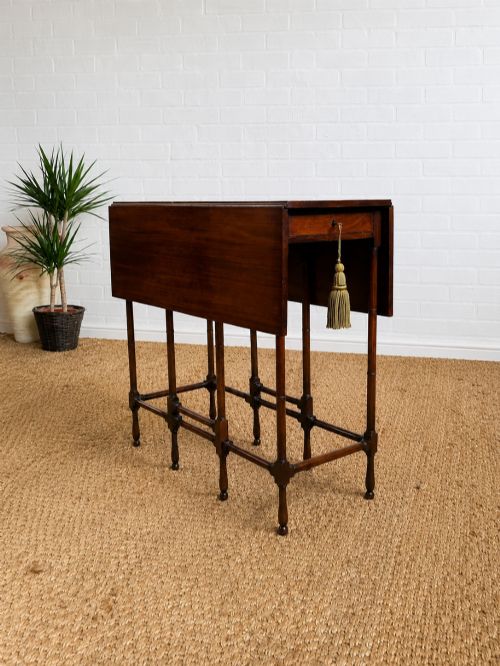
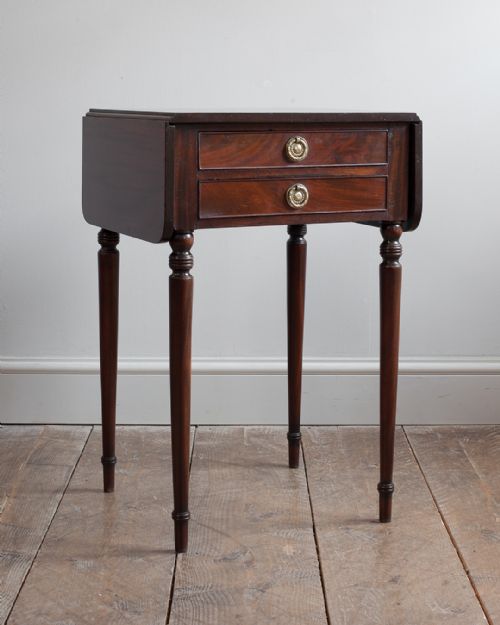
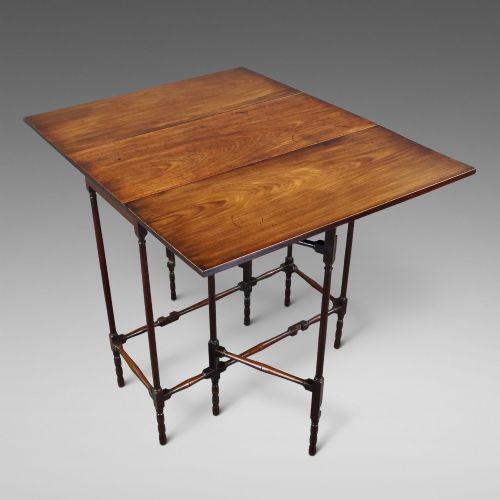
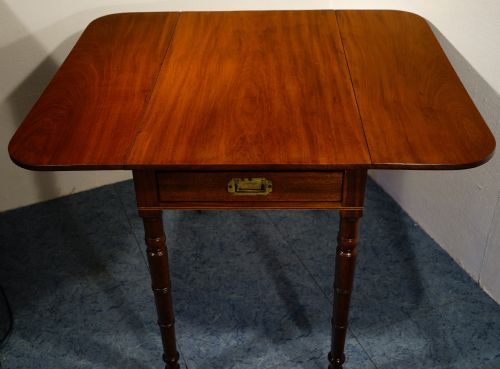
When you search for a small mahogany drop table, you encounter diverse forms designed to expand when needed and fold away compactly. The selection spans Pembroke tables with drawers, narrow Sutherland tables, spider-leg occasional tables, and compact gateleg dining tables.
The pieces you meet most frequently on this page date from the Edwardian era and the nineteenth century, often retaining drop-leaf flaps supported by hinged rule joints or swinging brackets. They serve readily as lamp tables, writing desks, and small breakfast tables in modern rooms.
How they were made
Cabinet makers utilised solid mahogany and rich mahogany veneers over secondary timbers, frequently selecting Cuban or dense regional stocks for durability and grain figure. Surface enrichment relied on satinwood inlay, boxwood stringing, brass castors, and ebonised detailing.
Structural integrity depended on precise rule joints along the drop leaves and sturdy pivoting leg actions, such as gatelegs or bamboo-turned uprights. Drawer construction typically employed hand-cut dovetails and turned wooden knobs or brass pulls.
Listings feature items built from the eighteenth century through the Edwardian period, incorporating mahogany, satinwood, brass, and leather.
What varies in quality
The distinction between standard utility furniture and superior cabinet work lies in the choice of timber figure and the crispness of secondary details. Pieces featuring finely matched mahogany grains, delicate stringing, and well-executed satinwood inlay stand apart from plainer workshop production.
Mechanical execution also defines the upper tier, seen in smooth action for folding flaps, stable gateleg pivots, and carefully fitted drawers that run true without excessive play. Proportion matters deeply, as genuinely small proportions demand greater skill from the maker than standard-sized equivalents.
Gillows·Morison of Ayr
The Small Mahogany Drop Table Glossary
- Pembroke table
- A small rectangular table with two hinged drop leaves on opposing sides, commonly fitted with a single end drawer. It originated in the eighteenth century and remained popular throughout the Victorian era for occasional use.
- Sutherland table
- A narrow drop-leaf table featuring exceptionally slender legs and leaves that fold down almost vertically. This design allows the table to occupy minimal floor space when closed.
- Gateleg table
- A table with hinged leaves supported by one or more legs that swing outward like a gate. This mechanism provides robust support for the extended leaves.
- Rule joint
- A moulded joint connecting a table top to its drop leaf, designed to conceal the hinge mechanism and provide a clean line when the leaf is raised.
- Spider leg
- An occasional table design characterised by exceptionally thin, turned legs braced by delicate stretchers. This style appears frequently in Georgian and Edwardian iterations.
Small Mahogany Drop Table: Frequently Asked Questions
What is a small mahogany drop table used for?
These tables function primarily as flexible furniture pieces that adapt to changing spatial needs in sitting rooms, studies, and bedrooms. They serve as lamp stands, writing desks, or small dining surfaces when the leaves are raised.
When folded down, they sit flat against a wall or tuck neatly beside seating, offering surface space without crowding compact interiors.
How do I identify a Georgian drop table?
Georgian examples typically exhibit dense Cuban mahogany timber, hand-cut drawer dovetails, and pad feet or tapering legs. The joinery is heavier and relies on traditional hand-tool methods without modern mechanical fasteners.
Secondary woods like oak or pine inside the drawers further confirm the period, alongside simpler, more robust rule joints on the drop leaves.
Are Edwardian drop tables sturdy?
Edwardian versions are surprisingly robust despite their lighter frames, utilising kiln-dried mahogany and improved hinge hardware. Many feature bamboo-turned legs or slender satinwood-inlaid supports that handle daily domestic use reliably.
Care should be taken not to overload extended drop leaves, as the rule joints depend on the supporting brackets or swinging legs rather than the hinges alone.