


Small Mahogany Display Cupboard
A small mahogany display cupboard brings warmth and refinement to a room, offering compact storage behind glass for treasured objects and books.
Small Mahogany Display Cupboard
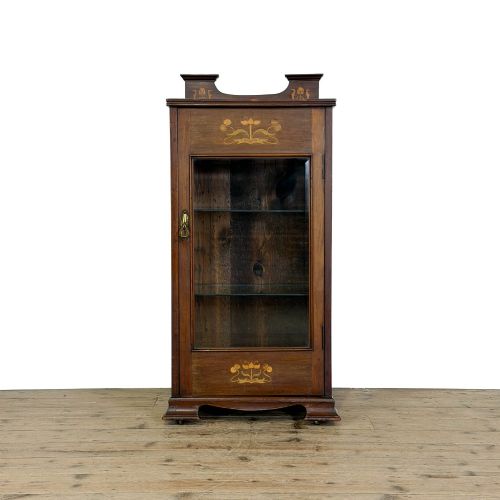
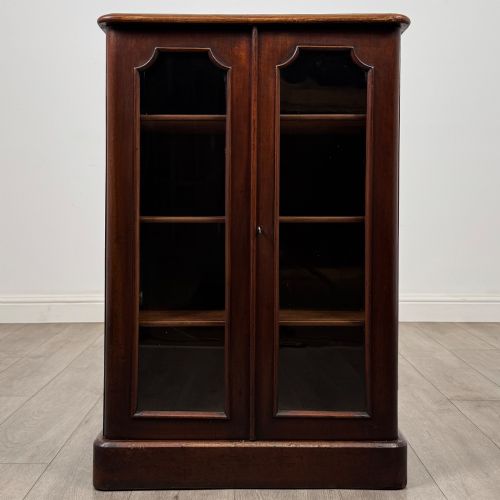
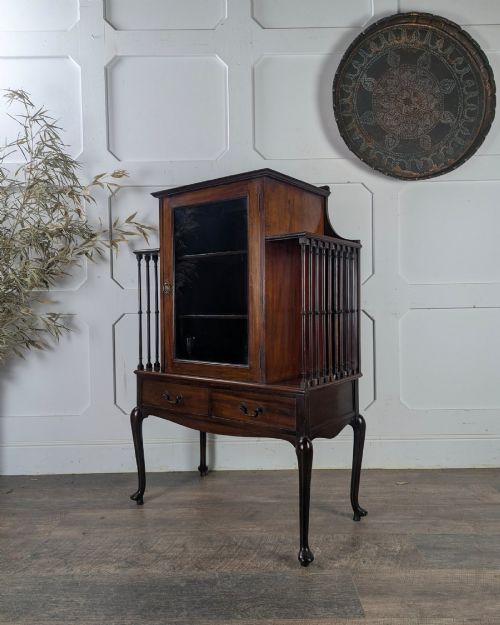
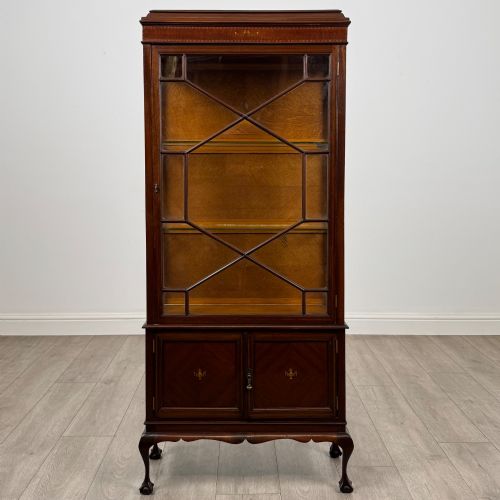
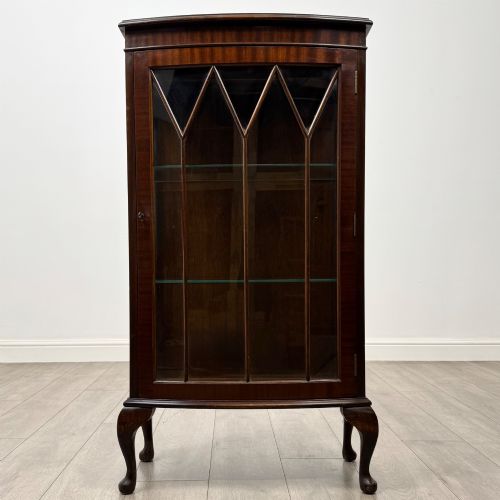
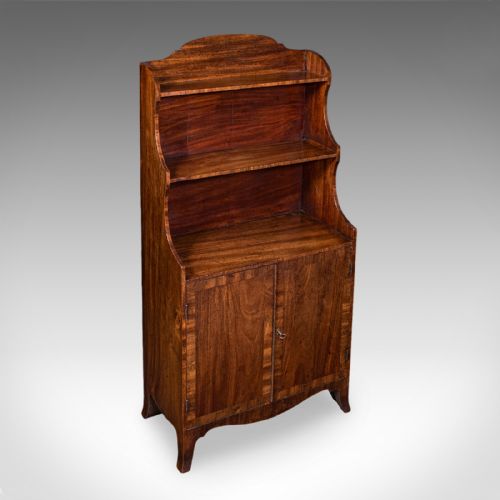
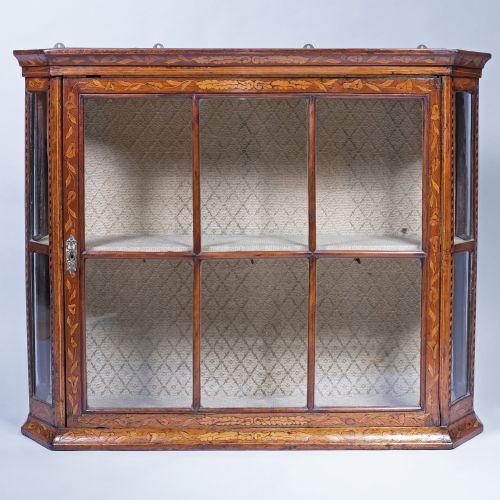
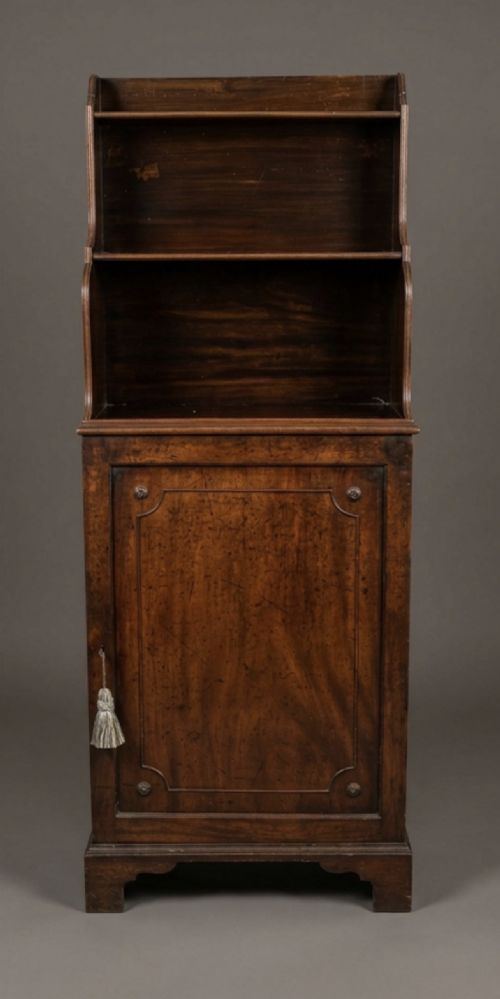
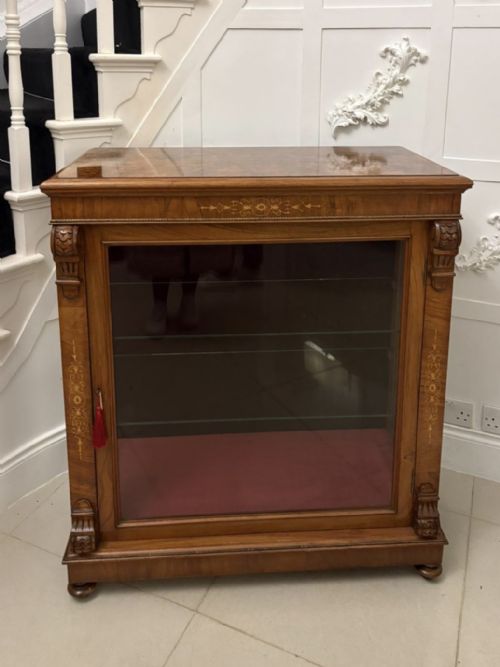
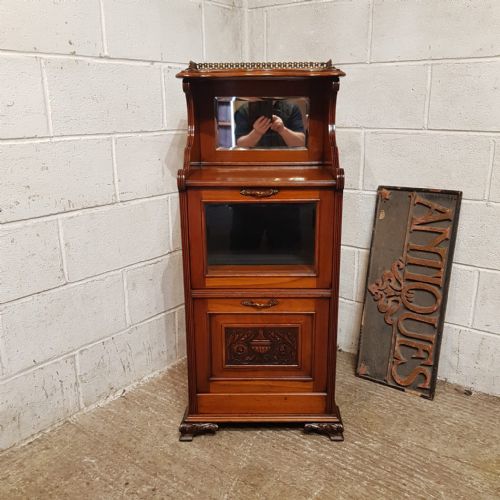
A small mahogany display cupboard spans several distinct eras, with Edwardian and Victorian examples appearing most frequently alongside Georgian and Regency pieces. These cabinets take various forms, including wall-hanging corner cupboards, floor-standing display cabinets, narrow side cabinets, and music cabinets with glazed or open shelving.
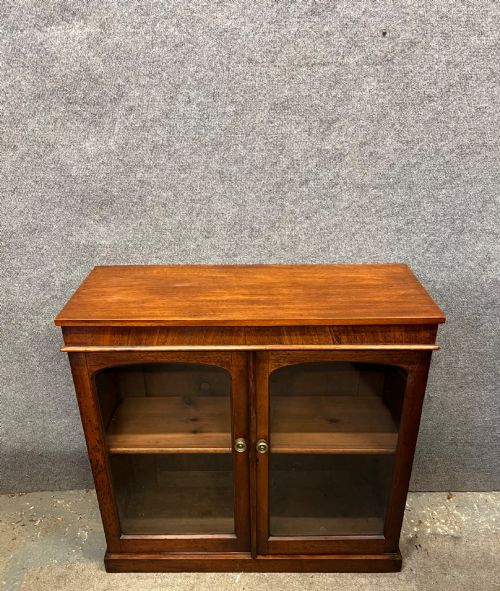
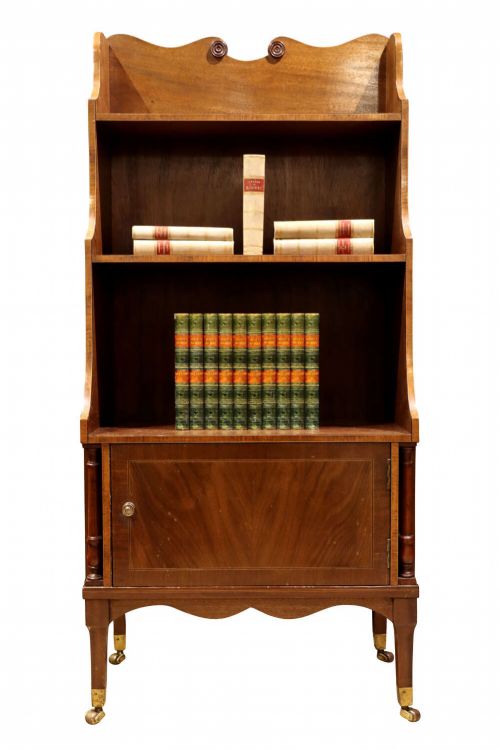
The pieces on this page originate from workshops working across the eighteenth, nineteenth, and early twentieth centuries. Buyers encounter floor bookcases, breakfront bookcases, and chiffoniers alongside dedicated wall cabinets designed to utilise compact spaces.
Materials and construction
Makers utilised solid mahogany and mahogany veneers as the primary timber, frequently combining it with secondary woods and incorporating glass panels into doors. Brass hardware, including hinges, handles, and castors, appears regularly across the pieces.
Decoration relies on contrasting materials such as satinwood and boxwood inlay, alongside intricate marquetry and marquetry inlay techniques. Fabric linings often furnish the interiors of glazed display sections to complement the exterior timber.
Listings feature mahogany, satinwood, boxwood, brass, and glass across Edwardian, Victorian, and Georgian periods.
Factors of quality
The refinement of the timber and the precision of the inlay separate finer examples from simpler utilitarian pieces. Crispness in the execution of satinwood and boxwood stringing or marquetry indicates a higher standard of cabinet-making.
Quality also shows in the proportional balance of the proportions and the joinery of the glazed doors. Original brass fittings and well-figured mahogany grain elevate the standing of a cabinet.
Shapland & Petter·Gillows
The Small Mahogany Display Cupboard Glossary
- Chiffonier
- A low sideboard or cabinet featuring shelves or enclosed cupboards, popular during the Regency and Victorian periods. These pieces often combine open display space with lower storage doors.
- Marquetry
- Decorative veneer work forming pictorial or geometric patterns using various woods. Craftsmen cut thin sheets of contrasting timber to fit precisely into a prepared background.
- Breakfront
- A cabinet design where the central section projects forward from the flanking wings. This architectural arrangement creates depth and visual interest on smaller wall units.
- Satinwood
- A lustrous, yellowish timber utilised for contrasting inlay and banding on mahogany furniture. It provides bright linear detail against darker woods.
- Waterfall bookcase
- A set of open bookshelves where each successive tier recedes from the one below it. This stepped profile creates a distinctive cascading silhouette.
Small Mahogany Display Cupboard: Frequently Asked Questions
Where should I place a small mahogany display cupboard?
These compact cabinets suit alcoves, hallways, or reception rooms where floor space is limited. Wall-hanging versions make effective use of vertical wall space above other furniture.
Their shallow depth allows them to sit comfortably in narrow corridors or smaller studies without dominating the room.
How do I distinguish Edwardian pieces from Victorian ones?
Edwardian cabinets often display lighter satinwood inlay and Sheraton Revival influences with delicate proportions. They frequently date from around 1900 to 1910.
Victorian pieces tend to be heavier in timber weight and darker in finish, often showing robust mouldings and straightforward glazed doors.
What is the difference between a bookcase and a display cabinet?
Bookcases primarily feature open shelving for books, though many examples include glazed doors to protect the volumes. Display cabinets focus on glazed panels designed to exhibit ceramics, glass, or collectables.
Several pieces combine both functions with upper display glazing and lower enclosed cupboards.
How do I care for mahogany furniture?
Keep mahogany pieces away from direct sunlight and steady sources of artificial heat to prevent the timber from drying out. Dust regularly with a soft, dry cloth to maintain the lustre of the polish.
Avoid using silicone-based polishes, opting instead for traditional natural waxes when the surface requires nourishment.