

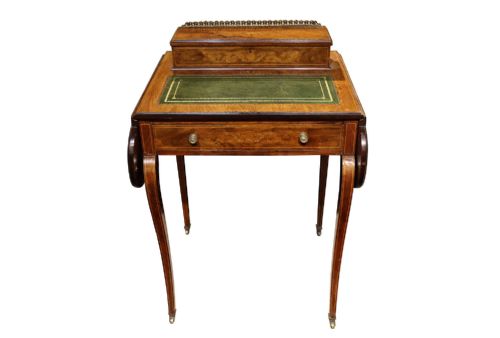
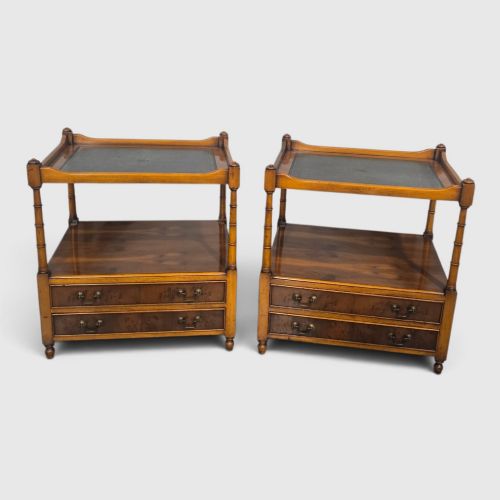
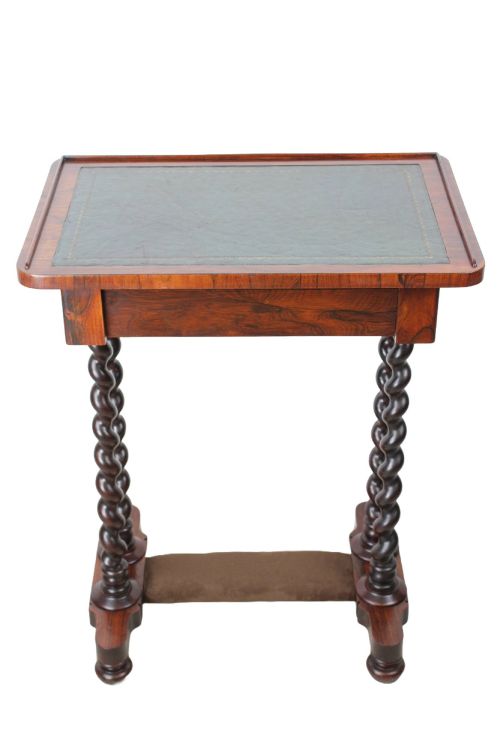
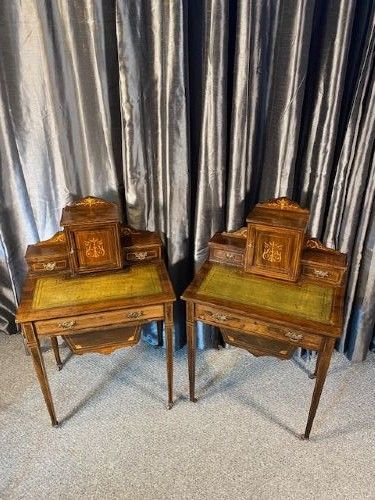
Small Leather Table
These small leather table options range from compact writing desks to side tables, offering compact workspace and classic surfaces in durable hides.
Small Leather Table
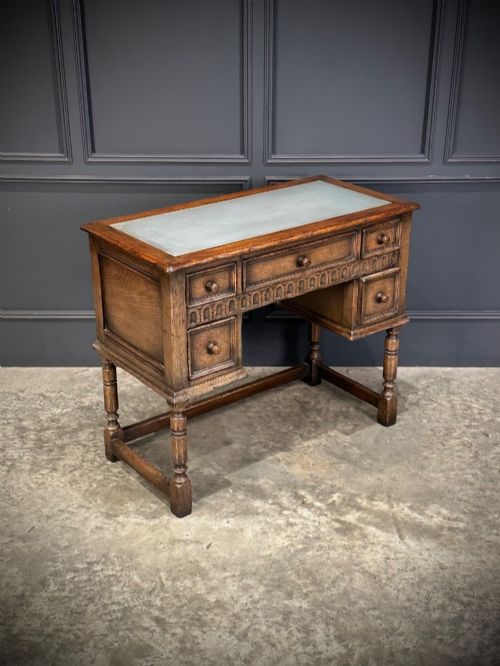
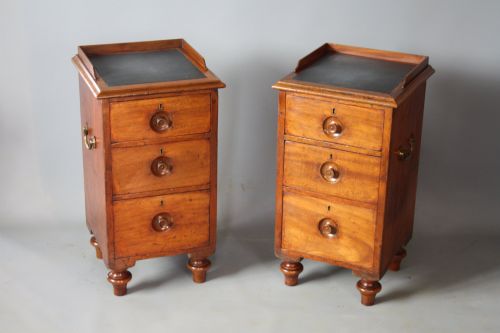
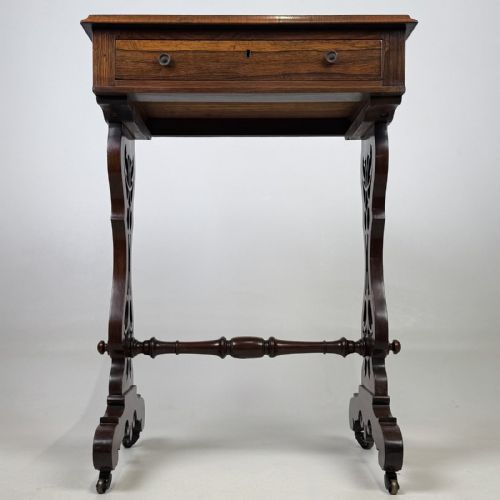
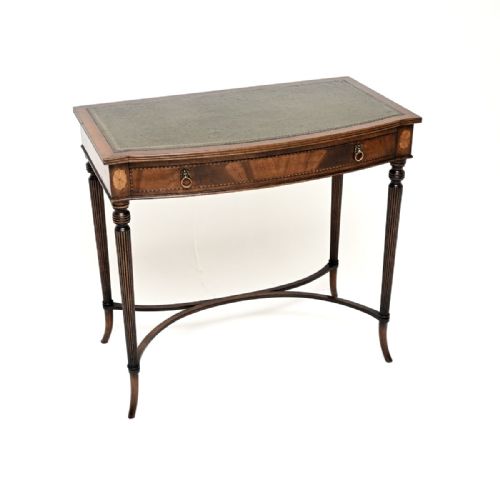
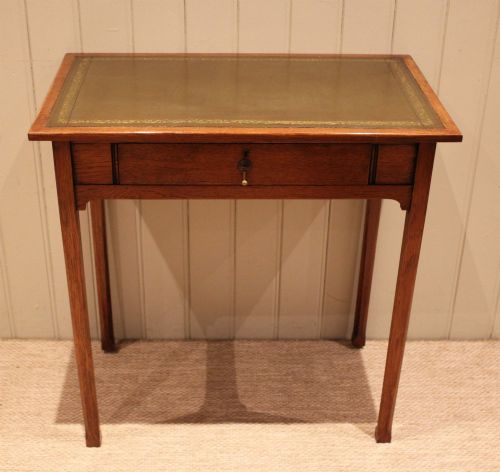
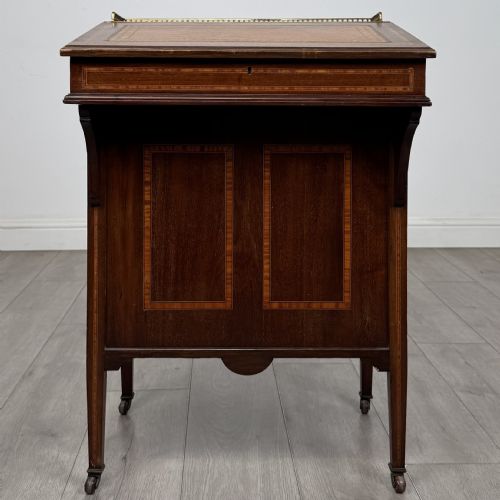
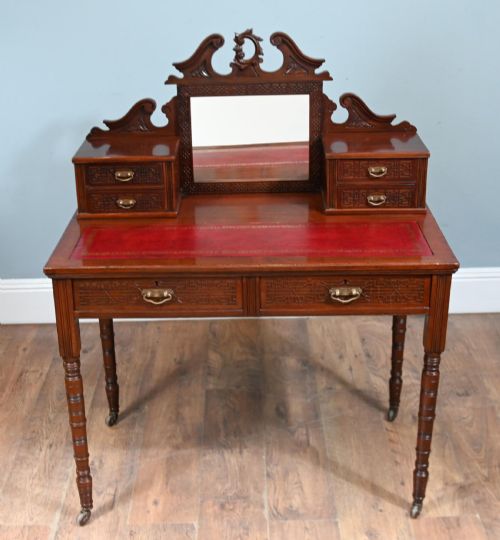
A small leather table serves primarily as a writing surface, side table, or compact desk designed for domestic use. Buyers seeking a small leather table will encounter forms spanning the Regency, Victorian, and Edwardian periods, as well as Arts and Crafts iterations.
The materials frequently span solid woods and veneers like mahogany, rosewood, and oak, inset with panels of leather for writing and display. Pieces appear from the nineteenth and early twentieth centuries, including specialised writing desks, kneehole desks, and occasional side tables.
Most examples originate from English workshops or continental makers, adopting styles from Georgian revival to Aesthetic movement designs. The selection balances utilitarian writing surfaces with refined cabinetmaking suited for smaller rooms.
Materials and construction
Carpenters utilised dense hardwoods such as mahogany, walnut, and rosewood for structural frames, sometimes employing satinwood or kingwood for decorative banding and veneers. Writing surfaces were inset with finely tooled leather, secured with glue and bordered by timber frames.
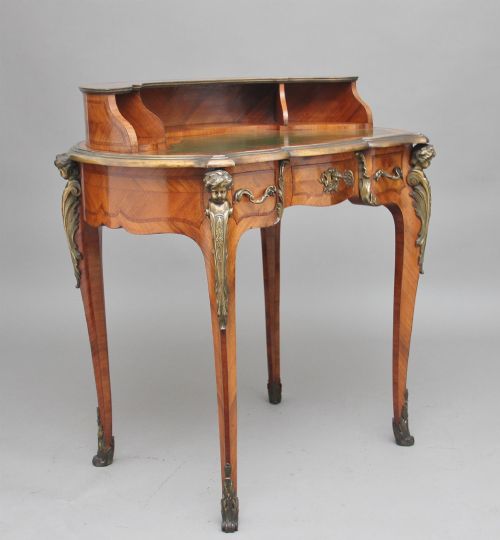
Brass mounts, handles, and castors provided functional and decorative accents, particularly on Regency and French pieces utilising ormolu. Joinery relied on traditional techniques like dovetailing for drawers and mortise and tenon joints for frames.
Small Leather Table Retail Price Guide 2026
Typical asking prices for small leather table among the pieces listed under this phrase on Sellingantiques today, from the lower quarter to the upper quarter. They describe what is for sale here now, not the wider market.
Some miniature desks even included hidden compartments for secret correspondence and private ledgers.
Assessing quality and execution
Superior execution shows in the selection of figured timber veneers and the precision of inlaid stringing or parquetry. Cabinetmakers who spent extra time on secondary woods and interior fittings produced pieces that remain structurally stable over centuries.
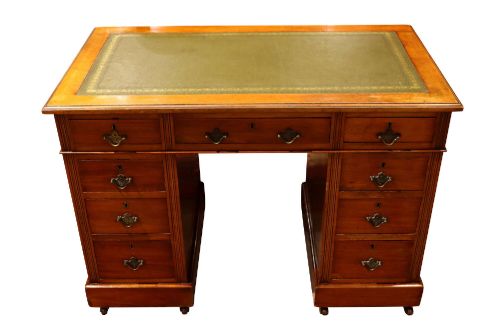
The quality of the leather insert and its gold-tooled border dictates the visual finish of the top surface. Heavier brass hardware and smooth-sliding drawers distinguish workshop standards from ordinary production.
Edwards and Roberts
The Small Leather Table Glossary
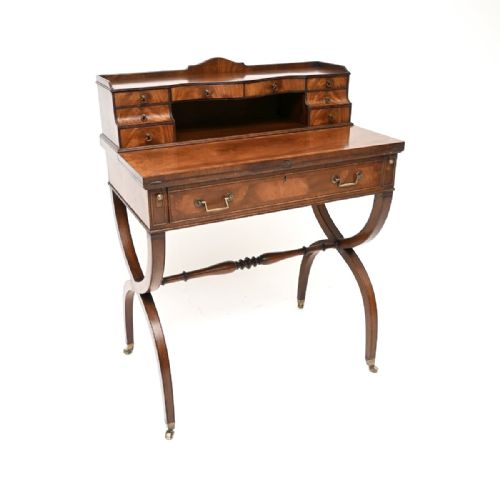
- Bonheur du Jour
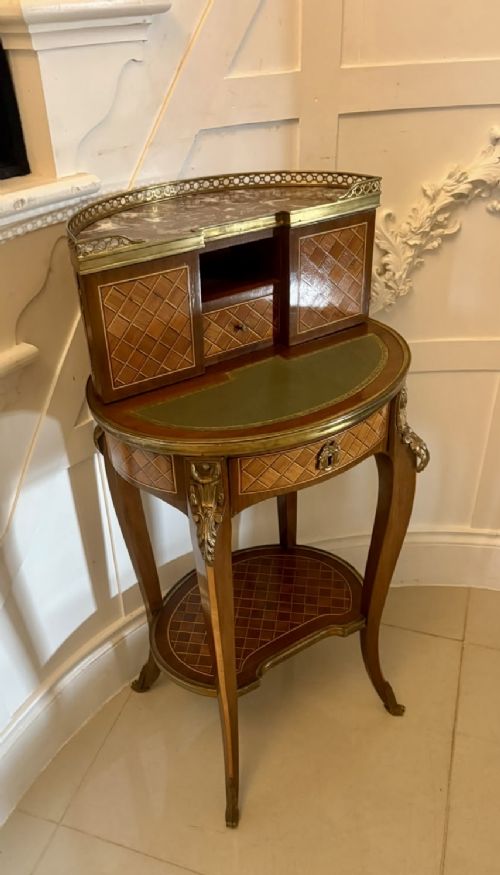
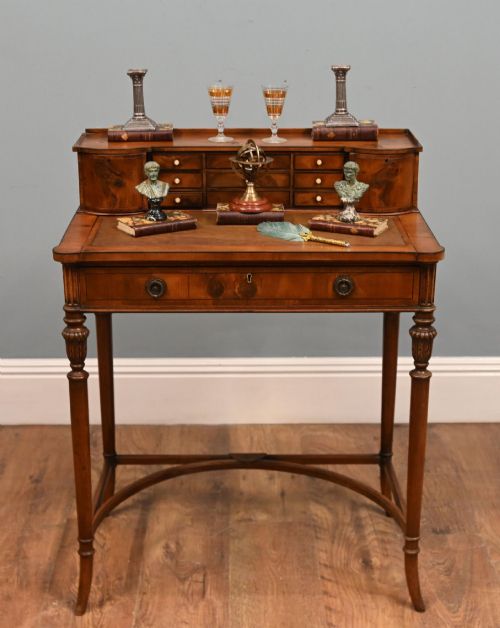
- A light lady's writing desk featuring a tiered superstructure with small drawers and pigeonholes above the main writing surface. This form gained popularity during the eighteenth and nineteenth centuries.
- Davenport desk
- A compact box-form writing desk with a sloping, leather-lined writing lid and side drawers. It typically rests on a pedestal base.
- Ormolu
- Gilded bronze used for decorative mounts and furniture trim. It was cast and chased before being applied to nineteenth-century luxury furniture.
- Parquetry
- Geometric wood-mosaic work used for flooring and furniture surfaces. Artisans arranged contrasting timber veneers in repeating patterns.
Small Leather Table: Frequently Asked Questions
Where were these small leather tables placed?
These tables typically sat in drawing rooms, private boudoirs, or studies where space was at a premium. They provided a dedicated surface for correspondence without dominating the room.
Larger variants served as centre tables or modest library desks, while smaller pedestal versions functioned as personal writing stations.
How do I care for the leather top?
Leather surfaces benefit from occasional dusting with a soft cloth and gentle conditioning to prevent the hide from drying out. Avoid harsh chemical cleaners and keep direct sunlight off the surface.
Using blotters or pads when writing helps preserve the original tooling and prevents ink stains on antique hides.
How can I tell a Regency piece from an Edwardian copy?
Regency pieces dating from the early nineteenth century generally exhibit heavier proportions, simpler classical lines, and secondary timbers like oak or pine inside drawers. Brass mounts and lyre supports are typical of this era.
Edwardian reproductions or revival pieces often feature lighter frames, machine-cut dovetails, and brighter interior satinwood veneers, reflecting turn-of-the-century manufacturing methods.
What is the difference between a writing table and a Davenport?
A writing table is an open-legged or pedestal-supported desk with a flat, leather-inset top designed for general correspondence. It prioritises legroom and a clean surface.
A Davenport is a much more compact, enclosed desk featuring a sloping top and drawers accessed from the side, prioritising storage over legroom.