




Small Home Office Desk
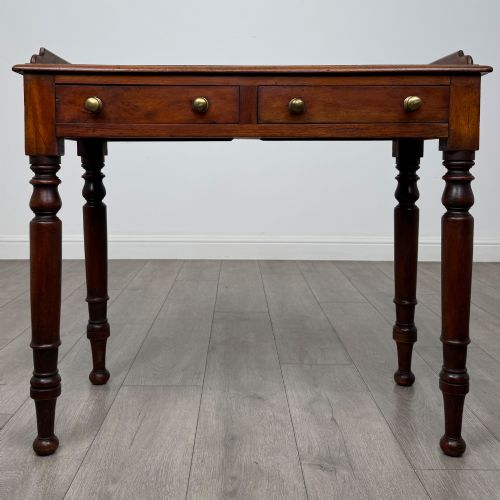
A small home office desk offers a compact place to write, drawing on periods from the Georgian era to the Edwardian years.
Small Home Office Desk
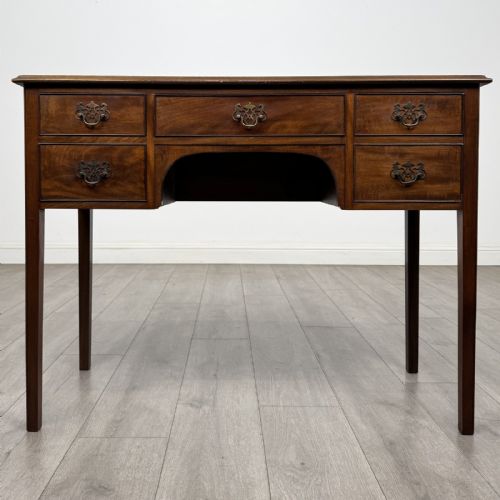
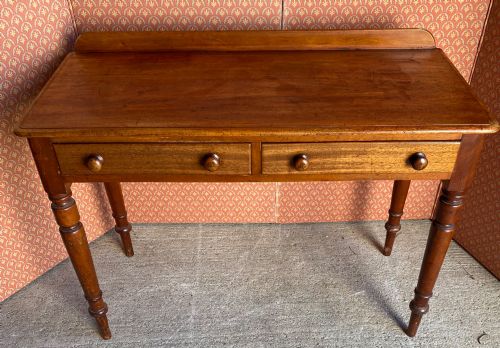
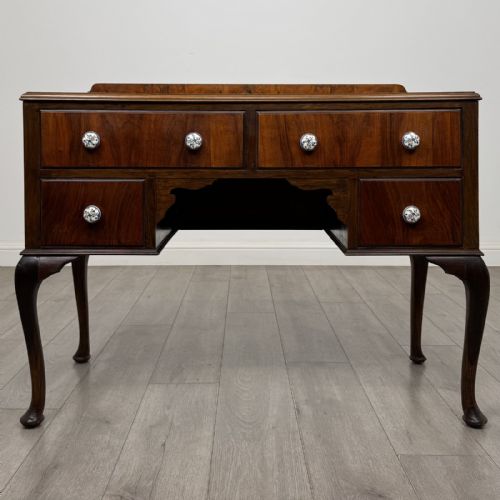
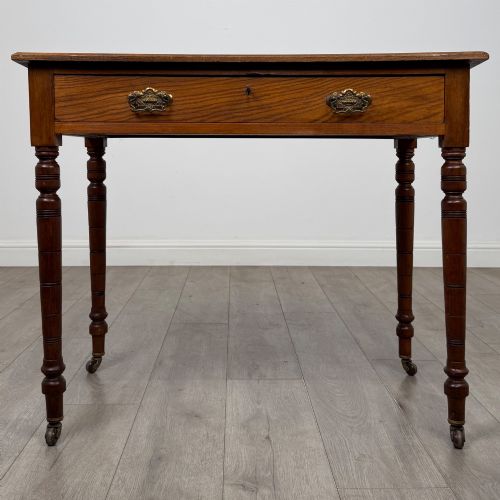
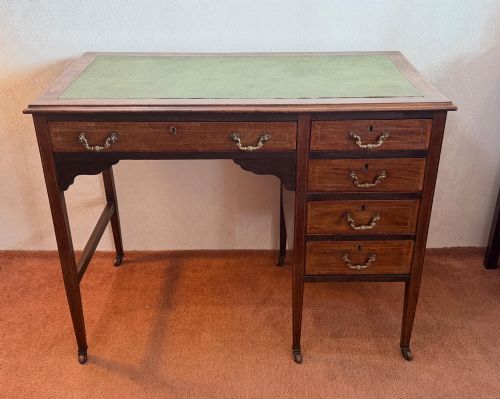
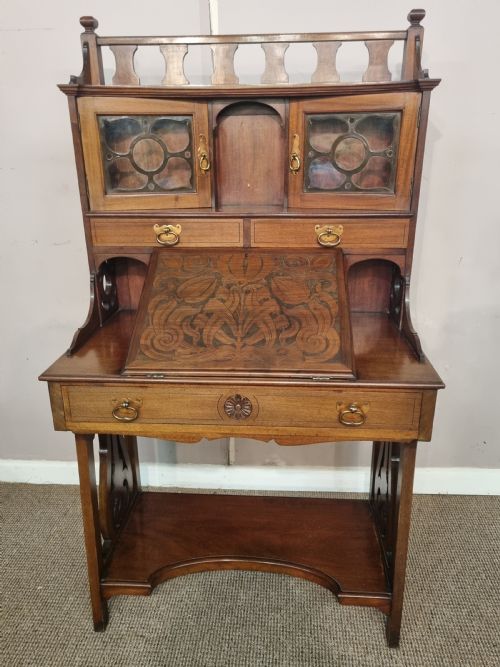
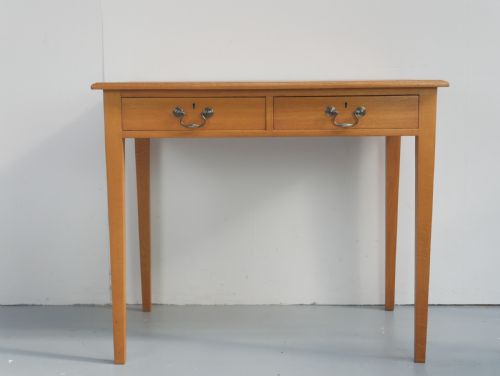
When you search for a small home office desk, you encounter writing tables, kneehole desks, bureaux, and davenports designed for compact workspaces. These pieces emerge from periods such as the Georgian, Victorian, and Edwardian eras, spanning the nineteenth and early twentieth centuries.
The most common forms on this page include kneehole desks and davenports, alongside writing tables and bureaux in mahogany, oak, and walnut. They reflect domestic workspaces of the past, scaled down to fit modern study rooms and smaller writing areas.
Materials and construction
Timber selection dictates the character of these desks, with mahogany, oak, walnut, burr walnut, and rosewood forming the primary structural and decorative surfaces. Cabinet makers utilised crossbanding, inlay, and carving to finish surfaces, complemented by leather writing inserts and brass fittings.
Construction methods range from traditional dovetailing in drawer construction to solid timber framing and veneered surfaces over secondary woods. The integration of brass handles, locks, and leather skivers demonstrates the standard techniques of nineteenth and early twentieth century cabinet making.
Small Home Office Desk Retail Price Guide 2026
Typical asking prices for small home office desk among the pieces listed under this phrase on Sellingantiques today, from the lower quarter to the upper quarter. They describe what is for sale here now, not the wider market.
Scottish oak met a department store counter when Jenners retailed writing tables in nineteen twenty.
Distinctions in quality
Quality rests on the selection of figured timbers, such as burr walnut, flame mahogany, and satin birch, paired with crispness in carved details and inlay. Superior pieces exhibit careful grain matching across drawer fronts and top surfaces, whereas simpler examples rely on plain timber boards.
The sophistication of the internal fittings, such as secret drawers within a davenport or fitted pigeonholes inside a bureau cabinet, separates standard workshop production from finer cabinet making. Original brass hardware, sound drawer linings, and intact leather skivers further distinguish the better examples.
Jenners
The Small Home Office Desk Glossary
- Davenport
- A small compact desk featuring a sloping writing surface above a pedestal of drawers, originating in the early nineteenth century.
- Kneehole desk
- A writing desk with a central recess for the legs, flanked by pedestals of drawers on both sides.
- Bureau
- A desk featuring a hinged sloping flap that opens to reveal a fitted interior of small drawers and pigeonholes.
- Crossbanding
- A narrow strip of veneer applied to the border of a panel, arranged so the grain runs at right angles to the surrounding surface.
- Satin birch
- A pale, lustrous timber utilised during the nineteenth century for decorative furniture surfaces and cabinet work.
Small Home Office Desk: Frequently Asked Questions
Where were small home office desks placed?
These desks served in private studies, bedrooms, and sitting rooms where space was limited but a dedicated writing surface was required.
Their compact footprints allowed them to sit against walls or in corners while providing storage for correspondence and writing materials.
How do I identify a Victorian davenport?
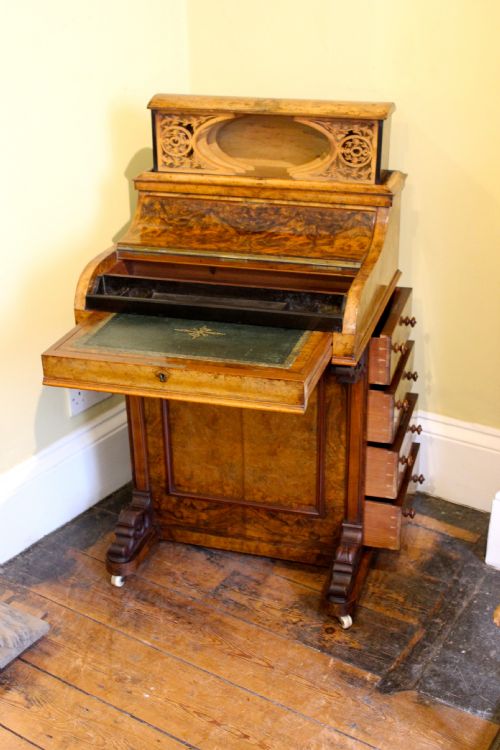
A Victorian davenport typically presents a sloping leather-lined writing lid with a stationery box compartment fixed to the top.
Beneath the writing slope, drawers open to one side while dummy drawers balance the opposite face, often supported by front columns.
What is the difference between a bureau and a writing table?
A bureau incorporates a fold-down writing flap that conceals internal compartments and small drawers when closed.
By contrast, a writing table provides an open, flat writing surface, sometimes fitted with one or more frieze drawers beneath the top.
Can I use an antique desk for modern writing?
These historical writing pieces accommodate modern notebooks and compact study equipment while fitting into smaller room layouts.
Their varied interior compartments assist with organising stationery and small items in a contemporary home workspace.