
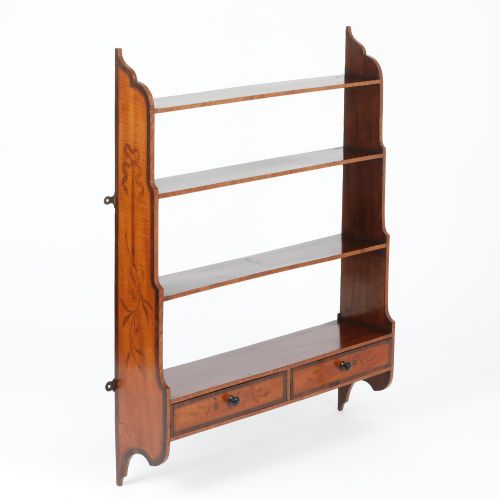


Small Hanging Shelves
Small hanging shelves bring practical storage to compact spaces, combining timber construction with period character from the eighteenth century onwards.
Small Hanging Shelves
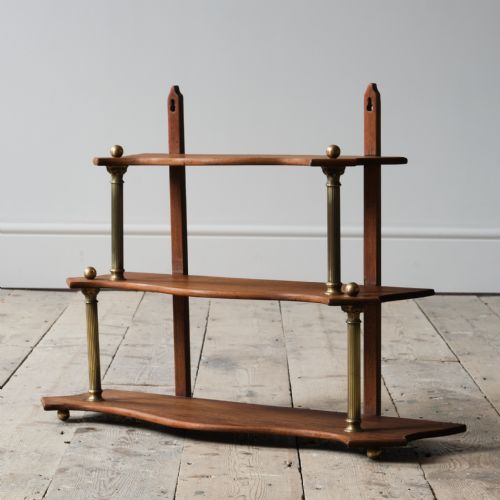
Small hanging shelves provide open display and storage across various historical periods, frequently appearing in mahogany, oak, and walnut. These compact wall fixtures range from simple tiered shelving units to glazed wall cabinets and corner shelves suited for domestic rooms.
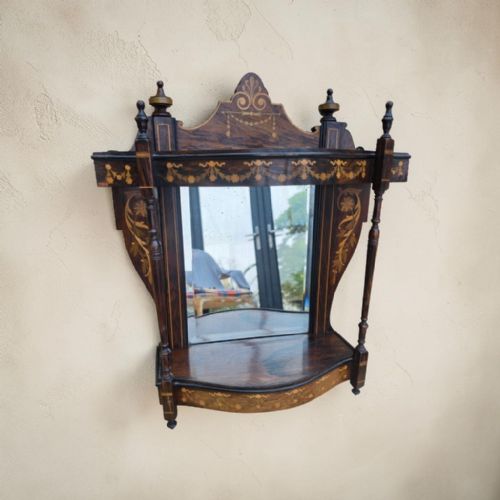
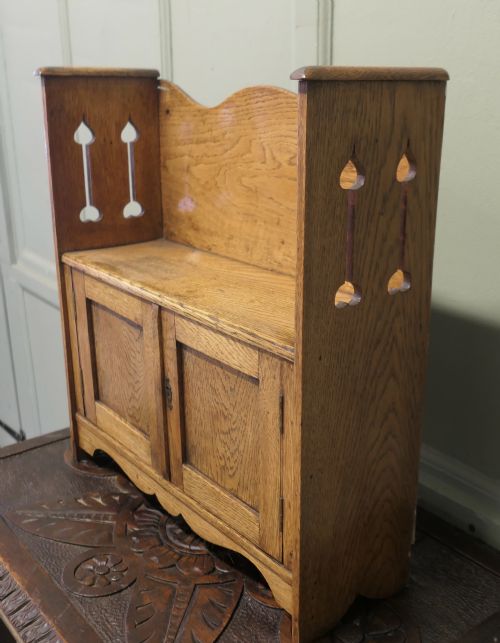
The pieces on this page span the eighteenth, nineteenth, and early twentieth centuries, encompassing Victorian, Edwardian, and Arts and Crafts styles. Mahogany examples dominate the selection, often accompanied by brass fittings, glass panels, and inlaid details.
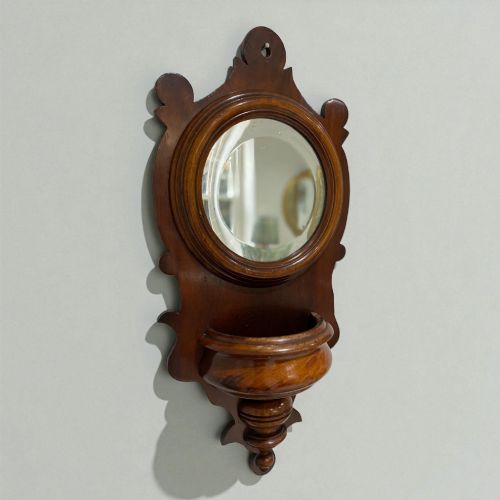
Buyers encounter regional variations including Welsh oak pieces alongside French Rococo Revival painted étagères and West African padouk corner shelves. Wall mirrors with integrated small shelves also feature frequently within the available inventory.
Materials and construction
Makers utilised dense hardwoods such as mahogany, oak, and walnut, alongside decorative timbers like satinwood, limewood, and satin birch. Pine appears in vernacular pieces, while ebonised wood and painted finishes cater to specific aesthetic tastes.
Brass is common for hinges, brackets, and suspension mounts, frequently paired with glass doors and mirrors. Joinery methods connect upright boards to horizontal tiers, occasionally incorporating tambour fronts, drawers, or intricate fretwork.
The inventory spans multiple design movements, including Regency, Aesthetic Period, Arts and Crafts, and French Rococo Revival.
Judging quality
Quality rests on the selection of timber grain, the crispness of inlaid work, and the integration of brass hardware. Superior examples display thoughtful proportions and balanced tier spacing rather than purely decorative additions.
Construction integrity determines longevity, visible in the tightness of joints and the retention of original mounting points. Pieces that maintain their surface finish and structural stability without intrusive repairs command greater attention.
The Small Hanging Shelves Glossary
- Étagere
- A piece of furniture consisting of a set of open shelves for displaying small objects. French Revival examples often incorporate painted and gilt surfaces.
- Tambour
- A surface constructed from narrow strips of wood glued to a flexible canvas backing, allowing doors to slide around a curved track. This technique appears on Georgian corner cupboards.
- Whatnot
- An open set of multiple shelves used for displaying ornaments and books. Mounted versions fix directly to the wall surface.
- Waterfall bookshelves
- Tiered shelving units where each lower shelf steps out wider than the one above. These follow a graduated profile.
- Aesthetic Movement
- A late nineteenth century design style emphasising visual beauty over narrative subject matter. Cabinets from this period often use walnut or ebonised wood.
Small Hanging Shelves: Frequently Asked Questions
How do I hang these shelves safely?
Most pieces retain original brass brackets or mounting loops secured to the backboards. Ensure fixings match the weight of the timber and engage directly with wall studs or appropriate wall anchors.
Check that hanging hardware remains firmly attached to the wooden frame before loading the shelves with books or heavy ceramic objects.
What rooms suit small hanging shelves?
Compact wall fixtures function effectively in halls, bedrooms, and studies where floor space is limited. Corner shelves utilise unused room junctions for display without obstructing movement.
Mirrored variants enhance light in smaller areas while providing narrow ledges for small decorative items.
How do I clean antique timber shelves?
Dust surfaces regularly with a soft, dry cloth to prevent particulate build-up on polished mahogany and oak. Avoid modern silicone sprays that leave residues on historical finishes.
Apply a traditional wax sparingly if the wood appears dry, buffing gently to maintain the natural sheen of the grain.
How do I identify a Victorian piece?
Victorian hanging shelves frequently employ dark mahogany or oak, often displaying Gothic Revival motifs or heavy moulded cornices. Construction details typically include machine-sawn timber components and brass screw fittings.
Proportions tend to be robust, reflecting the domestic storage requirements of the nineteenth century.