


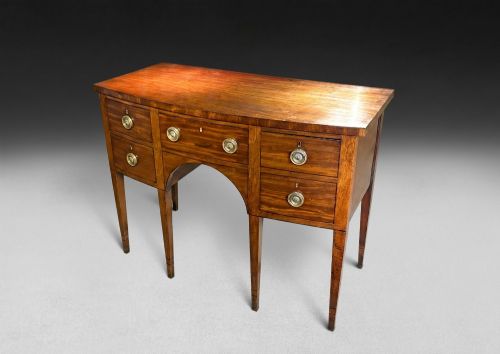


Small Georgian Mahogany Server
A small georgian mahogany server brings understated dining room utility and refined timber grain to compact spaces.
Small Georgian Mahogany Server
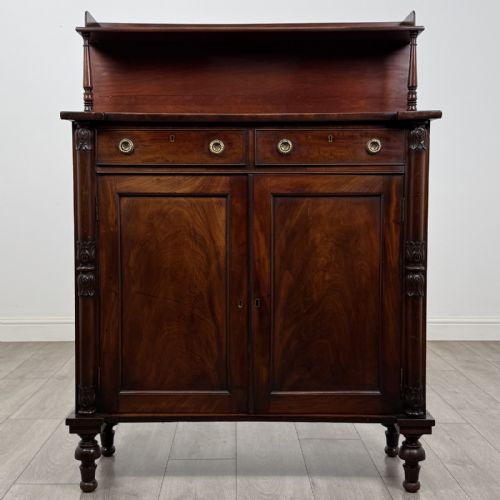
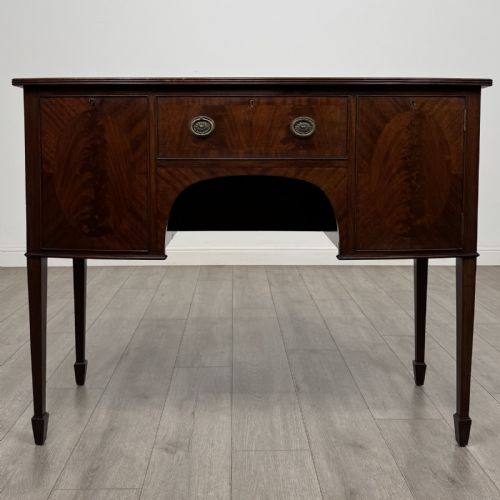
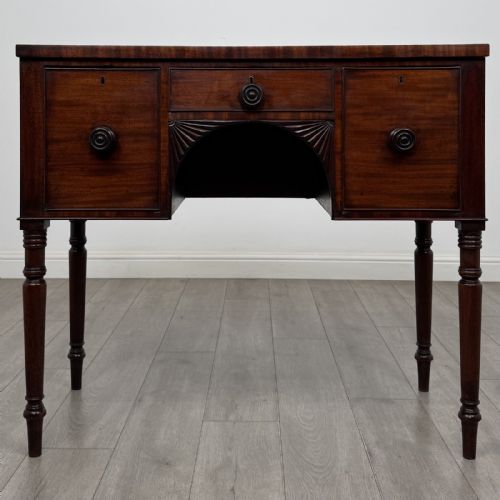
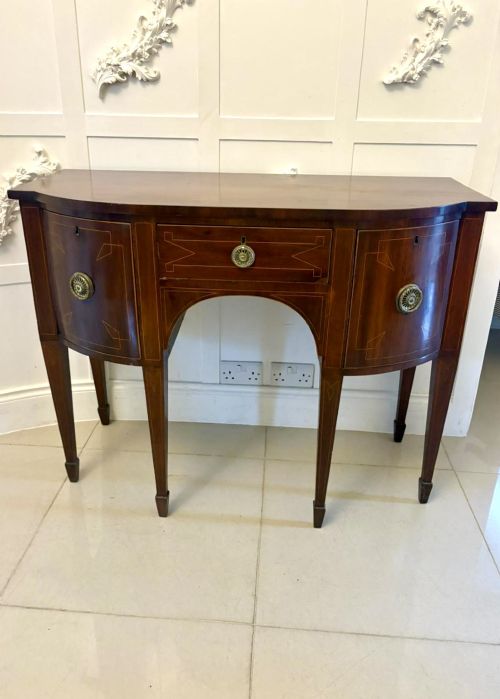
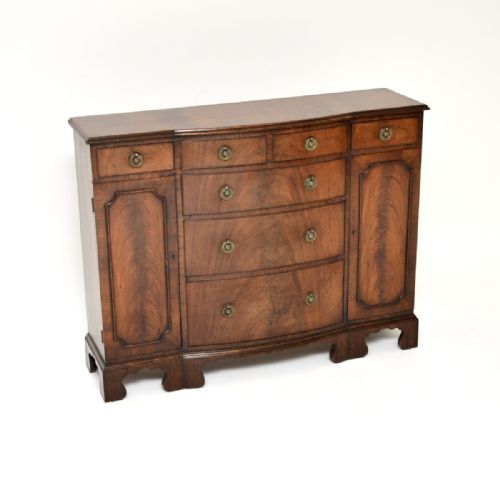
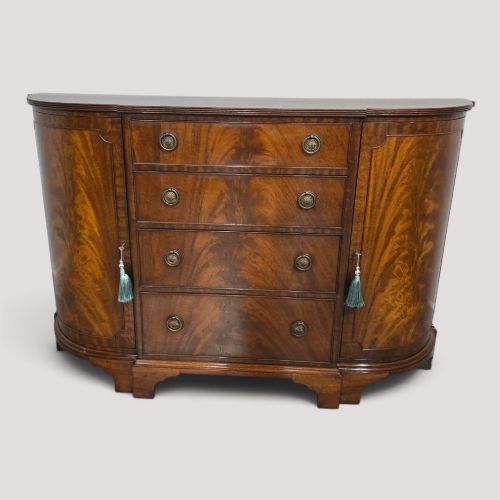
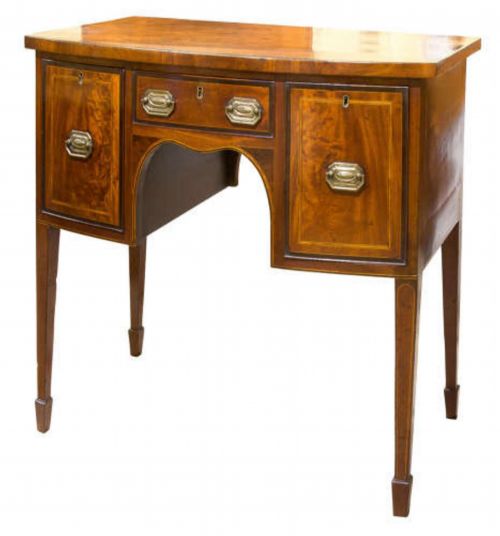
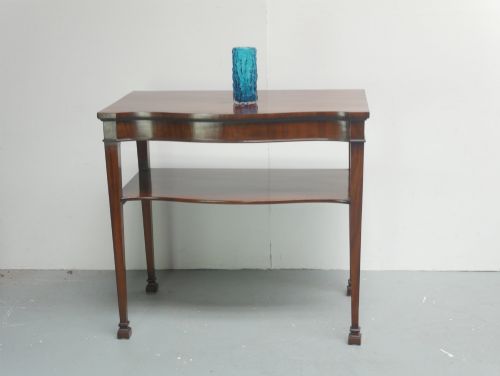
A small georgian mahogany server satisfies the search for compact dining furniture, appearing primarily as bowfront, serpentine, or straight-front sideboards, side tables, and lowboys.
These pieces originate predominantly from the eighteenth and nineteenth centuries, spanning George III, Sheraton, and Regency periods, alongside later revival interpretations.
The buyer meets variations ranging from neat console tables to diminutive chiffoniers and servers designed specifically for smaller rooms.
Construction materials and decorative technique
Cabinet makers utilised solid mahogany and flame mahogany veneer, often constructing internal linings in secondary timbers such as oak.
Visual detail relies on precision stringing and contrasting banding using boxwood, ebony, purpleheart, and satinwood inlay.
Hardware typically consists of brass handles and escutcheons fitted to drawers built with traditional joinery.
Small Georgian Mahogany Server Retail Price Guide 2026
Typical asking prices for small georgian mahogany server among the pieces listed under this phrase on Sellingantiques today, from the lower quarter to the upper quarter. They describe what is for sale here now, not the wider market.
Some diminutive servers feature hidden oak-lined cellarette drawers built quietly beneath the surface to keep vintage bottles cool and secure.
Distinctions in craftsmanship and timber selection
The upper tier of pieces is distinguished by superior timber selection, notably figured or flame mahogany veneers matched with crisp, intricate inlay work.
Structural refinement separates standard production from exceptional examples, observed in the precise curve of a bowfront or the fluid sweep of a serpentine edge.
Originality of brass hardware, timber surfaces, and secondary linings elevates a piece far above heavily restored or later revival alternatives.
The Small Georgian Mahogany Server Glossary
- Bowfront
- A curved cabinet front that swells outward in the centre, common on smaller sideboards and servers to maximise internal capacity while retaining a neat footprint.
- Serpentine
- A horizontally undulating front shape featuring a convex centre flanked by concave curves, demanding high skill from the cabinet maker.
- Lowboy
- A small side table with drawers, typically raised on four legs, serving a similar domestic function to a compact server.
- Chiffonier
- A small sideboard or cabinet featuring shelves or a raised back, originating in the Regency period for dining room storage.
- Stringing
- Thin lines of contrasting timber inlaid into the main surface to create decorative borders and frame drawer fronts.
Small Georgian Mahogany Server: Frequently Asked Questions
What is a small georgian mahogany server used for?
These items function primarily as compact sideboards for serving food and drink in dining spaces, or as decorative side tables in hallways.
Their restrained proportions allow them to fit into modern rooms while providing useful surface area and drawer storage.
How do I distinguish George III from Regency pieces?
George III pieces often display classical proportions with restrained satinwood or boxwood inlay and graceful bowfronts.
Regency examples tend toward bolder architectural lines, sometimes incorporating brass inlay or ebony stringing reflecting classical revival influences.
Are revival pieces considered authentic antiques?
Revival items, such as those from later periods, replicate earlier Georgian and Regency forms using traditional timber and construction methods.
While dating from subsequent centuries, they offer the aesthetic of the eighteenth century within dependable structural condition.
How do I care for a mahogany surface?
Maintain the timber by avoiding direct sunlight and excessive heat fluctuations that can dry out the mahogany veneer.
Apply occasional traditional wax polish to nourish the grain and protect the historical finish from everyday wear.