


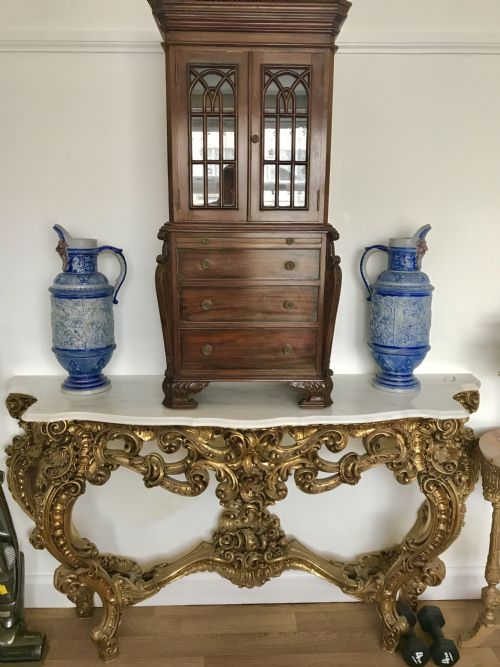


Small Georgian Mahogany Bureau
A small georgian mahogany bureau packs a fitted writing surface and drawer space into a compact domestic footprint.
Small Georgian Mahogany Bureau
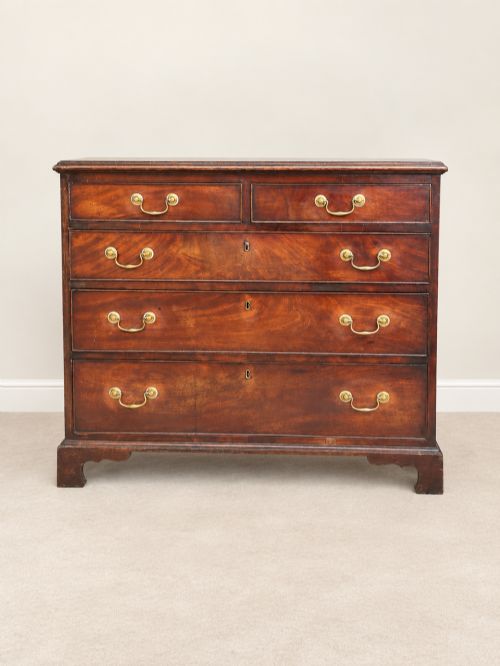
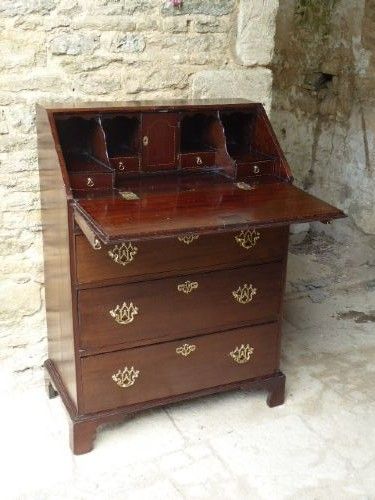
A small georgian mahogany bureau combines a sloping fall front with internal pigeonholes and small drawers above a chest of lower drawers. You will frequently encounter examples from the eighteenth century through to the regency period, alongside later revival interpretations.
The form exists to provide a private, lockable writing surface that closes away correspondence when not in use. Makers often scaled these downwards for tighter rooms, creating the compact proportions collectors seek today.
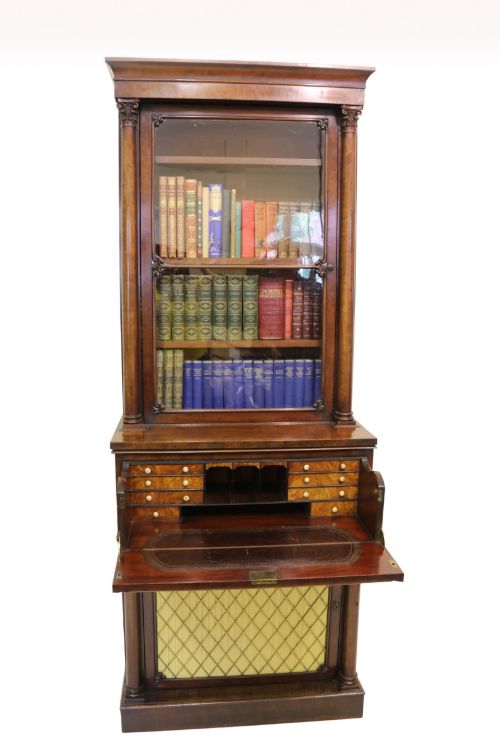
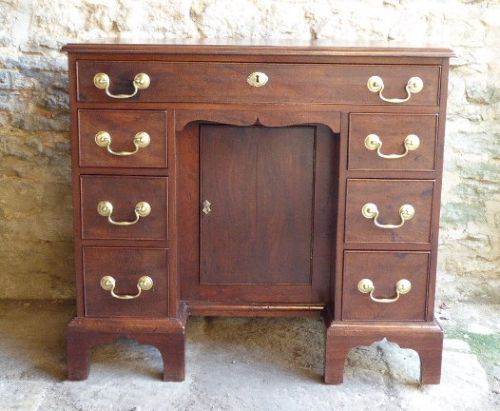
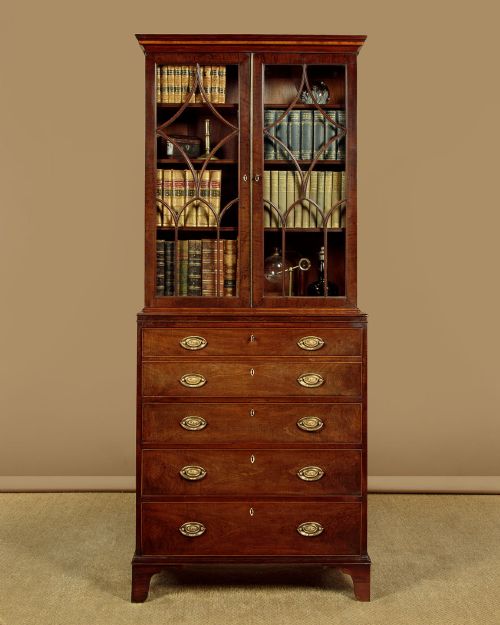
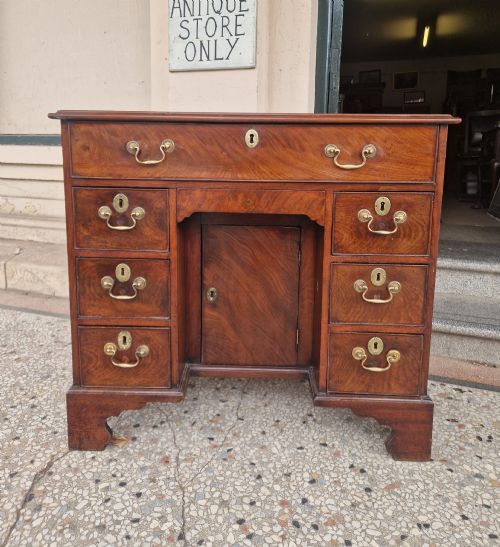
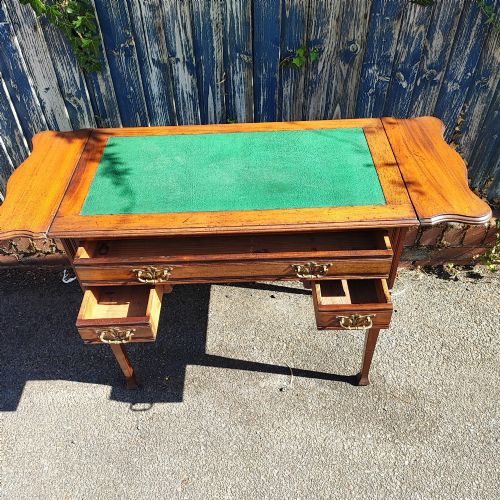
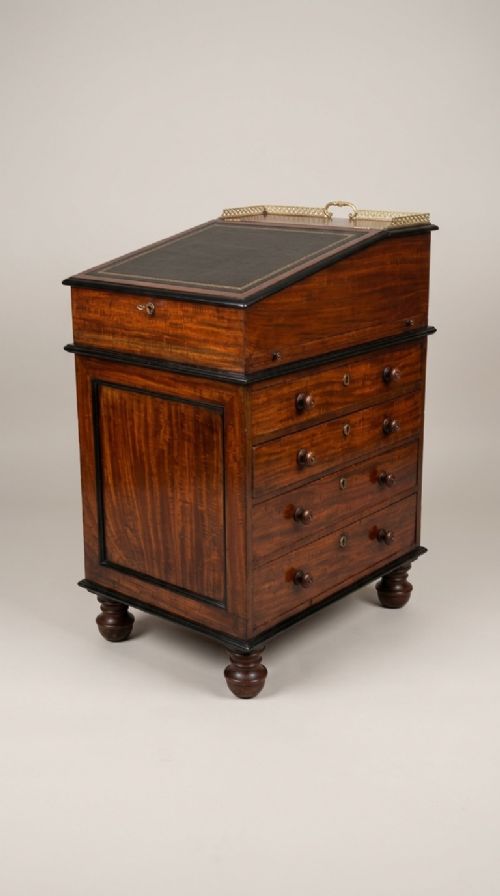
Related writing furniture like kneehole desks, writing tables, and secretaire bookcases appear alongside standard bureaux. These variations offer similar storage and writing utility within domestic settings of the period.
Materials and construction methods
Craftsmen relied primarily on solid and veneered mahogany, often pairing it with secondary woods such as oak and pine for drawer linings and internal divisions. Cabinetmakers selected figured grain timbers for the primary visual surfaces.
Detailing frequently involved boxwood inlay and satinwood stringing to accent drawer fronts and fall fronts. Brass hardware, including drop handles and escutcheons, completed the functional exterior structure.
Listings span the georgian, regency, and edwardian eras, demonstrating enduring demand for compact writing furniture across two centuries.
Assessing build quality
Superior examples display precise dovetail joinery on the drawer construction and careful book-matching of mahogany veneer across the fall front. The crispness of inlaid stringing and the retention of original brass fittings elevate an individual piece.
Proportion and scale dictate the desirability of the bureau, with genuine small dimensions commanding attention over later reductions or altered formats. The complexity of the internal cabinet fitments also indicates the original tier of production.
Gillows of Lancaster
The Small Georgian Mahogany Bureau Glossary
- Bureau
- A desk featuring a sloping hinged writing flap that opens to reveal internal compartments and drawers. Below this writing surface sit multiple exterior storage drawers.
- Fall front
- The hinged panel on a bureau that drops down to form a horizontal writing desk. It conceals pigeonholes and small drawers when closed.
- Satinwood
- A pale, highly reflective timber native to the tropics, utilised for contrasting inlay work and banding on mahogany furniture. Its inclusion marks finer cabinetmaking.
- Dovetail
- A joint formed by interlocking wedge-shaped fingers, used extensively to secure drawer corners. Hand-cut variations indicate period craftsmanship.
- Secretaire
- A piece of furniture containing a concealed writing drawer or pull-out desk section disguised as a standard drawer or bookcase base.
Small Georgian Mahogany Bureau: Frequently Asked Questions
What is a small georgian mahogany bureau?
A small georgian mahogany bureau is a compact writing cabinet featuring a sloping fall-front lid that opens over a chest of drawers. These pieces were built to save floor space while offering secure storage for letters and documents.
Cabinetmakers constructed them using dense mahogany timbers, often incorporating fitted interior compartments for inkwells and papers. Their smaller dimensions make them practical for modern interior placement.
How do I identify a georgian bureau?
You can identify a georgian bureau by examining the timber grain, drawer construction, and overall stylistic proportions. Eighteenth-century examples typically feature hand-cut dovetails and mature mahogany patination.
The interior arrangement of small drawers and pigeonholes also offers clues to the period of manufacture. Later revival pieces often display lighter secondary woods and different construction tolerances.
Where were these desks used?
These desks served as private writing and correspondence centres within domestic parlours, studies, and bedrooms. Their enclosed design allowed owners to conceal unfinished letters and personal papers quickly.
Due to their modest footprint, they fitted easily into smaller chambers where a full-sized partner desk would prove too bulky. They functioned as both personal storage units and display surfaces.
How do I care for mahogany furniture?
Keep mahogany furniture away from direct sunlight and heat sources to prevent the wood and veneer from drying out. Consistent indoor humidity levels help maintain the stability of the timber.
Apply traditional wax polishes sparingly to nourish the surface and preserve the natural sheen of the grain. Avoid chemical sprays that can damage historic polishes.