


Small Georgian Bureau
When you search for a small georgian bureau, you are looking at compact writing furniture designed for domestic correspondence during the eighteenth and early nineteenth centuries.
Small Georgian Bureau
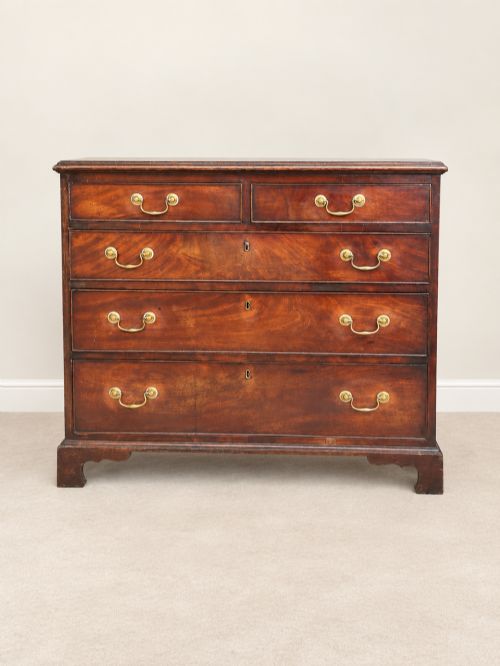
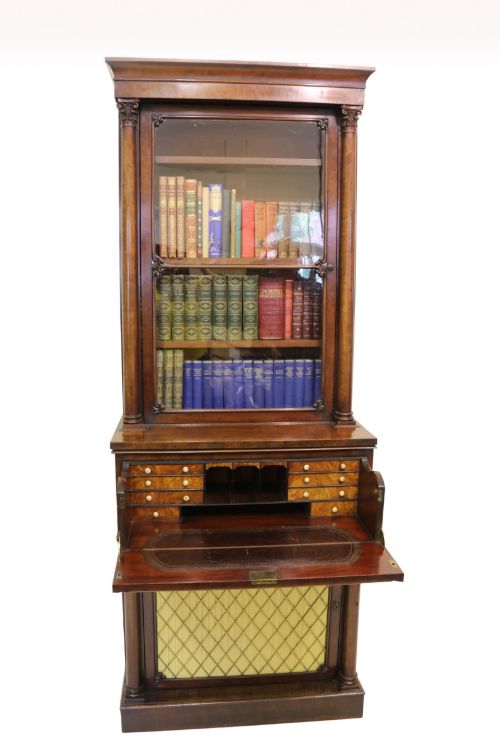
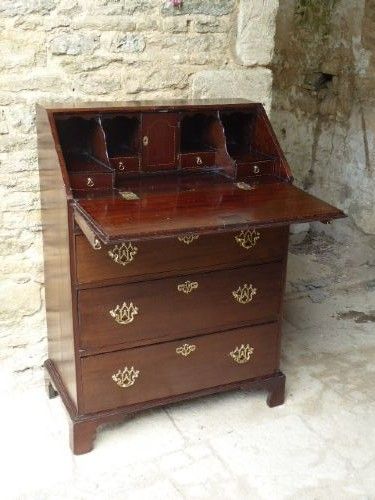
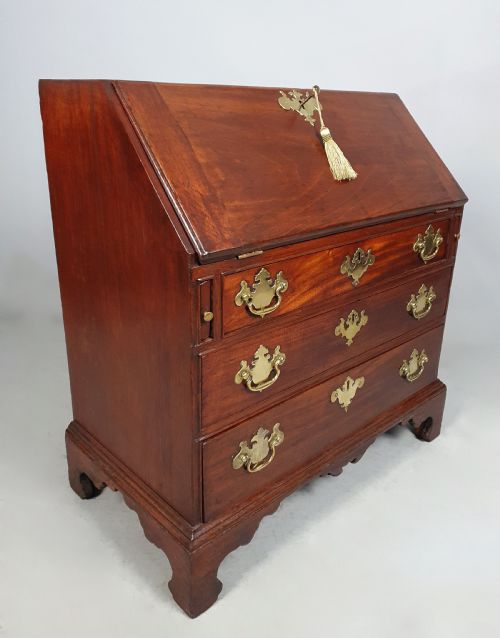
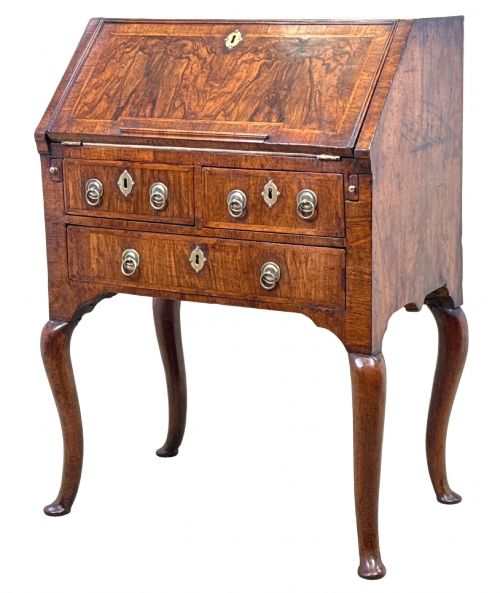
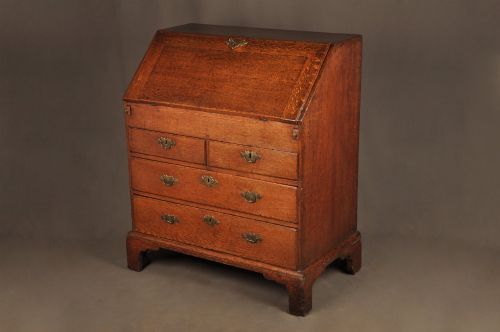
A small georgian bureau typically consists of a slanted fall-front writing flap that opens to reveal a fitted interior of small drawers and pigeonholes, sitting above a chest of drawers.
The versions you are most likely to encounter on this page span the 18th century, the Regency period, and later revival styles, constructed primarily in oak, mahogany, and walnut.
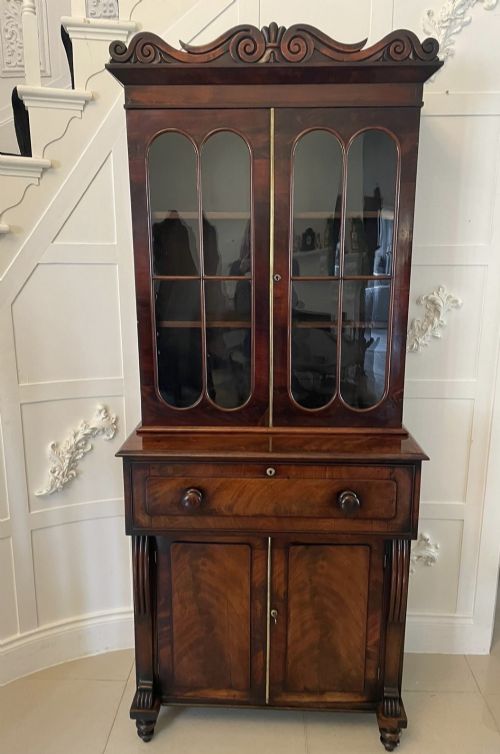
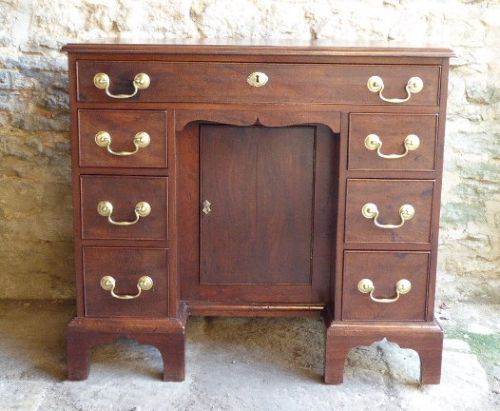
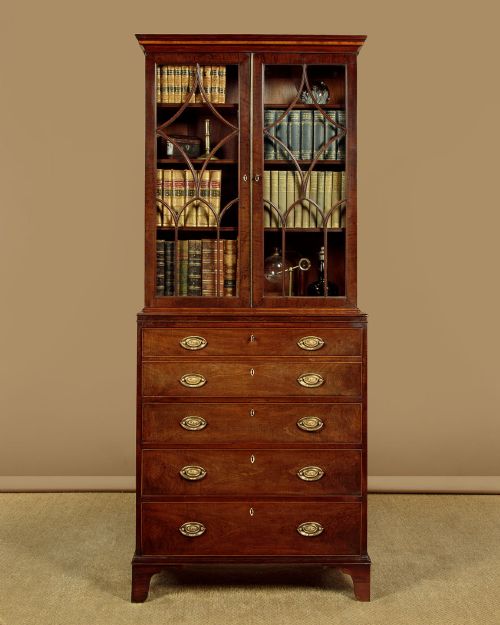
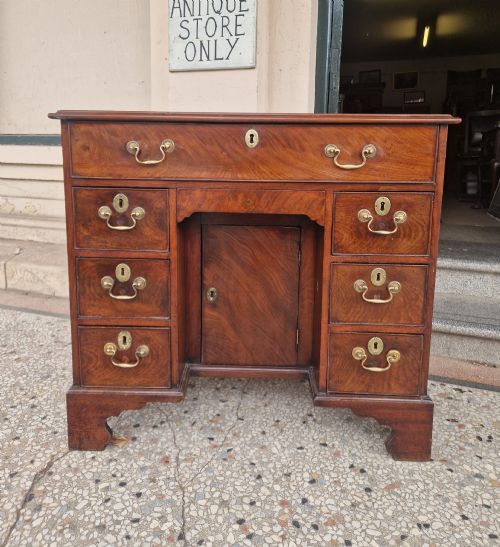
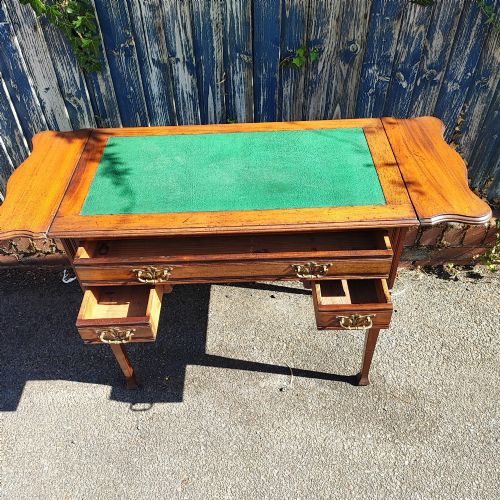
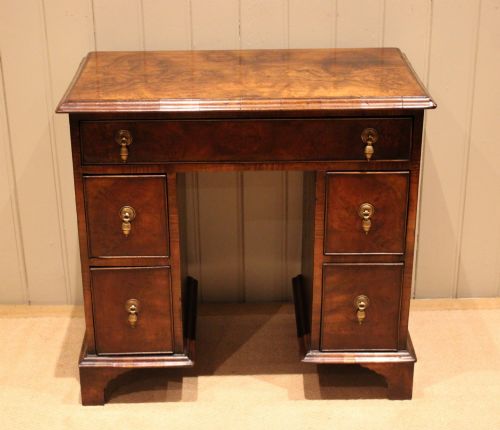
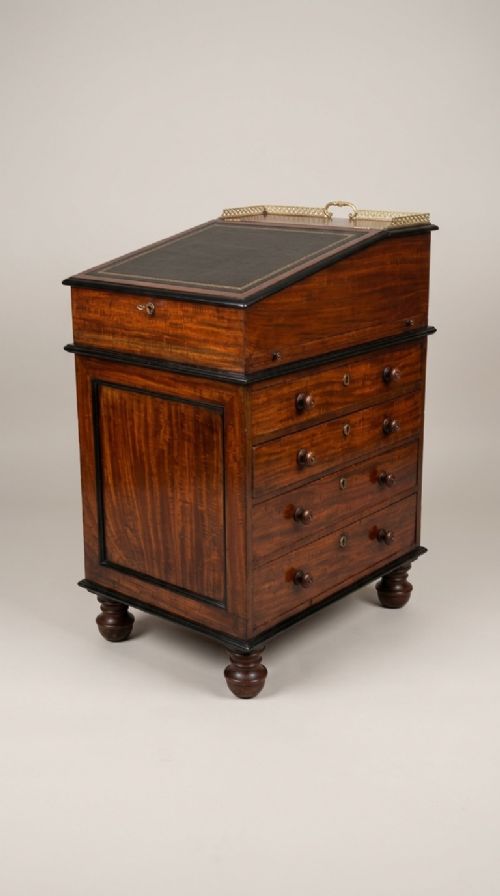
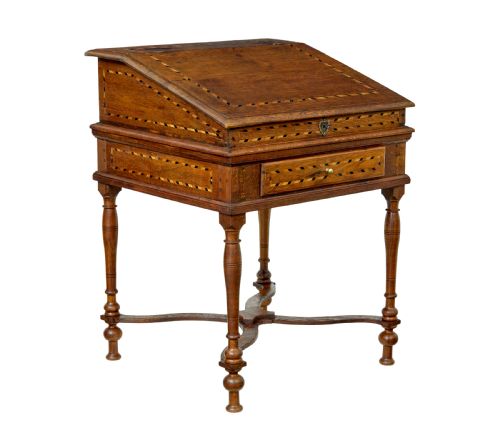
Beyond the standard fall-front form, the search includes related compact writing furniture such as kneehole desks, bureau bookcases, and bonheur du jour writing tables.
How They Were Made
Cabinet makers utilised solid timbers alongside figured veneers such as burr walnut and mahogany, often applying satinwood inlay or brass hardware for contrast.
Construction techniques involved traditional joinery to form the carcase and drawer boxes, paired with hinged writing flaps supported by lopers or brackets.
Listings feature woods including fruitwood, cedarwood, elm, and pollard oak alongside standard mahogany and walnut.
What Varies in Quality
The standard of timber selection and the precision of the cabinet work dictate the distinction between pieces, particularly in the figuring of the grain and the neatness of crossbanding or inlay.
Gillows of Lancaster
The Small Georgian Bureau Glossary
- Bureau
- A writing desk featuring a sloping lid that drops down to form a writing surface. It typically encloses a set of small drawers and pigeonholes.
- Fall-front
- The hinged writing flap of a bureau or cabinet that pulls down for use and locks upright when closed. It serves as the primary writing surface.
- Lopers
- Wooden support arms that pull out from the front frame of a bureau to hold the sloping writing flap when open. They slide back into the carcase when the bureau is closed.
- Kneehole desk
- A compact desk with a central recess for the user's legs, flanked by pedestals of small drawers. Examples frequently date from the Georgian and Queen Anne periods.
- Bonheur du jour
- A light, small ladies' writing desk featuring a superstructure of small drawers and shelves above the main writing surface. These appeared during the late 18th and early 19th centuries.
Small Georgian Bureau: Frequently Asked Questions
What is inside a bureau?
Lifting or lowering the writing flap reveals a fitted interior containing an arrangement of pigeonholes, small drawers, and occasionally secret compartments designed for letters and stationery.
Beneath this writing section, several full-width drawers provide additional storage space for household papers and personal items.
How do I use one today?
These compact desks function well in modern living spaces as writing tables or laptop stations, offering enclosed storage to keep work areas tidy.
The fall-front provides a practical surface for writing notes or correspondence while concealing documents when closed.
How do oak and mahogany differ?
Oak pieces generally reflect earlier 18th century or country vernacular production, displaying prominent grain patterns and robust construction.
Mahogany examples often date from the mid to late Georgian period onwards, showcasing smoother surfaces and finer cabinet detailing.
Are walnut pieces older?
Walnut furniture frequently points towards the early 18th century, including the reigns of Queen Anne and George I, or later 19th century revival periods.
The timber was widely used before mahogany became the dominant choice for fashionable cabinet makers.