

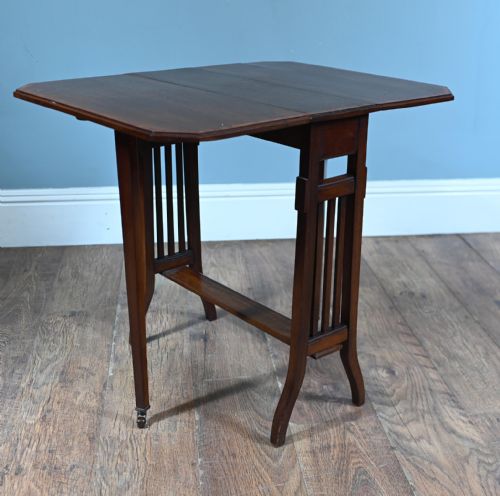


Small Folding Flap Table
A small folding flap table serves tight spaces with hinged leaves that lift when needed and drop out of view.
Small Folding Flap Table
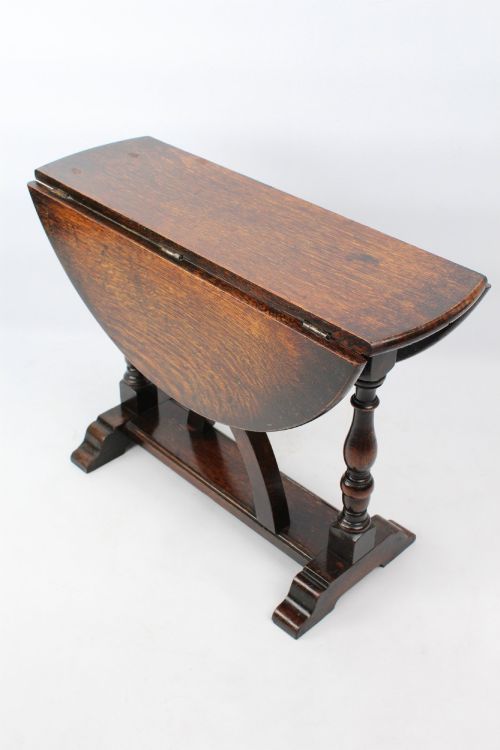
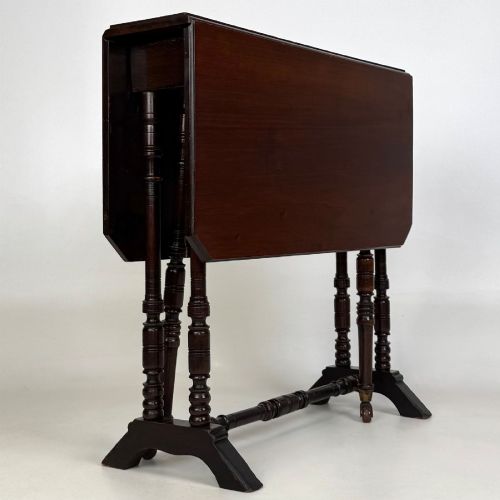
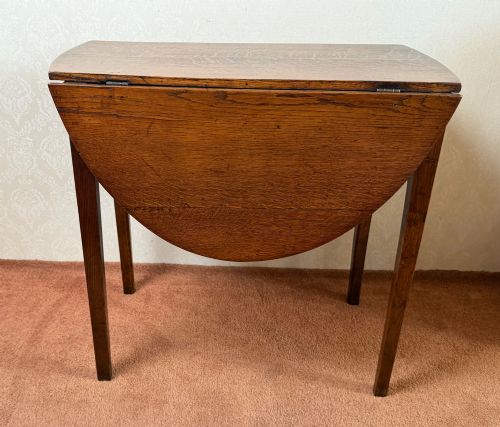
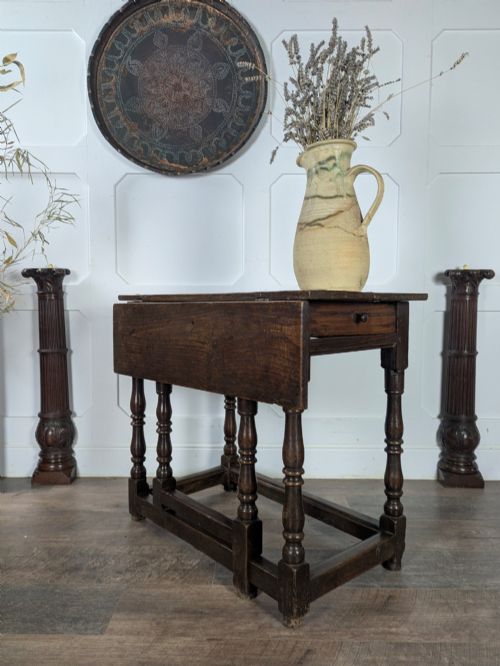
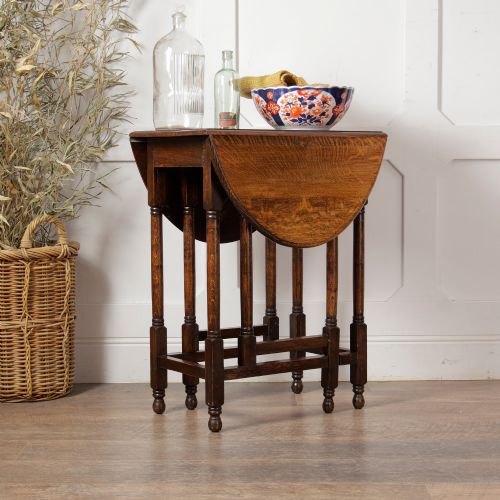
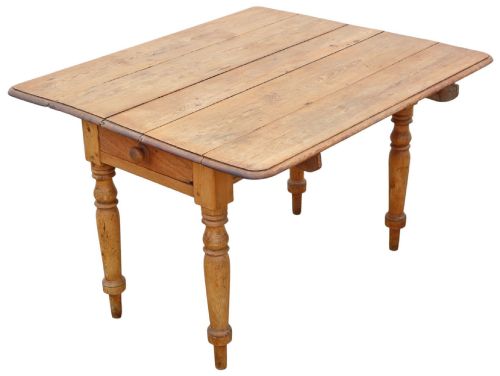
A small folding flap table appears in forms such as Sutherland tables, gateleg tables, Pembroke tables, and drop leaf occasional tables designed to save space. Buyers searching for a small folding flap table encounter examples spanning the 17th century through the Edwardian period and the 1930s. These pieces function as side tables, coffee tables, occasional tables, and dining tables.
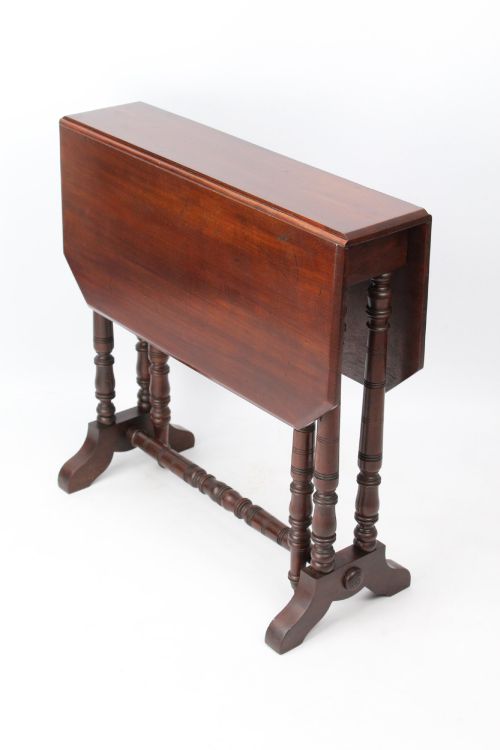
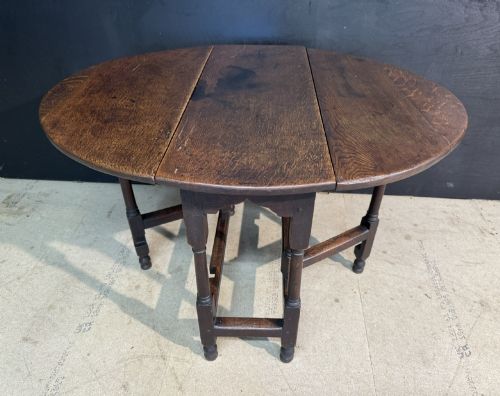
The most common version met on this page is the mahogany Sutherland table or the oak gateleg table. These compact tables utilise drop leaves supported by swinging legs or hinged gates to expand their surface area quickly. Their versatility suits smaller rooms where permanent large tables obstruct movement.
Materials and construction
Makers built these tables primarily in solid or veneered timber, utilising mahogany, oak, walnut, burr walnut, rosewood, satinwood, elm, and pine. Brass fittings appear on hinges and castors, while ceramic elements sometimes feature on castors. Iron and metal provide structural support or hardware.
Joinery techniques include drop leaf hinges, swivel tops, and swinging gateleg frames that support folding flaps. Some pieces incorporate inlaid decoration or barley twist legs turned on a lathe to ornament the timber structure.
Small Folding Flap Table Retail Price Guide 2026
Typical asking prices for small folding flap table among the pieces listed under this phrase on Sellingantiques today, from the lower quarter to the upper quarter. They describe what is for sale here now, not the wider market.
The listings span multiple centuries, ranging from 17th-century oak gateleg tables to 1930s traditional designs.
Evaluating construction and timber
Quality rests upon the selection of timber and the stability of the folding mechanism. Finer pieces employ figured veneers like burr walnut or select mahogany and satinwood, paired with crisp turning on legs such as barley twist or spider leg designs. Solid oak and walnut examples rely on sturdy gateleg frames that operate smoothly without sagging.
The precision of the hinge placement and the integrity of the joints dictate longevity. Tables that retain their original brass hardware, straight drop leaves, and firm gate actions sit at the upper end of the range.
Liberty & Co.
The Small Folding Flap Table Glossary
- Sutherland table
- A narrow table with exceptionally slender drop leaves and folding gate legs that support the flaps in a vertical position.
- Gateleg table
- A table with hinged leaves supported by one or more legs that swing outward like a gate to hold the flap.
- Pembroke table
- A rectangular table with two hinged drop leaves on opposing sides, frequently fitted with a small drawer.
- Spider leg
- A style characterised by extremely thin, delicate turned legs often braced with slender stretchers.
- Barley twist
- A decorative turning technique resembling a spiralling rope carved into furniture legs.
Small Folding Flap Table: Frequently Asked Questions
How do I use a small folding flap table in a small room?
Keep the drop leaves folded down against the sides to maintain a narrow profile that functions as a side table or console against a wall.
Lift one or both flaps and swing out the supporting legs whenever you require extra surface area for dining or working.
What is the difference between a Sutherland table and a gateleg table?
A Sutherland table is a specific form of drop leaf table featuring particularly narrow leaves and a slim frame designed to fold almost entirely flat.
A traditional gateleg table generally has a sturdier rectangular or oval top supported by pivoting leg assemblies that form physical gates beneath the flaps.
How can I date an antique folding flap table?
Examine the timber species, joinery methods, and leg turning styles to establish the period of origin. Oak construction often points to 17th or 18th-century examples, while mahogany and satinwood frequently indicate Georgian or Victorian manufacture.
Hardware details such as handmade screws, brass hinges, and castor types also help narrow down the decade.
Are these tables suitable for everyday dining?
Many of these pieces, particularly oak gateleg and drop leaf dining tables, were constructed for daily household use and remain robust enough for meals.
Lighter occasional tables like delicate Sutherland or spider leg designs serve better for holding lamps, books, or drinks rather than heavy loads.