
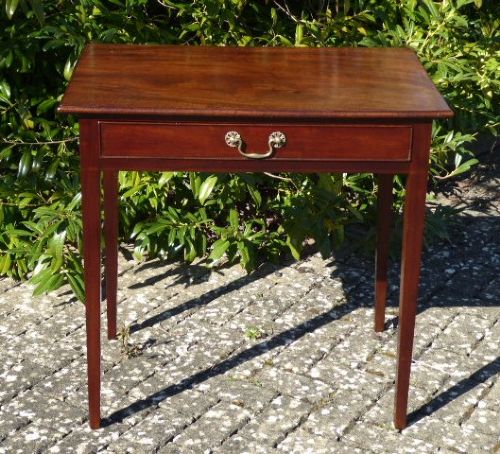


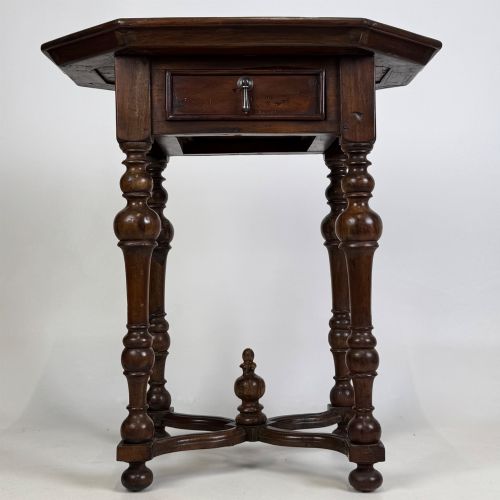
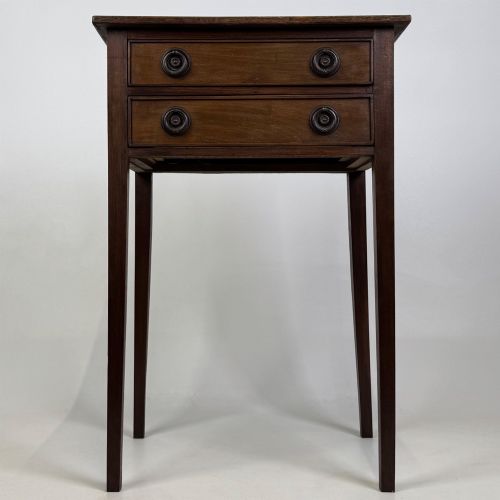
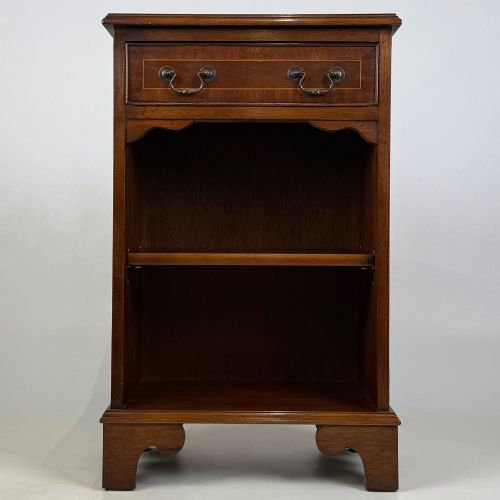
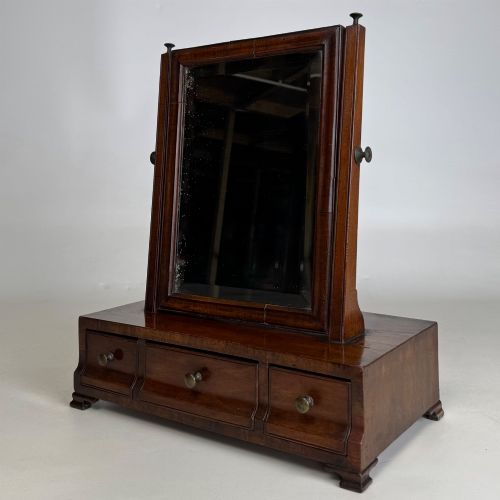
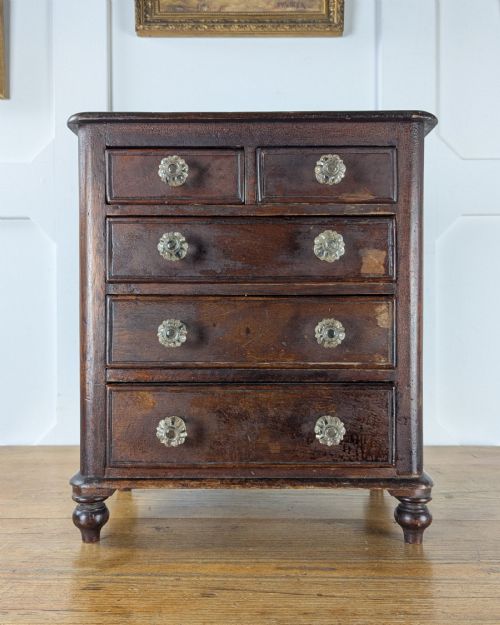
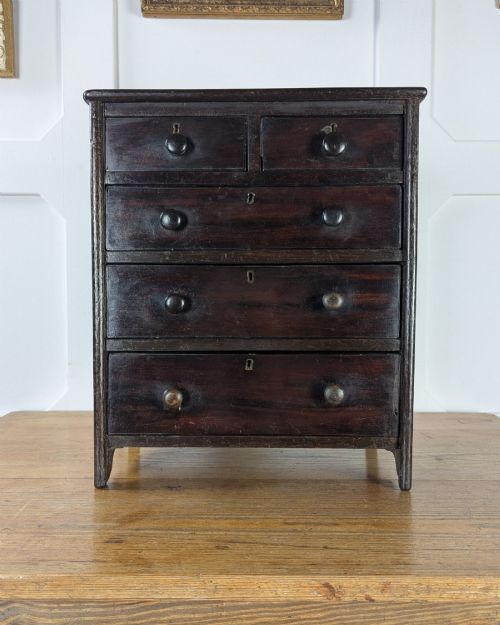
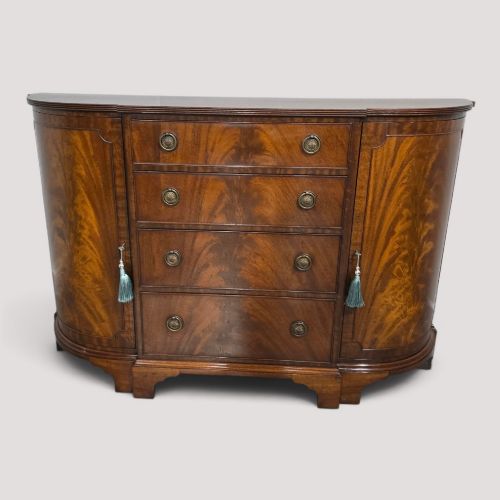
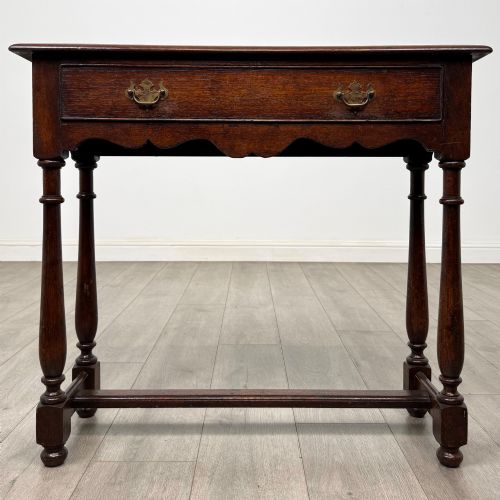
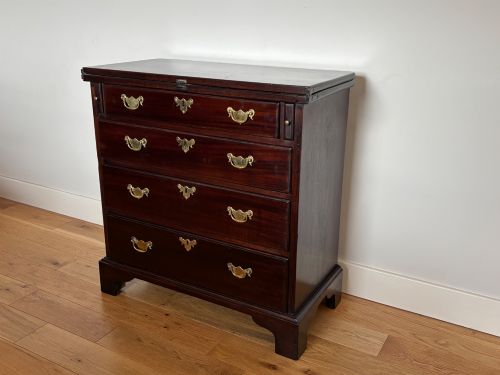
Small Dark Wood Drawers
Small dark wood drawers comprise compact chests, side tables and miniature pieces in mahogany and oak, chosen for rich timber tones and practicality in limited spaces.
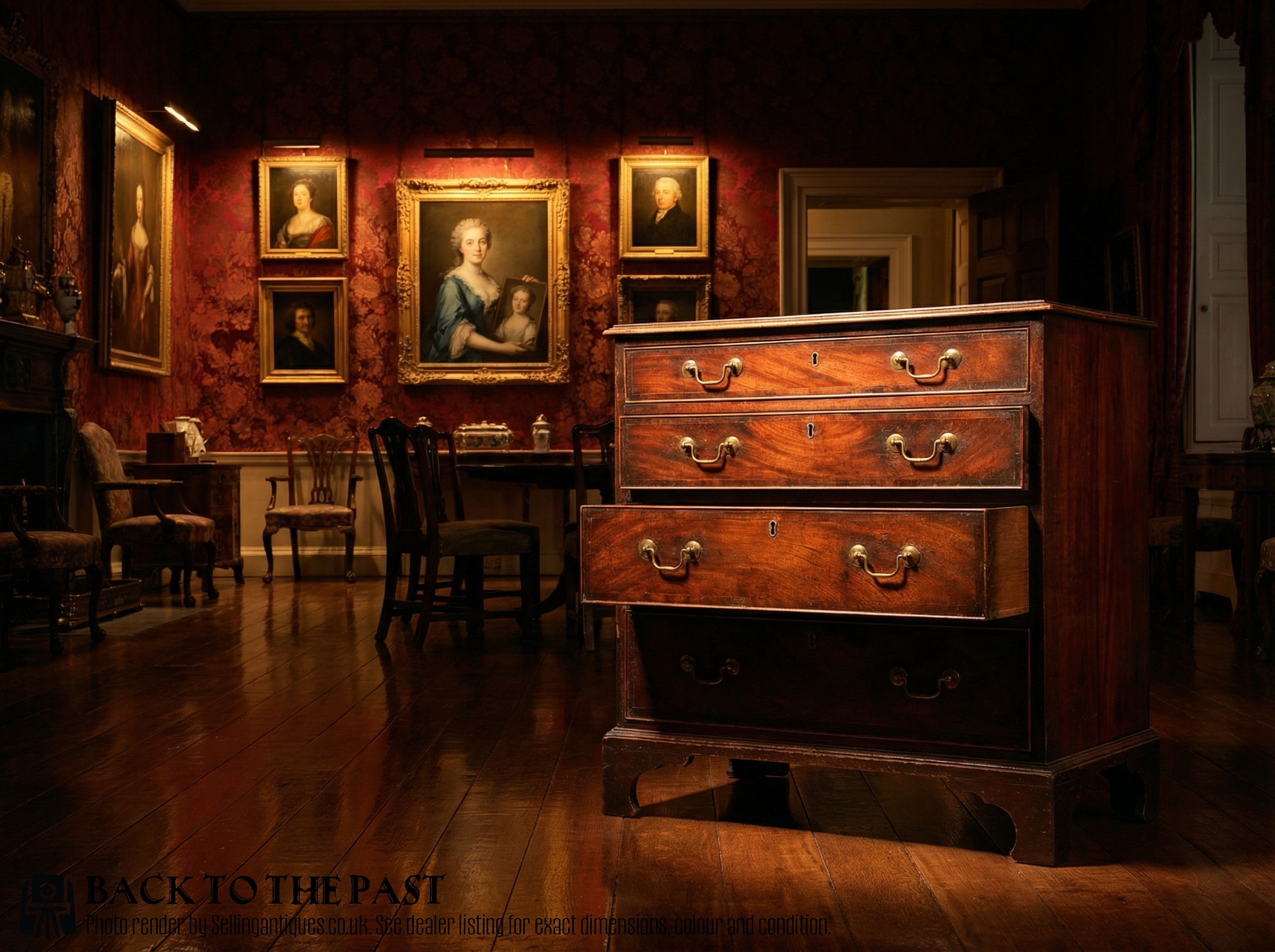
Small Dark Wood Drawers
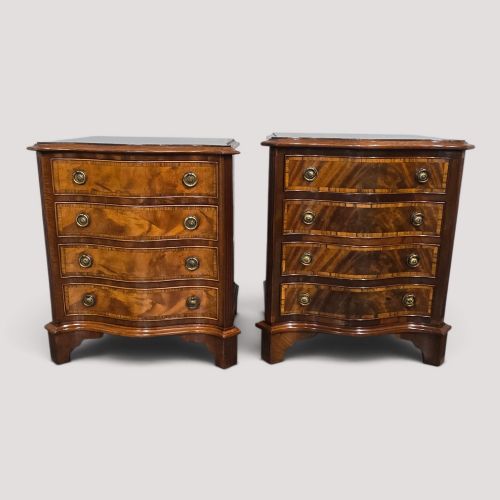
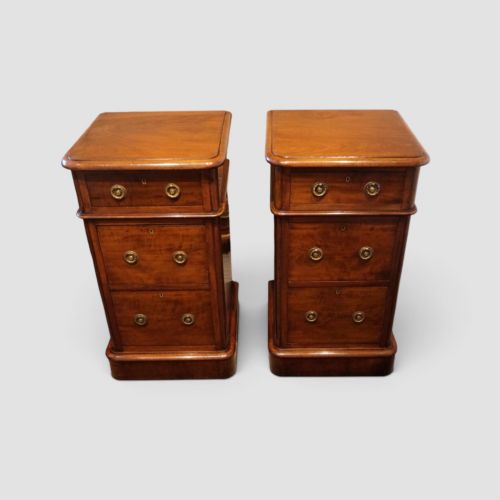
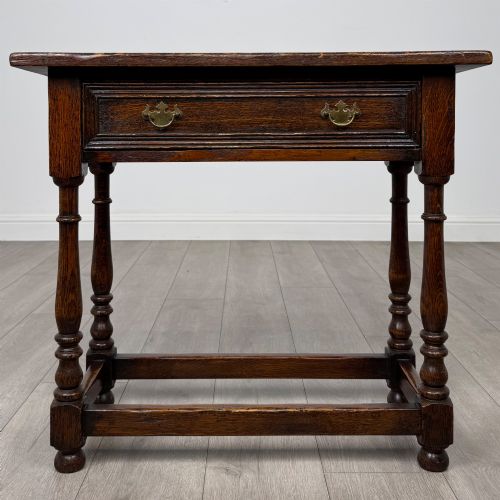
Small dark wood drawers appear in several forms across this selection, ranging from Georgian and Victorian bedside chests to miniature apprentice pieces and side tables fitted with single compartments. Pieces date from the eighteenth century through to the Edwardian period and the early twentieth century.
The buyer most frequently meets mahogany side tables, compact chests of drawers, and small cabinets constructed during the Georgian, Victorian, and Edwardian eras. These items serve modern interiors by providing storage and display surfaces that occupy minimal floor space.
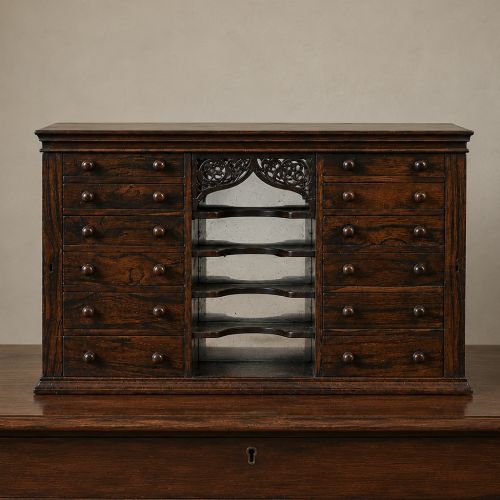
Origins span formal English workshop traditions to vernacular oak pieces, alongside specialised forms such as collector cabinets, davenport desks, and Dutch bombe chests. Each item reflects the domestic requirements of its period, from bedroom storage to writing and reading accessories.
Materials and construction methods
Makers utilised dense timbers predominantly, selecting mahogany and oak as primary structural materials, while rosewood, teak, and boxwood appear in specific decorative roles. These woods were chosen for durability and deep natural grain patterns.
Cabinetmakers combined solid timber construction with dovetail joints for drawer construction and turned or bracket supports. Brass handles, escutcheons, and occasional leather inserts complete the hardware and writing surfaces recorded in the evidence.
Apprentice pieces allowed young woodworkers to practice complex dovetailing on a scale where mistakes used considerably less timber.
Factors of quality and execution
Superior examples display precise timber selection with matched grain patterns across drawer fronts and top surfaces, whereas lesser pieces utilise plainer secondary woods or simpler construction. The depth of colour and finish achieved through traditional polishing distinguishes finer items.
Gillows·Druce and Co
The Small Dark Wood Drawers Glossary
- Apprentice piece
- A miniature item of furniture produced by a trainee to demonstrate mastery of cabinetmaking skills before admission to a guild.
- Wellington chest
- A tall, narrow chest of drawers secured by a locking hinged side pilaster that fastens over the drawer edges.
- Bow front
- A convex curved front contour typical of chests of drawers and sideboards produced during the Georgian and later periods.
- Lowboy
- A small low table with one or more rows of drawers, commonly used as a dressing table or side table in the eighteenth century.
- Bombe
- A swollen or bulging convex contour characteristic of continental furniture styles, featuring rounded drawer fronts and sides.
Small Dark Wood Drawers: Frequently Asked Questions
What periods do these pieces date from?
The selection spans from the late seventeenth century through Georgian, Regency, and Victorian eras into the Edwardian period and the early twentieth century.
Most items originate from the eighteenth and nineteenth centuries, reflecting established British and continental cabinetmaking traditions.
How were miniature chests used originally?
Miniature chests and apprentice pieces served as portfolio demonstrations for woodworkers proving their competence to master craftsmen.
They also functioned as salesman samples or decorative tabletop storage for small valuables in period interiors.
What wood types are most common?
Mahogany and oak appear most frequently across the listings, utilised for both structural frames and visible surfaces.
Additional timbers include rosewood, teak, and boxwood, which provide contrast in specific decorative details and stringing.
How do I distinguish a bachelor chest?
A bachelor chest is a compact form featuring a fold-over top or a sliding brushing board positioned above the primary drawers.
These pieces were designed for personal grooming and writing in domestic bedchambers.
Where do small dark wood drawers fit best?
Compact chests and side tables suit hallways, bedside placement, and smaller reception rooms where floor space is restricted.
Their proportions allow them to function as lamp tables, small desks, or supplementary storage units.