
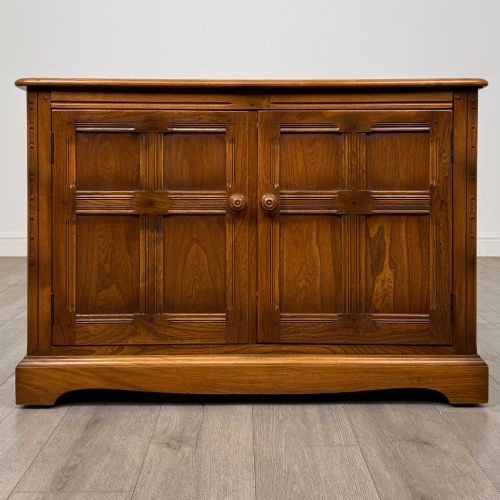
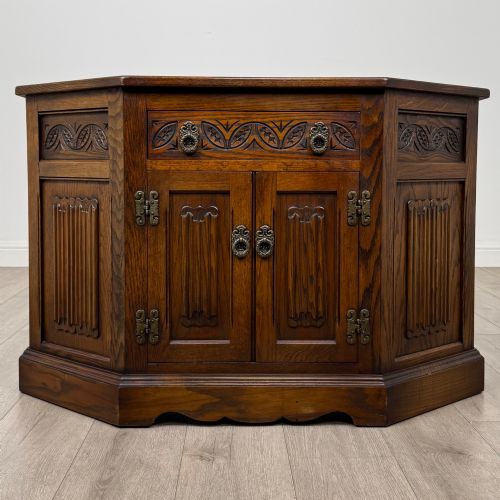
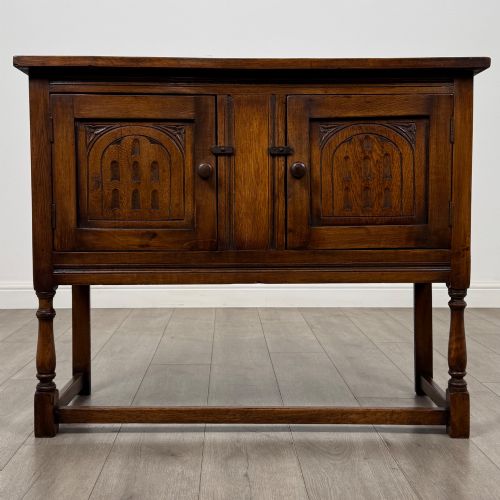
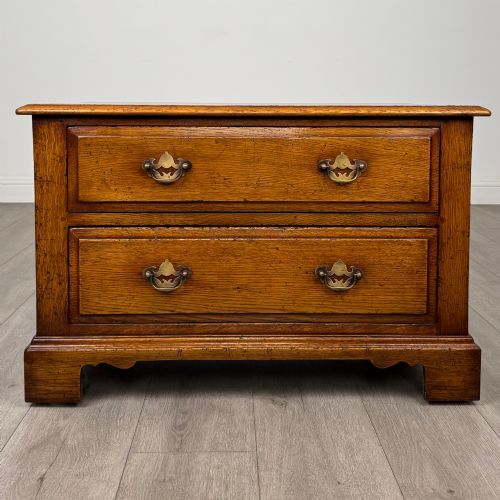



Small Carved Sideboard
A small carved sideboard delivers storage and presence in compact spaces, spanning oak, mahogany, and walnut across centuries of craftsmanship.
Small Carved Sideboard
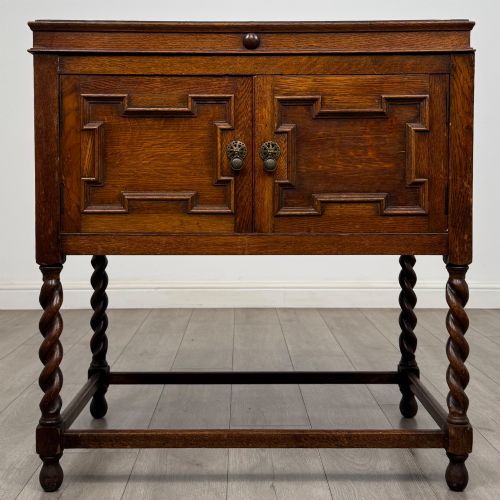
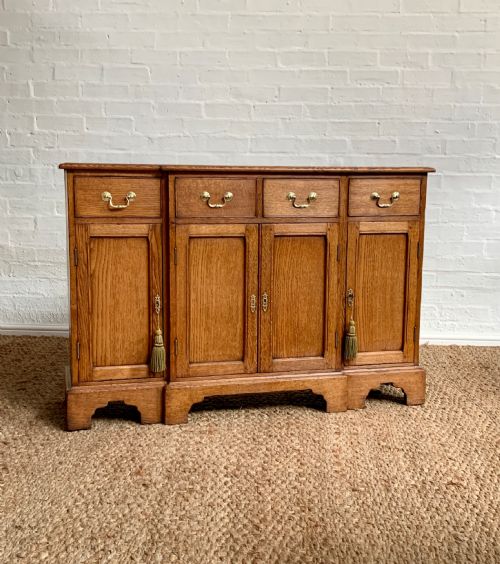
A small carved sideboard encompasses compact side cabinets, chiffoniers, low cupboards, and diminutive dressers found across domestic spaces. These pieces emerge from periods ranging from the seventeenth century through the Edwardian era and the twentieth century.
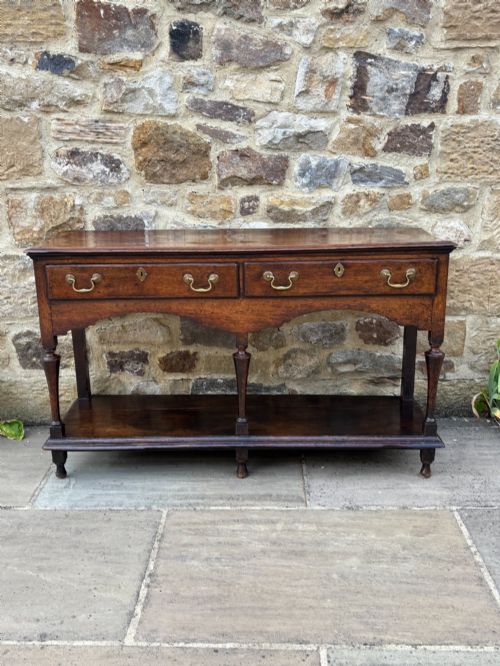
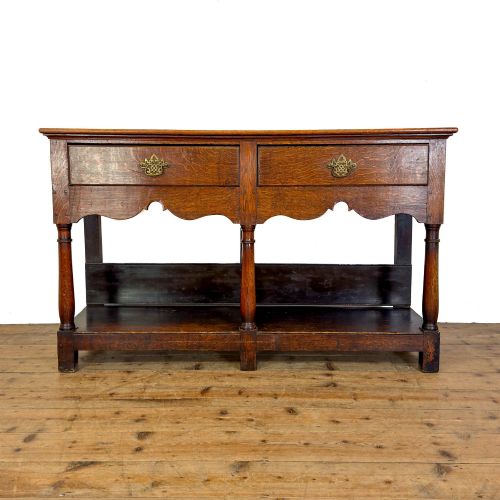
Buyers most frequently encounter solid oak and mahogany iterations, often drawing on Jacobean, Victorian, or regional styles. Forms vary from court cupboards and dresser bases to pedestal sideboards and open-shelf chiffoniers.
Origins stretch from Welsh country workshops and English provincial centres to continental makers and Anglo-Indian carving traditions. Dimensions remain restrained, designed to offer surface display and enclosed storage without dominating a room.
How they were made
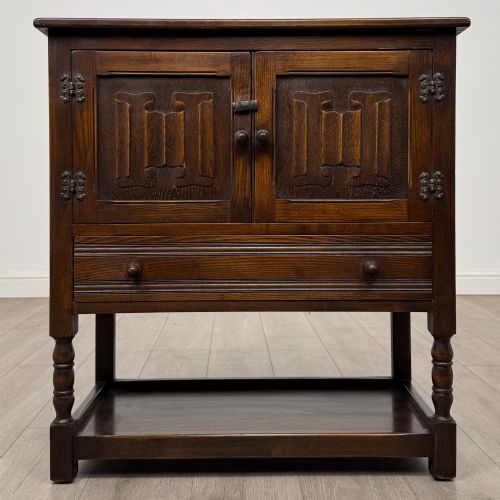
Makers construct these pieces primarily from timbers such as oak, mahogany, walnut, and fruitwood, occasionally incorporating flame mahogany veneer, glass, and brass or iron hardware. Surfaces often receive paint finishes or detailed hand-carved ornamentation including linenfold panels and geometric motifs.
Construction techniques combine traditional joinery with applied mouldings, turned supports, and panelled doors. Structural integrity relies on solid timber boards and pegged joints in earlier vernacular examples, shifting to more refined cabinetwork in later Victorian and Edwardian workshops.
One robust oak cabinet arrives complete with historic sign-writing for a German beer cellar.
What varies in quality
Quality reveals itself in the crispness and depth of the carving, the selection of figured timber veneers, and the integrity of the structural joinery. Finer examples display harmonious proportions, substantial backboards, and original brass or iron fittings.
Secondary woods, drawer linings, and the smoothness of operating doors and drawers distinguish workshop execution. Pieces retaining original surface finishes and cohesive period hardware sit at the upper end of the scale.
The Small Carved Sideboard Glossary
- Chiffonier
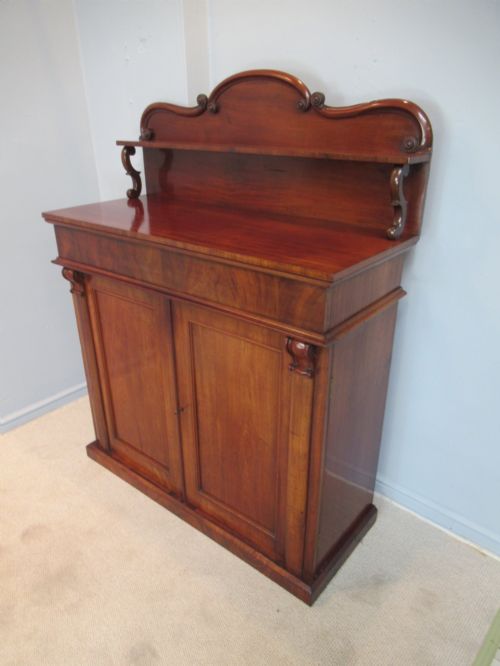
- A compact sideboard with enclosed lower cupboards, frequently surmounted by a shelf or mirror and associated with the Victorian and Regency periods.
- Court cupboard
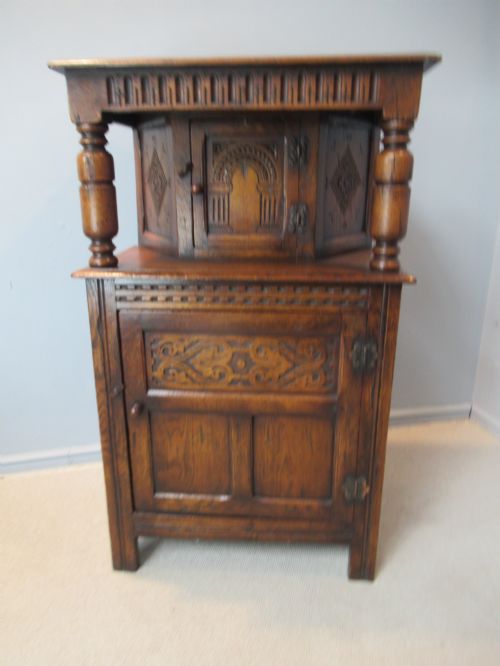
- A short, two-tier storage cabinet featuring recessed upper doors supported by turned columns, originating in the seventeenth century.
- Linenfold
- A style of carved wooden panelling that imitates folded fabric, commonly seen on oak cupboards from the Edwardian period and earlier.
- Dresser base
- A low wooden sideboard fitted with drawers and cupboards below, traditionally used in country kitchens and dining rooms.
- Apprentice piece
- A miniature piece of furniture executed by a trainee to demonstrate mastery of cabinetmaking techniques before joining a guild.
Small Carved Sideboard: Frequently Asked Questions
Where should I place a small carved sideboard?
These compact pieces fit well in narrow hallways, dining rooms, or living spaces where floor space is limited. Their modest proportions provide useful surface space and storage without overwhelming the room.
Position them against plain walls to let the carved details and timber grain stand out clearly.
How do I care for antique timber surfaces?
Maintain the wood by applying natural beeswax periodically and buffing gently with a soft cloth. Avoid placing timber furniture near direct heat sources or in strong sunlight to prevent drying and cracking.
Keep surfaces dry and use coasters beneath glasses or damp objects.
What is the difference between a chiffonier and a sideboard?
A chiffonier is typically smaller and more enclosed, often featuring a raised shelf or superstructure above the main cabinet body. They gained popularity during the Regency and Victorian periods for smaller dining and drawing rooms.
Standard sideboards are generally longer and designed primarily for serving food and storing dining ware.
How do I identify a regional style?
Regional pieces often reflect local timber availability and traditional woodworking methods, such as Welsh country dressers built from native oak. Carving motifs and construction details provide clues to their geographic origin.
Examining secondary woods and internal fixings helps confirm vernacular provenance.