



Small Brass Mirror
A small brass mirror brings bright reflection and crisp metallic detail to a room, drawing the eye with polished surfaces and period character.
Small Brass Mirror
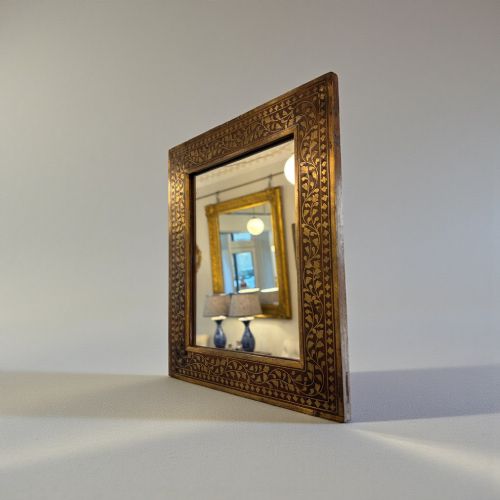
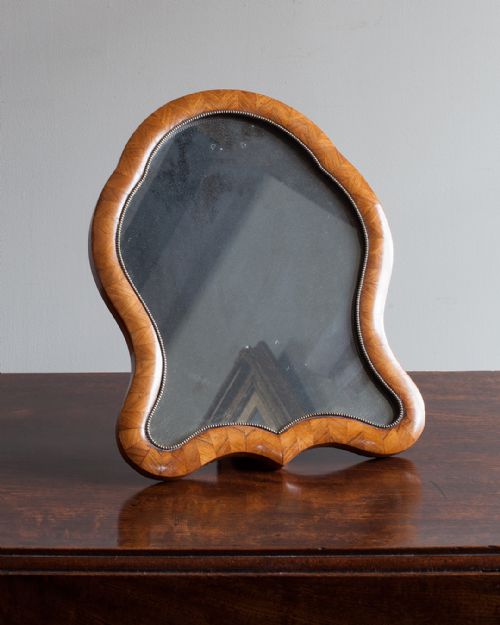
A small brass mirror serves as a compact focal point, taking the form of wall mirrors, table mirrors, dressing table mirrors, and vanity mirrors originating across the nineteenth and early twentieth centuries. These pieces emerge in styles ranging from Victorian and Edwardian to French Rococo Revival, Anglo-Indian, Arts & Crafts, and Neoclassical Revival.
Buyers encounter table-standing versions with hinged supports alongside hanging wall alternatives fitted with rings or chains. Many examples incorporate pressed, cast, or repoussé metalwork surrounding glass plates, sometimes paired with wooden frames in mahogany, rosewood, kingwood, or oak.
Origins stretch from British workshops to French ateliers and Kashmiri craft traditions, showing how domestic spaces across different regions utilised compact reflective items. The selection reflects diverse decorative impulses, from ornate floral motifs to restrained classical lines.
How they were made
Metalsmiths shaped these objects using brass, bronze, and pressed or cast techniques to create decorative borders, crests, and backplates. Repoussé decoration involved hammering metal from the reverse side to raise intricate relief patterns on the surface.
Wooden elements such as mahogany, rosewood, kingwood, and oak provided sturdy backing structures and framing for select models, often joined with traditional cabinetmaking methods. Glass components frequently featured bevelled edges, catching the light and adding depth to the reflection.
Small Brass Mirror Retail Price Guide 2026
Typical asking prices for small brass mirror among the pieces listed under this phrase on Sellingantiques today, from the lower quarter to the upper quarter. They describe what is for sale here now, not the wider market.
Listings span the Victorian, Edwardian, and Regency periods, utilising brass, glass, mahogany, rosewood, and hardwood.
What varies in quality
The crispness of the metalwork defines the upper tier of production, where cast or repoussé details retain sharp edges and deep relief rather than soft outlines. Heavier gauge brass and solid construction indicate careful manufacture.
The integration between metal frames and wooden or fabric backing elements shows the maker's hand, alongside the clarity and preservation of the original glass plate.
The Small Brass Mirror Glossary
- Repoussé
- A metalworking technique where the artisan hammers the design from the reverse side to form raised patterns in relief on the front. This method creates tactile, highly decorative surfaces on frames and crests.
- Bevelled Glass
- A mirror glass plate with edges cut and polished at an angle to create a framed border effect. This treatment catches light distinctively.
- Cast Brass
- Molten brass poured into a mould to produce solid, three-dimensional decorative elements and heavy frames. It allows for robust construction and complex ornamental detail.
- Vanity Mirror
- A small mirror designed for placement on a dressing table or vanity surface, often featuring an adjustable pivoting frame.
- French Rococo Revival
- A nineteenth-century style drawing on eighteenth-century French motifs, characterised by asymmetrical scrollwork, floral elements, and organic curves.
Small Brass Mirror: Frequently Asked Questions
Where should I hang a small brass mirror?
These pieces suit narrow wall spaces, hallways, or above small pieces of furniture where a large glass would overwhelm the proportions.
They also function effectively as vanity or dressing table accessories when mounted on stands.
How do I clean an antique brass frame?
Dust gently with a soft dry cloth to remove surface particles without disturbing the metal or the glass.
Avoid abrasive polishes that strip away the aged patina accumulated over decades.
Are these mirrors heavy?
Weight depends largely on whether the frame uses solid cast brass or thin pressed sheet metal mounted on a wooden back.
Wall-hanging versions require fixings appropriate to their specific weight and construction.
How can I tell the period of the mirror?
Stylistic clues such as Victorian mask crests, Edwardian repoussé work, or French Rococo curves point toward specific eras.
Construction methods and backing materials also offer indicators of age.