
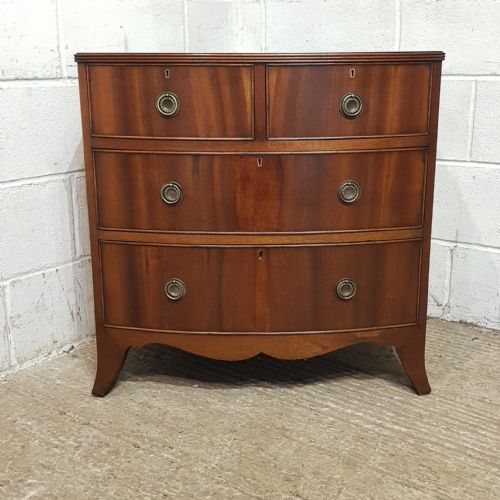
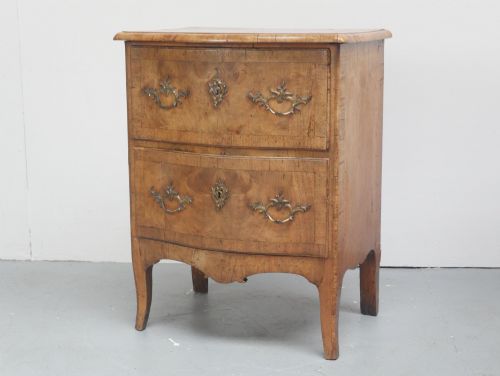
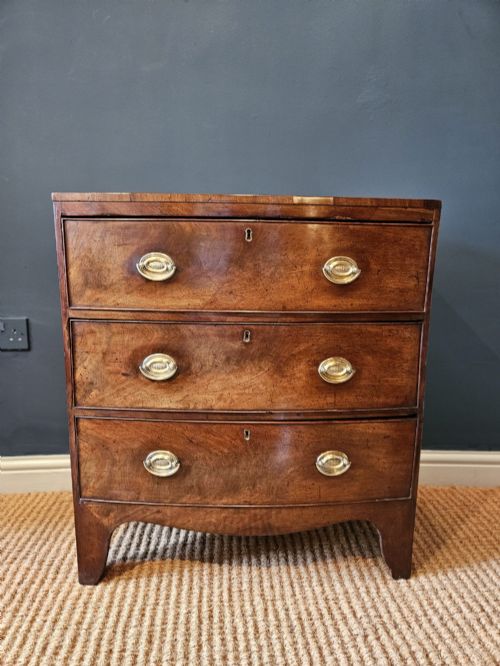
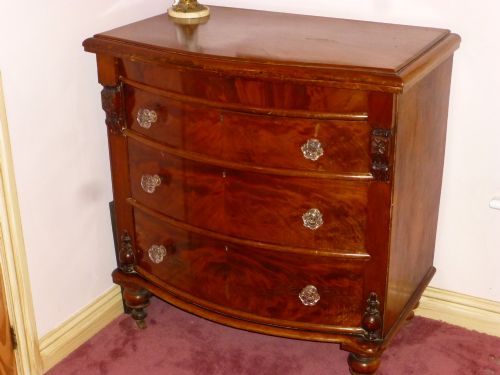


Small Bow Front Chests
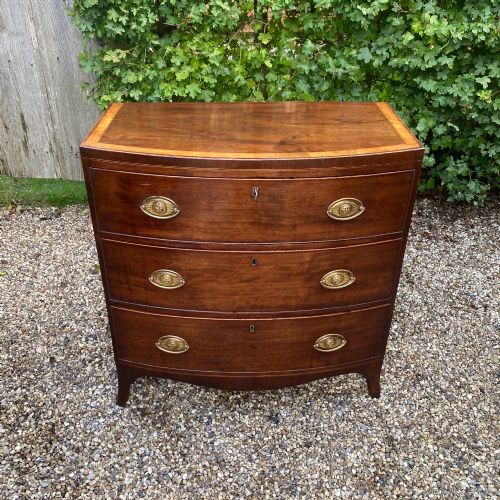
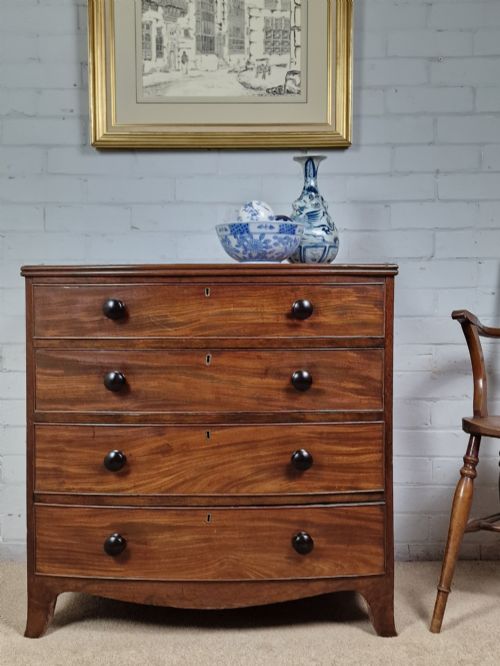
These small bow front chests offer curvaceous elegance and compact storage, bringing timeless Georgian and Regency character into modern rooms.
Small Bow Front Chests
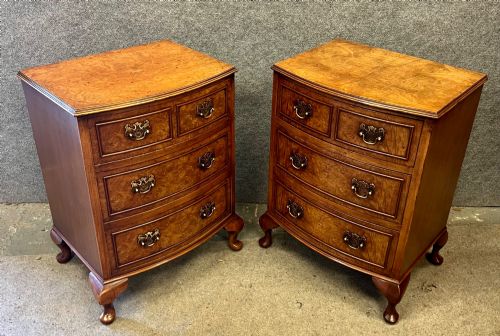
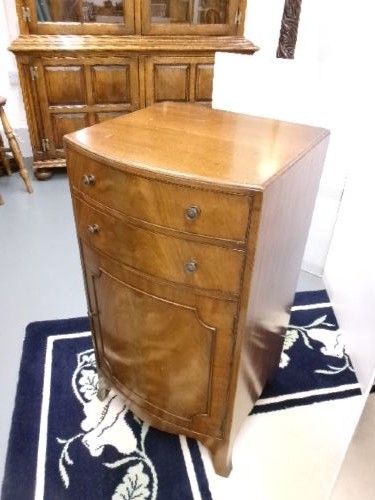
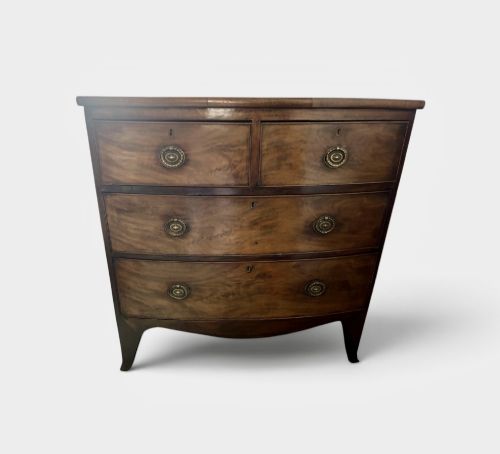
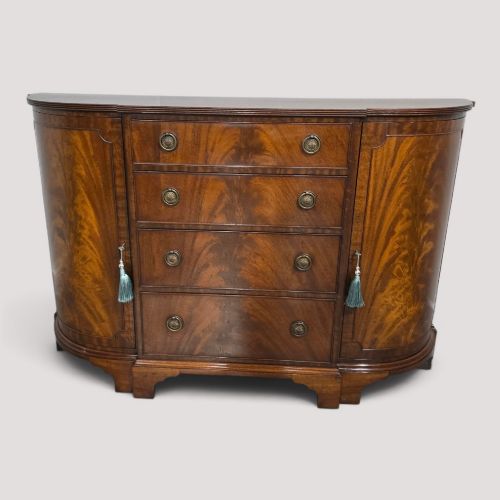
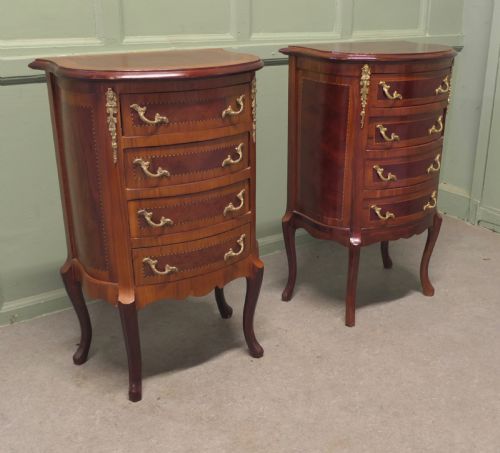
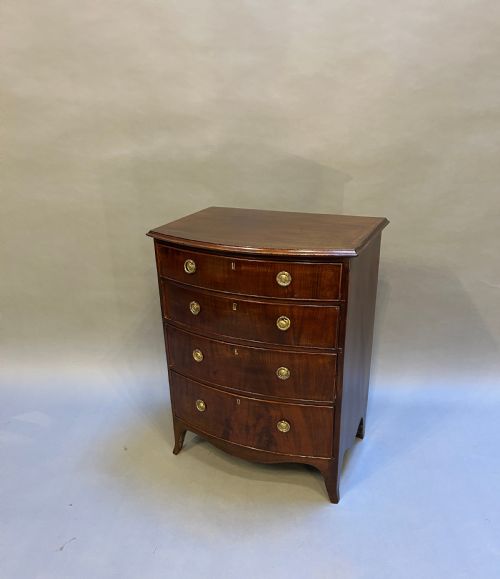
Small bow front chests combine curved facades with compact proportions, providing practical drawer storage without dominating a room. When hunting for small bow front chests, buyers encounter various formats ranging from full-sized Georgian and Regency pieces down to miniature furniture and bedside cabinets.
The selection on this page spans several centuries and stylistic revivals, drawing heavily upon mahogany, walnut, and burr walnut timbers. Pieces appear from the eighteenth century onwards, including Edwardian interpretations and early twentieth-century reproductions in the Georgian manner.
How they were made
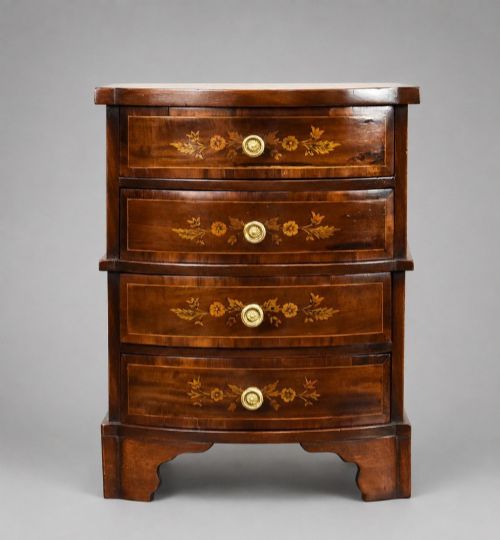
Cabinet makers constructed these curved carcasses using dense timbers such as mahogany and walnut, frequently applying decorative veneers like burr walnut, satinwood, and amboyna to the drawer fronts. Inlaid wood and contrasting stringing often highlight the sweeping contours of the bow front design.
Brass handles and escutcheons punctuate the drawer faces, functioning as both operational hardware and decorative accents. Skilled joinery allowed the curved drawer fronts to move smoothly within their corresponding frames despite seasonal wood movement.
Listings feature mahogany, walnut, burr walnut, birch, and satinwood, spanning eighteenth-century origins to early twentieth-century revivals.
What varies in quality
Quality rests heavily upon the selection of timber veneers and the crispness of the secondary inlay work, where finer examples display book-matched grain patterns across the curved drawer fronts. The integrity of the structural joinery and the depth of the surface patina dictate the visual weight of the piece.
Proportion and scale distinguish standard bedroom chests from miniature apprentice pieces or bedside adaptations. Refined handles, well-fitted drawers with secret compartments, and original brassware elevate an example above standard utility furniture.
The Small Bow Front Chests Glossary
- Bow front
- A convex curved front facade that projects outward from the centre. This curved profile requires specialised woodworking techniques to shape the drawers and frame.
- Caddy top
- A tabletop style featuring a raised, moulded edge reminiscent of tea caddies. It adds architectural definition to the upper surface of the chest.
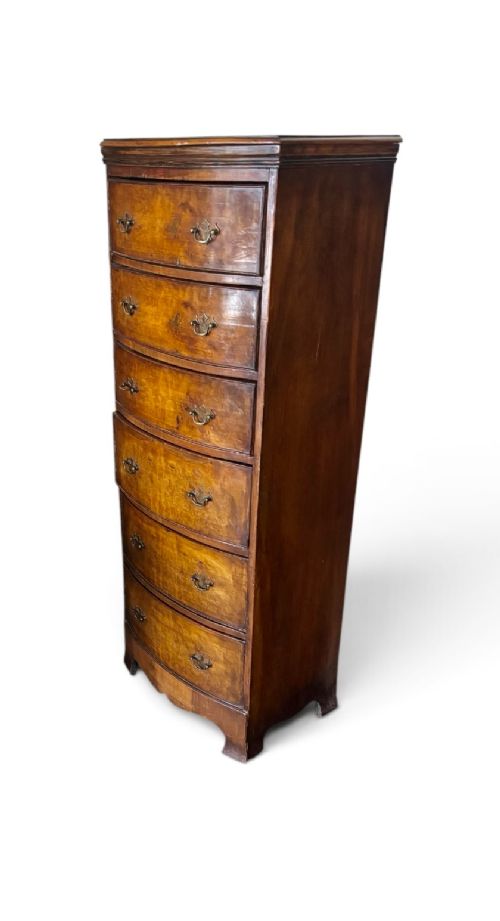
- Tallboy
- A tall chest of drawers made in two stacked sections, providing extensive storage within a narrow footprint. They often feature an arrangement of smaller drawers over larger ones.
- Apprentice piece
- A miniature furniture item created by a trainee craftsman to demonstrate mastery of joinery skills. These smaller pieces faithfully replicate full-sized furniture details.
Small Bow Front Chests: Frequently Asked Questions
Where should I place a small bow front chest?
These compact chests fit easily into hallways, bedrooms, or living spaces where floor space is limited. Their curved shape prevents sharp corners in narrow thoroughfares.
They also function effectively as bedside cabinets or alternative lamp tables, combining decorative presence with accessible storage.
How do I identify a Georgian chest from a later revival?
Examine the timber construction methods, drawer linings, and backboards for signs of period hand-tool marks and traditional joinery. Eighteenth and early nineteenth-century pieces display different timber shrinkage patterns and secondary woods compared to twentieth-century reproductions.
Revival pieces often utilise uniform modern timbers internally while copying earlier Regency or George III aesthetic proportions.
What is the difference between a miniature chest and a standard chest?
Miniature chests are scaled-down versions of larger furniture forms, often created as apprentice pieces or cabinet maker display samples. They retain the same functional drawers and stylistic details in a fraction of the size.
Standard chests are built for full-scale domestic storage use in primary living areas or bedrooms.
How do I care for antique mahogany and walnut surfaces?
Maintain the timber by keeping the piece away from direct sunlight and sudden temperature shifts that cause wood to crack. Regular dusting with a soft dry cloth protects the historic patina.
Apply high-quality beeswax sparingly when the wood appears dry, buffing gently to preserve the natural lustre.