

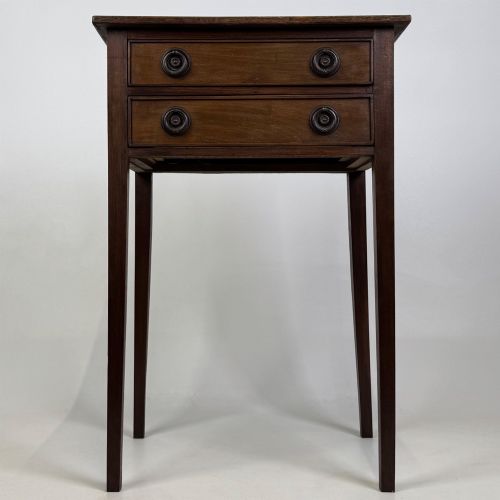
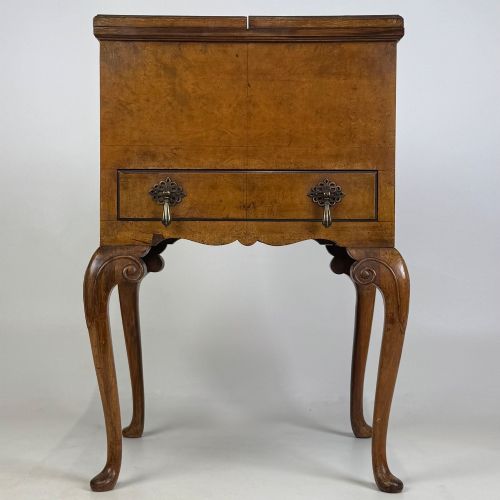
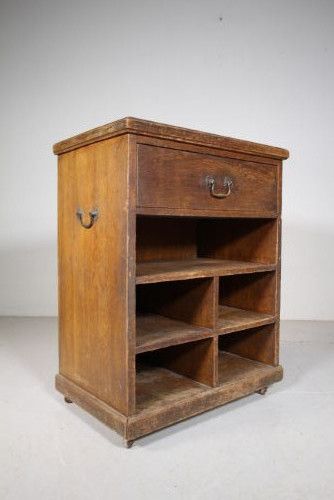
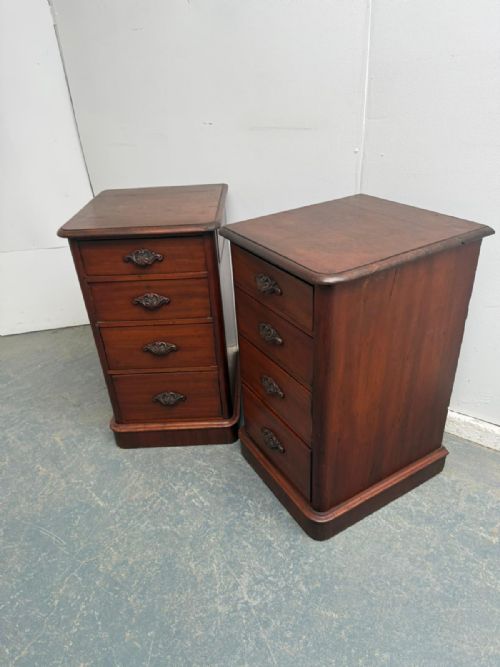
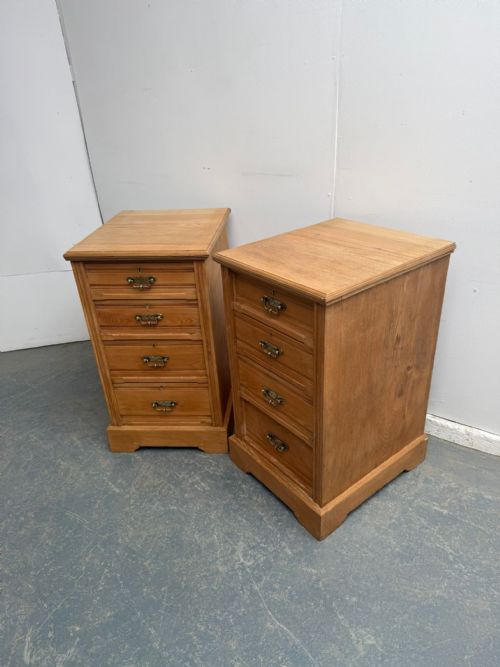
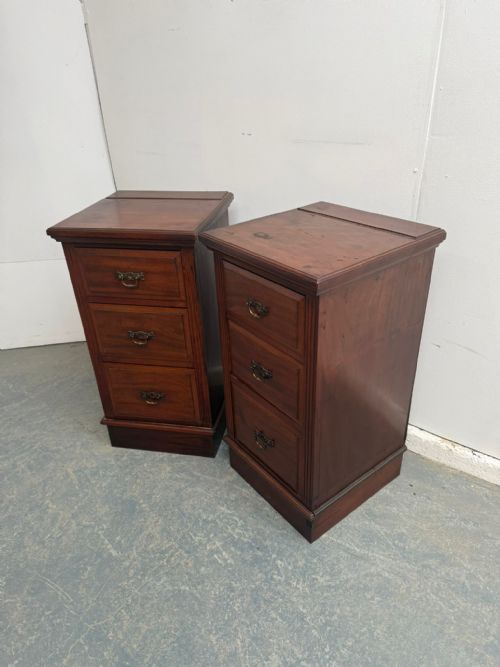
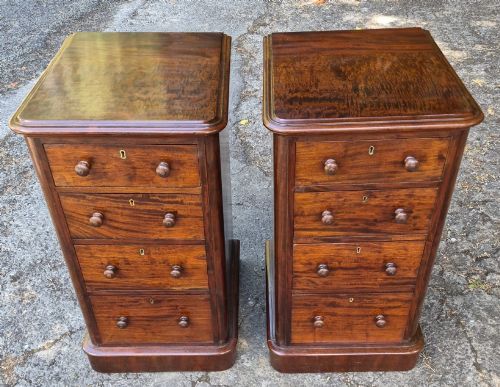
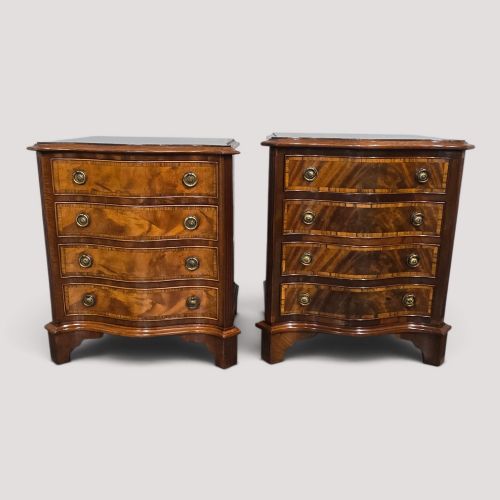
Small Bedside Chest
When you search for a small bedside chest, you seek a compact piece for storage beside the bed that unites utility with period character.
Small Bedside Chest
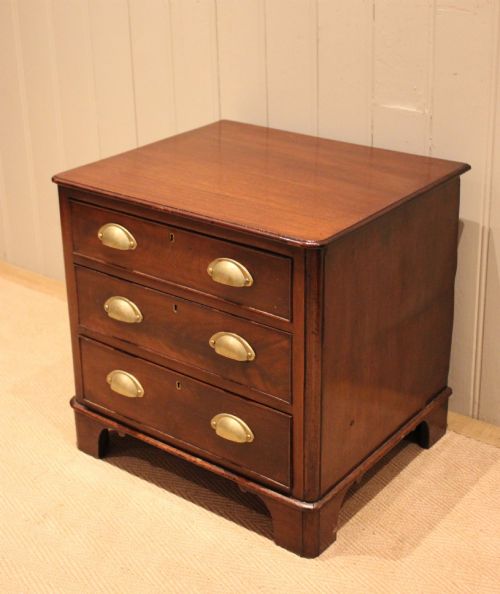
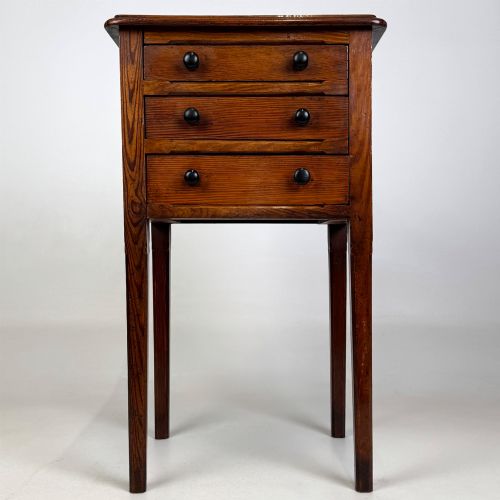
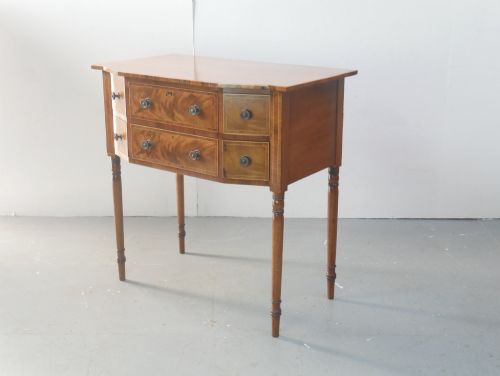
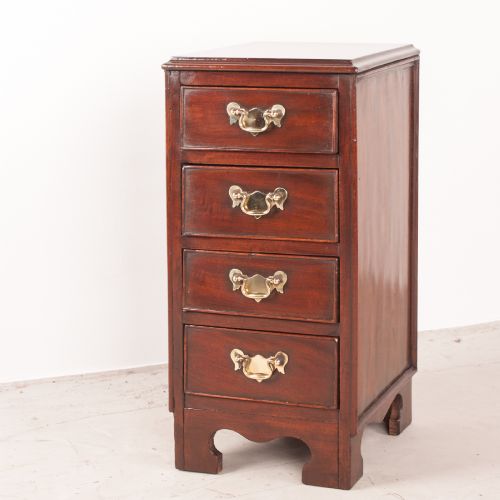
A small bedside chest serves as a compact storage unit placed next to a bed, combining drawers and cupboards in varied proportions. Most examples encountered here date from the Victorian and Edwardian eras, alongside earlier Georgian pieces and later 1930s designs.
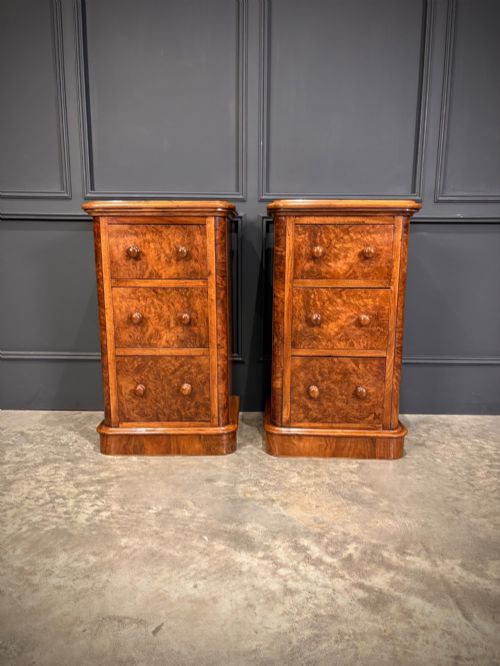
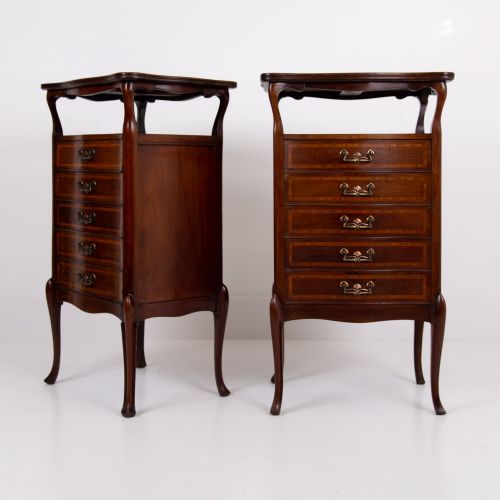
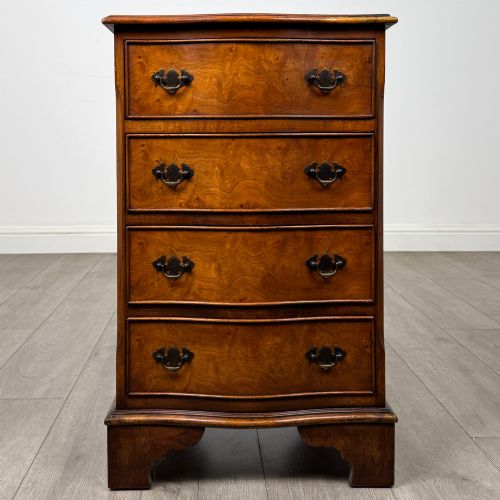
The form spans straightforward mahogany chests of drawers, narrow bedside cabinets with single doors, and distinctive pairs finished in burr walnut or painted wood. These pieces originate from English workshops as well as French and Italian makers.
Makers adapted these small chests for intimate spaces, utilising modest footprints while retaining multiple functioning drawers or compartments for nighttime storage.
How they were made
Cabinetmakers relied heavily on solid mahogany, oak, and walnut, often applying decorative wood veneers like burr walnut or kingwood to drawer fronts and top surfaces. Grain patterns received careful alignment to present a coherent visual texture.
Construction techniques included dovetailed drawer joints and panelled sides, paired with brass handles, escutcheons, and occasional metal mounts. Waxed finishes enhanced the natural tone of the timber without excessive gloss.
Some eighteenth-century oak close stools disguised chamber pots as elegant miniature chests before finding new life as bedside tables.
What varies in quality
The grade of timber and the precision of the cabinetmaking establish the distinction between standard and superior pieces. Selected veneers with rich figure and symmetrical grain placement elevate an ordinary chest into a refined example.
Original hardware, tight drawer joints, and well-preserved timber patination indicate disciplined craftsmanship from the original workshop, whereas later alterations or replaced fixtures alter the integrity of the piece.
Gomme
The Small Bedside Chest Glossary
- Burr walnut
- A figured timber taken from the growth excrescences of the walnut tree, prized for swirling grain patterns. It appears frequently on cabinet fronts from the Victorian period onwards.
- Serpentine
- A front shape curving outward at the sides and inward at the centre, creating a gentle wave effect. This contour demands skilled woodworking to execute across small drawer fronts.
- Wellington chest
- A tall, narrow chest of drawers secured by a hinged vertical locking bar on one side. This design provides compact vertical storage for limited floor spaces.
- Bachelors chest
- A low chest of drawers traditionally featuring a fold-over top or slide surface for writing. These versatile pieces often double as compact bedside surfaces.
- Close stool
- An eighteenth-century box or cabinet enclosing a chamber pot, often disguised as a small chest. Later conversions adapt these items for conventional bedside use.
Small Bedside Chest: Frequently Asked Questions
What is a small bedside chest?
A small bedside chest is a compact piece of case furniture designed to fit beside a bed while offering enclosed drawer or cupboard storage.
These pieces range from narrow Victorian mahogany chests to walnut Edwardian cabinets and decorative French styles.
How do I date a bedside chest?
Dating relies on observing construction methods, timber choices, and stylistic cues such as Georgian bracket feet or Art Deco geometric lines.
Secondary woods, handle types, and dovetail construction help confirm the manufacturing period.
Are these chests sold in pairs?
Many listings feature matched pairs of bedside chests, which proves particularly common for Victorian and Edwardian examples.
Singular pieces also appear frequently for those seeking an accent table rather than a symmetrical bedroom setup.
What woods were used?
Mahogany, walnut, and oak form the primary structural timbers across the available selection.
Cabinetmakers also utilised decorative veneers including burr walnut, kingwood, and tulipwood to enrich drawer fronts.