


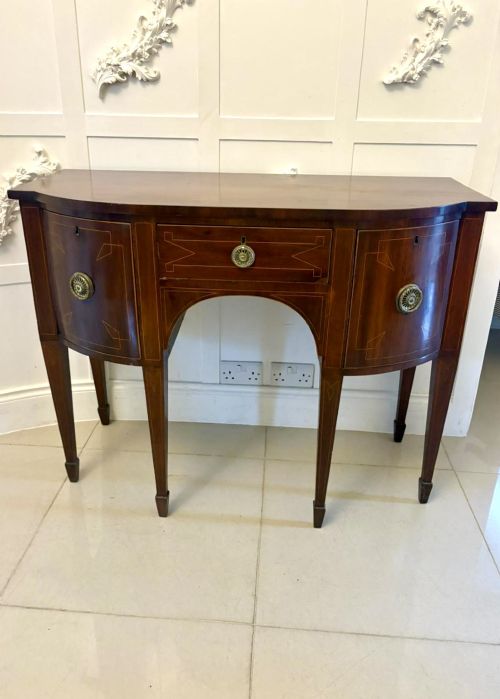
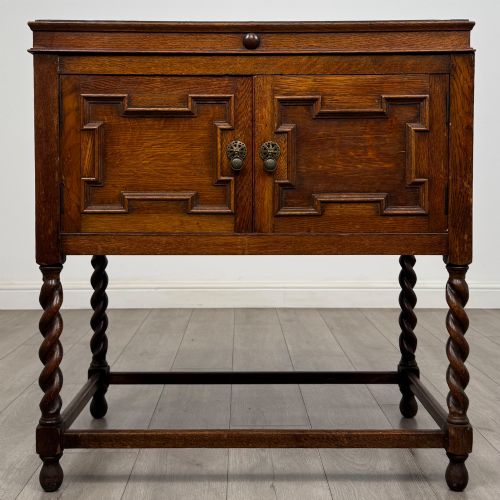
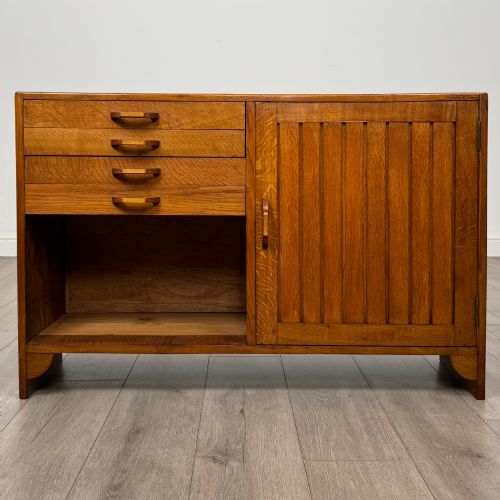
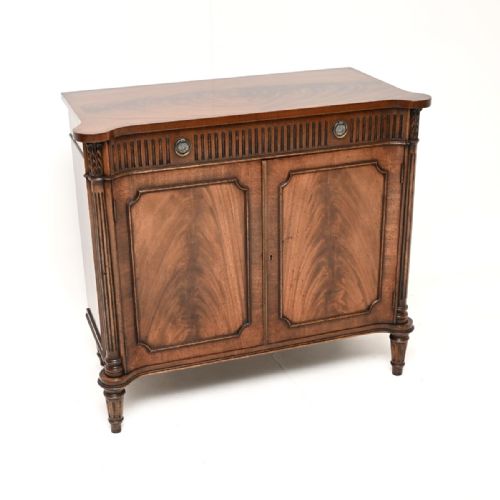
Small Buffet
These small antique buffet examples deliver compact dining room storage across Georgian, Victorian, and later periods.
Small Buffet
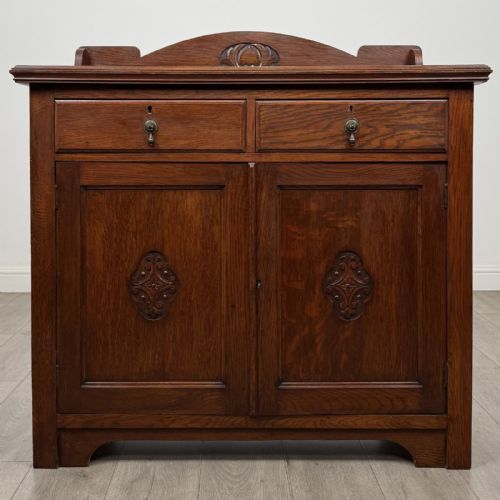
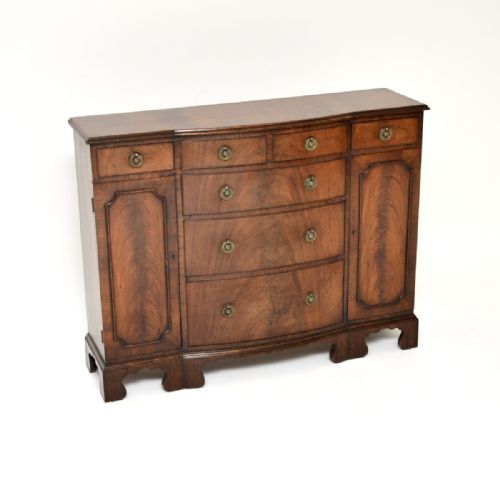
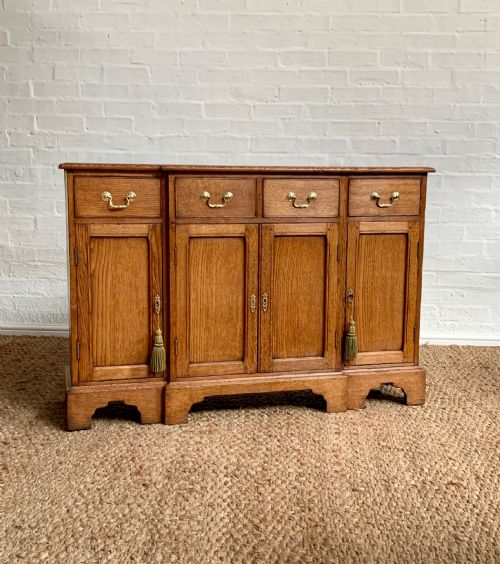
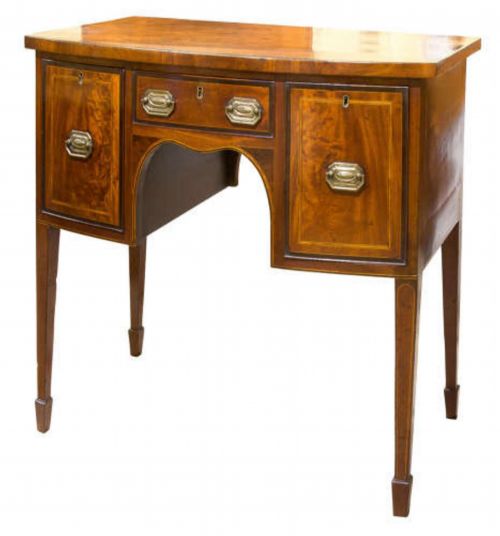
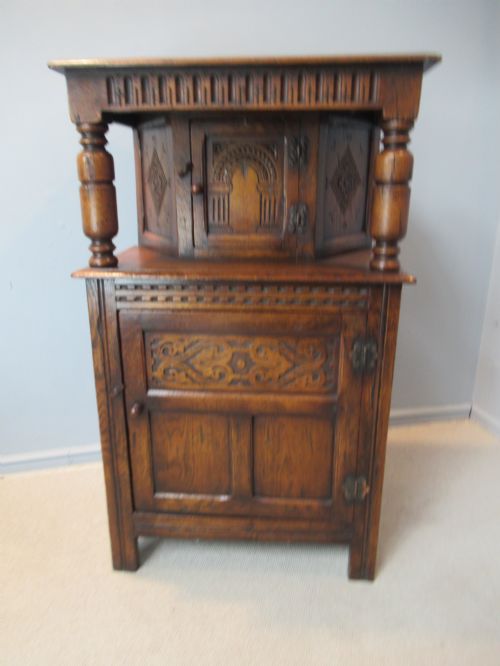
A small antique buffet offers functional surface area and enclosed storage for dining spaces where floor space is limited. When searching for a small antique buffet, buyers encounter diverse forms including compact sideboards, chiffoniers, dresser bases, and small court cupboards.
The pieces span multiple eras, with George III, Regency, Victorian, and early twentieth-century examples appearing frequently. Proportions remain modest, accommodating smaller rooms without sacrificing the character of mahogany, oak, walnut, or pine construction.
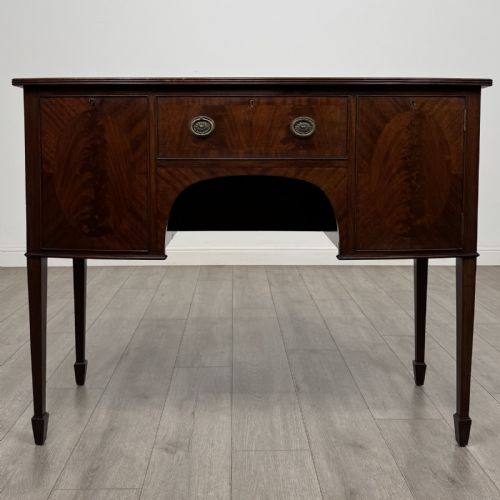
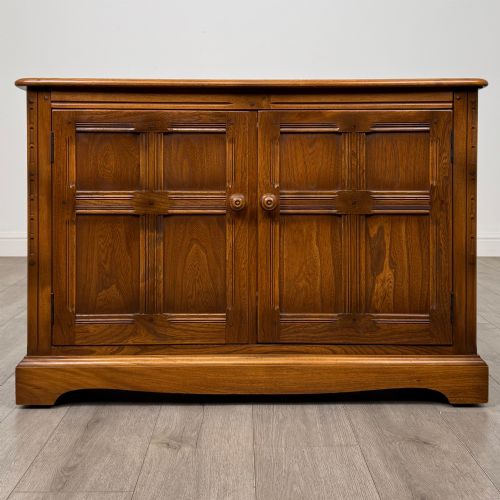
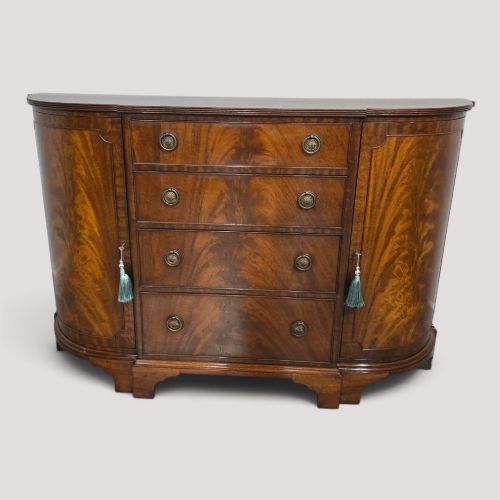
Makers and regional workshops adapted standard sideboard and cupboard designs into reduced dimensions for domestic use. Buyers find both formal bowfront styles in figured timbers and sturdy country designs in solid oak or pine.
Materials and construction
Cabinet makers utilised dense hardwoods like mahogany and walnut for formal pieces, often incorporating decorative stringing, satinwood inlays, or purpleheart banding. Brass handles and glass elements frequently complement these polished mahogany and walnut surfaces.
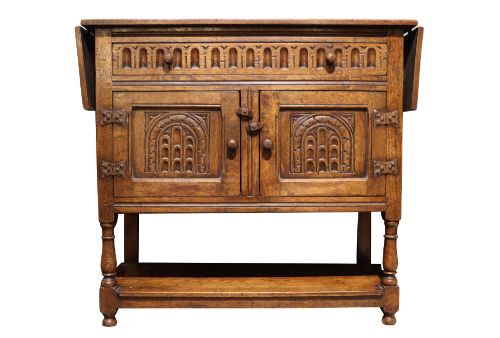
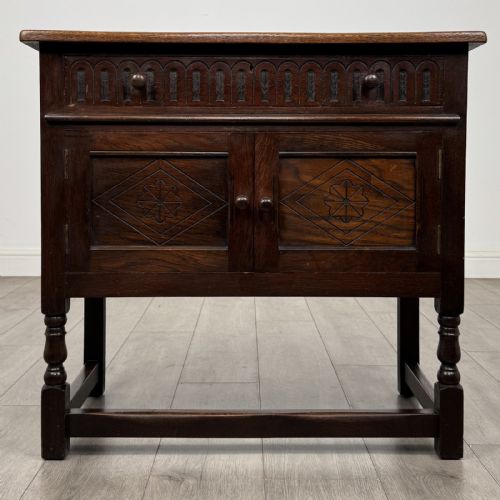
Country and regional workshops relied on solid oak and pine, sometimes featuring carved details, barley twist legs, or raised galleries. Structural methods include fitted drawers, drop-leaf configurations, and two-part carcass construction.
Small Buffet Retail Price Guide 2026
Typical asking prices for small buffet among the pieces listed under this phrase on Sellingantiques today, from the lower quarter to the upper quarter. They describe what is for sale here now, not the wider market.
Some diminutive cupboards come fitted with secret drawers to hide your silver spoons.
Variations in quality
The refinement of timber selection dictates much of the distinction between pieces, with figured mahogany and finely matched grain patterns marking out higher-status work. Simpler pine or oak items depend on honest construction and the integrity of their original hardware.
Symmetry in bowfront profiles and precision in inlay work separate sophisticated urban pieces from utilitarian provincial items. Proportions remain the central virtue, distinguishing custom-built small proportions from later alterations.
Heals of London·Gordovil Spain
The Small Buffet Glossary
- Bowfront
- A convex curved front facade popular on formal sideboards and buffets. This shape softens room angles while maximising internal storage depth.
- Chiffonier
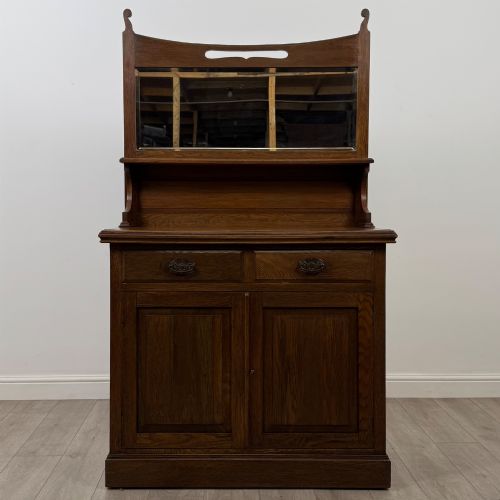
- A compact low sideboard or cupboard originating in the nineteenth century. It frequently incorporates a shelf or mirror back above enclosed lower cabinets.
- Court cupboard
- A traditional enclosed cupboard with an upper section supported on pillars. These pieces usually feature sturdy oak construction and carved decoration.
- Dresser base
- A low cabinet with drawers and cupboards, originally used in kitchens or dining rooms for serving food and storing tableware. These pieces often lack the upper plate rack of a full dresser.
- Stringing
- A thin inlay of contrasting wood used to outline drawers, doors, or tabletops. It defines the geometric panels of formal case furniture.
Small Buffet: Frequently Asked Questions
How do I date a small sideboard?
Dating relies on examining timber choices, hardware, construction methods, and prevailing historical styles. Georgian pieces often display fine mahogany veneers and stringing, while Victorian examples introduce heavier walnut or chiffonier configurations.
Secondary woods inside drawers and the style of joinery provide additional clues to the era of manufacture. Regional oak pieces from the early twentieth century often emulate earlier seventeenth-century styles.
Where should I place a small buffet?
These compact dining pieces suit alcoves, hallways, or dining rooms requiring auxiliary surface space. Their reduced proportions allow them to function where standard full-sized sideboards overwhelm the room.
Pairing a low buffet with a mirror or hanging art creates a balanced focal point in living areas or entryways.
Are these pieces made of solid wood?
Many examples utilise solid oak or pine, particularly country pieces and dresser bases. Formal urban sideboards frequently employ dense mahogany or walnut veneers applied to stable secondary timber carcasses.
Timber selection reflects the original maker's intent, balancing decorative grain patterns with structural stability across different periods.