
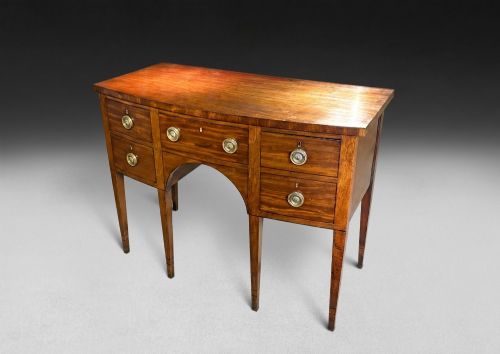


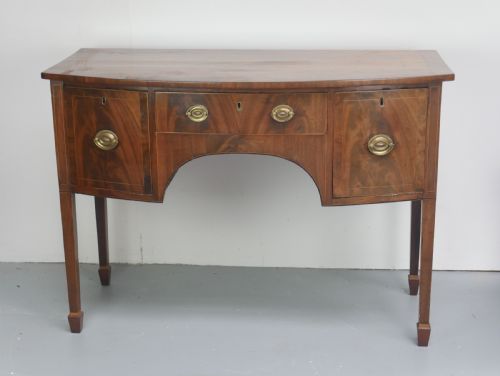


Small Buffet Server
A small antique buffet server provides compact dining storage in mahogany, oak, and walnut from Georgian, Victorian, and later periods.
Small Buffet Server
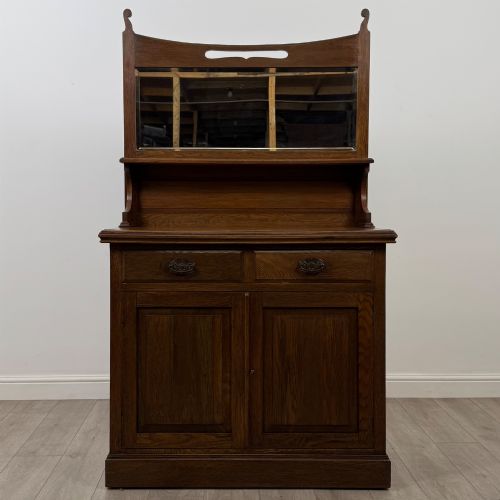
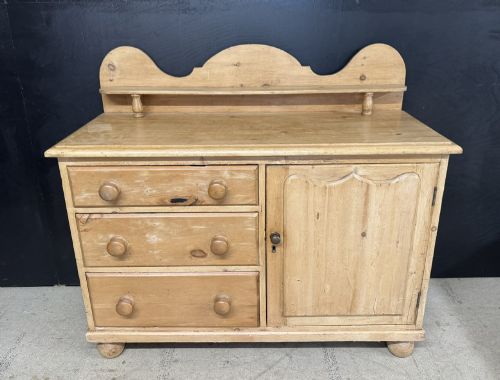
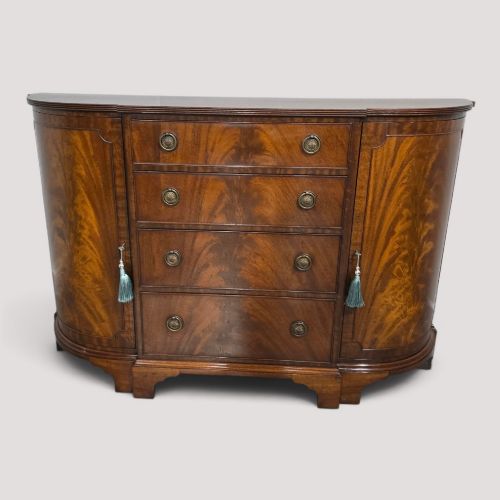
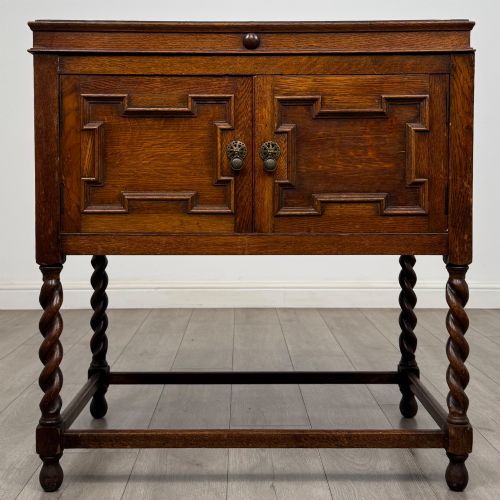
A small antique buffet server typically takes the form of a compact sideboard, dresser base, or chiffonier designed to sit against a dining room wall. These pieces are intended to store tableware, linen, and serving dishes while occupying a modest footprint.
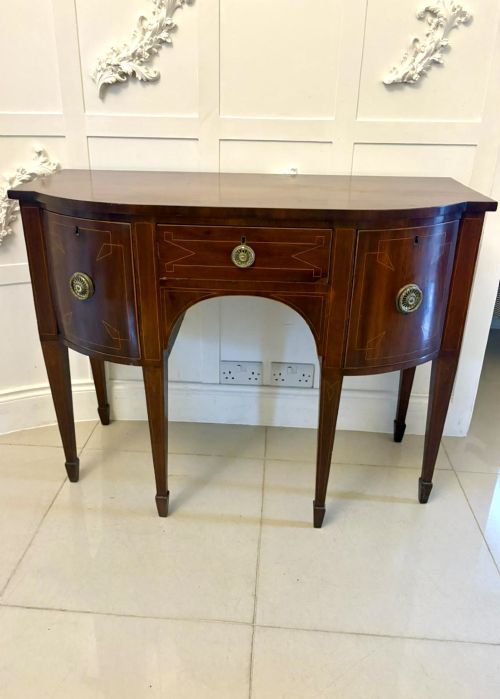
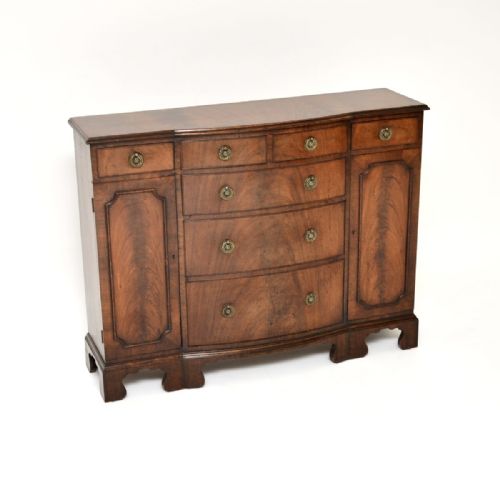
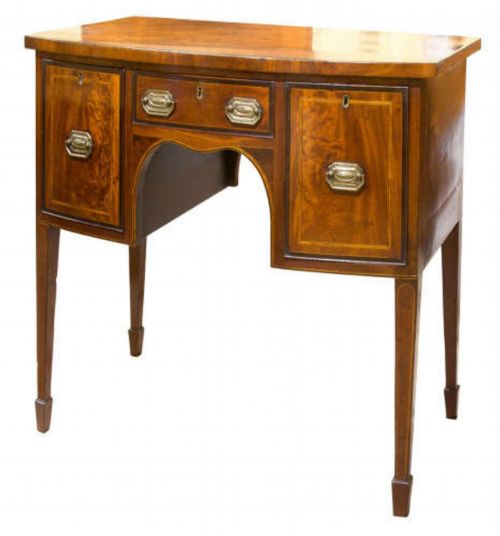
The selection on this page centres on examples from the eighteenth, nineteenth, and early twentieth centuries. Georgian and Regency pieces appear alongside Victorian and Edwardian variations, often constructed with bow-front or serpentine shapes.
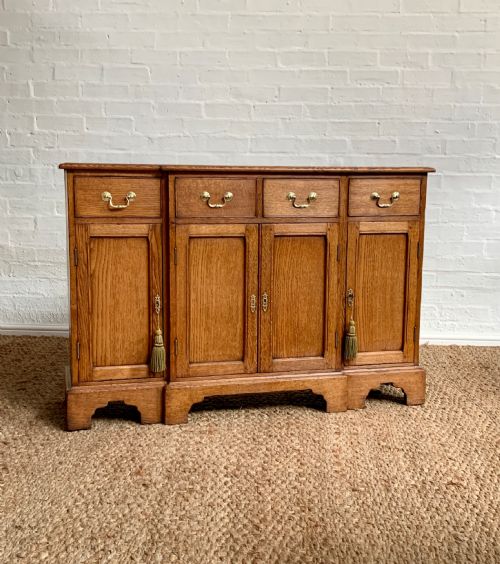
Buyers will encounter various regional interpretations, including country oak dresser bases and refined mahogany sideboards. These items serve everyday storage needs while introducing period character to a modern interior.
Materials and construction
Cabinetmakers relied heavily on timbers such as mahogany, oak, and walnut, frequently enhancing surfaces with flame mahogany veneer, boxwood stringing, or purpleheart banding. Pine and satinwood also appear among the listed pieces for secondary framing or lighter decorative finishes.
Construction techniques combined solid timber framing with dovetailed drawer boxes and fielded panel doors. Brass handles and mounts were standard for hardware, while specific pieces incorporated adjustable shelving or lined interiors.
Listings feature oak, mahogany, and walnut across Georgian, Victorian, and Edwardian periods.
Craftsmanship and proportion
Quality in a small antique buffet server rests upon the selection of timber figures and the crispness of inlaid details such as boxwood and ebony stringing. Superior examples maintain balanced proportions and refined proportions across smaller dimensions.
The integrity of the structural joinery, the smooth operation of drawers, and the retention of original brass hardware distinguish finer workshops from utilitarian pieces. The handling of curved fronts, such as bow-fronts and serpentine shapes, reveals the skill of the original maker.
Heals of London
The Small Buffet Server Glossary
- Bow-front
- A convex curved cabinet front that projects outward in the centre. This shape gained popularity during the late eighteenth century to soften the corners of dining rooms.
- Dresser base
- A low wooden storage unit featuring drawers and cupboards beneath a flat top. These items originated in country houses for kitchen and dining use.
- Serpentine
- A cabinet front featuring a concave centre flanked by convex outer curves. This profile requires advanced woodworking skill to execute properly.
- Stringing
- Thin inlay lines of contrasting timber used to outline drawer fronts and panels. Cabinetmakers applied this technique to add linear definition to plain surfaces.
Small Buffet Server: Frequently Asked Questions
What is a small antique buffet server used for?
These pieces provide practical storage for dining rooms, holding plates, cutlery, and table linens within a compact footprint.
The flat top surface also functions as a convenient station for serving food or displaying decorative objects during meals.
How do I identify a Georgian buffet server?
Georgian pieces generally feature solid timbers like mahogany or oak, often decorated with subtle stringing, banding, or brass drawer pulls.
They frequently display formal architectural proportions and refined woodwork that distinguish them from later Victorian or Edwardian furniture.
Will a small sideboard fit in a modern dining room?
The reduced proportions of these servers make them well suited to contemporary spaces that require scaled-down storage solutions.
Their shallow depths and varied timber tones allow them to sit comfortably against walls in hallways or living areas as well.
What is the difference between a sideboard and a chiffonier?
A sideboard is typically a long, low cabinet designed specifically for dining room storage and serving.
A chiffonier is generally smaller and often includes enclosed lower cupboards, sometimes accompanied by a raised shelf or back panel.