

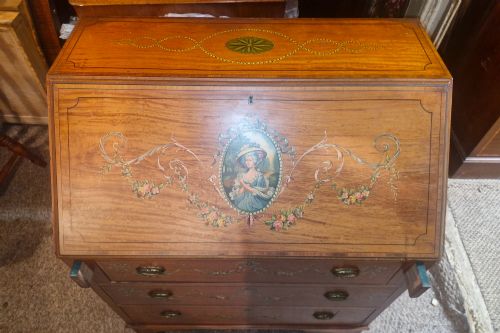
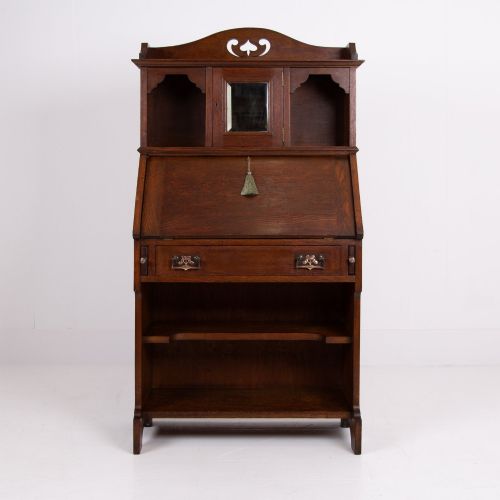
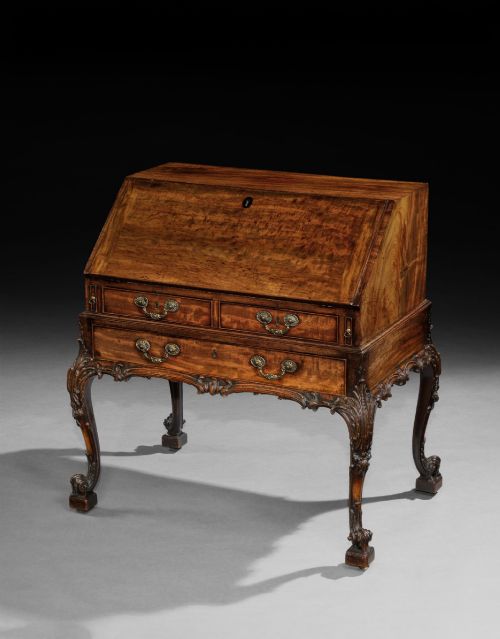
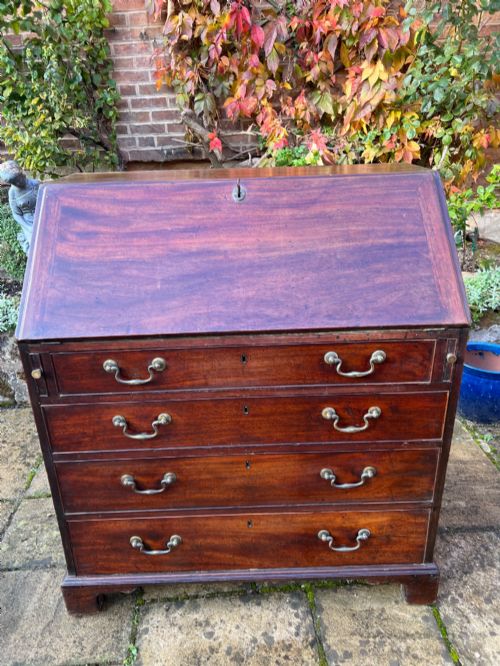
Sloping Front Secretary
A sloping front secretary combines a hinged writing flap with fitted interior drawers, offering a traditional workspace rooted in centuries of cabinetmaking.
Sloping Front Secretary
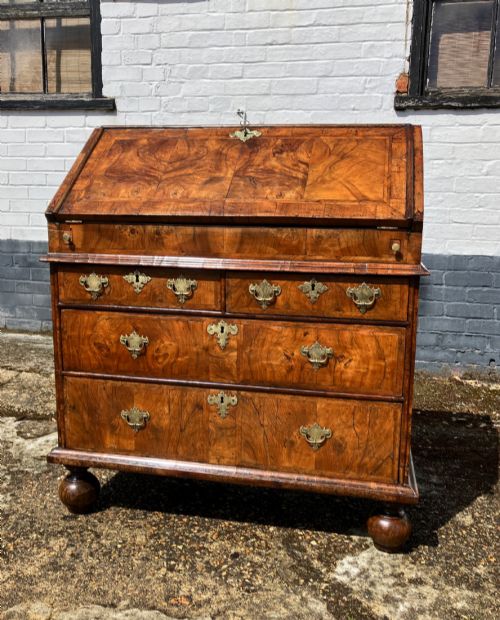
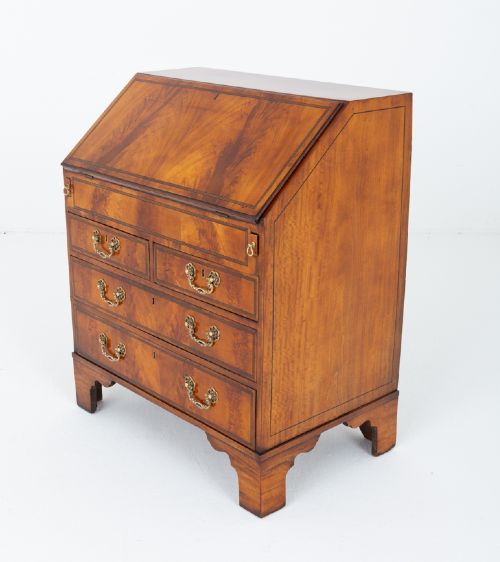
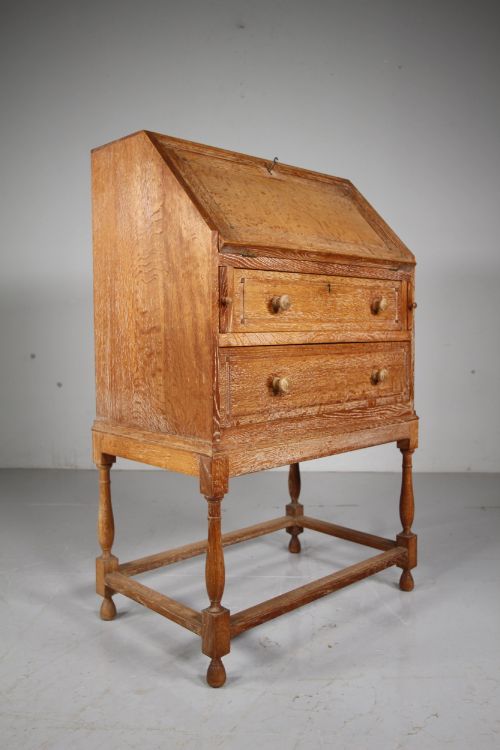
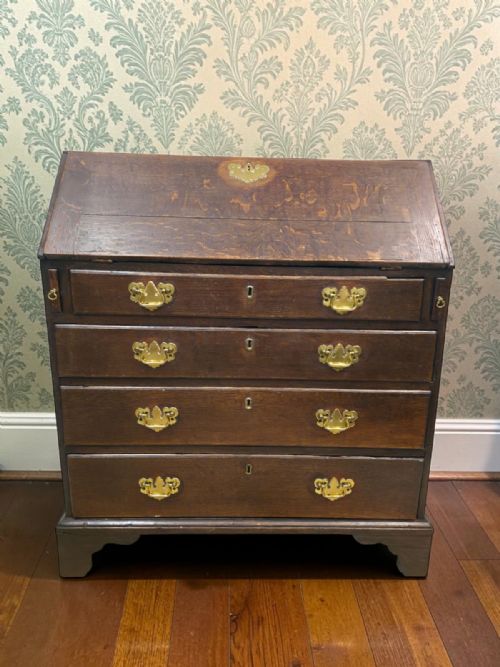
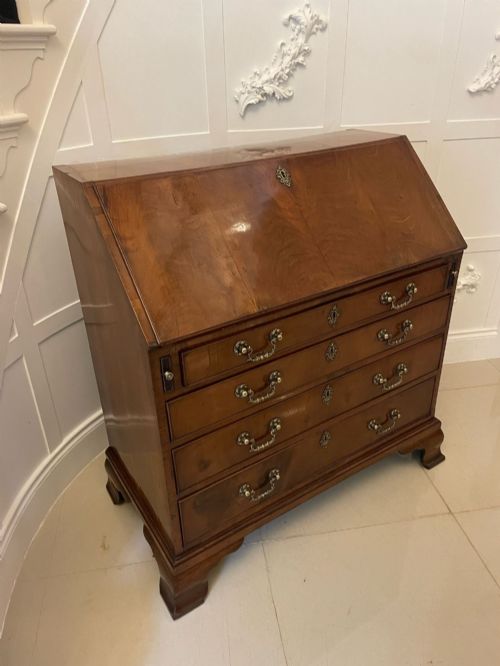
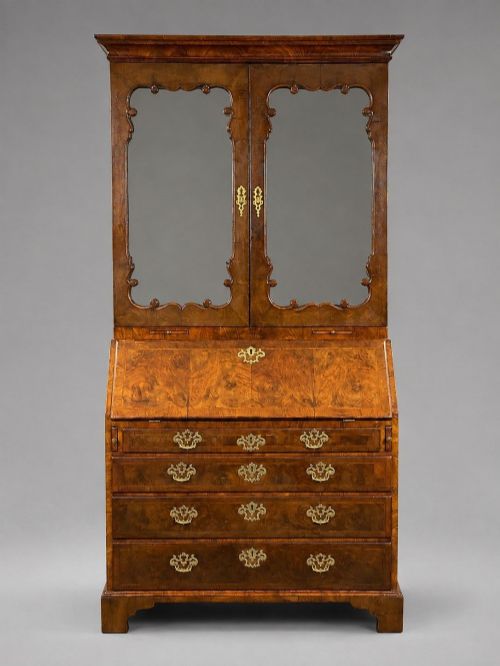
A sloping front secretary, commonly encountered as a bureau or bureau bookcase, provides a concealed writing surface that folds down to reveal compartments and pigeonholes. Buyers searching for this form often encounter examples from the 18th century and the Georgian period, alongside later interpretations from the Edwardian era and the 1920s.
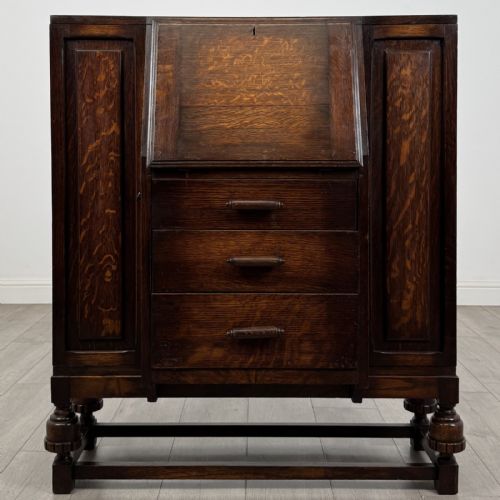
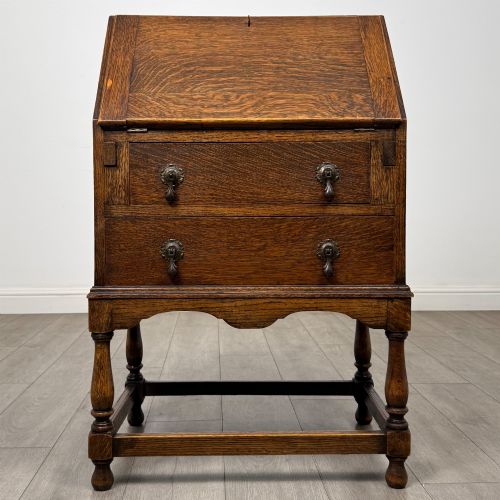
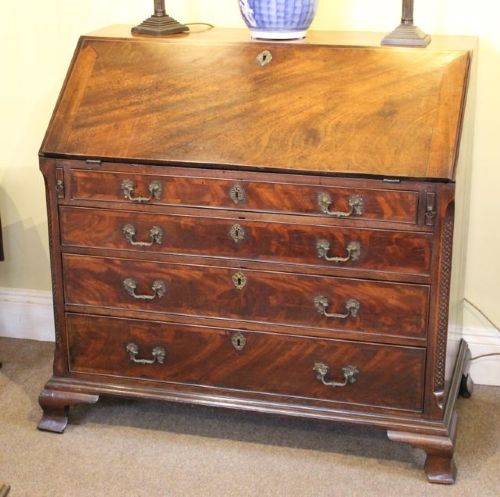
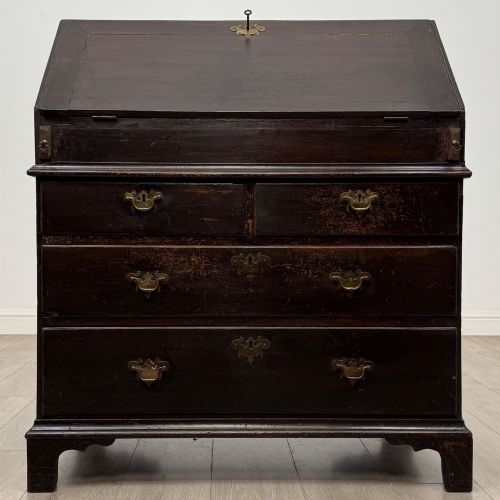
The primary forms range from compact oak and mahogany desks to taller bureau bookcase combinations featuring upper glass doors and side cupboards. Oak and mahogany dominate the earlier centuries, while walnut and burr walnut appear frequently across both Georgian pieces and later 20th-century revivals.
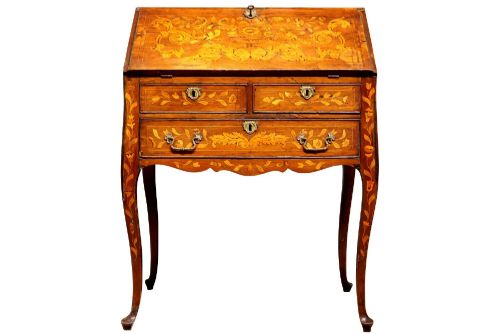
Regional variations span English cabinetmaking traditions and continental examples, including Dutch floral marquetry desks executed in walnut and fruitwood. These pieces served as private writing cabinets in domestic interiors, preserving letters and documents behind locked fall-front lids.
Materials and Construction
Cabinetmakers utilised dense hardwoods such as mahogany, oak, and walnut, often selecting highly figured burr veneers for the fall-front panels and interior drawers. Secondary timbers like cedarwood and elm appear in drawer linings and internal divisions.
Construction techniques relied on dovetail joints for drawer boxes and frame-and-panel assembly for carcass stability. Brass handles, escutcheons, and original ironwork secured the fall-front and internal compartments, while specialist decoration involved floral marquetry and painted satinwood.
Sloping Front Secretary Retail Price Guide 2026
Typical asking prices for sloping front secretary among the pieces listed under this phrase on Sellingantiques today, from the lower quarter to the upper quarter. They describe what is for sale here now, not the wider market.
Listings feature multiple periods, spanning 18th Century Georgian walnut pieces to 1920s oak and elm desks.
Judging Quality
The visual success of a sloping front secretary depends upon the figure and grain matching of the timber across the fall-front flap and drawer fronts. Superior examples display consistent patination and careful selection of burr walnut or mahogany veneers that flow visually across the elevation.
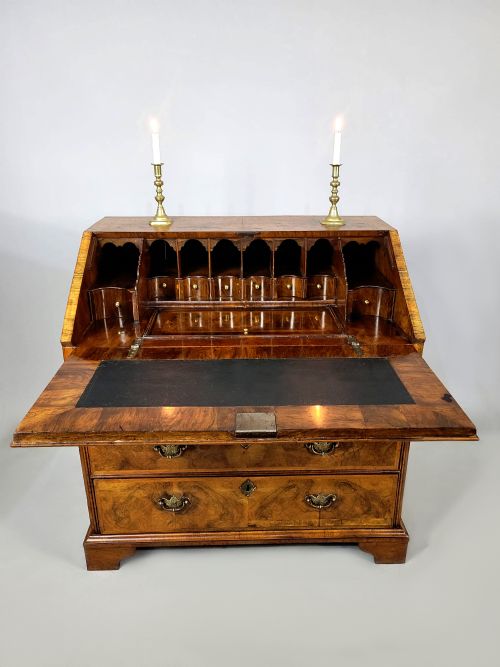
Interior architecture dictates the distinction between standard utilitarian desks and finer cabinetwork. Elaborate fitted interiors featuring secret compartments, pigeonholes, and small drawers demonstrate the elevated skill of the original workshop.
Heals of London
The Sloping Front Secretary Glossary
- Bureau
- A writing desk with a sloping hinged lid that covers fitted interior compartments. This term is frequently used interchangeably with secretary in British furniture terminology.
- Fall front
- The hinged writing flap that pulls down to a horizontal position for use. When closed, it conceals the inner drawers and pigeonholes.
- Burr walnut
- Wood taken from a tree growth where the grain has deformed into intricate swirls and patterns. Cabinetmakers sliced this timber into thin veneers to ornament prominent surfaces.
- Marquetry
- Decorative inlay work using various tinted woods and veneers to create pictorial patterns or floral motifs. It is commonly found on Dutch bureau cabinets.
- Pigeonhole
- A small, open compartment within the desk interior designed for sorting letters and papers. These compartments are often flanked by small drawers and secret wells.
Sloping Front Secretary: Frequently Asked Questions
What is a sloping front secretary?
A sloping front secretary is a writing desk featuring an angled flap that opens downward to create a flat writing surface. The interior typically contains small drawers, pigeonholes, and hidden compartments.
Historically used for correspondence and document storage, these pieces combine compact storage with a dedicated workspace suitable for domestic use.
How do I date an antique bureau?
Dating relies on examining construction methods, timber choices, and hardware styles. Earlier pieces from the 18th century often feature hand-cut dovetails and solid timber carcases.
Later Edwardian and 1920s examples show machine-sawn elements and revival styles such as Jacobean twist legs or linenfold carving.
Where were these desks used?
These desks were primarily placed in private parlours, bedrooms, and libraries where personal correspondence took place. Their enclosed design allowed owners to lock away sensitive papers and financial records.
Today, they function well in home offices or living rooms as writing surfaces that conceal modern clutter when closed.