



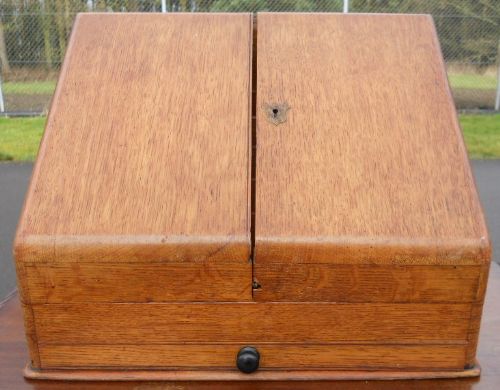


Sloping Front Box
A sloping front box organises correspondence or papers with an inclined lid or fall front, spanning centuries of timber cabinetmaking.
Sloping Front Box
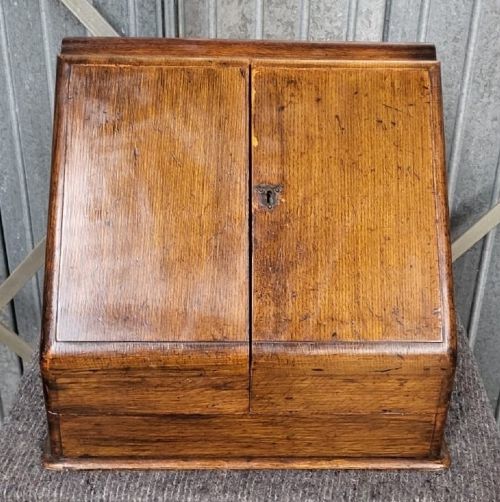
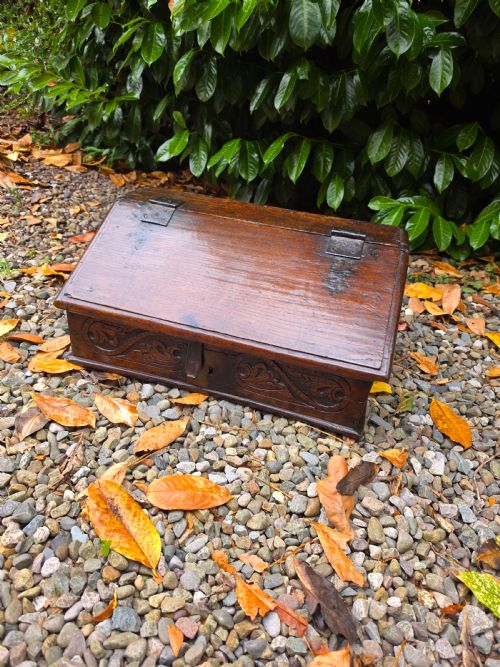
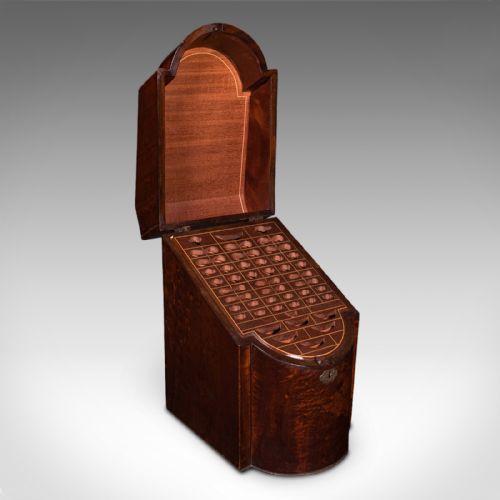
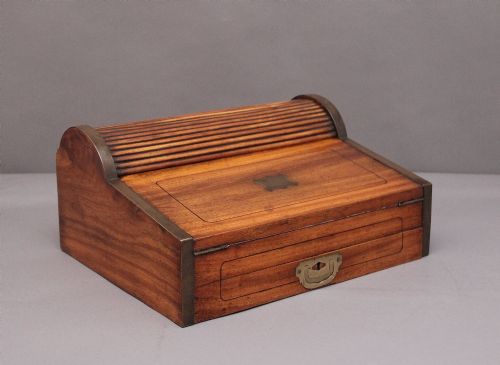
A sloping front box covers formats from early bible boxes and knife boxes to Victorian stationery cabinets and writing slopes. These desk accessories and small chests appear in oak, mahogany, walnut, and satinwood across the seventeenth, eighteenth, and nineteenth centuries.
The evidence shows vernacular oak desk boxes and bible boxes from the seventeenth century alongside Georgian mahogany knife boxes and Victorian walnut stationery cabinets. Table top bureaux and fall front organisers complete the range.
Buyers meet early pieces with carved friezes or owner initials alongside later serpentine mahogany items fitted with brass hardware. Walnut and coromandel versions from the late nineteenth century represent the most elaborate iterations.
Materials and construction
Cabinetmakers utilised solid timbers including oak, mahogany, walnut, and elm, often applying wood inlay or satinwood veneers to enhance the exterior surfaces. Brass fittings such as hinges, handles, and escutcheons secure the lids and fall fronts.
Interior fittings frequently incorporate partitioned letter holders, small drawers, and velvet or leather writing surfaces within the box structure. Iron, metal, and bone details appear alongside painted porcelain panels and gilt decoration on select Victorian examples.
Sloping Front Box Retail Price Guide 2026
Typical asking prices for sloping front box among the pieces listed under this phrase on Sellingantiques today, from the lower quarter to the upper quarter. They describe what is for sale here now, not the wider market.
Listings feature items in oak, mahogany, walnut, satinwood, and camphor wood spanning the seventeenth to the nineteenth centuries.
Judging execution
Quality rests in the selection of figured timber veneers, the precision of dovetail joinery, and the integrity of the original brass hardware. Carved details on early oak examples show varying depth and sharpness of hand chisel work.
Internal complexity dictates refinement, separating simple utility boxes from fitted stationery cabinets with multiple internal compartments and functioning locks. Surface finish and timber patination reflect the original status of the piece.
The Sloping Front Box Glossary
- Bible box
- A small wooden desk box with a sloping lid, historically used to store religious texts and writing materials. These seventeenth-century oak pieces often feature carved friezes.
- Knife box
- A vertical wooden container with a sloping lid, originally designed for cutlery storage. Georgian examples in mahogany are frequently repurposed as stationery boxes.
- Stationery cabinet
- A desk tidy with a fall front or sloping door enclosing pigeonholes and letter slots. Victorian versions appear in walnut, coromandel, and oak.
- Writing slope
- A portable desk opening to reveal an inclined writing surface and internal compartments for ink and paper. These boxes utilise mahogany, camphor wood, or oak.
- Purdonium
- A specialised cabinet or box designed to hold coal near a fireplace, typically incorporating a metal liner and shovel. Victorian examples often match the timber of other desk accessories.
Sloping Front Box: Frequently Asked Questions
What is a sloping front box used for?
These pieces serve to organise letters, documents, and writing implements upon a table or desk.
Historically, specific forms held cutlery, bibles, or coal rather than stationery.
How do I date a wooden desk box?
Dating relies on timber species, construction methods, and hardware styles across different centuries.
Seventeenth-century items show vernacular oak construction with carved decoration, while Georgian pieces favour mahogany and Victorian examples introduce walnut and elaborate stationery interiors.
Can I use an antique knife box for letters?
Georgian knife boxes suit modern desks well for holding envelopes and correspondence.
Their internal partitions adapt easily from cutlery storage to paper organisation.
What is the difference between a writing slope and a stationery cabinet?
A writing slope opens to provide an angled surface for writing letters.
A stationery cabinet remains upright with a fall front or drop front to store paper and envelopes.