
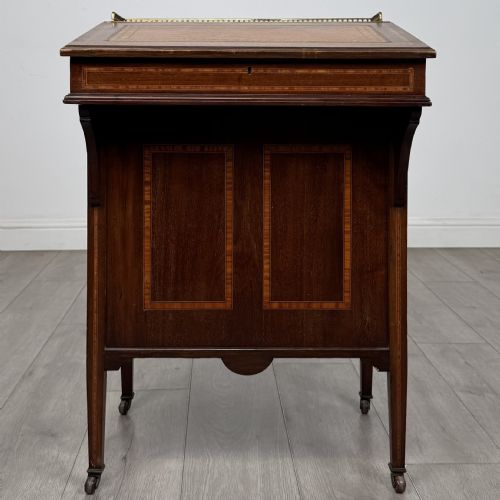
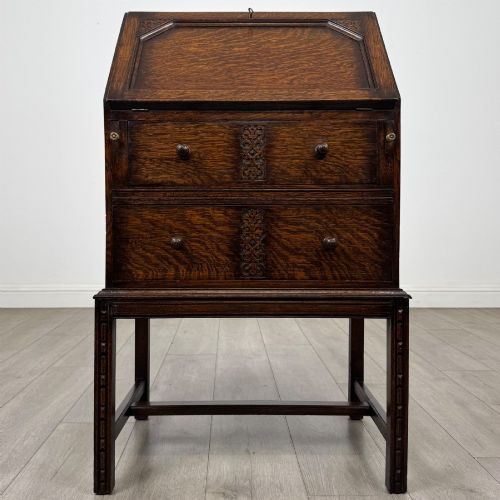
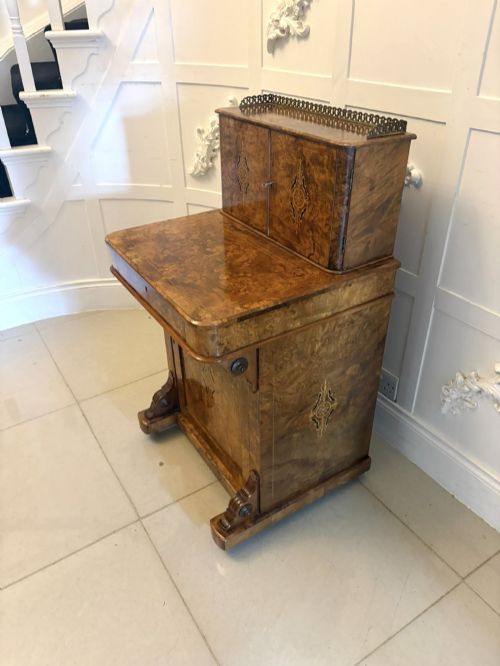
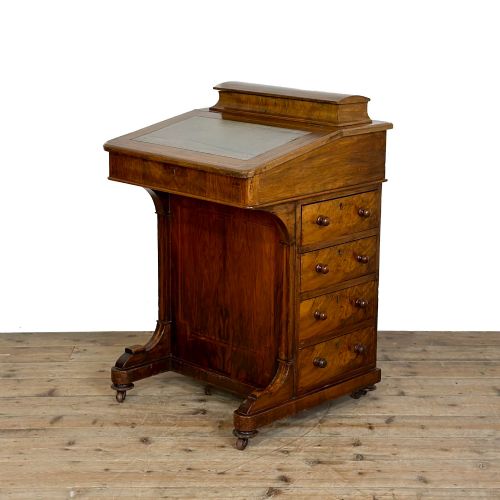


Sloped Writing Cabinet
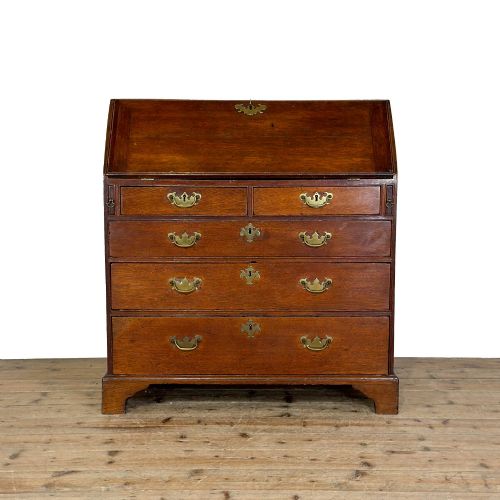
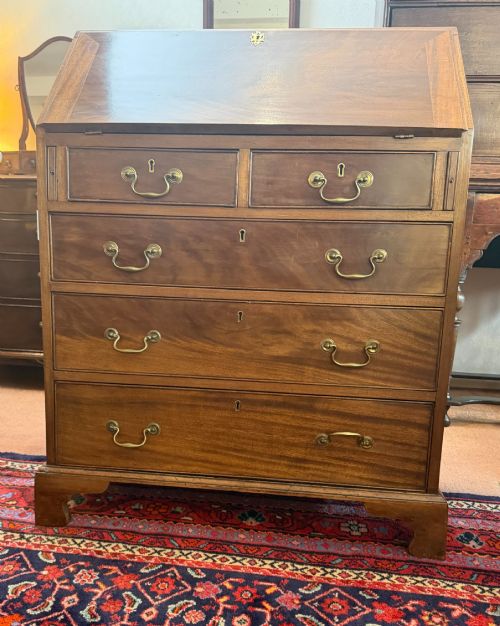
A sloped writing cabinet provides a dedicated slant for correspondence, ranging from compact stationery boxes to large bureau bookcases.
Sloped Writing Cabinet
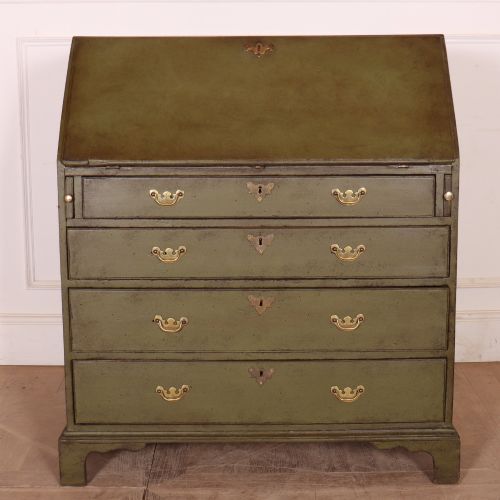
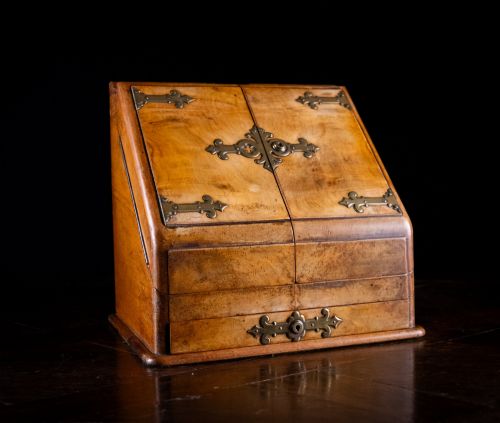
When buyers search for a sloped writing cabinet, they encounter a variety of forms including desks, bureaux, stationery boxes, and Davenport desks. These pieces span periods from Queen Anne and Georgian through Regency, Victorian, and Edwardian eras.
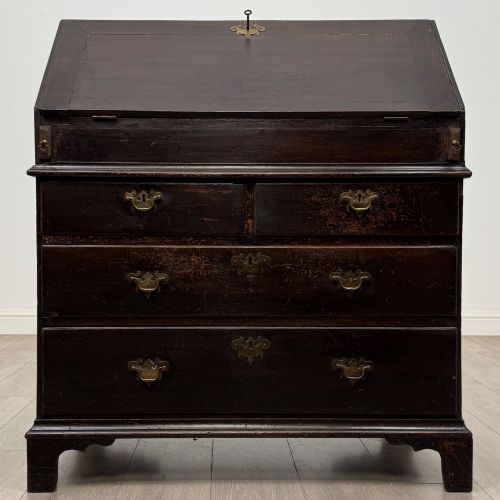
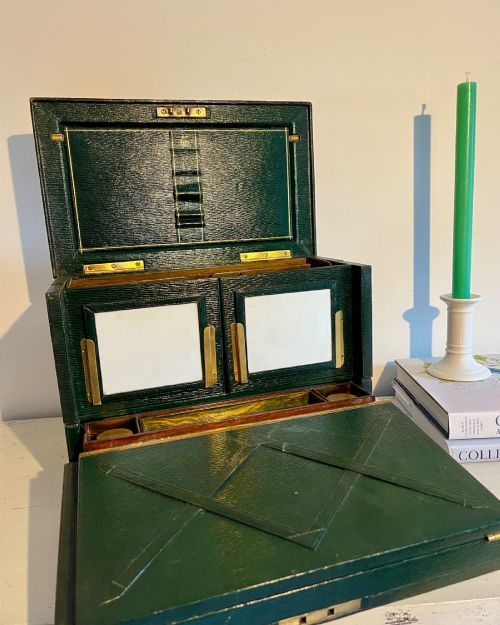
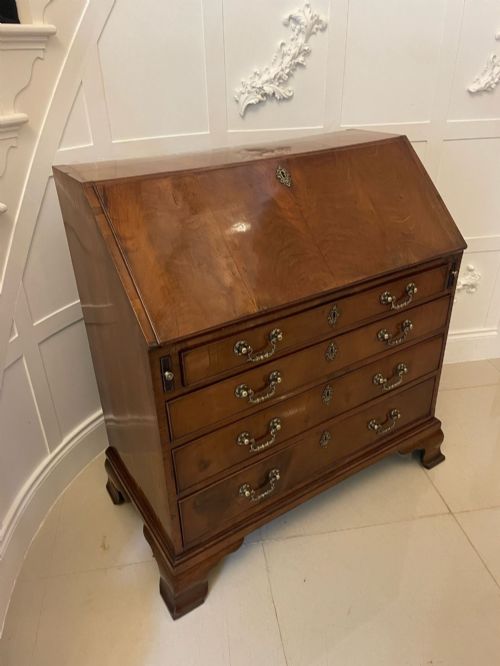
The most common formats on this page are standard mahogany and oak bureaux alongside compact Victorian Davenport desks and tabletop stationery boxes. Cabinet makers designed these items to store paper, ink, and letters while offering a firm angled surface for handwriting.
How they were made
Cabinet makers utilised dense timbers such as mahogany, oak, walnut, burr walnut, rosewood, amboyna, and ebonised wood to build these writing pieces. Many examples incorporate brass mounts, glass panels, leather writing inserts, and intricate marquetry or inlaid decoration.
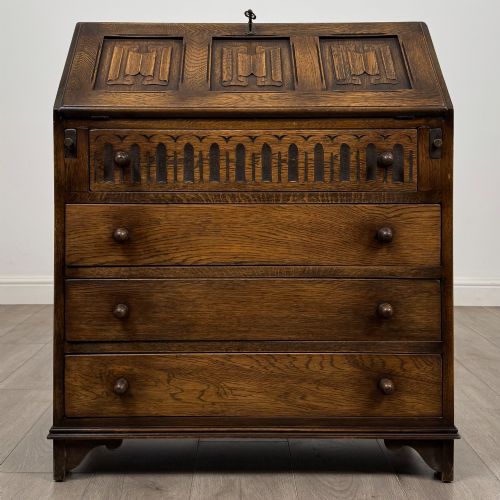
Structural methods range from traditional dovetailing in drawer construction to carved details like Green Man motifs, linenfold panels, and painted finishes.
Periods represented span from Queen Anne and Georgian times through Regency, Victorian, and Edwardian eras.
What varies in quality
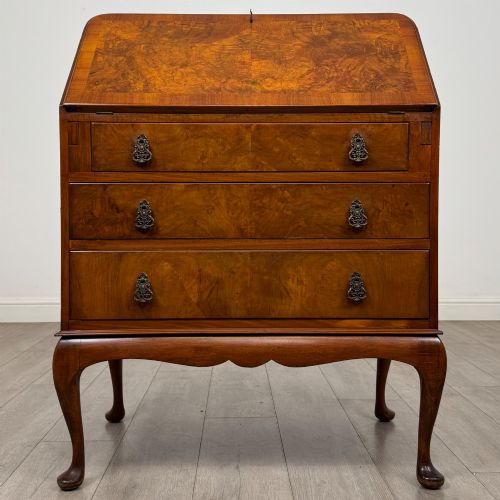
Quality in a sloped writing cabinet depends upon the selection of timber veneers, such as figured walnut or burr walnut, and the precision of internal pigeonholes and small drawers. Superior examples often bear the mark of established workshops like Gillows.
The sophistication of brass hardware, secret compartments, and secondary woods like satinwood or mahogany inside the writing well distinguish standard items from exceptional ones.
Gillows·Gillow and Co·Gillows of Lancaster·Stanley Webb Davies
The Sloped Writing Cabinet Glossary
- Bureau
- A writing desk with a sloping hinged lid that covers a fitted interior of drawers and pigeonholes.
- Davenport
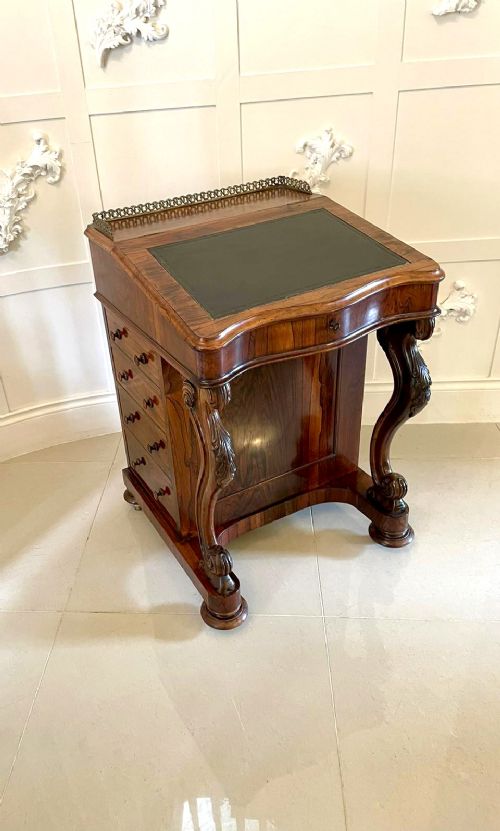
- A compact pedestal desk featuring a sloping top, popularized during the Regency and Victorian periods.
- Stationery box
- A tabletop cabinet designed to hold writing paper, envelopes, and correspondence accessories.
- Bureau bookcase
- A tall two-part furniture piece combining a lower sloping writing cabinet with upper bookshelf shelving.
- Fall front
- A hinged flap that drops down to form a horizontal or angled writing surface.
Sloped Writing Cabinet: Frequently Asked Questions
What is a Davenport desk?
A Davenport desk is a compact form of sloped writing cabinet featuring drawers to one side and a sloped top, often mounted on castors.
Cabinet makers designed them during the Regency and Victorian periods for use in smaller rooms or drawing rooms.
How do I use a bureau?
A bureau provides a fold-down sloping writing surface that reveals small drawers and compartments for letters and inkwells.
When closed, the sloping lid conceals the working area and keeps stationery neatly stored away.
What is a bureau bookcase?
A bureau bookcase combines a lower writing bureau with an upper glazed or panelled cabinet for storing books.
These taller pieces date predominantly from the Georgian and Edwardian eras.
How do I tell Georgian from Victorian pieces?
Georgian sloped writing cabinets typically feature simpler classical proportions in mahogany or oak with brass batwing handles.
Victorian and Edwardian examples often incorporate darker woods, burr walnut veneers, brass inlay, or carved details like linenfold.