


Slatted Wooden Chairs
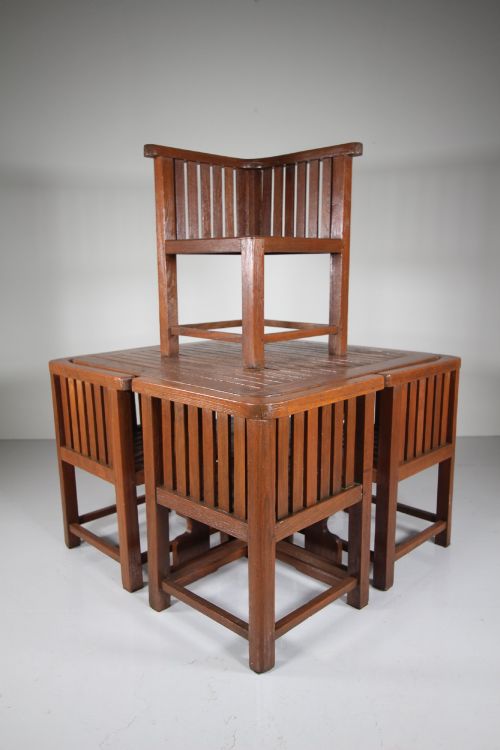
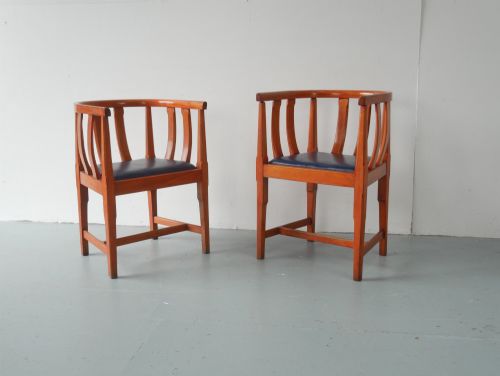
Slatted wooden chairs bring straightforward utility and honest construction into a room, spanning rustic kitchen seats to refined Georgian models.
Slatted Wooden Chairs
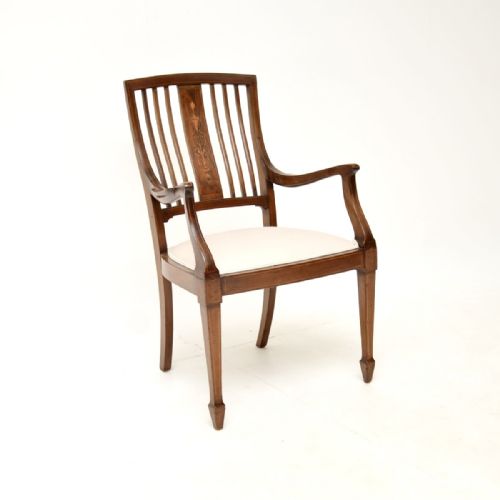
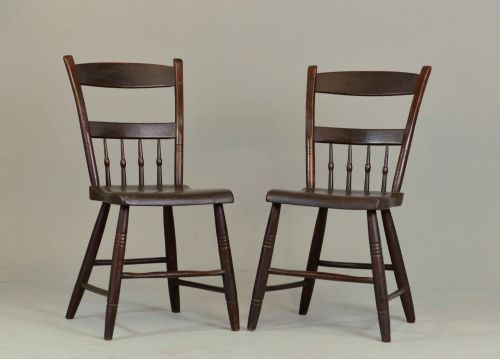
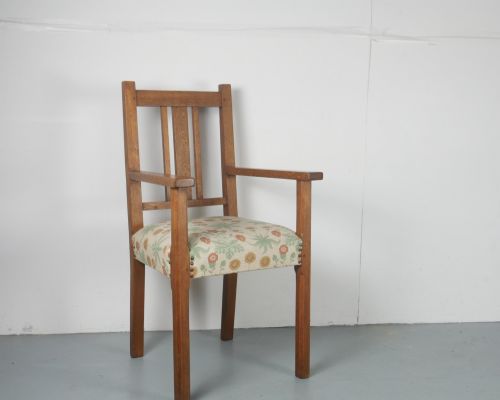
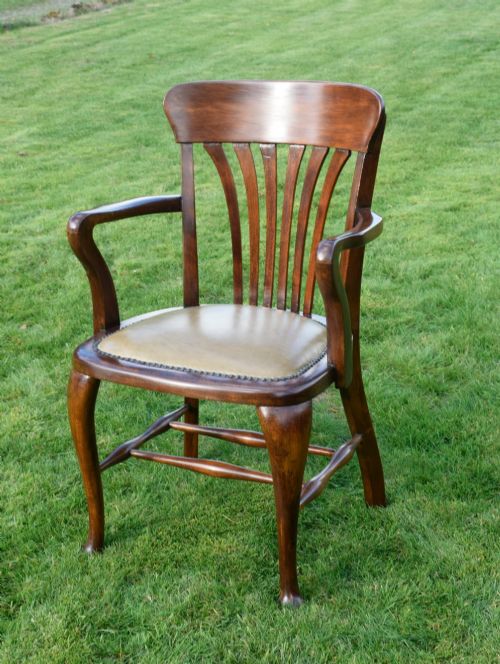
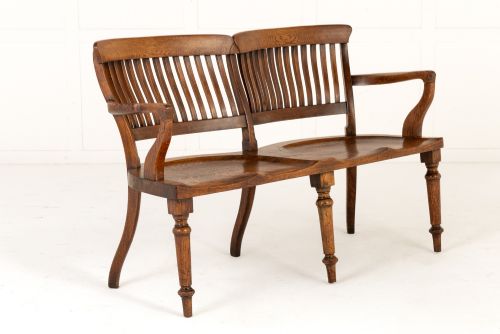
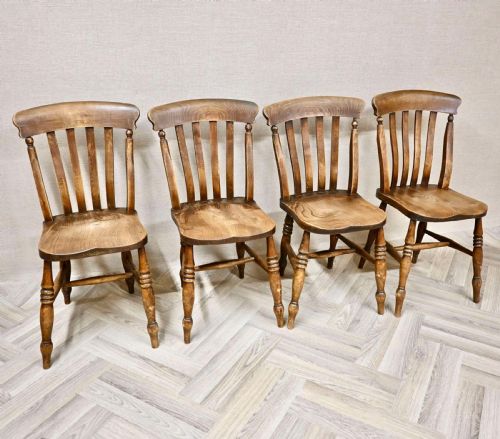
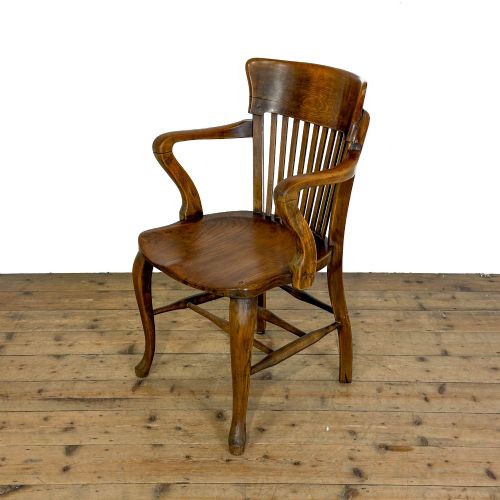
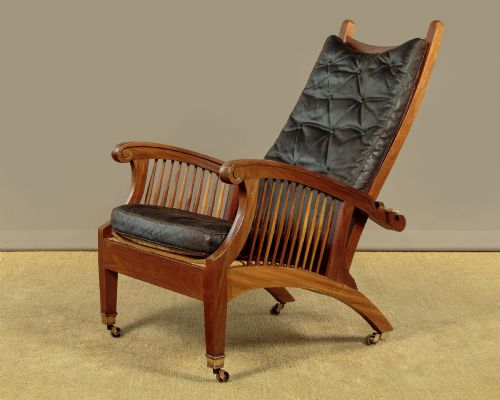
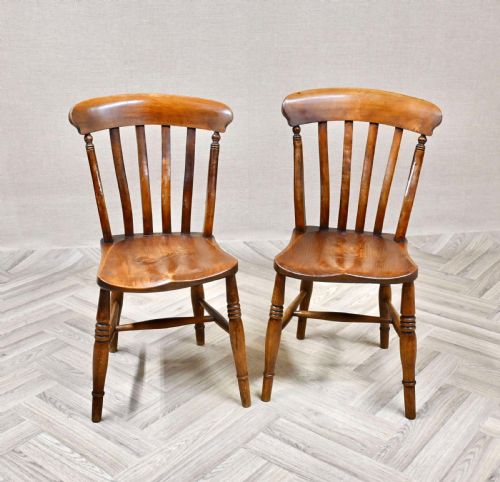
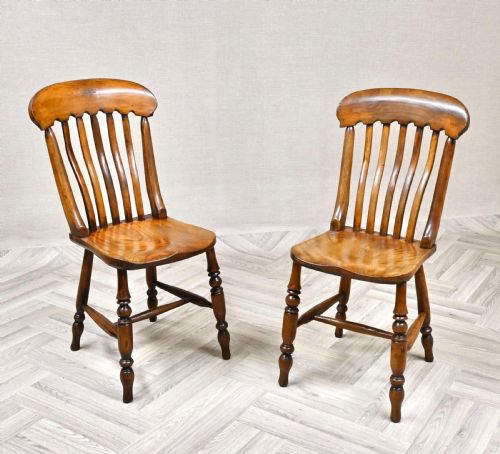
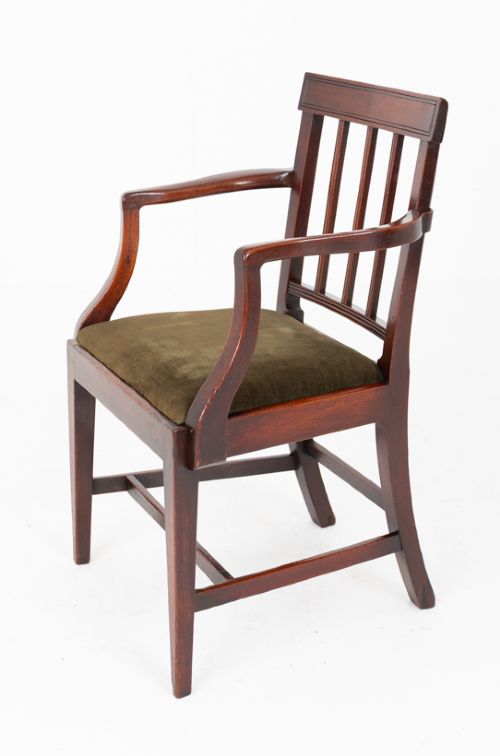
Slatted wooden chairs encompass a wide variety of seating, from 19th century country kitchen Windsors to Edwardian desk chairs and Georgian armchairs. These pieces serve practical seating needs in dining rooms, kitchens, and studies.
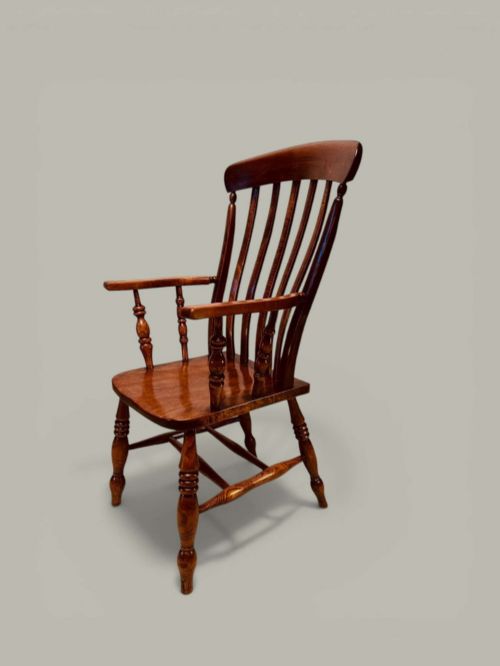
The most common examples on this page are country kitchen chairs and Windsor variants featuring elm seats and beech or ash backs. These vernacular forms reflect regional traditions across Britain and beyond.
Makers utilised sturdy domestic timbers to build dining chairs, armchairs, side chairs, and garden benches designed for daily use. The emphasis remained on functional construction rather than excessive ornament.
Materials and construction
Makers relied on solid native timbers, pairing elm seats with ash, beech, or birch for spindles, legs, and bentwood components. Oak and mahogany appear in more formal dining and desk chairs from later periods.
Traditional Windsor construction involved boring holes directly into a solid wooden seat to receive the legs and back spindles. Steam bending shaped the continuous arm bows and high backs characteristic of lath back and Windsor designs.
Slatted Wooden Chairs Retail Price Guide 2026
Typical asking prices for slatted wooden chairs among the pieces listed under this phrase on Sellingantiques today, from the lower quarter to the upper quarter. They describe what is for sale here now, not the wider market.
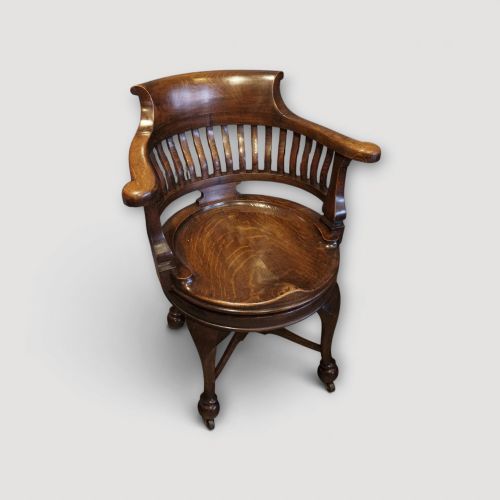
Several armchairs carry smoker's bow designs, built low and wide for gentlemen to ponder matters of state or tobacco.
Evaluating quality
Quality rests upon the selection of timber and the tightness of the joints uniting seat and spindle. Solid, unwarped elm seats show greater longevity than replacement panels.
Finer examples retain original surface patination, crisp turning on the legs, and legible maker stamps or signatures. Harlequin sets demonstrate consistency in scale and timber tone despite being gathered over time.
Edward Barnsley
The Slatted Wooden Chairs Glossary
- Windsor chair
- A chair built with a solid wooden saddle-shaped seat into which the legs and back spindles are driven directly. This construction method provides notable strength.
- Lath back
- A regional chair style featuring flat vertical wooden slats set into the back bow rather than turned spindles. These slats offer comfortable support.
- Harlequin set
- A group of dining chairs that match in general style and period but vary slightly in detail. These sets were assembled from individual pieces over time.
- Smoker's bow
- A low-backed Windsor armchair with a continuous curved arm rail, frequently used as a desk or smoking chair. They feature robust proportions.
- Rush seat
- A traditional woven seating surface made from dried marsh rushes twisted around a frame. This technique creates a textured and resilient pad.
Slatted Wooden Chairs: Frequently Asked Questions
How do I identify a Windsor chair?
Look for a thick, sculpted wooden seat that holds the legs and back spindles without a conventional frame. The spindles often connect to a bentwood bow.
Such chairs rely on this pegged method for structural integrity and longevity.
Are these chairs suitable for daily dining?
Most of these pieces were originally constructed for heavy kitchen or dining use. Their solid timber frames handle regular sitting well.
Selecting sturdy woods like elm, oak, or beech ensures reliable everyday support in a modern home.
What is a harlequin set?
A harlequin set is a collection of dining chairs that share a similar period and vernacular style but differ in subtle design details. Earlier owners gathered them individually rather than buying them as a single factory batch.
This creates a dining group with varied character while maintaining a unified aesthetic.
How do I care for antique wooden seats?
Keep wooden chairs away from direct heat sources and drastic humidity changes to prevent timber shrinkage and cracking. Regular dusting and occasional application of appropriate wax maintain the finish.
Avoid harsh chemical cleaners that strip the original surface patina.