

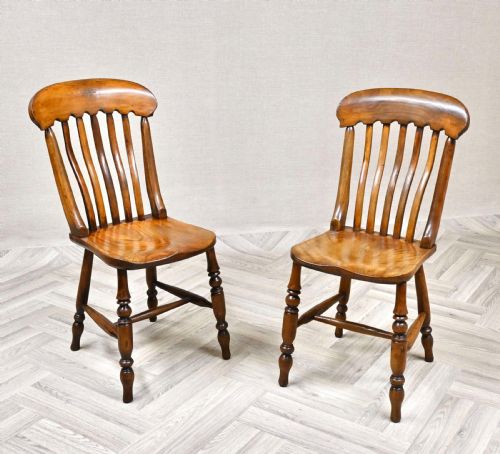
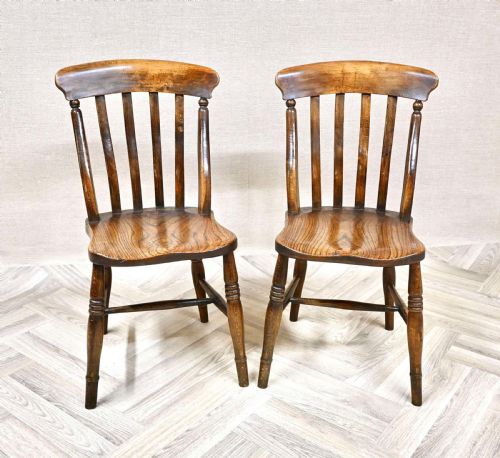
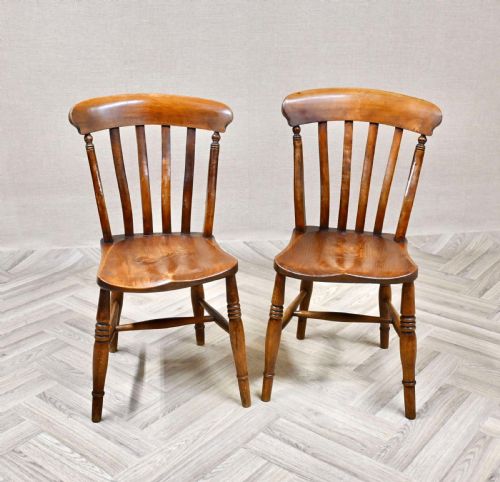
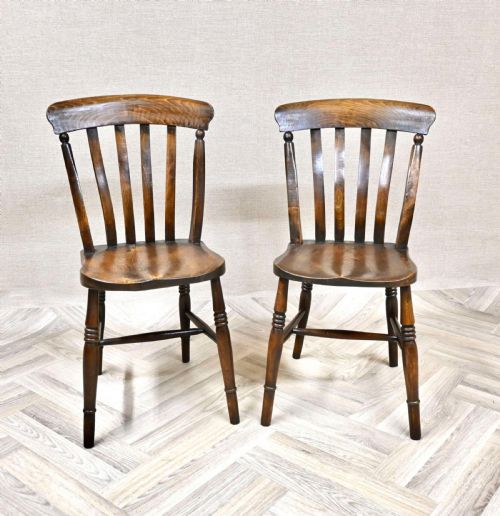
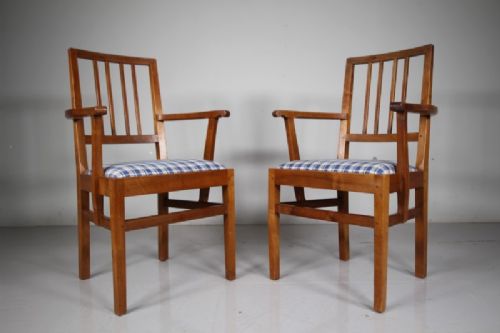
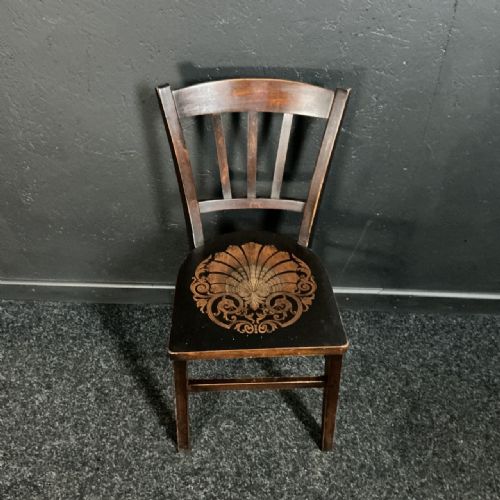
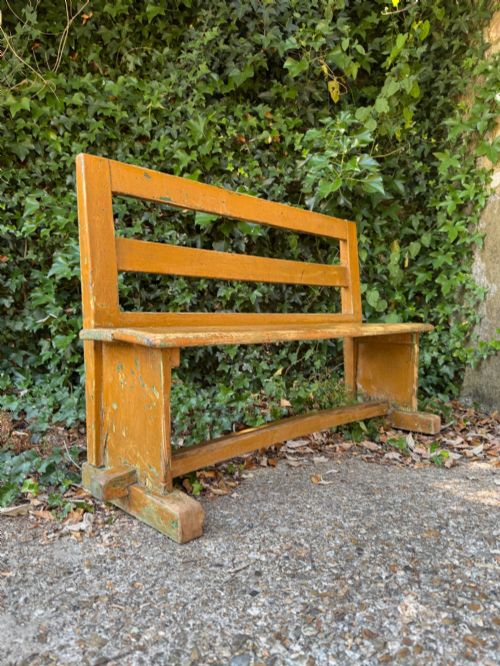
Slatted Back Dining Chairs
Slatted back dining chairs are sturdy timber seats built for daily dining, bringing honest country craft and warm wood grain to the table.
Slatted Back Dining Chairs
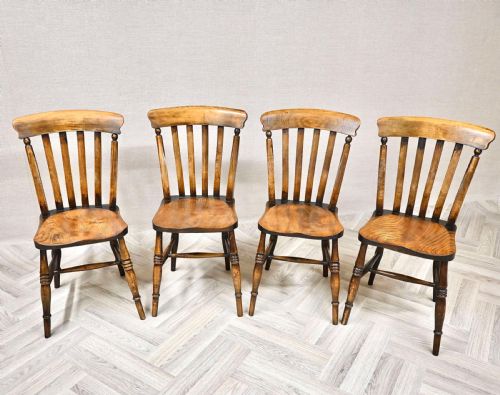
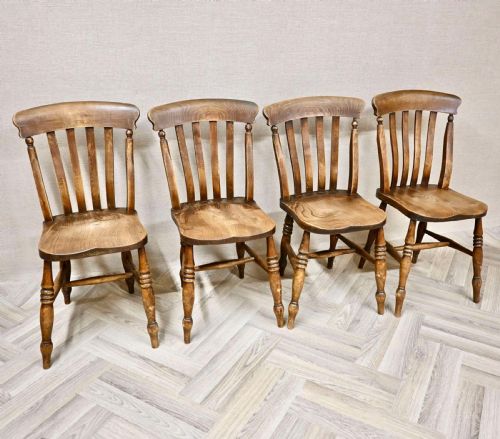
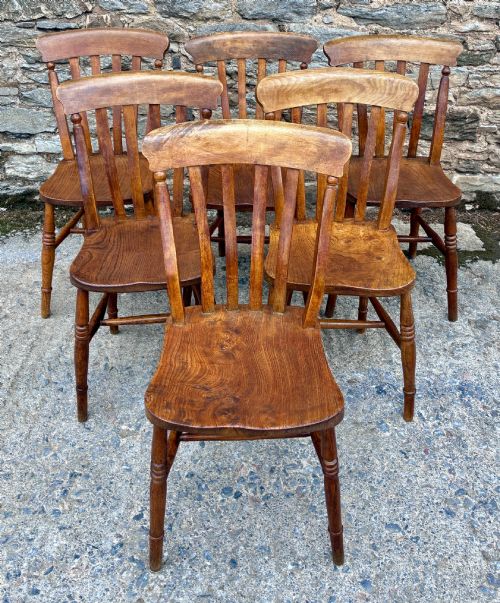
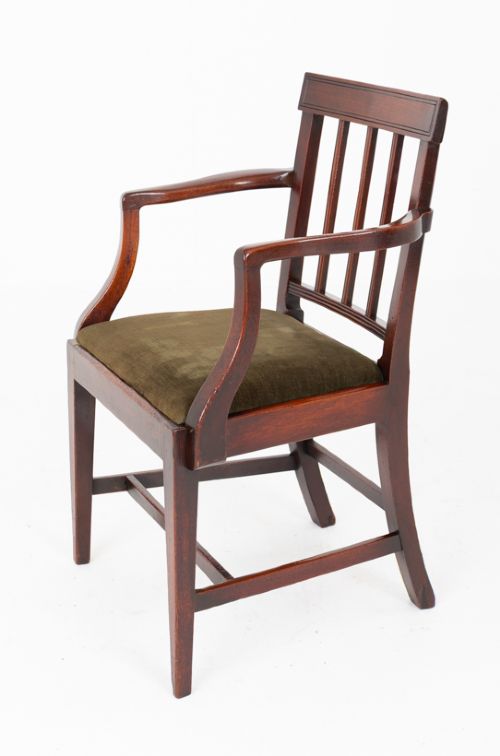
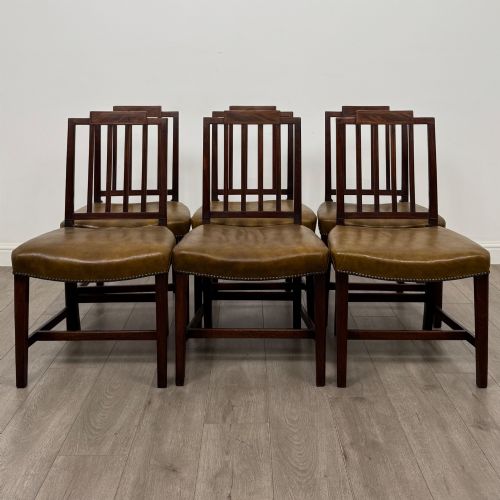
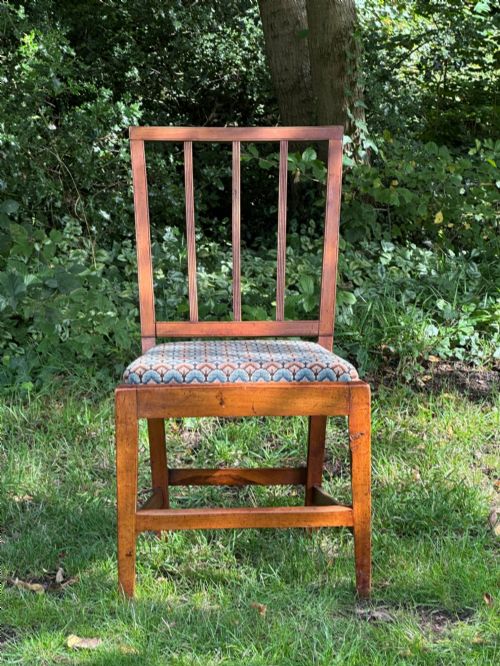
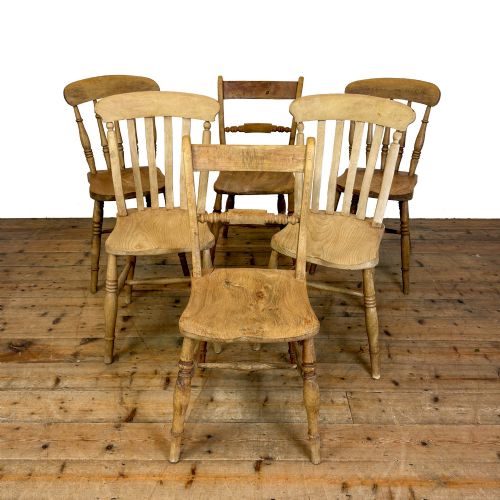
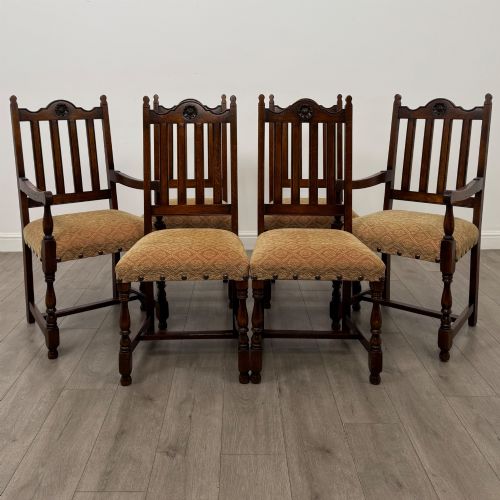
Slatted back dining chairs encompass robust kitchen seating and formal dining sets designed for everyday use around the table. You will frequently encounter nineteenth century country Windsor forms, lathbacks, and ladderbacks alongside Edwardian and Georgian mahogany designs.
The selection ranges from single farmhouse chairs in elm and rush to sets of six or eight oak dining chairs. Forms span simple side chairs and open armchairs to benches and bedroom chairs originating from British country workshops.
Makers utilised local timbers to build sturdy frames intended for heavy service in domestic kitchens and dining rooms. The enduring appeal lies in the straightforward joinery and comfortable timber seats shaped by generations of use.
Construction and materials
Cabinet makers and country joiners relied on native hardwoods such as oak, elm, beech, and ash for strength and flexibility. Elm often formed the solid saddle seats because its interlocking grain resisted splitting under weight.
Frameworks utilised traditional mortise and tenon joints, steam bending for curved laths, and turned spindles. Seats frequently incorporated woven rush or cane inserts, while finer formal dining pieces employed upholstered pads in fabric or velvet.
Common configurations include harlequin sets, pairs, and large matching groups of six or eight dining chairs.
Assessing quality and finish
Quality rests in the integrity of the timber selection and the tightness of the original joinery. Solid construction without excessive replacement parts distinguishes superior sets from heavily restored examples.
Finer pieces display balanced proportions, crisp turning on the legs and stretchers, and well-worn patina built up over centuries of daily handling.
Edward Barnsley
The Slatted Back Dining Chairs Glossary
- Windsor
- A chair built with a solid wooden saddle seat into which the legs, backrest spindles, and bow are separately bored and wedged. This technique creates a remarkably rigid and durable frame.
- Lathback
- A seating variant featuring flat wooden slats secured horizontally or vertically across the backrest frame. These slats provide solid lumbar support.
- Ladderback
- A traditional chair design incorporating horizontal arched wooden rails stacked up the backrest. The style dates back centuries and remains a staple of country workshops.
- Rush
- Dried marsh grass twisted into cords and hand-woven to form durable flat seating surfaces. It offers a resilient texture that softens with age.
- Harlequin set
- A collection of dining chairs that match in general style and period but differ slightly in minor decorative details. Such sets were assembled over time rather than bought as one uniform batch.
Slatted Back Dining Chairs: Frequently Asked Questions
How do I care for antique wooden dining chairs?
Clean timber surfaces periodically using a soft cloth and natural beeswax to nourish the grain without buildup. Avoid placing chairs near direct heat sources or in damp areas to prevent wood movement and splitting.
Check tightenings on stretchers and joints gently over time as central heating can dry out historic glues. Regular gentle use helps maintain the natural patina of the wood.
Are these chairs comfortable for long dinner parties?
Many country dining chairs feature sculpted wooden saddle seats designed to distribute weight comfortably during extended meals. Adding subtle loose squabs can provide extra softness if needed.
Ergonomics varied by period, with Georgian and Victorian makers prioritising upright posture and supportive lumbar laths. High backs and broad arms on Windsor armchairs offer particularly generous support.
Can I mix these chairs with a modern table?
Historic timber seats pair exceptionally well with contemporary glass, metal, or modern wooden dining tables. The contrast highlights the natural warmth and texture of older materials.
Harlequin sets introduce eclectic character around a simple modern dining setup without looking overly formal. The neutral tones of oak, ash, and elm blend easily into varied interior schemes.
What is the difference between a side chair and an armchair?
Side chairs are compact seats without armrests, designed to tuck neatly underneath dining tables to save floor space. They form the core of most dining sets.
Armchairs feature integrated elbow rests and are traditionally placed at the head and foot of the table. They offer a more substantial profile and greater seating enclosure.