
Six Light Ceiling Fitting
A six light ceiling fitting is a commanding overhead light source designed to anchor a room, uniting scale and illumination.
Six Light Ceiling Fitting
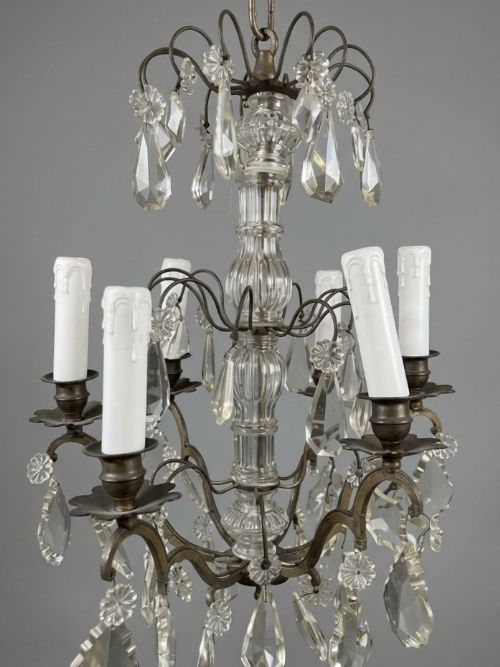
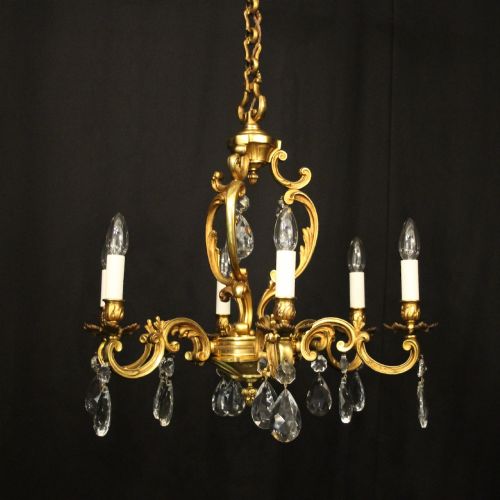
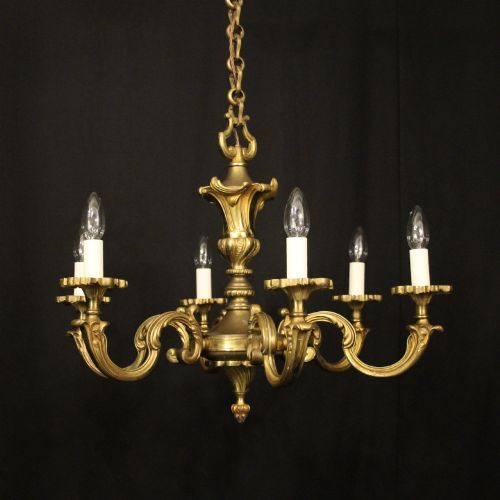
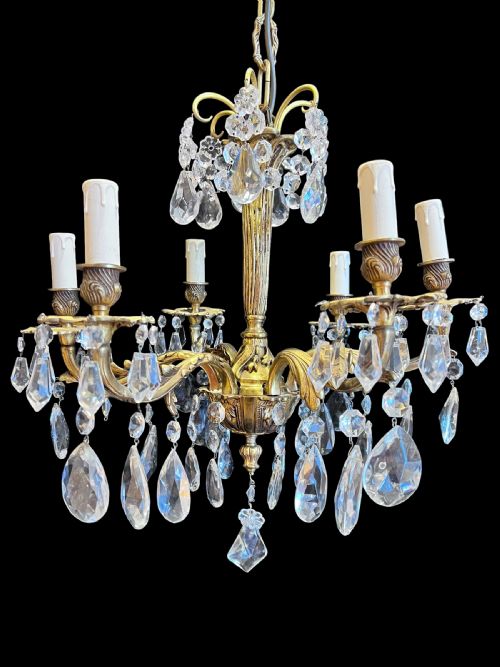
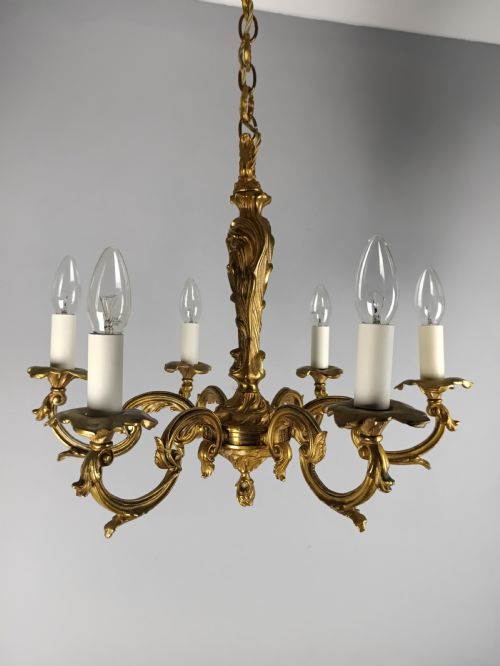
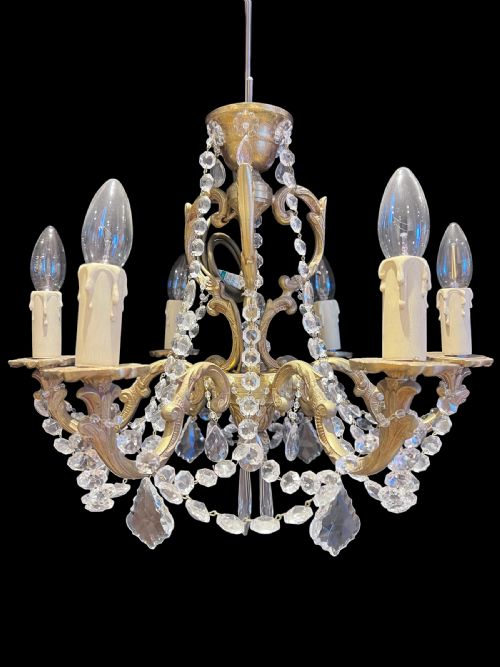
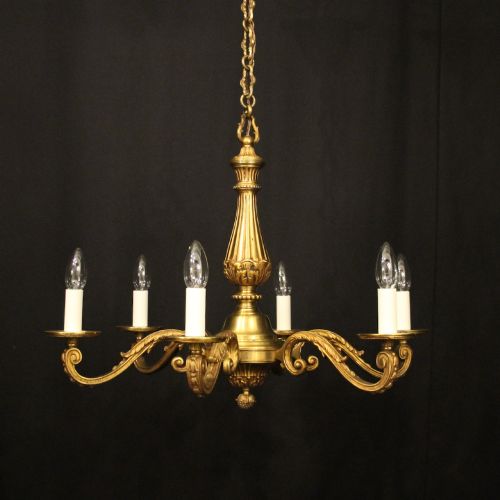
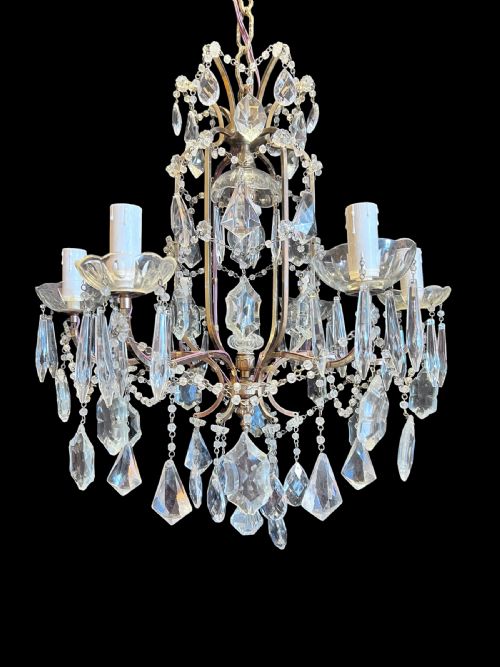
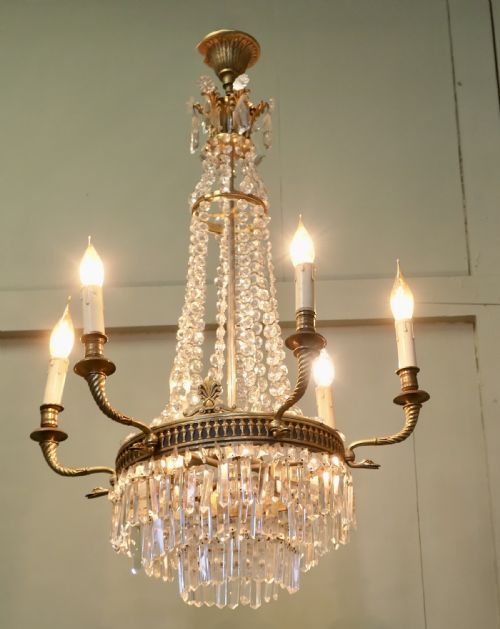
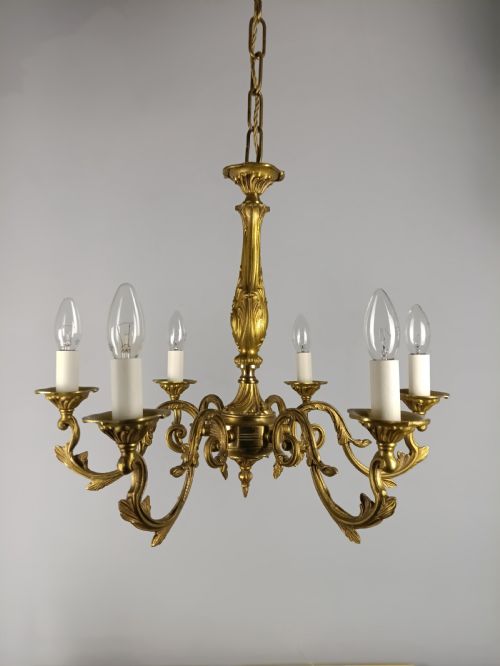
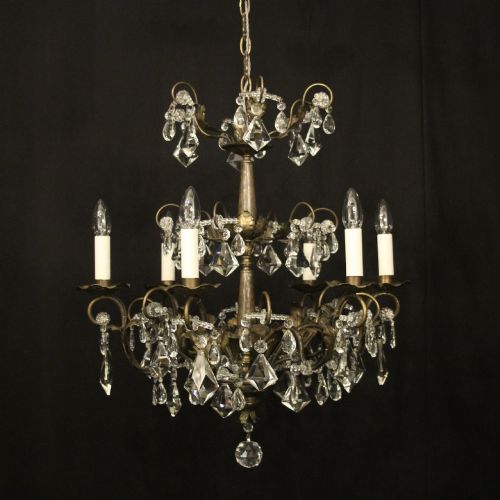
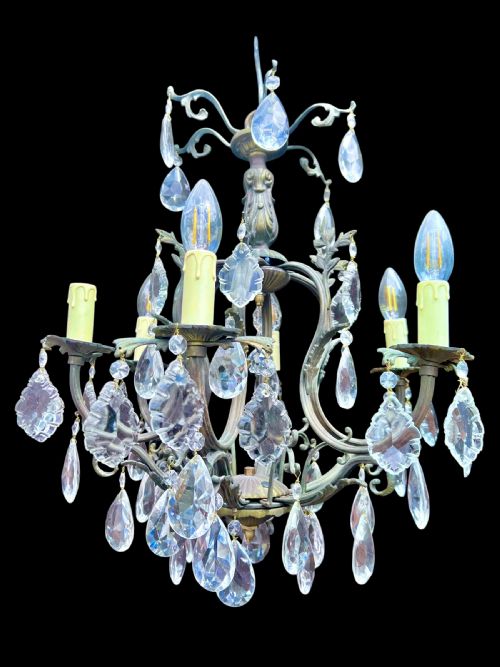
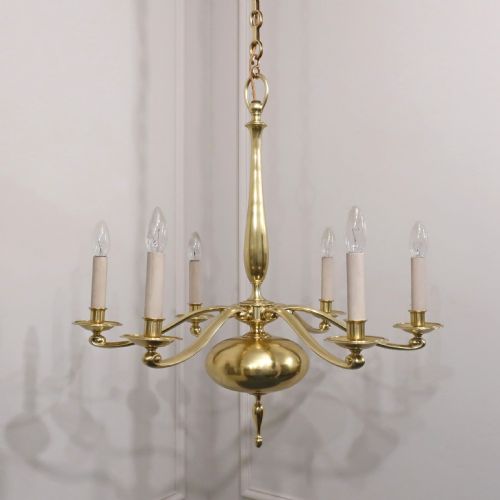
When you search for a six light ceiling fitting, you encounter substantial overhead illumination designed to anchor principal rooms. The most prevalent versions on this page take the form of French chandeliers spanning multiple decades from the late nineteenth century to the 1930s. These pieces frequently deploy arms cast in brass, bronze, or gilt metal.
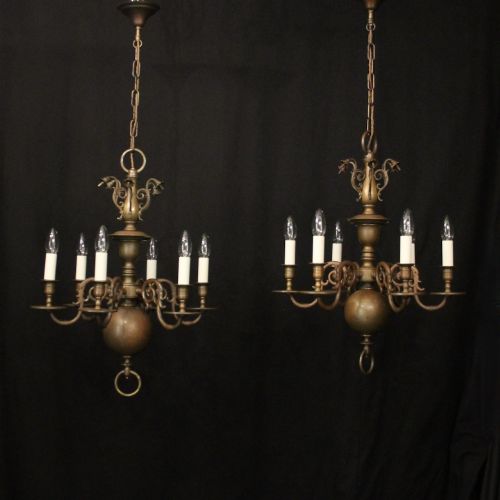
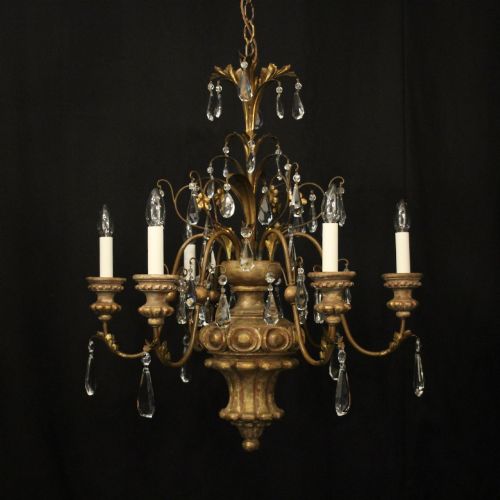
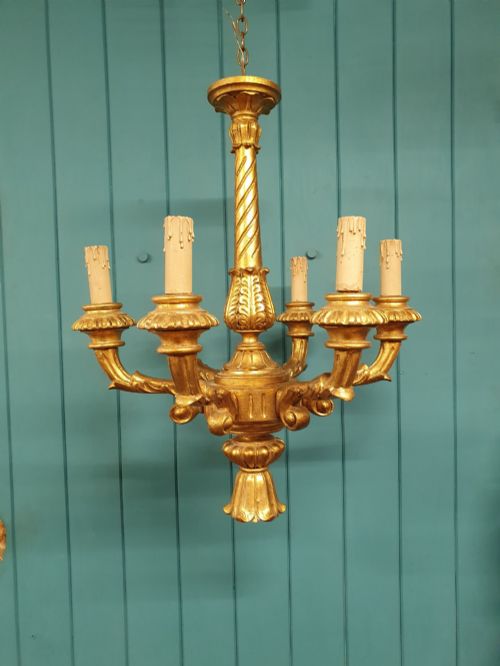
Beyond standard French brass examples, the selection encompasses specialised regional styles including Italian Florentine models and English fixtures. Forms range from compact fifteen inch arrangements to large thirty inch statements, occasionally incorporating specialised configurations like birdcage or tent and waterfall structures.
Materials and construction
Makers constructed these fittings using metal skeletons of brass, bronze, and wrought iron, often finished with gilt, silvering, or polychrome paint. Heavier structures utilise cast bronze or heavy brass to support the span of six arms.
Crystal and cut glass elements frequently suspend from the metal framework to refract light across the room. Giltwood, gesso, and silvered metal appear on specific regional pieces, particularly within Florentine and Victorian examples.
Materials recur across brass, crystal, cut glass, and gilt bronze, alongside specialised regional gesso and wrought iron.
Evaluating craftsmanship and finish
The distinction between tiers of quality rests in the crispness of the metal casting and the depth of the surface finish, whether hand-applied gilt or silver leaf. Finer pieces demonstrate superior articulation in the chasing of bronze and brass components.
Quality also manifests in the selection and cutting of crystal drops rather than moulded glass. Heavier gauge metalwork ensures structural integrity across the six arms without sag or misalignment.
G.E.C
The Six Light Ceiling Fitting Glossary
- Chandelier
- A branched ceiling fitting designed to hold multiple light sources and distribute illumination outward. This form dominates the selection of large overhead fixtures.
- Gilt Bronze
- Bronze metal coated with a thin layer of gold or gold-coloured alloy. This material provides a durable and rich golden surface finish on period frames.
- Tent and Waterfall
- A specific chandelier configuration featuring strings of crystal beads draped in a tent shape above a cascading shower of drops. This style creates dense optical refraction.
- Birdcage
- A wire or metal framework enclosing central lights, resembling an ornamental cage. It structures the distribution of crystal garlands.
- Polychrome
- Decorated in several colours. This surface treatment appears on carved wood and metal frames to introduce painted pigment.
Six Light Ceiling Fitting: Frequently Asked Questions
What rooms suit a six light ceiling fitting?
These fixtures provide substantial illumination suited to principal living spaces, dining rooms, and generous hallways. Their six-arm spread requires adequate ceiling height for proper clearance.
Smaller fifteen inch variants accommodate more intimate spaces, while thirty inch chandeliers demand larger square footage to maintain visual proportion.
How do French and Italian styles differ?
French fixtures frequently utilise gilt bronze, brass, and crystal in formal chateau or neoclassical arrangements. They emphasise symmetry and reflective crystal components.
Italian pieces, particularly Florentine examples, tend to incorporate carved wood, gesso, and polychrome finishes. These designs often favour organic or ornate floral motifs over crystal waterfalls.
Are these fittings wired for modern electricity?
Period ceiling lights undergo rewiring to meet contemporary electrical standards while preserving their antique housing. Converted candle tubes or lamp holders integrate into the original six-arm structure.
Installation requires professional assessment to ensure the ceiling can support the combined weight of metal, glass, and crystal.
How do I determine the period of a fitting?
Dating relies on stylistic markers and material combinations spanning the Victorian era through the 1930s. Art Deco influences appear in geometric brass treatments from the early twentieth century.
Earlier nineteenth-century examples often display heavy gesso, giltwood, or specialised functional forms like billiard room lights.