

Six Country Dining Chairs
Six country dining chairs bring sturdy vernacular character to a table, offering matched seating fashioned from honest regional timbers.
Six Country Dining Chairs
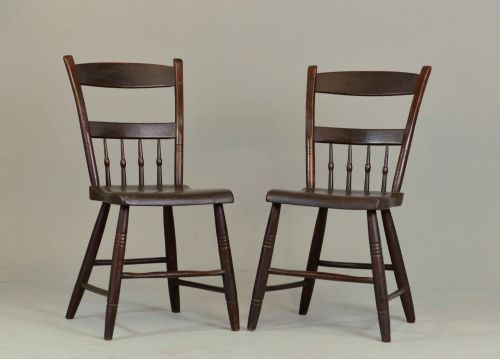
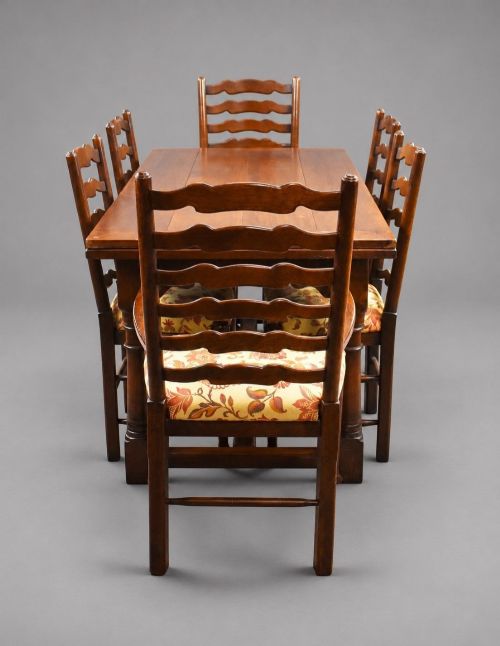
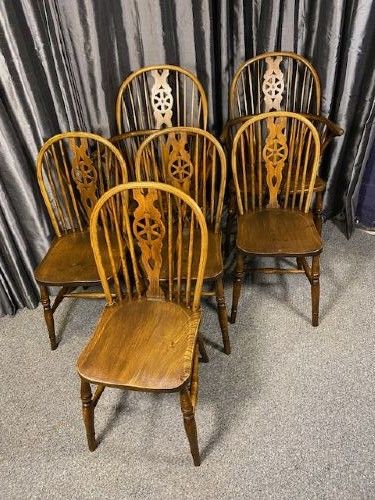
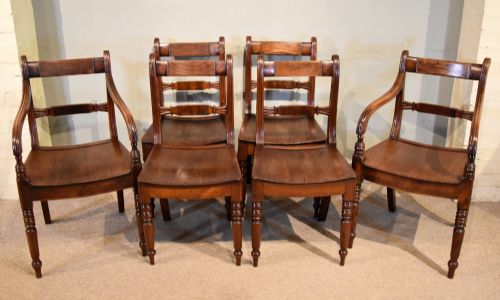
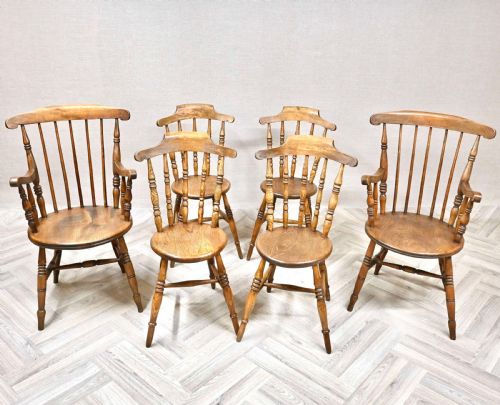
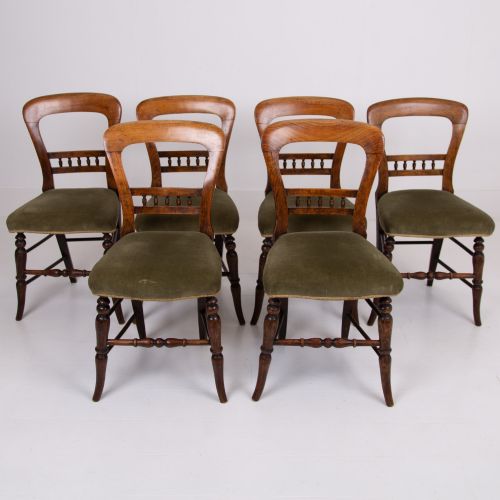
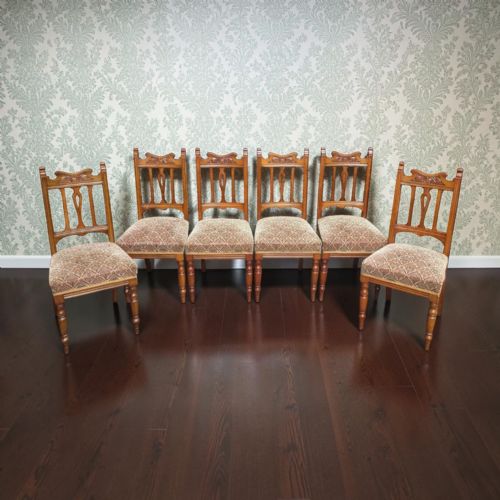
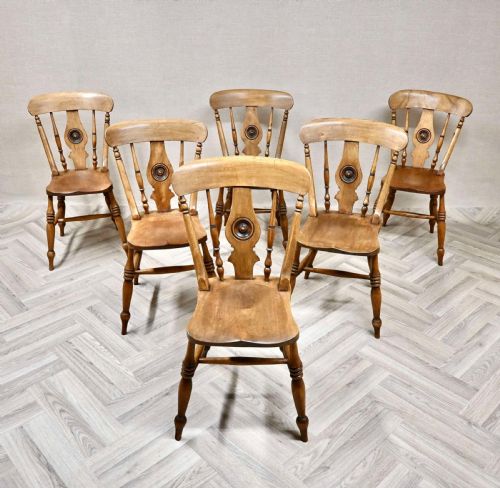
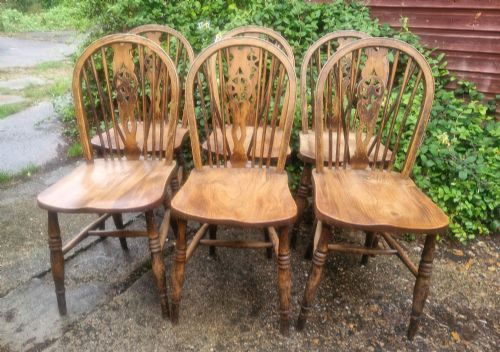
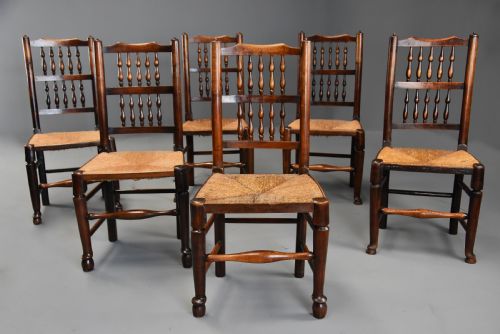
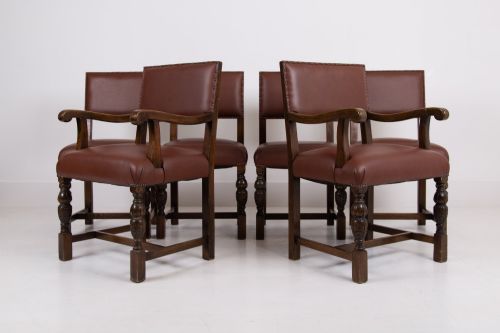
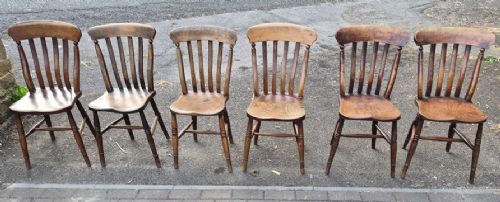
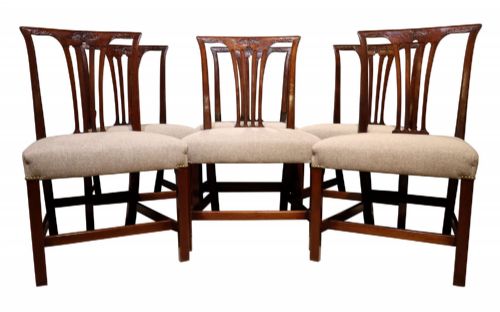
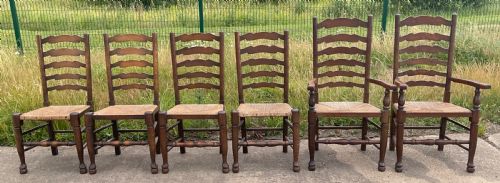
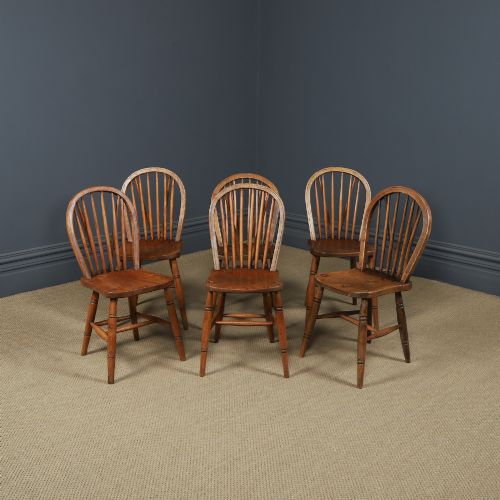
Six country dining chairs span robust Windsor forms, ladderbacks, and spindle backs originating from English, French, and American vernacular traditions. Buyers encounter matched sets alongside harlequin collections gathered together over decades.
The material palette relies heavily on native timbers such as elm, ash, beech, and oak, often paired with rush or timber seats. These pieces range from nineteenth-century farmhouse kitchen staples to more formal regional interpretations.
Makers utilised local woods for strength, selecting elm for solid saddle seats and ash or beech for resilient spindles and bentwood hoops. Construction methods prioritised utility and endurance for daily domestic life.
Materials and Construction
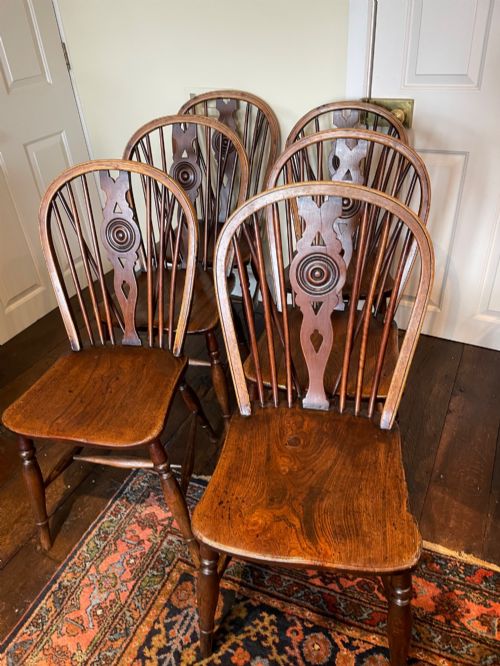
Chairwrights combined different timbers within a single frame to exploit each wood's specific mechanical properties. Elm seats provided a stable, split-resistant base for wedged legs and back stems turned from ash or beech.
Steam bending shaped hoop backs and armbows, while traditional joinery utilised through-wedged tenons and crinoline stretchers to brace the underframe. Seats were frequently carved into a comfortable saddle shape using an adze or scorp.
Six Country Dining Chairs Retail Price Guide 2026
Typical asking prices for six country dining chairs among the pieces listed under this phrase on Sellingantiques today, from the lower quarter to the upper quarter. They describe what is for sale here now, not the wider market.
Judgments of Quality
The integrity of the original joints and the thickness of the elm seat plank distinguish superior examples. Sets that retain their matching turnings and uniform timber grain display greater cohesion than assembled harlequin groups.
Surface preservation matters significantly, particularly the presence of untouched patinated finishes rather than modern stripped surfaces. Finer sets maintain original wedged construction without excessive replacement of spindles or undercarriage stretchers.
M. D. Miller & Sons Nottingham·Worksop
The Six Country Dining Chairs Glossary
- Windsor
- A chair built with a solid wooden seat into which the legs and back sticks are directly tenoned. These regional forms evolved distinct local variations across England and America.
- Harlequin set
- A collection of chairs sharing a similar style or period but assembled from various sources rather than produced together originally. Such groups typically share common materials like elm and ash.
- Wheel back
- A Windsor chair design featuring a pierced wooden splat carved in the shape of a cartwheel. This decorative backrest motif became particularly popular during the nineteenth century.
- Crinoline stretcher
- A bowed underframe connecting the legs of a Windsor chair to provide structural rigidity. These hoops often curve backward beneath the seat.
- Smokers bow
- A low-backed Windsor armchair designed for domestic comfort, sometimes called a captain's chair. They commonly feature a continuous armrail supported by turned spindles.
Six Country Dining Chairs: Frequently Asked Questions
What is a harlequin set of chairs?
A harlequin set comprises chairs that match in general style, timber, and period but were gathered individually rather than made as a single batch.
Buyers often select these groups for a relaxed dining arrangement that retains visual harmony through shared materials like elm and beech.
How do I care for antique wooden seats?
Maintaining these timbers requires simple dusting with a dry cloth and occasional application of traditional beeswax to nourish the dry wood.
Keeping the chairs away from direct heat sources and sudden temperature shifts prevents the timber seats from splitting.
Are Windsor chairs comfortable for daily dining?
Windsor chairs feature saddled wooden seats carved to fit the body, providing surprising ergonomic comfort during long meals.
Adding loose squab cushions can increase softness while preserving the visible timber grain of the seat.
How can I tell an older set apart?
Examining the undercarriage reveals tool marks, hand-turned spindles, and the weathering of native woods like ash and elm.
Older frames show construction details such as wedged through-tenons and subtle variations in hand-carved components.