

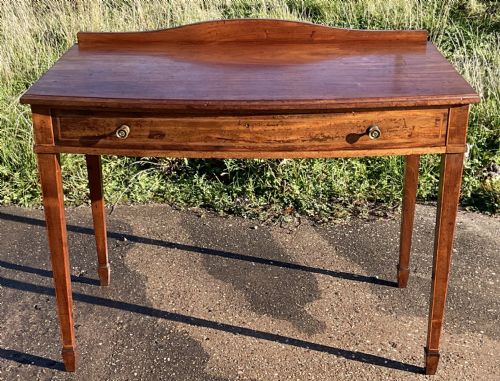
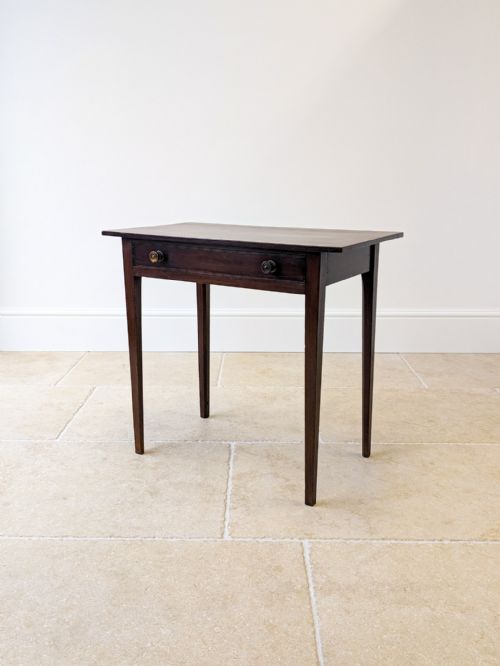
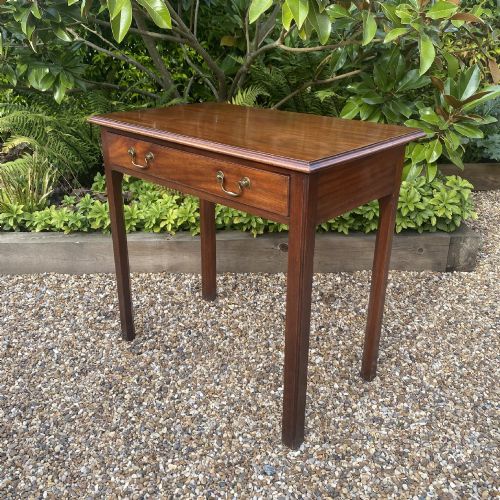
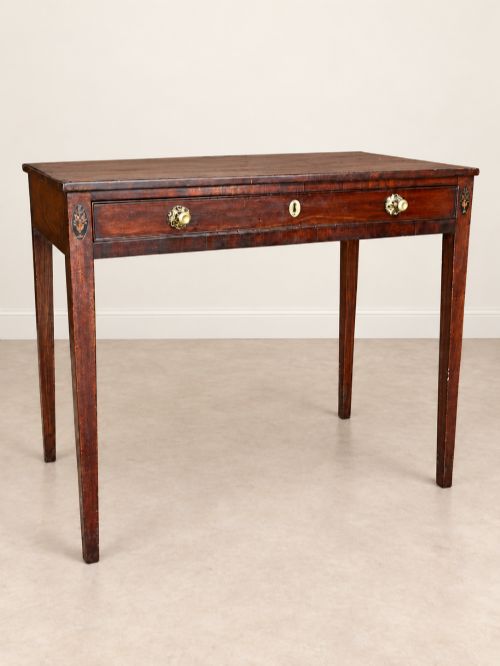
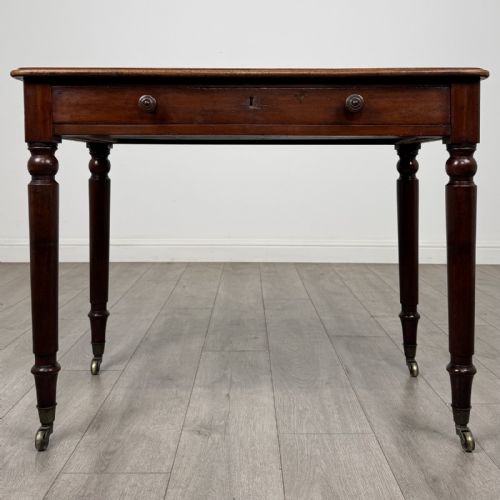
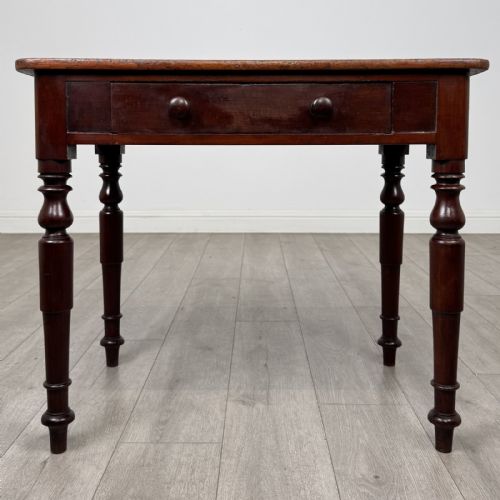
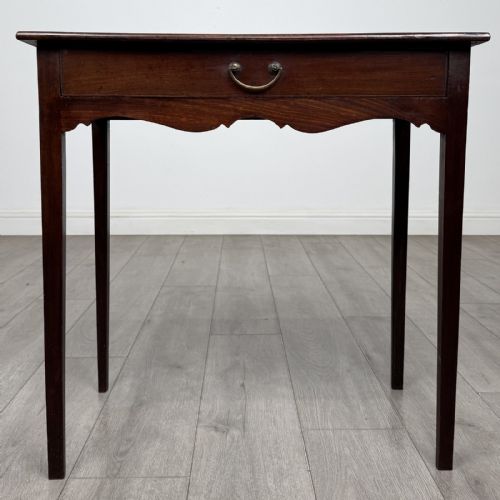
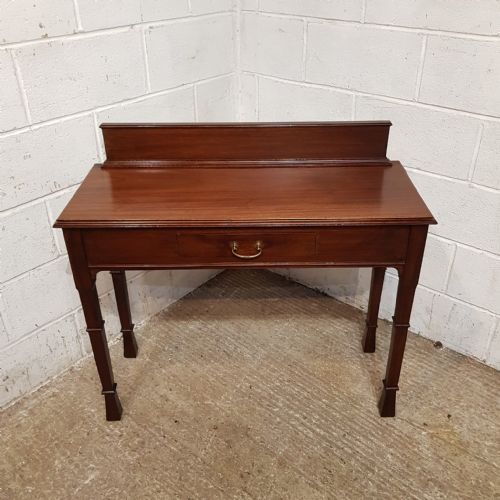

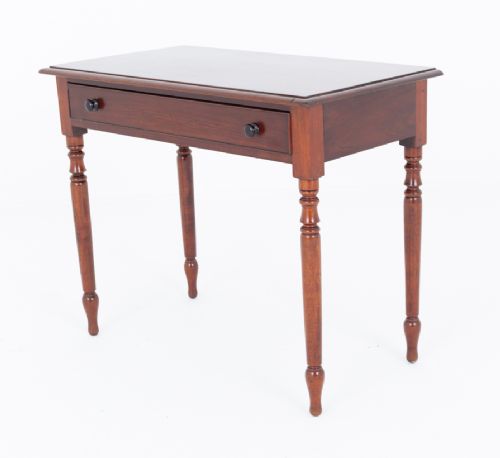


Single Drawer Mahogany Desk
A single drawer mahogany desk brings practical workspace and refined timber to a room, drawing on Georgian and Victorian forms.
Single Drawer Mahogany Desk
A single drawer mahogany desk spans side tables, writing tables, and hall tables from the Georgian, Victorian, and Edwardian periods. These compact pieces served for correspondence and study in period homes.
Georgian and George III examples dominate the selection, often taking the form of side tables or writing tables with clean lines and neat proportions. Victorian iterations follow with similar utility, sometimes incorporating boxwood inlay or bow fronts.
Makers such as Gillow & Co contributed higher-end pieces, while regional workshops produced simpler side tables and console tables in mahogany, oak, and pine.
Materials and Construction
Cabinet makers built these desks primarily from mahogany, utilising oak and pine as secondary timbers for drawer linings and internal framing. Timber selection governed the strength and grain pattern of each table.
Surface decoration frequently involved boxwood and satinwood inlay, contrasting with the dark grain of the mahogany. Brass handles and leather writing inserts completed the fittings on writing tables.
Drawer construction relied on traditional hand-cut joints, paired with turned or tapering legs depending on the stylistic period.
Single Drawer Mahogany Desk Retail Price Guide 2026
Typical asking prices for single drawer mahogany desk among the pieces listed under this phrase on Sellingantiques today, from the lower quarter to the upper quarter. They describe what is for sale here now, not the wider market.
Listings feature mahogany, boxwood inlay, leather, and brass across Georgian, Victorian, and Edwardian periods.
Judging Quality
The refinement of the timber and the crispness of the inlay distinguish standard pieces from exceptional ones. Finer desks display carefully matched mahogany veneers and delicate satinwood or boxwood stringing.
Hardware integrity and the retention of original brass handles or leather inserts influence the overall character. Heavy, solid construction without excessive structural timber replacement marks a superior build.
Gillow & Co
The Single Drawer Mahogany Desk Glossary
- Mahogany
- A durable tropical hardwood prized for its rich reddish-brown colour and stability in furniture making. It forms the primary structural and visual surface for these desks.
- Side table
- A versatile small table designed to stand against a wall, frequently fitted with a single frieze drawer. These served various domestic functions in hallways, bedrooms, and sitting rooms.
- Bow front
- A curved frontal contour swelling outwards in the centre. This shape appears on several Georgian and Victorian variants.
- Inlay
- A decorative technique where contrasting woods like boxwood or satinwood are inserted into the mahogany surface. It creates geometric borders and floral motifs.
- George III
- The period spanning from 1760 to 1820, characterised by restrained classical design and balanced proportions. Pieces from this era often feature straight tapering legs.
Single Drawer Mahogany Desk: Frequently Asked Questions
What is a single drawer mahogany desk used for?
These tables function as compact writing desks, hall tables, or dressing surfaces in modern rooms. The single drawer provides convenient storage for stationery and small items.
They fit easily into home offices and narrow corridors where space is limited.
How do I date a mahogany desk?
Dating relies on stylistic clues such as leg shape, hardware, and timber characteristics. Georgian pieces generally show simpler, lighter proportions while Victorian versions can be heavier or incorporate inlay.
Secondary woods like oak and pine inside the drawer also offer clues regarding the period of manufacture.
Are these desks suitable for daily work?
Many historical writing tables accommodate modern laptops and writing tasks comfortably. Their sturdy mahogany construction handles everyday use well.
Leather inserts found on certain models provide a durable surface for writing.
What is the difference between a side table and a writing table?
Side tables typically feature a shallow drawer and served multi-purpose roles in hallways or living spaces. Writing tables often include more knee clearance and finished backs for placement away from walls.
Both forms utilise mahogany and share similar overall dimensions.