




Single Door Vitrine Cabinet
A single door vitrine cabinet serves to display cherished objects while protecting them behind glass.
Single Door Vitrine Cabinet
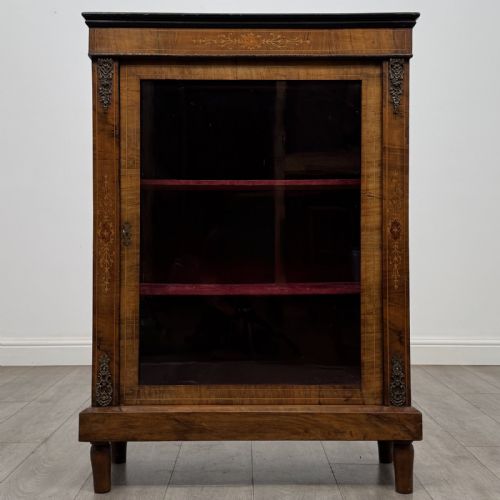
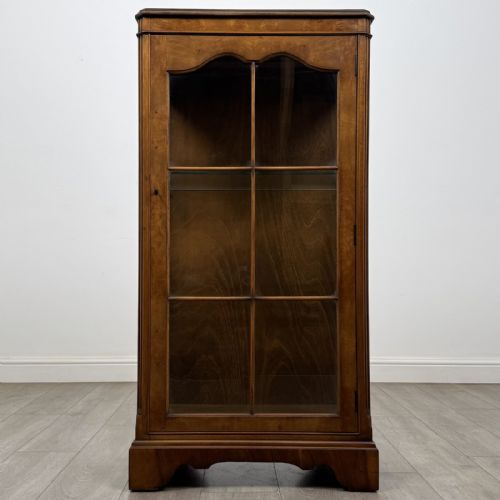
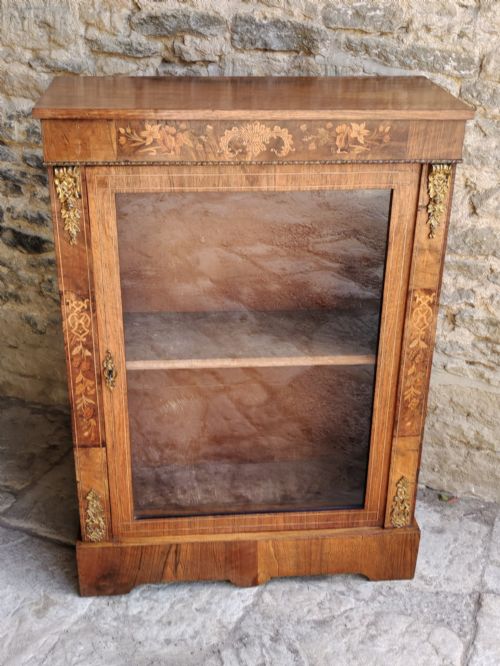
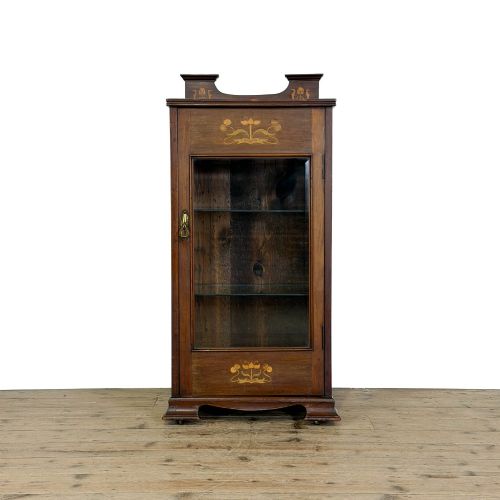
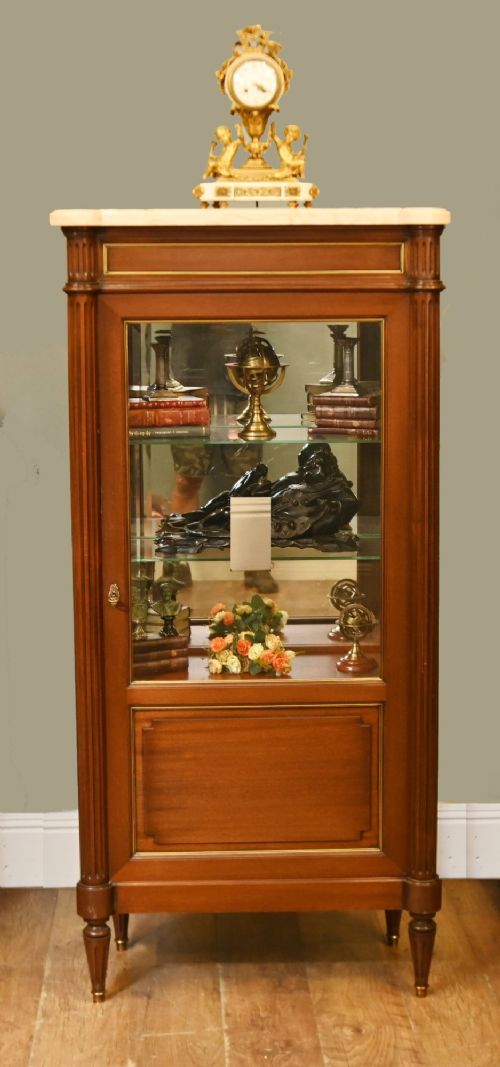
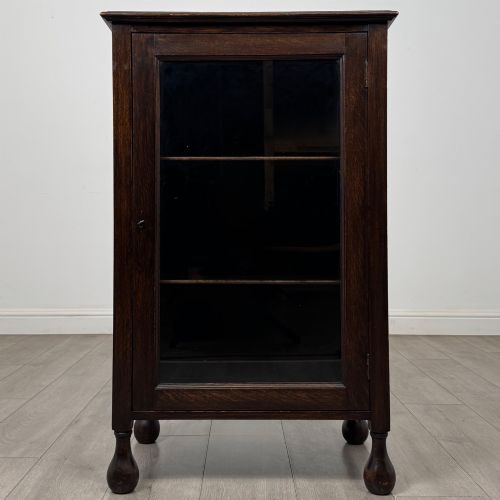
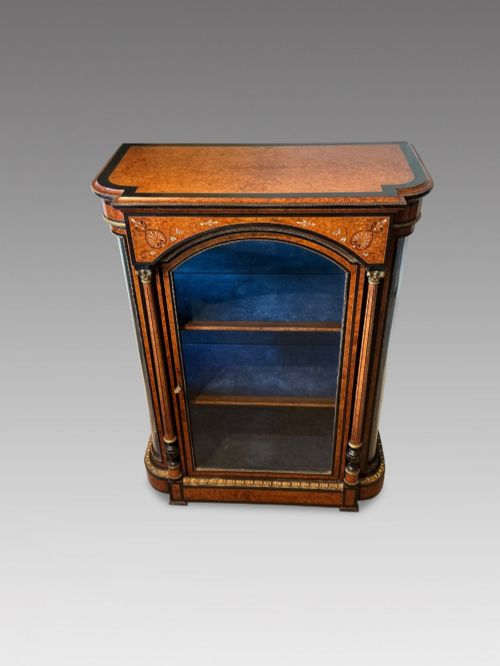
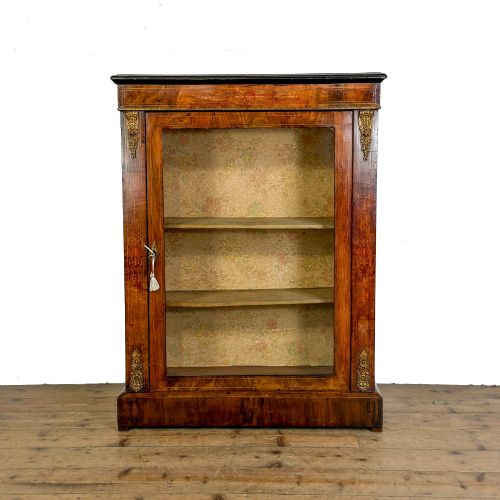
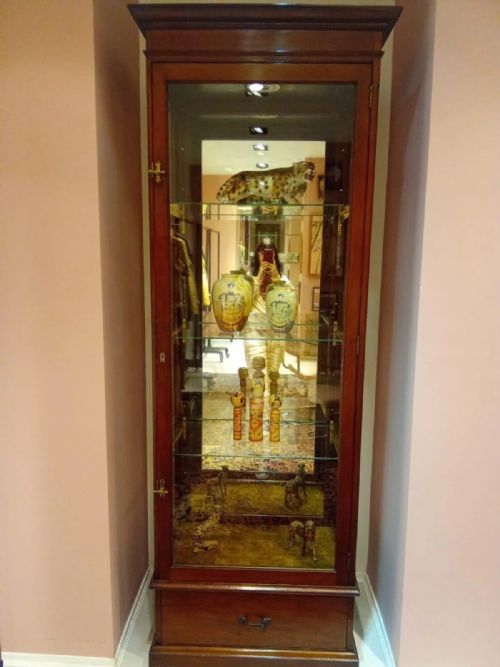
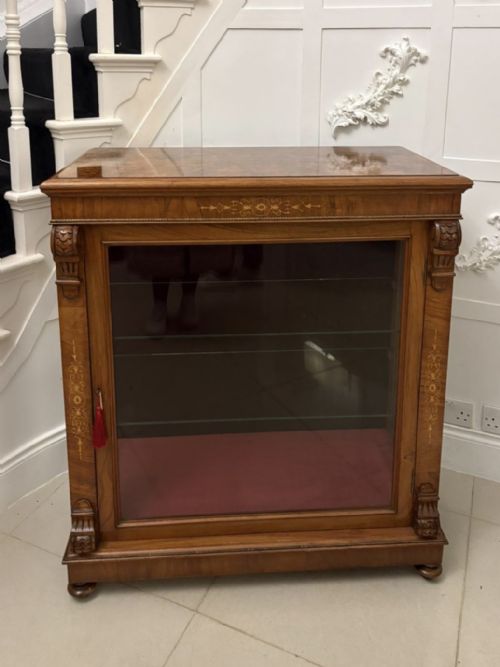
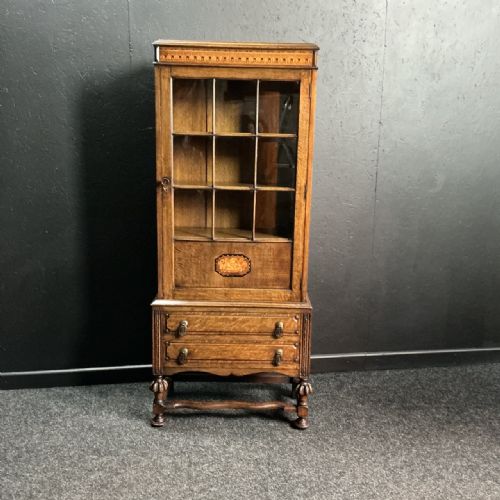
A single door vitrine cabinet is a refined display piece designed to showcase porcelain, books, and curiosities while keeping dust at bay. When exploring a single door vitrine cabinet, buyers encounter forms ranging from compact Victorian pier cabinets to Edwardian display cases and French-inspired vitrines.
The evidence spans the Victorian and Edwardian eras, alongside pieces from the nineteenth and early twentieth centuries. These cabinets function as bookcases, side cabinets, and dedicated display cupboards within domestic interiors.
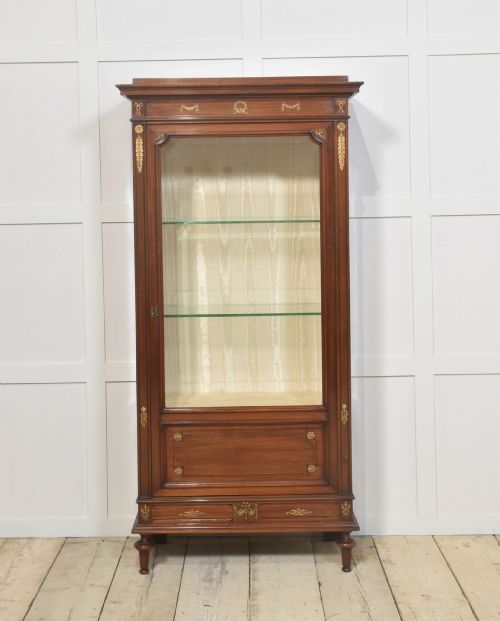
Origin and style vary from English mahogany and walnut pieces to French marble-topped vitrines with ormolu mounts. Buyers select these items for their glass doors and narrow proportions, which suit smaller spaces.
How they were made
Cabinet makers utilised primary timbers such as mahogany, walnut, satinwood, oak, and rosewood, often applying intricate marquetry and parquetry. Inlays of lighter woods create contrasting decorative borders along the panels and cornices.
Glazing forms a central element, with glass fitted into single doors to reveal the interior shelves. Brass mounts, ormolu details, and marble tops provide structural accents and decorative contrast on specific French and English models.
Single Door Vitrine Cabinet Retail Price Guide 2026
Typical asking prices for single door vitrine cabinet among the pieces listed under this phrase on Sellingantiques today, from the lower quarter to the upper quarter. They describe what is for sale here now, not the wider market.
Some cabinets hide adjustable glass shelves behind their single doors, perfect for objects of all heights.
What varies in quality
The refinement of the timber veneers and the intricacy of the marquetry inlay determine the standing of a cabinet. Finer examples display carefully matched grain patterns and precise floral or geometric wood selections.
Hardware and secondary materials differentiate standard production from superior pieces. Cast ormolu mounts, heavy marble tops, and subtle timber choices elevate the execution of the cabinet.
The Single Door Vitrine Cabinet Glossary
- Vitrine
- A glass-fronted cabinet designed specifically for the display of fine objects and porcelain. These pieces often feature glazed sides as well as a single glazed door.
- Pier cabinet
- A narrow cabinet traditionally built to fit the wall space between windows. Victorian examples in walnut and mahogany frequently incorporate single glass doors.
- Ormolu
- Gilded bronze used for decorative mounts and furnishings on French and influenced English cabinets. It provides a bright metallic contrast against dark woods like ebonised finishes.
- Marquetry
- Decorative woodwork where pieces of veneer are fitted into a ground material to form designs. Floral and geometric patterns appear across Victorian walnut surfaces.
- Parquetry
- A geometric mosaic of wood pieces used for patterning cabinet surfaces. This technique appears on finer satinwood and hardwood panels.
Single Door Vitrine Cabinet: Frequently Asked Questions
Where should I place a single door vitrine cabinet?
These narrow cabinets suit alcoves, hallways, or drawing rooms where floor space is limited. Their single door design allows them to fit against shorter wall stretches.
Position the cabinet away from direct sunlight to protect displayed contents and prevent timber fading over time.
How do I clean the glass and timber?
Dust the timber surfaces regularly with a soft, dry cloth to maintain the polish of mahogany, walnut, or satinwood. Avoid modern silicone sprays that can damage antique polishes.
Clean the glass panels using a mild glass cleaner applied to a cloth rather than sprayed directly, preventing moisture from reaching the wooden frame.
Can I adjust the internal shelves?
Many surviving display cabinets and shop cases feature adjustable glass or wooden shelving supported on rack systems. This allows the interior height to be adapted for different collections.
Take care when moving shelves within older cabinets to avoid chipping the edges of the glass or scratching the interior veneer.
How do I distinguish Victorian from Edwardian cabinets?
Victorian cabinets often utilise dark walnut with heavy marquetry inlay, ebony details, and robust proportions. They date from the mid to late nineteenth century.
Edwardian pieces tend to favour lighter satinwood, mahogany, and neoclassical revival motifs with slender legs and refined stringing lines, dating from around nineteen hundred.