


Silvered Metal Light Base
These silvered metal light base pieces combine utility and ornament, offering period lighting solutions from various eras.
Silvered Metal Light Base
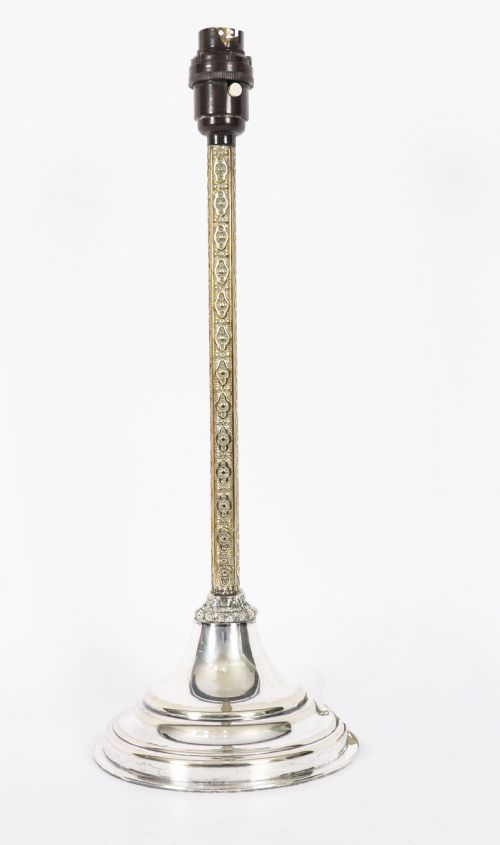
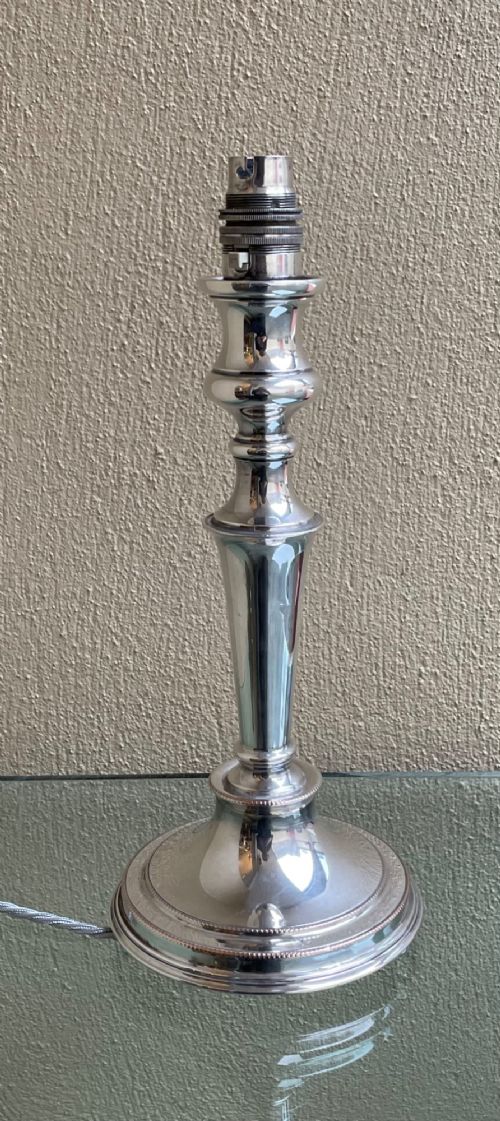
A silvered metal light base search brings together lighting fixtures and candle supports created across multiple centuries and stylistic movements. Buyers encounter table lamps, candlesticks, and candelabra fashioned from diverse metallic foundations finished with silver plating or nickel.
The selections available here represent periods ranging from the eighteenth century through the Edwardian era and into the nineteen-thirties. Forms shift from Georgian and Victorian Rococo Revival designs to sleek Art Deco interpretations and French ecclesiastical pieces.
Table lamps and candlesticks dominate the selection, often incorporating secondary materials alongside the primary metal structure. These objects bridge functional interior illumination and decorative metalwork craftsmanship.
Distinctions in quality and execution
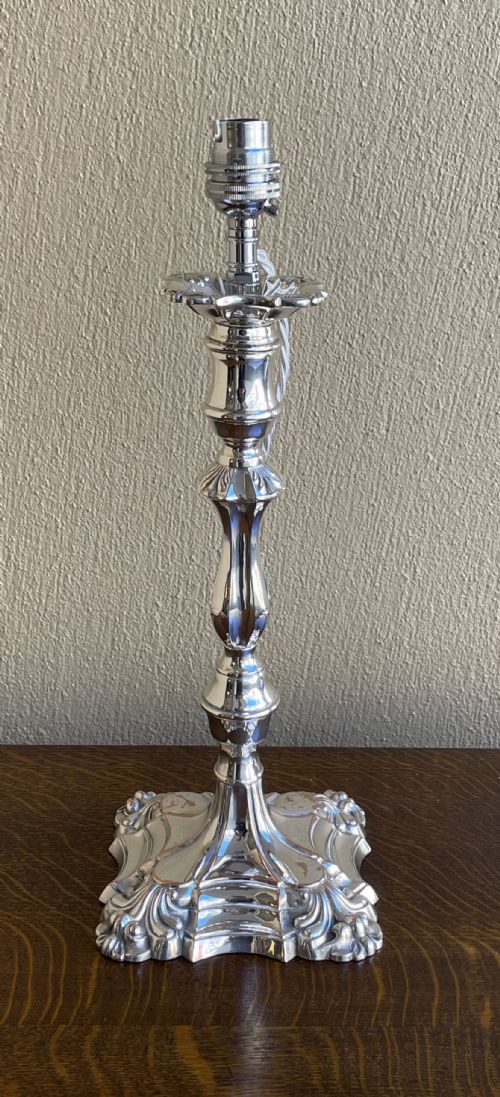
Quality separates through the crispness of casting detail in styles like Art Nouveau pewter or Victorian Rococo ornamentation. Superior examples display refined proportions and hand-finishing that remain distinct from mass-produced utility items.
The durability of the silver plating or metal surface treatment dictates long-term appearance, with thicker applications withstanding decades of handling. Maker attribution, such as pieces bearing marks from WMF or Mappin & Webb, elevates the standing of specific objects.
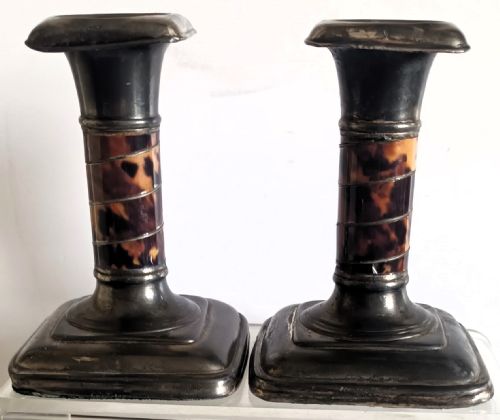
Condition of the underlying metal and any secondary materials like tortoiseshell or applied gilt work influences the integrity of the piece. Intricate metalwork requires preservation of fine details without over-cleaning.
The listings span the eighteenth, nineteenth, and twentieth centuries, incorporating silver plate, pewter, brass, and Bakelite.
Mappin & Webb·Muller Bros·WMF
The Silvered Metal Light Base Glossary
- Silver Plate
- A thin layer of silver applied to a base metal core such as brass, copper, or pewter. This technique provided the appearance of solid silver at a lower production cost.
- Pewter
- A malleable metal alloy consisting primarily of tin mixed with copper and antimony. It was frequently cast into decorative candlesticks during the nineteenth century.
- Spelter
- A zinc alloy commonly used as a substitute for bronze in decorative figures and lamp bases, particularly during the Art Deco period.
- Parcel Gilt
- A decorative treatment where specific areas of an object are partially gilded with gold leaf while other sections retain the silvered metal finish.
- Candelabra
- A branched candlestick designed to hold multiple candles simultaneously, often engineered on a substantial metal base for stability.
Silvered Metal Light Base: Frequently Asked Questions
How do I clean a silvered metal light base?
Clean surfaces gently with a soft, dry cloth to remove dust without disturbing the plating. Avoid abrasive metal polishes that can wear away thin silver or nickel layers.
Test any cleaning method on a hidden area first. Preserving the patination of nineteenth and twentieth-century metals maintains their historical character.
Are these antique lamps safe to use?
Many older table lamps require professional rewiring to meet modern electrical safety standards. Check the internal wiring and plug before connecting the fixture to a power source.
Consult a qualified electrician if the cord or socket shows age. Candlesticks require no electrical updates and function simply with standard taper candles.
What is the difference between a lamp and a candlestick?
Lamps are wired for electricity to provide constant illumination through bulbs and shades. Candlesticks hold wax candles in a fixed nozzle without electrical components.
Some antique candlesticks are later converted to lamps, altering their original function. Examine the top fitting to determine if it was manufactured for a candle or a bulb.