




Silvered Metal Candleholder
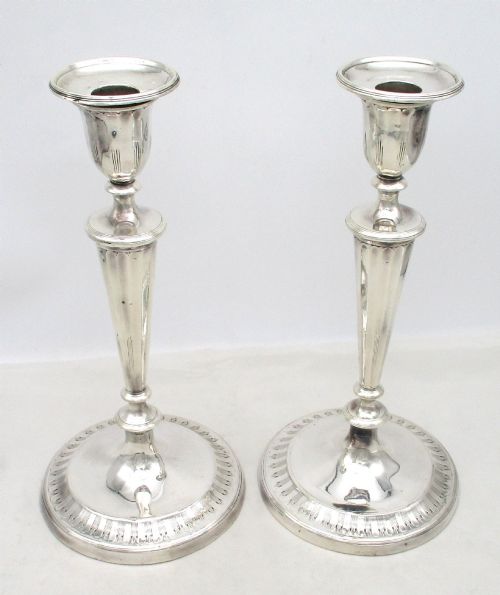
These silvered metal candleholder pieces bring tactile historic light to a room, ranging from robust Victorian pewter to sleek Art Deco spelter.
Silvered Metal Candleholder
A silvered metal candleholder brings together domestic lighting and reflective metal surfaces across several distinct historic periods. Buyers hunting for a silvered metal candleholder encounter table candlesticks, multi-light candelabra, and wall-mounted sconces.
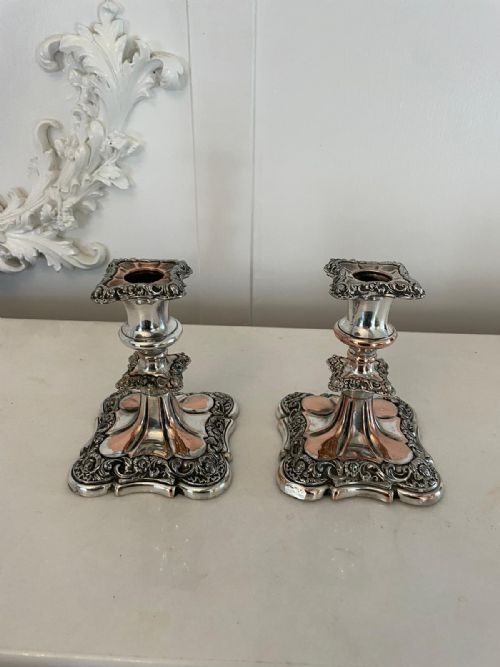
The selections span nineteenth century Victorian revivals, Regency Sheffield plate, and later twentieth century modernist designs. Pewter and silver plate dominate the offerings, often shaped in Rococo, Art Nouveau, or geometric Art Deco forms.
Materials and construction methods
Base metals including pewter, brass, copper, and spelter form the structural bodies of these items, shaped through casting or fabrication. Many pieces receive a layer of silver plate or Old Sheffield plate to emulate solid silver.
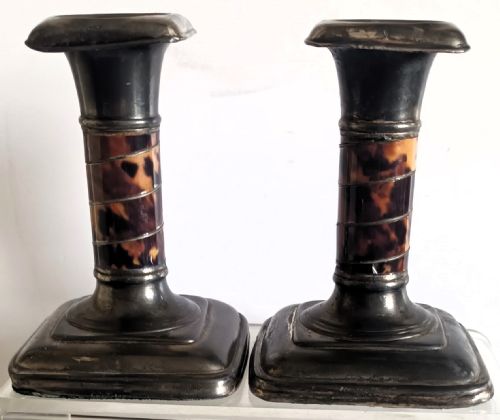
Makers occasionally incorporate contrasting inlays such as tortoiseshell into pewter frames or apply specialised silvering techniques to achieve reflective surfaces.
Listings feature items from the eighteenth, nineteenth, and twentieth centuries, spanning Georgian, Regency, Victorian, Art Nouveau, and Modernist eras.
Distinctions in craftsmanship and design
Quality rests upon the crispness of cast ornamentation, such as fluid Rococo scrolls or defined Art Nouveau plant motifs, against softer or worn castings. The preservation of the original silver plating or the rich patina of base metals dictates the visual weight of the piece.
Proportion and structural balance separate standard production items from balanced pairs with well-cast weighted bases and secure sconces.
Blagden, Hodgson & Co.·Liberty & Co.
The Silvered Metal Candleholder Glossary
- Sheffield Plate
- A composite material formed by fusing a thin sheet of silver to a thicker copper ingot. This technique was widely utilised before modern electroplating became standard.
- Pewter
- A malleable alloy composed primarily of tin, combined with copper and antimony. It forms a dull grey surface that accepts patination and detailed casting.
- Spelter
- A zinc alloy frequently utilised as a substitute for bronze or brass in decorative figures. It accepts metallic paints and silvered finishes readily.
- Sconce
- A wall-mounted lighting fixture designed to hold candles. These items project illumination outward from vertical surfaces.
- Candelabra
- A branched branch-holder designed to support multiple candles simultaneously. They often feature removable nozzles for cleaning wax.
Silvered Metal Candleholder: Frequently Asked Questions
How do I clean silvered metal candleholders safely?
Dust the item gently with a dry, soft microfibre cloth to remove loose particles. Avoid abrasive polishes that strip thin silver plating or disrupt the natural patina of base metals.
For stubborn residue, use a mild, neutral soap solution on a damp cloth, drying the metal thoroughly immediately afterward.
Are these candleholders suitable for daily use?
Most historic candlesticks and sconces function well for routine lighting provided standard taper candles fit securely. Ensure you extinguish flames before wax reaches the metal or the socket.
Use protective drip guards if necessary to prevent stubborn wax accumulation on antique silver plate or pewter.
How can I tell Victorian pieces from Art Deco examples?
Victorian examples lean heavily into ornate historical revivals, featuring Rococo scrolls, botanical asymmetry, and heavy cast pewter or silver-plated brass. They prioritise rich surface texture and traditional decorative motifs.
Art Deco items embrace clean geometric lines, stylised figures such as Hollywood girls, and modernist silhouettes typical of the nineteen-thirties.
What is the difference between Sheffield plate and silver plate?
Sheffield plate involves mechanically fusing silver sheet to copper through heat and pressure. This creates a durable laminated material characteristic of eighteenth and early nineteenth century production.
Standard silver plate relies on an electrochemical process to deposit a thin layer of silver onto a base metal substrate.