


Silvered Metal Candelabra
Silvered metal candelabra bring genuine warmth to a room, offering the unmistakable gleam of plated copper, bronze, or spelter without the constant upkeep of solid silver.
Silvered Metal Candelabra
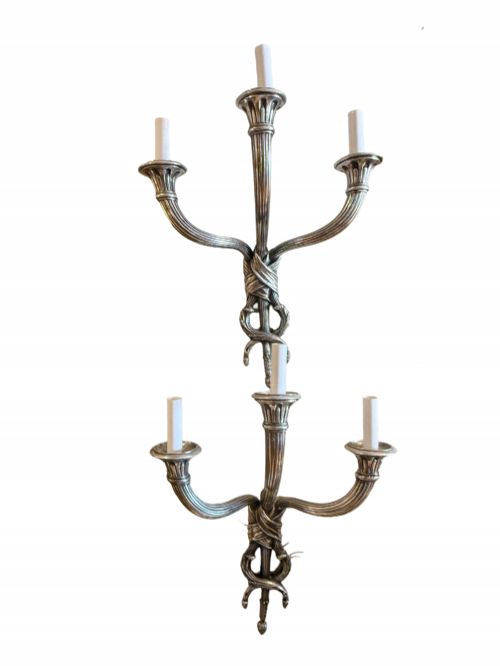
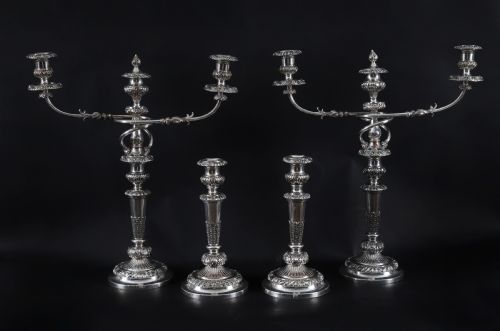
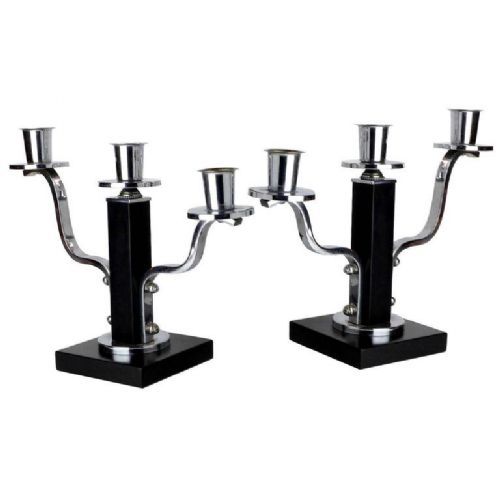
Silvered metal candelabra encompass branch-bearing table pieces, wall sconces, and candle lamps produced across several centuries, with forms ranging from restrained classical suites to expressive figures. When searching for silvered metal candelabra, buyers encounter objects spanning the eighteenth century through the art deco era, reflecting shifts in interior lighting taste.
The selection here draws heavily upon nineteenth-century revival styles and twentieth-century modernism, including French neoclassical wall sconces and art nouveau maiden figures. Buyers are most likely to meet silver plated and old Sheffield plate examples alongside spelter and nickel plated pieces designed for domestic illumination.
How they were made
Maker workshops employed copper, bronze, and spelter as base metals, applying silver plating or a silvered finish to achieve a bright reflective surface. Sheffield plate techniques fused a thin sheet of silver to a thicker copper base, creating durable vessels with rich metallic depth.
Art nouveau and art deco pieces often utilised cast spelter or pewter adorned with figural details, while grander Georgian and Victorian suites relied on heavy silver plating over copper foundations. Crystal elements and onyx accents occasionally complemented the metal branches, adding textural contrast to the finished lighting.
Listings feature silvered metal pieces spanning the eighteenth century to nineteen thirty, incorporating copper, brass, and onyx.
What varies in quality
Quality reveals itself in the crispness of the casting and the integrity of the underlying metal, where finer objects retain sharp relief in their scrollwork and figural motifs. Heavy gauge copper in older plated pieces provides structural stability that lighter base metals lack over decades of use.
The skill of the original plater dictates how evenly the silver coating adheres to the contours of the branches and drip pans. Superior pieces show thoughtful proportion between the stem and the multiple light arms, maintaining balance when fully loaded with tapered candles.
WMF·Blagden Hodgson And Co
The Silvered Metal Candelabra Glossary
- Old Sheffield Plate
- A composite material made by fusing a sheet of silver to a copper ingot before rolling them into sheets together. This early plating method often reveals thin lines of copper along high wear points as the silver naturally thins over time.
- Spelter
- An inexpensive zinc alloy commonly used as a base metal for decorative castings during the nineteenth and twentieth centuries. It accepts metallic paints and silvered finishes readily, though it requires gentle handling due to its relative brittleness.
- Wall Sconce
- A decorative lighting fixture fixed directly to a wall surface to hold candles or electric bulbs. These pieces direct candlelight outwards into a room, often utilising a reflective backplate to amplify the illumination.
- Art Nouveau
- An international decorative style popular around nineteen hundred characterised by sinuous plant stems, floral motifs, and flowing female figures. In metalwork, this translates into organic, asymmetrical lines that depart entirely from strict classical symmetry.
- Candelabra
- A multi-branched candleholder designed to support several tapers from a single central stem. Unlike a simple candlestick, a candelabra distributes light across multiple points, serving as a significant decorative centrepiece for dining tables and sideboards.
Silvered Metal Candelabra: Frequently Asked Questions
What is old Sheffield plate?
Old Sheffield plate is an early nineteenth-century material created by fusing silver to a copper core before shaping. This method produces a rich lustre that ages gracefully.
Items made this way show subtle traces of copper beneath the silver surface over time, which collectors view as a mark of authenticity.
How do I clean silvered metal?
Silvered surfaces require gentle dusting with a soft cloth rather than harsh abrasive polishes that might strip the thin coating. Proper care preserves the delicate finish on plated copper or spelter.
Avoid chemical dips entirely, as they damage underlying base metals and permanently alter the historical patina of older lighting.
Where should I place wall sconces?
Wall sconces suit hallways, dining rooms, and living spaces where ambient illumination creates a welcoming atmosphere at eye level. Positioning them near mirrors or reflective surfaces doubles the warmth of the candlelight.
Ensure they are securely mounted to support the combined weight of the metal branches and fitted candles.
How do I date these pieces?
Dating relies on stylistic clues, such as the flowing organic curves of art nouveau or the geometric symmetry of art deco design. Construction methods also provide clear clues to the period of origin.
Examining the base metal beneath any worn plating often reveals whether a piece belongs to the georgian, victorian, or later twentieth-century eras.