

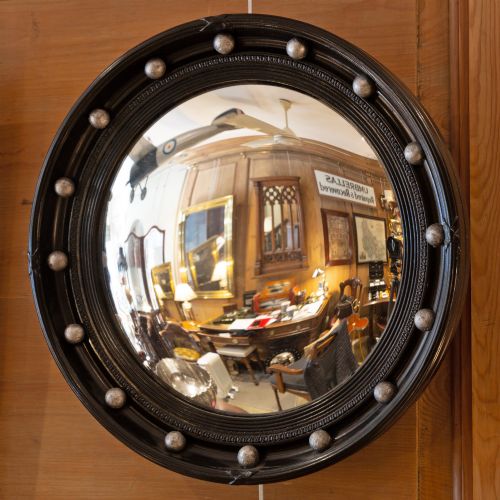

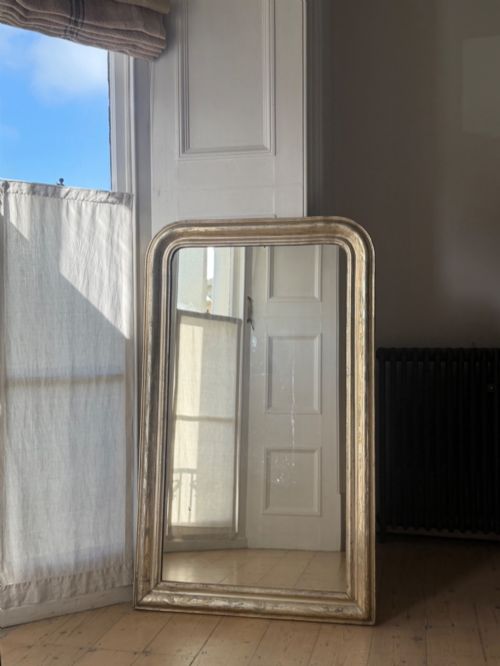
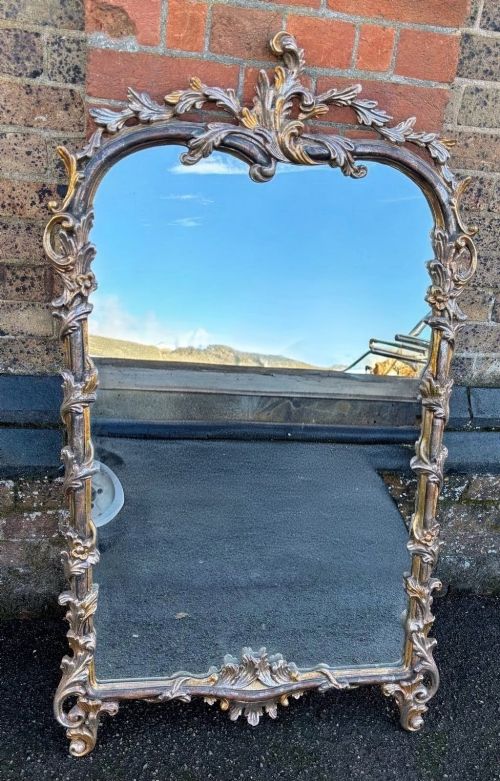
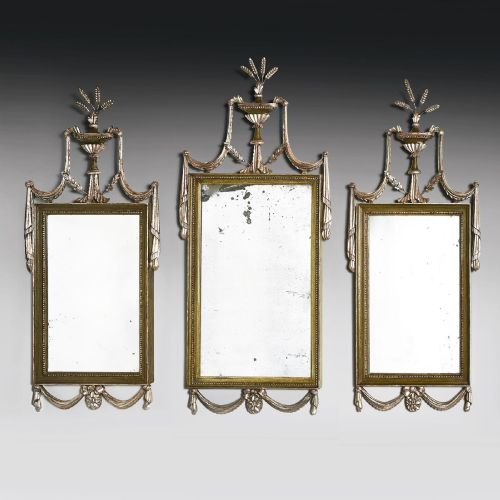
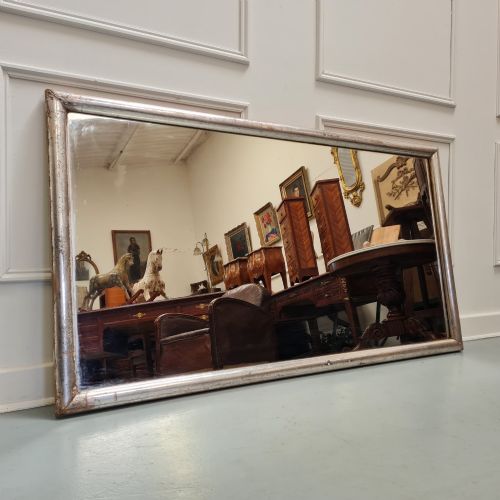
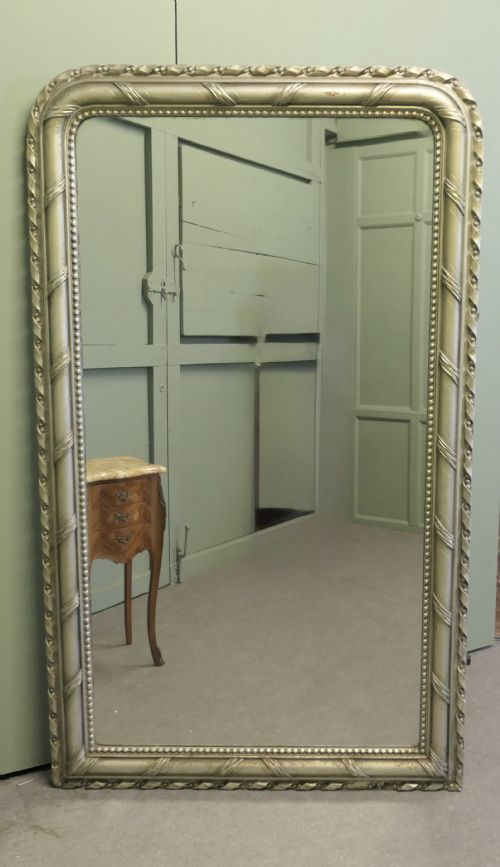
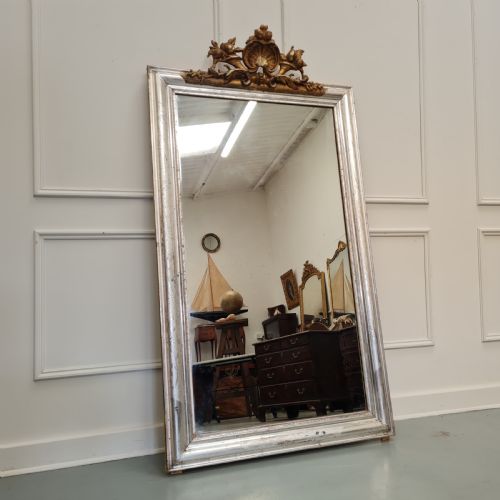


Silver Wood Wall Mirror
A silver wood wall mirror brings light and presence to a room, spanning French Louis Philippe designs to Victorian overmantels.
Silver Wood Wall Mirror
A silver wood wall mirror unites wooden construction with a reflective surface, frequently encountered in nineteenth-century French and Victorian forms. These pieces serve practical and decorative functions across domestic interiors, appearing as large overmantels, arched wall mirrors, and smaller girandoles.
The selection ranges from seventeenth-century Venetian examples to twentieth-century Art Deco interpretations. Overmantel mirrors and tall French Chateau designs dominate the current offerings, alongside specialised pieces incorporating pink mirror glass or marquetry panels.
Materials and Construction
Carved wood forms the structural foundation for many frames, often enhanced with applied gesso to build up intricate surface ornamentation. Artisans then applied silver leaf, gold leaf, or silver-gilt finishes directly over the prepared wooden base.
Mirror glass provides the reflective element, paired occasionally with specialised backing materials such as original wooden boards or mercury formulations. Frames utilise techniques ranging from simple parcel-silvered mouldings to elaborate carved decoration.
Silver Wood Wall Mirror Retail Price Guide 2026
Typical asking prices for silver wood wall mirror among the pieces listed under this phrase on Sellingantiques today, from the lower quarter to the upper quarter. They describe what is for sale here now, not the wider market.
Object types on this page range from standard wall mirrors and grand overmantels to specialised barometers and girandoles.
Evaluating Quality and Execution
The depth and precision of the wood carving dictate the distinction between standard production and superior craftsmanship. Original surfaces that retain their authentic silver leaf or silver-gilt patination hold greater interest than later repainted interventions.
Structural integrity of the wooden frame and the clarity of the original mirror glass further differentiate pieces. Integration of specialised elements, such as branched candle holders on girandoles or detailed marquetry, marks higher-tier examples.
Gillows Of Lancaster·A.J Rowley
The Silver Wood Wall Mirror Glossary
- Gesso
- A plaster-like mixture applied to wood frames to create a smooth surface for gilding or silvering. It allows artisans to carve intricate relief details before metal leaf application.
- Silver Leaf
- Extremely thin sheets of beaten silver applied to wooden or gessoed surfaces. It yields a distinctive metallic lustre that ages and tarnishes naturally over time.
- Overmantel Mirror
- A large mirror specifically designed to hang above a fireplace mantelpiece. These horizontal pieces frequently feature architectural framing to anchor large wall spaces.
- Girandole
- A decorative wall mirror featuring attached candle branches or sconces. The candle arms reflect additional light from the central mirror glass.
- Louis Philippe
- A mid-nineteenth-century French style characterised by restrained curves and arched tops. These mirrors balance decorative presence with clean architectural lines.
Silver Wood Wall Mirror: Frequently Asked Questions
How do I hang a heavy silver wood wall mirror?
Heavy wall mirrors require secure attachment directly into wall studs or appropriate masonry fixings using robust hanging hardware. The substantial weight of carved wood and gesso frames demands professional installation to ensure stability.
Distributing the load across multiple points prevents strain on the original wooden backing and frame joints. Consulting a specialist ensures the chosen wall can safely support the mirror.
What is an overmantel mirror?
An overmantel mirror is a wide format mirror built to sit above a fireplace mantel. These pieces reflect ambient light and visually anchor the hearth within the room.
They appear frequently in nineteenth-century Victorian and French interiors, often featuring arched or shaped tops designed to complement architectural proportions.
How should I clean silver leaf frames?
Silver leaf surfaces require gentle dusting with a soft, dry brush to prevent damage to the delicate metallic finish. Moisture and chemical cleaners must be avoided entirely to preserve the original patination.
Professional restoration is recommended if the silvering shows signs of flaking or active deterioration. Regular minimal intervention keeps the surface stable.
How can I tell a nineteenth-century mirror from a later copy?
Nineteenth-century mirrors typically display hand-beveled glass, traditional joinery in the wooden backing, and natural ageing within the silver leaf. Examination of the gesso and underlying wood reveals tool marks consistent with period craftsmanship.
Later reproductions often use uniform modern fixings and lack the subtle variations found in hand-finished frames. Comparing the backboards and frame construction helps clarify the date.