


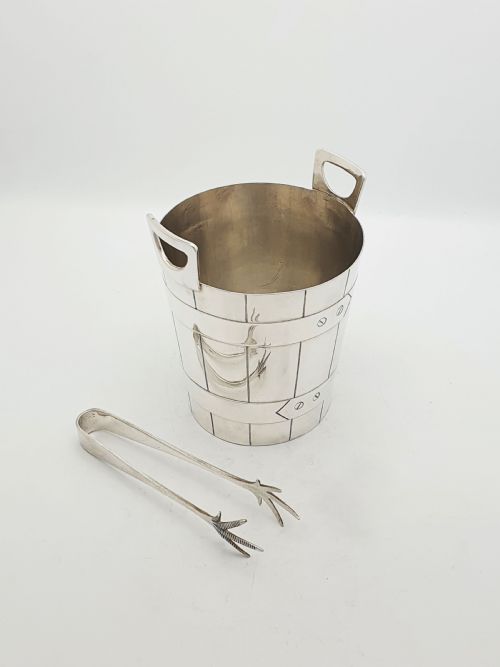


Silver Wine Pail
A silver wine pail holds bottles at table, taking forms from the nineteenth century through the art deco era in silver plate, oak, and glass.
Silver Wine Pail
A silver wine pail serves to chill wine and champagne at table, appearing in forms ranging from traditional footed coolers to novelty barrels and military drums. When seeking a silver wine pail, a buyer encounters pieces spanning the nineteenth century, the Edwardian period, and the mid-twentieth century.
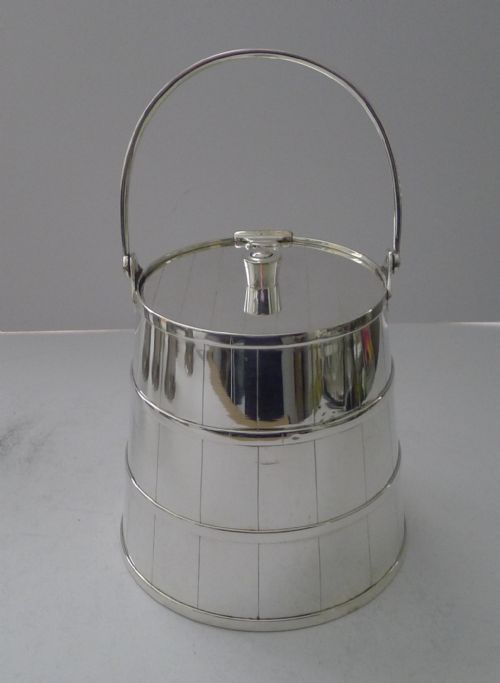
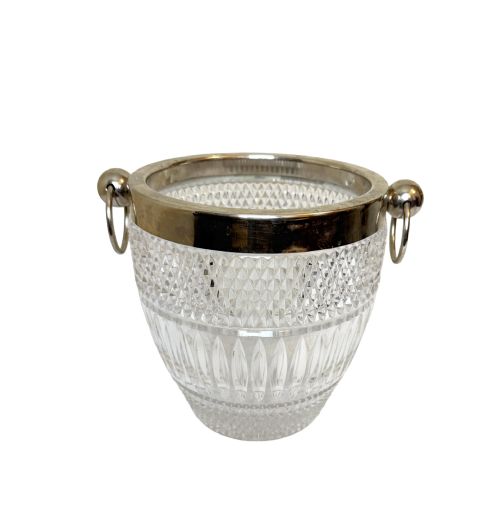
The selection includes heavy lead crystal and cut glass bodies mounted in silver plate, alongside wooden examples coopered in oak with plated bands. Makers from Sheffield and Paris produced these vessels for dining and bar service.
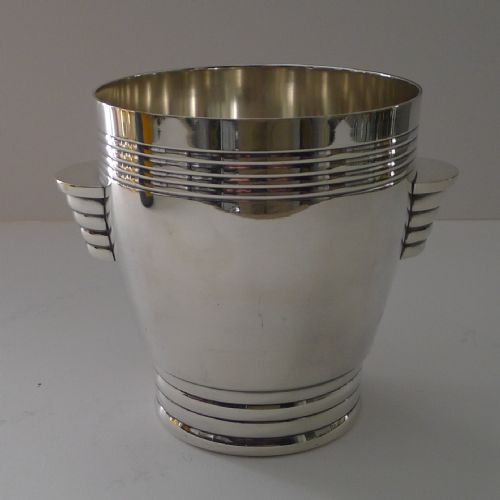
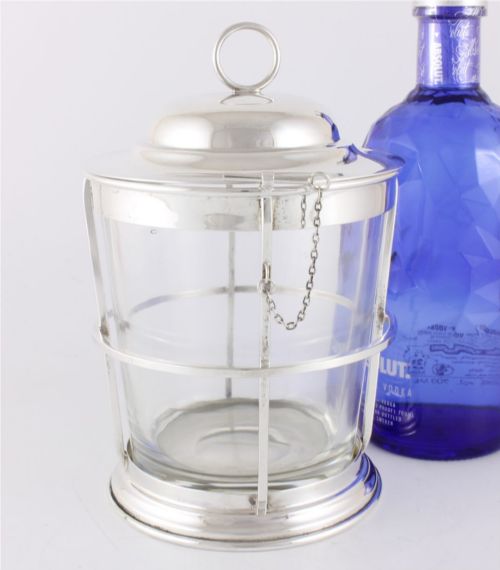
Victorian and Edwardian versions often incorporate liners of ceramic creamware or glass, while later Art Deco designs emphasise clean metallic geometry or specialised forms like ship lanterns.
Materials and construction
Silversmiths utilised silver plate, Old Sheffield plate, and solid sterling silver over foundational materials such as copper, oak, and glass. Lead crystal and cut glass provide heavy transparent bodies that contrast with polished metal mounts and swing handles.
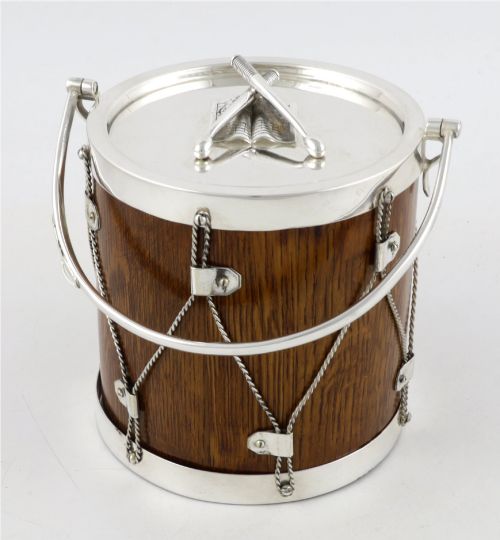
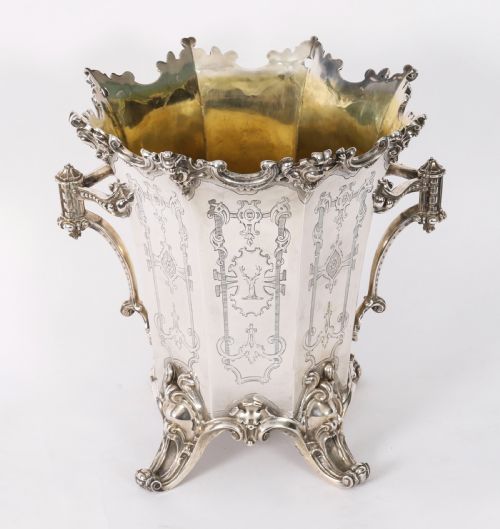
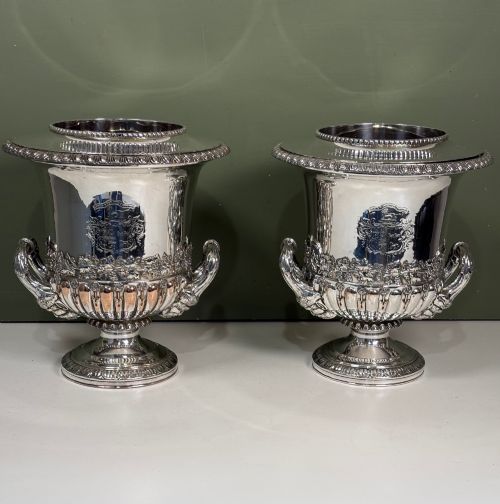
Wooden pails employ coopered oak staves secured by silver-plated hoops, frequently fitted with ceramic creamware or glass liners to hold ice and water. Embossing, casting, and engraving techniques shape the metal surfaces, creating armorial crests, military drum details, and ribbed art deco planes.
Silver Wine Pail Retail Price Guide 2026
Typical asking prices for silver wine pail among the pieces listed under this phrase on Sellingantiques today, from the lower quarter to the upper quarter. They describe what is for sale here now, not the wider market.
Several pails disguise their primary function entirely by taking the shape of a wooden military drum or a ship's lantern.
Distinctions in manufacture
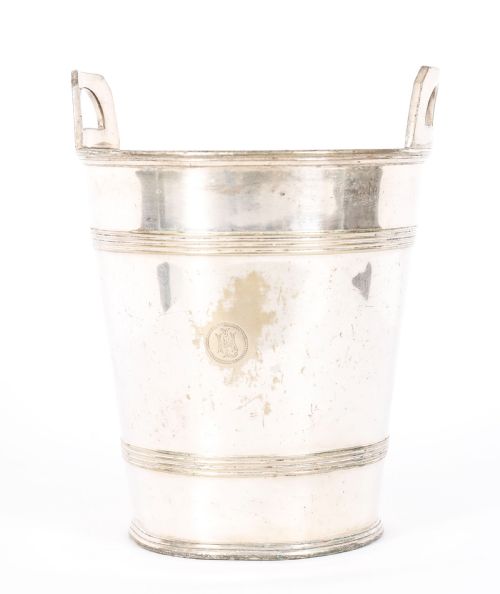
The weight of the metal and the thickness of the silver plating dictate the substance of the piece, distinguishing heavy lead crystal or thick silver-plated vessels from lighter commercial items. Superior examples retain crisp detail in cast mounts, handles, and embossed coats of arms without thinning of the silver layer over the underlying copper or base metal.
Construction integrity separates standard production items from workshop pieces, particularly in the fitting of glass liners, ceramic inserts, and wooden stave alignment. Maker marks from established firms indicate documented workshop standards of design and assembly.
Hutton Sheffield·Elkington, Mason & Co·Dawson·Matthew Boulton & Co·Christofle·Macabo
The Silver Wine Pail Glossary
- Old Sheffield plate
- A composite material made by fusing a sheet of silver to a copper ingot before rolling into sheets, utilised in early nineteenth-century wine coolers.
- Silver plate
- A layer of silver bonded to a base metal substrate, forming the primary metallic surface for the majority of these pails.
- Lead crystal
- A heavy glass material containing metallic oxide, used to create cut glass ice buckets and champagne coolers.
- Creamware
- A fine earthenware developed in the eighteenth century, providing glazed ceramic liners for wooden and metal pails.
- Coopering
- The traditional method of joining wooden staves with metal bands to form watertight vessels such as oak barrels and drum pails.
Silver Wine Pail: Frequently Asked Questions
What is the difference between a wine pail and a champagne bucket?
A wine pail generally accommodates a single bottle for table service, while a champagne bucket is typically deeper and wider to hold ice alongside the bottle.
Both forms appear across the nineteenth and twentieth centuries in silver plate, crystal, and oak.
How do I clean a silver plated ice bucket?
Clean silver plate using a soft cloth and a specialised silver polish formulated to preserve the plated layer over the base metal.
Avoid abrasive materials that can wear away the silver surface, particularly on embossed or engraved decoration.
Were these pails used only for wine?
Many examples served multiple functions, operating as ice buckets, biscuit barrels, or champagne coolers depending on their interior liners.
Wooden and ceramic-lined versions adapted readily from holding ice cubes to storing biscuits at the dining table.
How can I tell an Edwardian pail from a Victorian one?
Victorian pieces frequently display heavier ornamentation such as rococo revival scrolls, elaborate embossing, or armorial crests.
Edwardian and later twentieth-century pails tend toward simpler wooden coopered designs, clean art deco lines, or functional glass bodies.