



Silver Vegetable Cover
These silver vegetable cover pieces span Georgian grandeur to Edwardian dining, offering functional elegance for the formal table.
Silver Vegetable Cover
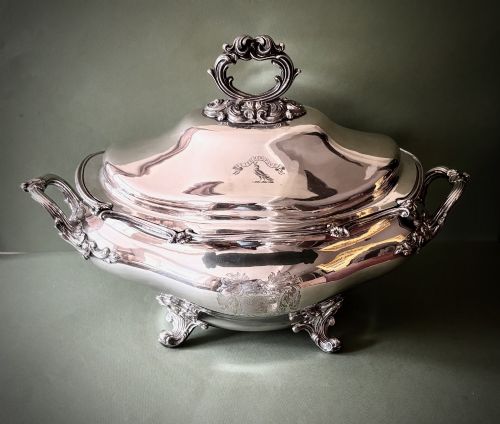
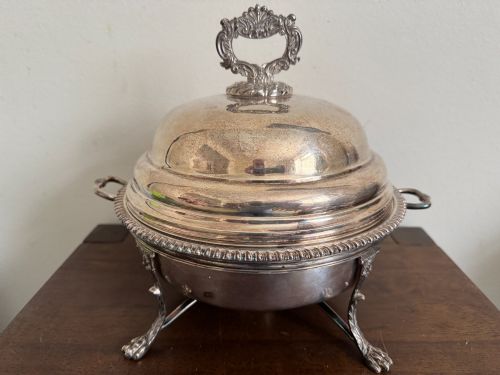
A silver vegetable cover serves to keep side dishes warm at the dining table, taking the form of entree dishes, tureens, and serving dishes. These items protect the food beneath a snug lid, maintaining heat between courses in grand dining rooms.
The versions most commonly met on this page belong to the Edwardian and Victorian periods, often fashioned as silver plated rectangular or oval entree dishes. Alongside these, earlier Georgian and Regency examples appear in sterling silver and Old Sheffield Plate.
Makers shaped these wares into functional serving vessels equipped with handles and matching covers, designed to sit alongside larger tureens and supper dishes. Their presence reflects the structured service of historical meals where presentation matched culinary ambition.
Distinctions in craftsmanship and design
The distinction between standard items and the finest examples rests upon the crispness of the chased decoration and the weight of the metal used in the dish. Heavier gauge silver and thick Old Sheffield Plate indicate substantial craftsmanship that survived decades of polishing.
Makers who invested care in cast handles, detailed borders, and well-fitted lids produced pieces that command greater respect today. The integration of maker marks and clear hallmarks further elevates an object by recording its precise origin.
Silver Vegetable Cover Retail Price Guide 2026
Typical asking prices for silver vegetable cover among the pieces listed under this phrase on Sellingantiques today, from the lower quarter to the upper quarter. They describe what is for sale here now, not the wider market.
Listings feature items spanning the Georgian, Victorian, and Edwardian periods, constructed in materials from sterling silver to copper and electroplated nickel silver.
Mappin and Webb·Hamilton and Inches·William Grundy·Edward and John Barnard·Walker and Hall·Elkington·Matthew Linwood·William Hutton and Sons·Cresswick·Christofle Gallia
The Silver Vegetable Cover Glossary
- Old Sheffield Plate
- A composite material made by fusing a thin sheet of silver to a thicker copper base, common in Georgian pieces before electroplating arrived. This technique leaves a characteristic copper seam visible on raw edges.
- Entree dish
- A shallow container with a fitted cover used for serving individual courses or side dishes at the table. These vessels often feature removable handles to allow the cover to double as a secondary serving dish.
- EPNS
- Electroplated Nickel Silver, a common base metal method introduced in the nineteenth century. This process coated a nickel alloy with a thin layer of silver using electrical current.
- Tureen
- A deep, bowl-shaped vessel equipped with a cover, intended for serving soups, vegetables, or sauces. They typically sit on fixed feet and possess two opposing side handles for lifting.
- Hallmark
- An official stamp struck into precious metals to guarantee purity and identify the assay office and maker. These marks help date sterling silver items with accuracy.
Silver Vegetable Cover: Frequently Asked Questions
What is a silver vegetable cover used for?
These vessels kept cooked vegetables and side dishes warm on the dining table before central heating and modern kitchen conveniences. The tight-fitting lid trapped steam and heat while the metal body regulated temperature during long multi-course meals.
Hosts used them to serve portions directly from the sideboard or dining table to guests. Their presence added visual symmetry and polished brilliance to formal nineteenth-century dining arrangements.
How do I identify Old Sheffield Plate?
Old Sheffield Plate reveals a subtle copper bleed along unplated edges and seams where the fused copper base shows through the worn silver layer. This mechanical fusion method predates the chemical electroplating processes that became standard later in the Victorian era.
Pieces from this earlier tradition often feel heavy and display a softer, warmer glow than later plated wares. Examining the rims and underside under good light exposes these distinct layered characteristics.
Are these dishes safe for modern dining?
These serving pieces continue to function well for holding warm foods during dinner parties and family gatherings. Regular gentle washing with mild soap preserves the antique metal surfaces without stripping the plating.
Owners should avoid abrasive scrubbers and harsh chemical dips to maintain the historical finish. Proper drying prevents water spots and keeps the silver bright for daily use.
How can I tell Victorian pieces from Georgian ones?
Georgian and Regency examples often display hand-hammered transitions, heavier gauges of silver, and Old Sheffield Plate construction methods. Their forms tend toward classical restraint with restrained gadroon or leaf borders.
Victorian and Edwardian versions frequently utilise electroplated nickel silver bases with more ornate cast handles and heavier machine-assisted ornamentation. Maker marks and assay stamps provide definitive clues to the precise decade of manufacture.