






Silver Top Pot
A silver top pot combines cut glass, crystal or coloured glass with a hallmarked metal lid, making a practical dressing table or desk accessory.
Silver Top Pot
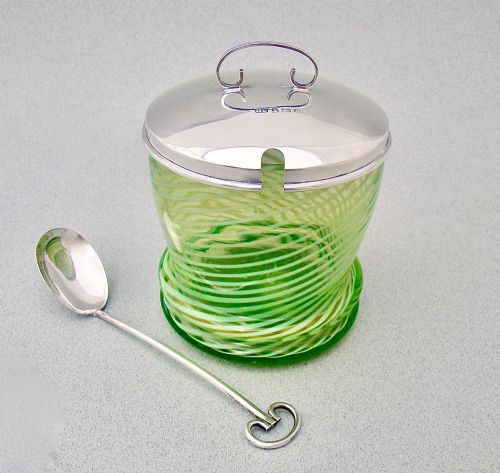
A silver top pot encompasses vanity jars, dressing table jars, inkwells, preserve pots, condiment sets and trinket boxes featuring metal lids. Buyers seeking a silver top pot encounter pieces ranging from Victorian inkwells to Art Deco enamel vanity items.
The material combinations pair glass vessels with sterling silver or silver plate, sometimes incorporating oak, tortoiseshell, porcelain plaques or enamel work. Forms span from simple Edwardian cut glass jars to elaborate George V and Art Deco pieces created for domestic dressing tables and desks.
Materials and construction
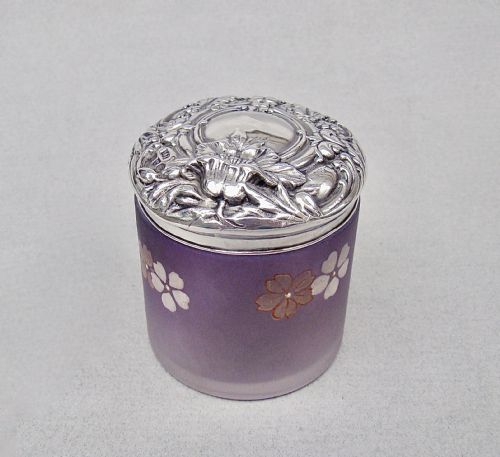
Glass bodies are shaped through cutting, facet cutting, moulding or blowing, utilising vaseline glass, cranberry glass, frosted glass, Clichy glass and heavy cut crystal. Metal components utilise sterling silver or silver plate, often bearing hallmarks from assay offices in London, Birmingham, Chester and Sheffield.
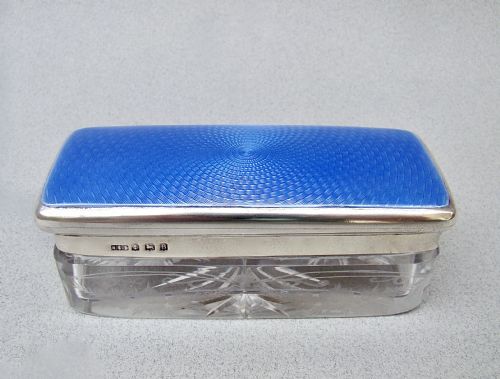
Surface decoration integrates guilloche enamel, hand-painted porcelain plaques, tortoiseshell panels and etching. Internal fittings occasionally incorporate ceramic liners or wooden elements like oak alongside the primary glass and metal structures.
Silver Top Pot Retail Price Guide 2026
Typical asking prices for silver top pot among the pieces listed under this phrase on Sellingantiques today, from the lower quarter to the upper quarter. They describe what is for sale here now, not the wider market.
One particularly imaginative maker turned an ordinary desk necessity into a miniature architectural pagoda.
Quality factors in manufacture
Superior examples display crisp facet cutting on heavy crystal or precise glass blowing on coloured vessels, paired with substantial gauge silver lids that hold their shape. Finer pieces incorporate complex decorative techniques such as multi-coloured guilloche enamel or hand-painted porcelain plaques.
The clarity of the glass, the depth and sharpness of hallmarks, and the precision with which the silver lid fits the glass collar distinguish standard utility items from masterwork dressing table accessories.
George Unite·Henry Clifford Davis·Jonathan Douglas·Asprey·Elkington and Company
The Silver Top Pot Glossary
- Guilloche enamel
- A decorative technique involving precise mechanical patterns engraved beneath translucent enamel layers. This method appears frequently on Art Deco dressing table jar lids.
- Hallmark
- An official stamp applied by an assay office indicating metal purity, origin city and year of manufacture. British sterling silver pieces bear these marks on the metal mount.
- Cut crystal
- High-clarity glass containing lead oxide, shaped with deep geometric facets that refract light. It forms the heavy bodies of Edwardian and Art Deco boxes.
- Clichy glass
- Nineteenth-century French glass associated with the Clichy factory, known for delicate coloration and fine manufacture. These pieces occasionally feature silver mounts.
Silver Top Pot: Frequently Asked Questions
What were silver top pots used for?
These vessels served various domestic functions on dressing tables, desks and dining surfaces. They held cosmetics, powders, pins, ink, glue, condiments and preserves.
On a dressing table, vanity jars kept powders and creams contained while presenting a decorative surface. Desk accessories like inkwells and string jars kept writing materials organised in a study.
How do I date a silver top pot?
Dating relies primarily on the hallmarks stamped into the metal lid or mount. These assay marks indicate the exact year of manufacture and the city where the piece was tested.
Stylistic indicators also help assign periods, such as geometric enamel patterns pointing to the Art Deco era or heavy hobnail cutting suggesting Edwardian manufacture.
How do I clean silver and glass jars?
Cleaning requires separating the metal components from the glass vessel if the mount is removable. Use a gentle silver polish on the metal while avoiding contact with any enamel or glass.
Wash the glass body in warm soapy water and dry thoroughly. Submerging items with glued mounts or wooden elements like oak should be avoided to prevent structural damage.
Are the lids solid silver or plated?
Lids and mounts are typically marked as sterling silver, though some examples utilise silver plate over a base metal. Hallmarks on the metal surface confirm the exact standard.
Solid silver pieces bear standard assay office symbols such as the lion passant for British sterling, distinguishing them from plated alternatives.