




Silver Tea Spoons Boxed
Silver tea spoons boxed offer matched cutlery sets resting in fitted presentation containers for formal hospitality.
Silver Tea Spoons Boxed
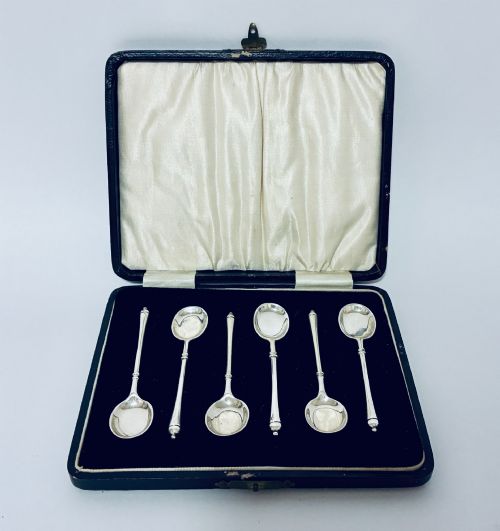
Silver tea spoons boxed bring together sets of small flatware housed in dedicated cases lined for protection. These sets emerge across multiple periods including the Georgian, Victorian, Edwardian and Art Deco eras.
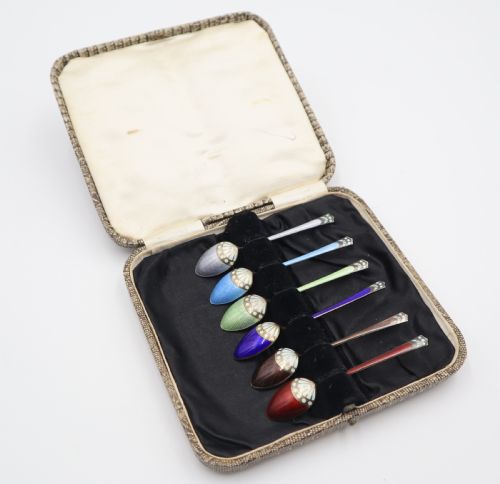
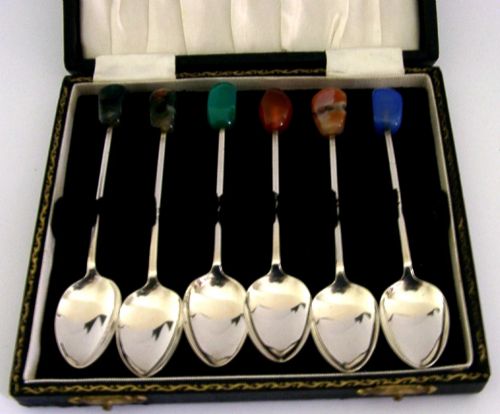
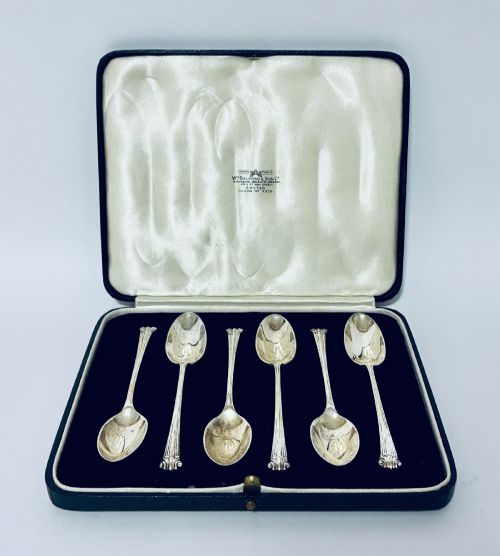
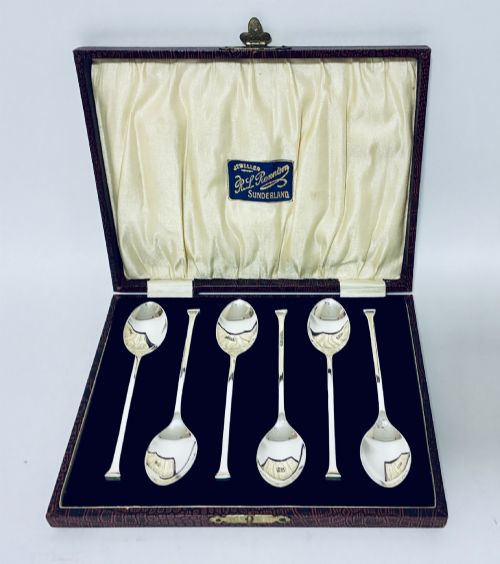
Most entries consist of matched sets of six or twelve spoons, frequently accompanied by matching sugar tongs. Forms range from plain sterling designs to specialised pieces featuring enamel work, gilt finishes or apostle terminals.
Originating from British provincial assays, London makers and continental workshops, these cased sets served as wedding presents and household gifts. The surviving examples retain their fitted interiors of satin, velvet and silk.
Materials and construction
Silversmiths shaped these pieces from solid sterling silver or silver-gilt, employing techniques such as casting, hammering and piercing. Bowls and handles often received detailed engraving or applied enamel decoration in distinct colour palettes.
Presentation containers utilise sturdy wooden carcases covered in leather, leatherette or textured cloth. Interiors are carefully fitted with moulded depressions lined in silk, satin or velvet to secure each spoon and tong firmly in place.
Silver Tea Spoons Boxed Retail Price Guide 2026
Typical asking prices for silver tea spoons boxed among the pieces listed under this phrase on Sellingantiques today, from the lower quarter to the upper quarter. They describe what is for sale here now, not the wider market.
Some sets swapped standard tea service for golf themes, nestling tiny sporting spoons securely into green velvet.
Assessing quality
The standard of a set rests upon the crispness of the hallmarks, the uniformity of the spoon bowls and the integrity of the original case. Thicker gauge silver resists bending during daily use and maintains sharp decorative detail.
Superior sets retain undamaged interior linings and fully functioning box clasps. Enamelled and silver-gilt pieces demand scrutiny of the coloured glass surfaces and gold washes to ensure minimal loss over decades of handling.
P A W Bateman·Robert Stebbings·Amy Sandheim·Georg Jensen
The Silver Tea Spoons Boxed Glossary
- Sterling silver
- A silver alloy containing 92.5 percent pure silver and 7.5 percent other metals, usually copper, to increase durability. This standard is denoted by the lion passant hallmark on British items.
- Silver-gilt
- Silver objects that have been coated with a thin layer of gold on the surface, sometimes referred to as vermeil. This technique produces a warm golden hue over the underlying silver.
- Hallmark
- A series of official marks stamped onto precious metal items to indicate the standard of purity, the assay office, the maker and the year of manufacture. These symbols provide a reliable method for dating silver.
- Sugar tongs
- Small spring-action implements designed for lifting sugar lumps, commonly included alongside tea spoon sets within fitted presentation boxes. They share the decorative style and metal standard of the spoons.
- Apostle spoon
- A spoon featuring the figure of an apostle or saint cast upon the end of the handle. These traditional designs appear in various commemorative sets.
Silver Tea Spoons Boxed: Frequently Asked Questions
What periods do these cased spoons come from?
The available sets span several decades, starting from the Georgian period through the Victorian and Edwardian eras. Later examples extend into the Art Deco period of the 1930s and 1940s.
Design styles shifted from plain traditional patterns towards geometric Art Deco motifs and colourful enamel work as time progressed.
Did these sets always include sugar tongs?
Many of the cased sets incorporate matching sugar tongs alongside the spoons, though some consist solely of teaspoons or coffee spoons. Sets designed for formal tea service frequently paired the spoons with a matching pair of tongs.
The inclusion of tongs often depends on the size of the box and the original purpose of the cutlery arrangement.
How should I store a cased set?
Keep the presentation box in a dry environment away from direct sunlight to protect the exterior leather or cloth and the delicate interior silk linings. Storing the silver inside its fitted case helps minimise tarnishing from air exposure.
Avoid placing boxes near heat sources that could dry out the wood or damage the vintage fabrics.
What materials line the presentation boxes?
Original interiors utilise luxury fabrics such as silk, satin and velvet moulded to fit the exact contours of the spoons and tongs. The outer shells typically consist of leather, leatherette or textured paper over a sturdy carcase.
These fitted beds kept the pieces from shifting and scratching against one another during transit.