



Silver Tea Set in Box
These silver tea set in box pieces gather fitted sets of teaspoons, butter knives, and tea services housed in protective cases across several eras.
Silver Tea Set in Box
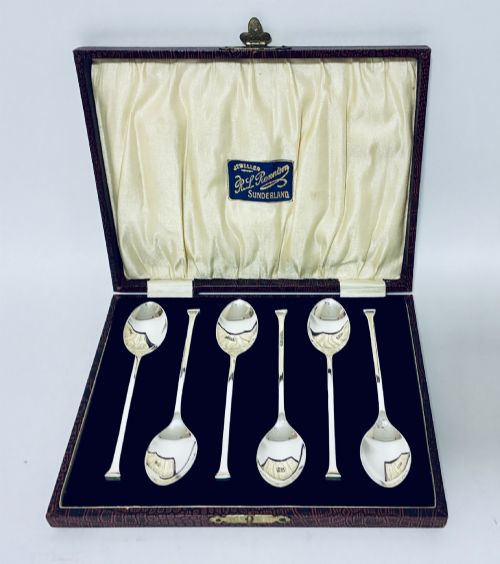
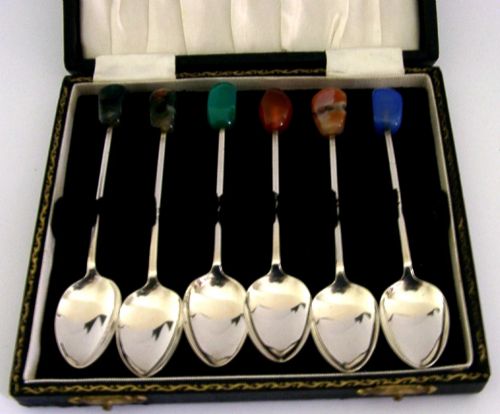
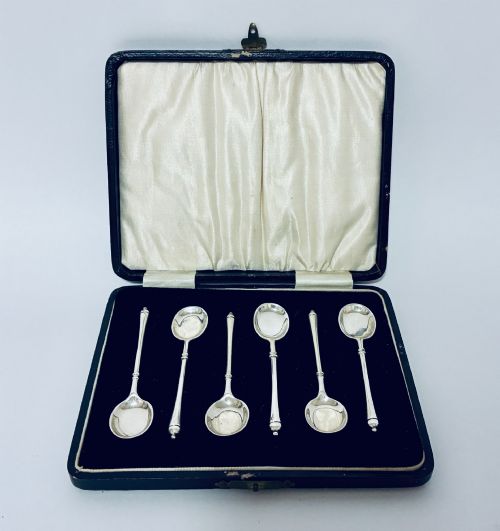
A silver tea set in box collection centres on fitted presentation cases housing spoons, knives, or complete tea services from periods such as the Georgian, Victorian, and Edwardian eras. Buyers encounter various configurations ranging from small sets of six coffee spoons to larger silver-gilt pieces and complete tea and coffee services.
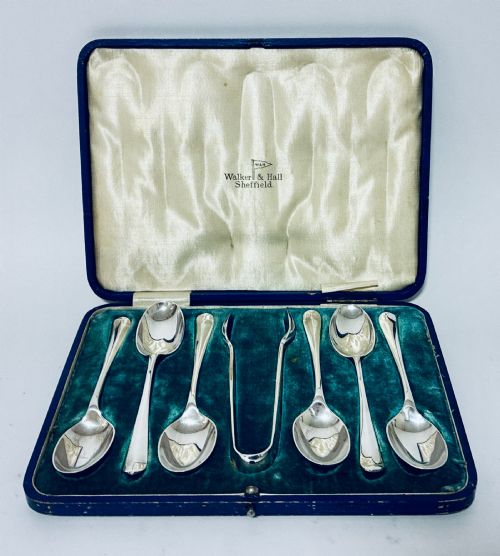
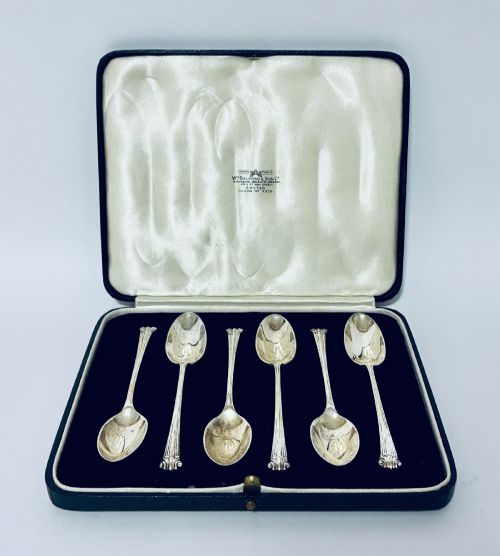
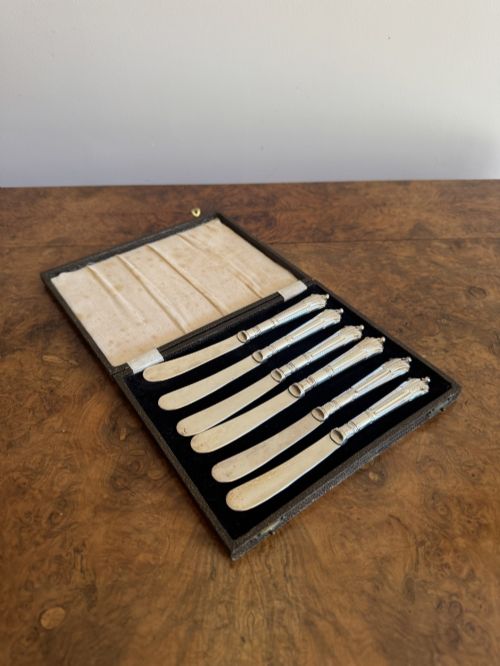
The objects on this page include teaspoons, cake forks, butter knives, and sugar tongs alongside complete five-piece services. Many items belong to the Art Deco and Mid-Century Modern movements, showing the continuation of boxed silver presentation well into the twentieth century.
Origins span English assay offices such as London and Sheffield, alongside German and Dutch workshop traditions. Presentation boxes typically match the specific contours of the cutlery or service they contain, utilising tailored internal layouts.
Evaluating Quality and Craftsmanship
Superior examples feature complete, original fitted cases that retain their structural integrity and protective internal fabric lining without substantial wear. The quality of the silverwork itself shows in crisp hallmarks, substantial metal weight, and refined decorative chasing or enamel application.
Complete sets that retain every original element without replacement pieces demonstrate higher integrity than assembled groups. The precision of the case manufacture and the preservation of delicate materials like tortoiseshell or mother-of-pearl distinguish exceptional items.
Silver Tea Set in Box Retail Price Guide 2026
Typical asking prices for silver tea set in box among the pieces listed under this phrase on Sellingantiques today, from the lower quarter to the upper quarter. They describe what is for sale here now, not the wider market.
Materials across the listings include traditional sterling silver, silver-gilt, steel, and enamel, housed in cases lined with velvet, silk, satin, and leatherette.
P A W Bateman·Robert Stebbings·Harry Atkin
The Silver Tea Set in Box Glossary
- Hallmark
- Official stamps struck into precious metals to indicate the assay office, purity, and date of manufacture. These marks provide verifiable historical documentation for silver items.
- Silver-gilt
- Sterling silver that has been coated with a thin layer of gold, often referred to as vermeil. This technique adds a rich golden tone to spoons and tongs.
- Seal top spoon
- An early form of spoon featuring a solid, flat-topped terminal shaped like a seal. These pieces date back to Tudor and Stuart times, though revival pieces exist.
- Tortoiseshell
- A natural material derived from the shell of certain turtle species, utilised for ornamental boxes. It displays rich amber and brown mottled patterns.
- Enamel
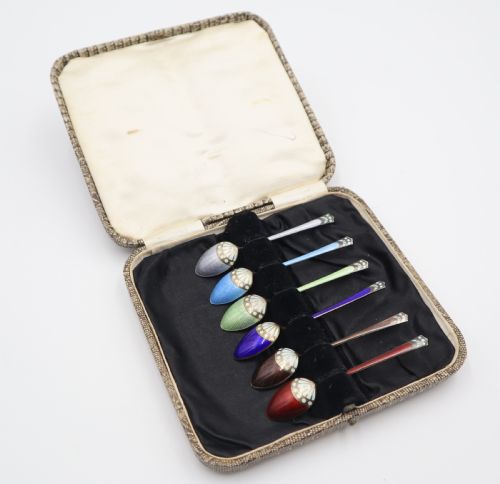
- A glassy substance fused to metal through high-temperature firing to add decorative colour. It appears frequently on twentieth-century spoons and small accessories.
Silver Tea Set in Box: Frequently Asked Questions
What periods do these boxed sets come from?
The listings span several eras, starting from Georgian and Victorian times through Edwardian, Art Deco, and Mid-Century Modern periods. Each period brings distinct decorative motifs and case designs.
Twentieth-century examples often feature enamel work or modernist lines, while nineteenth-century sets tend towards traditional chased decoration and rich velvet linings.
How were these boxed sets originally used?
These sets served as high-status gifts for weddings, anniversaries, and domestic milestones. The fitted boxes protected the delicate silver and cutlery from tarnish and damage between uses.
Owners brought out the cased spoons and services for formal tea parties and hosting guests, returning them to their lined compartments afterwards.
How should I care for a cased silver set?
Keep the silver clean using appropriate polishing methods that avoid abrasive compounds, especially on items with delicate enamel or gilding. Store the set in a dry environment to protect both the metal and the fabric box lining.
Avoid exposing antique leatherette and silk linings to direct sunlight or damp conditions, which can degrade the internal fabrics over time.
How can I tell the age of a boxed set?
Examine the silver components for hallmarks, which indicate the specific assay office and year of manufacture. The style of the box, the materials used for the internal lining, and the typography on any manufacturer labels also offer clues to the date.