

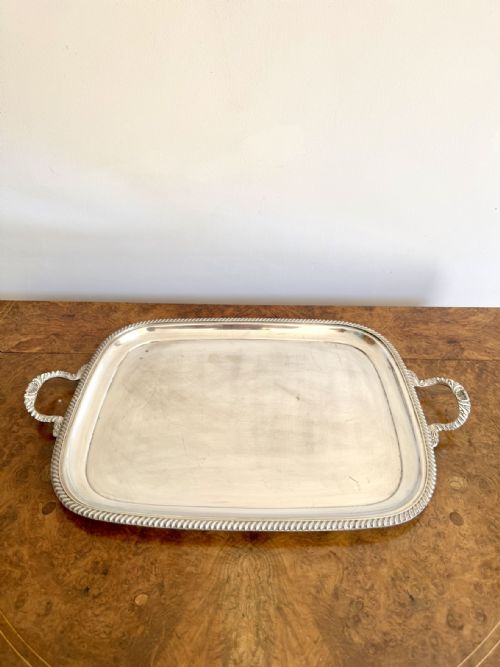

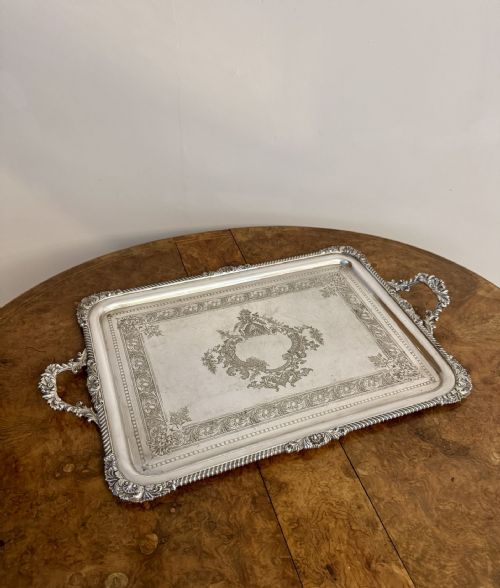
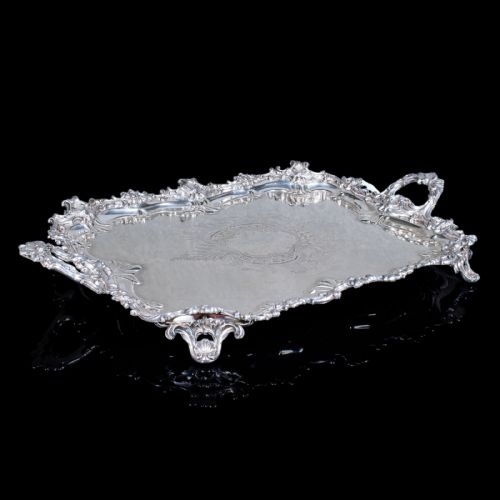


Silver Tea Salver
A silver tea salver gathers teaware or drinks upon a formal surface, bringing weight and polish to a table.
Silver Tea Salver
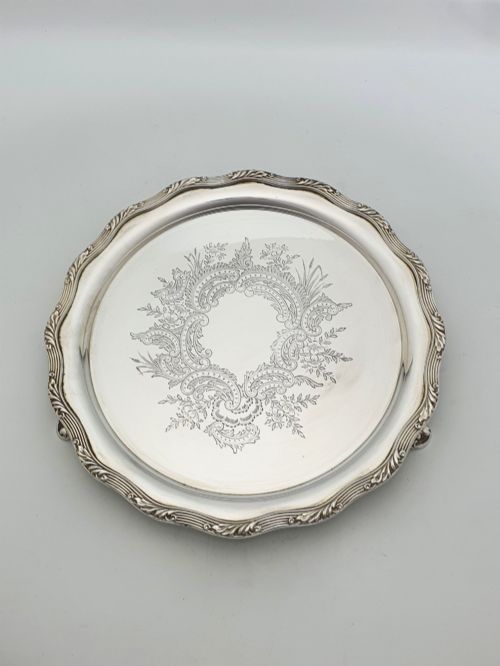
A silver tea salver serves as a sturdy platform for teapots, cups, and glasses, appearing across dining rooms and drawing rooms in various shapes. Buyers searching for a silver tea salver encounter pieces designed to protect polished wood surfaces while easing the service of afternoon tea or evening drinks. These items function equally as display centres for decanters or as practical serving vessels.
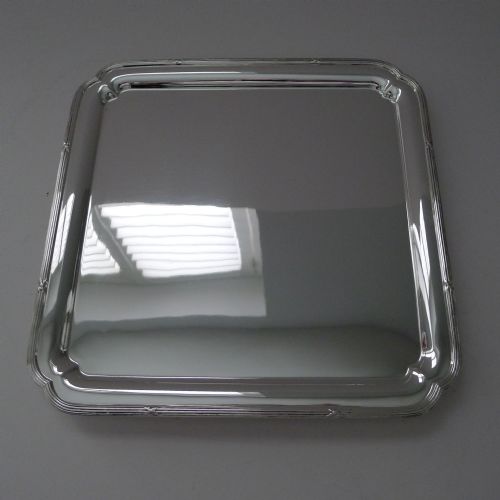
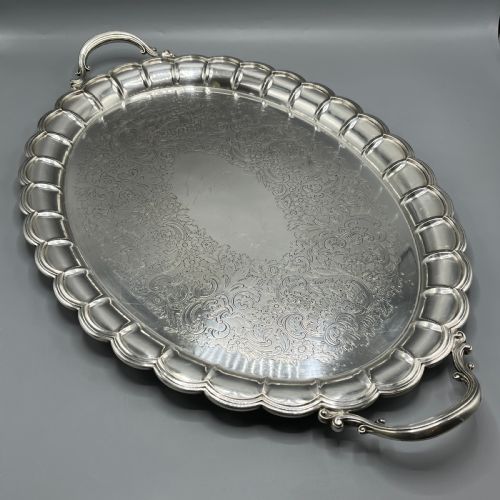
Most examples found here date from the nineteenth century into the early twentieth century, spanning Victorian, Edwardian, and Art Deco periods. Forms range from compact circular salvers to large oval platters with scalloped rims or integrated handles. English workshops dominate the selection, alongside occasional Scottish, Irish, and continental pieces.
While traditional salvers often feature flat chased engraving and raised borders, later cocktail trays adopt geometric lines and streamlined handles. Pieces span domestic afternoon tea sets to large presentation items intended for formal gatherings. Each object reflects the social rituals of its decade of manufacture.
Materials and construction
Silver tea salvers rely predominantly on silver plate, electroplated nickel silver, or Old Sheffield plate applied over a base metal core such as copper or brass. Solid sterling silver pieces also appear, marked for assay offices in cities like Sheffield or London. Wood elements occasionally support the base of specific tray types.
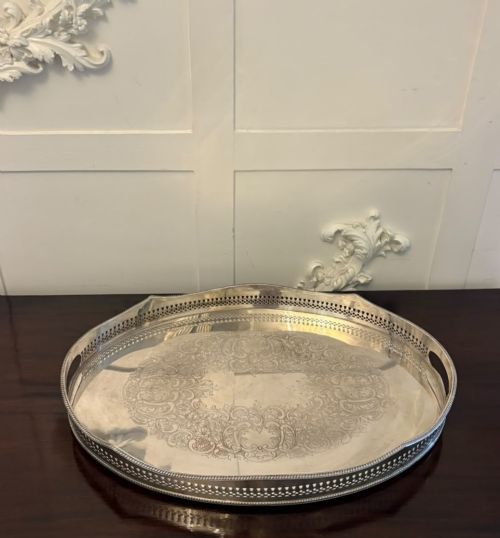
Makers shaped these metals through stamping, casting, and hand-beating, attaching cast handles and pierced gallery rails by soldering or mechanical fastening. Engravers worked freehand across the surface metal to produce intricate foliate scrolls, crests, or geometric Art Deco motifs.
Plating techniques evolved from the fused silver sheet of Old Sheffield plate to the chemical deposition of nineteenth-century electroplating. This transition allowed makers to produce deeply chased decoration and heavy gadroon borders without the prohibitive weight of solid metal.
Silver Tea Salver Retail Price Guide 2026
Typical asking prices for silver tea salver among the pieces listed under this phrase on Sellingantiques today, from the lower quarter to the upper quarter. They describe what is for sale here now, not the wider market.
Many of these trays carry old presentation inscriptions, recording forgotten golf tournaments and retirement speeches from a century ago.
Assessing quality and craftsmanship
Quality rests in the crispness of the engraved decoration and the substantial gauge of the underlying metal. Superior pieces maintain rigidity across large spans without flexing under the weight of a heavy tea service.
The finesse of applied borders, whether cast rococo scrolls or reticulated galleries, marks the distinction between standard commercial output and fine workshop production. Maker marks from established firms indicate reliable silver content or plating thickness.
Elkington & Co.·Mappin & Webb·Thomas Bradbury & Sons·Harrison Bros·Walker & Hall·James Dixon & Sons·Lee & Wigfull·Paul Storr
The Silver Tea Salver Glossary
- Salver
- A flat tray, typically with feet or a raised edge, used for serving food or drinks.
- Silver Plate
- A thin layer of silver bonded to a base metal such as copper, brass, or nickel silver.
- Old Sheffield Plate
- An early fusing technique where a sheet of silver is fused to a copper ingot before rolling.
- EPNS
- Electroplated nickel silver, a common base alloy for silver-plated items produced from the mid-nineteenth century onward.
- Chasing
- A metalworking technique where a hammer and punches displace metal from the front to create low-relief decoration.
Silver Tea Salver: Frequently Asked Questions
What is a silver tea salver used for?
A silver tea salver serves to carry teapots, cream jugs, and sugar bowls safely from the kitchen to the parlour. It provides a stable, heat-resistant base that protects wooden furniture from drips and heat marks.
Beyond tea service, these trays often act as display surfaces for decanters and glassware on sideboards or drinks trolleys. Their reflective surfaces add brightness to a room during formal gatherings.
How do I clean my salver?
Cleaning requires a soft cloth and a specialised silver polish designed to remove tarnish without stripping the underlying plating. Gentle circular motions help preserve any hand-engraved details on the surface.
Running water and harsh chemical detergents should be avoided, particularly on older plated items where the base metal might become exposed. A light buffing after cleaning restores the original shine.
How can I tell the period?
Stylistic clues such as heavy foliate scrolls point towards Victorian manufacture, whereas clean geometric lines indicate an Art Deco origin. Maker marks and assay stamps provide precise chronological markers for sterling silver pieces.
Manufacturing methods also help date the piece, as electroplated items generally post-date the mid-nineteenth century. Old Sheffield plate techniques typically suggest an earlier date towards the late eighteenth or early nineteenth century.