
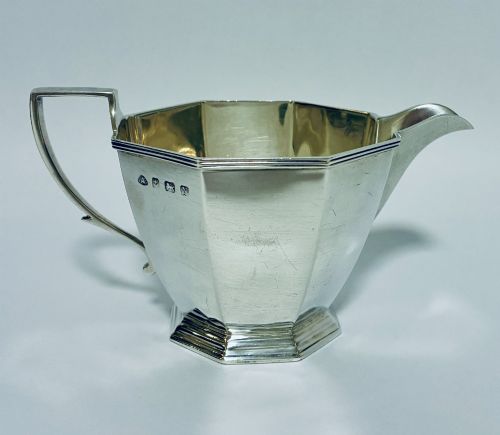
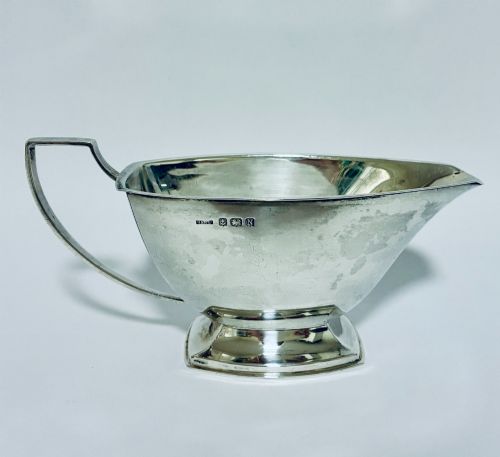

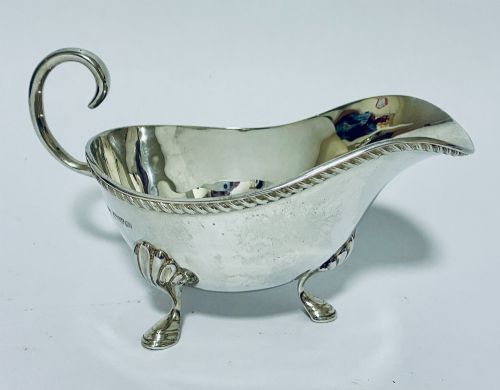
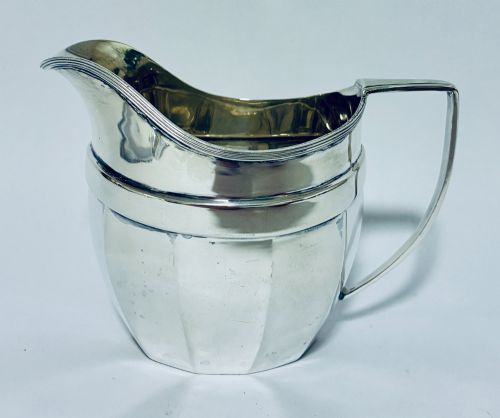
Silver Tableware Jug
A silver tableware jug brings weight and polish to the table, and these pieces span cream jugs, sauce boats, and claret jugs from Georgian and Victorian makers.
Silver Tableware Jug
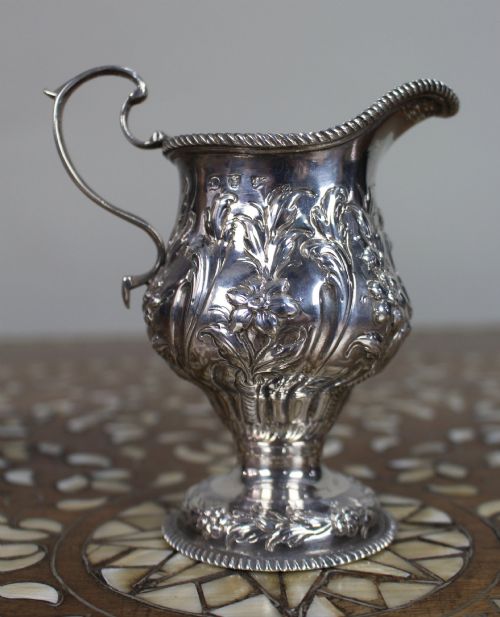
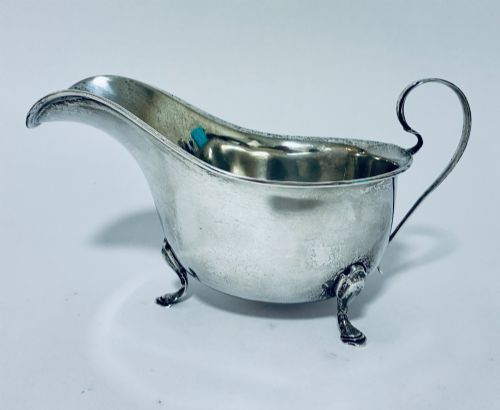
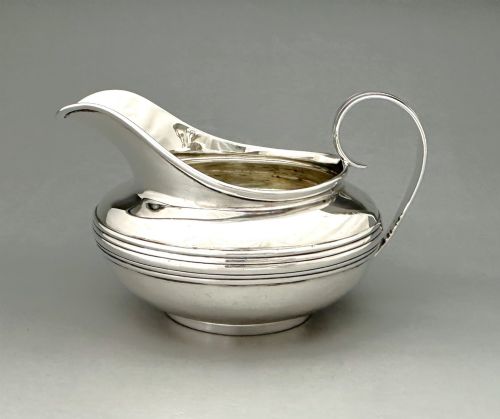
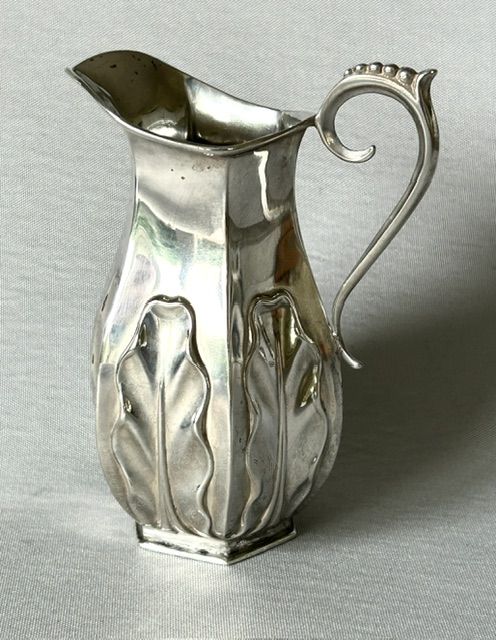
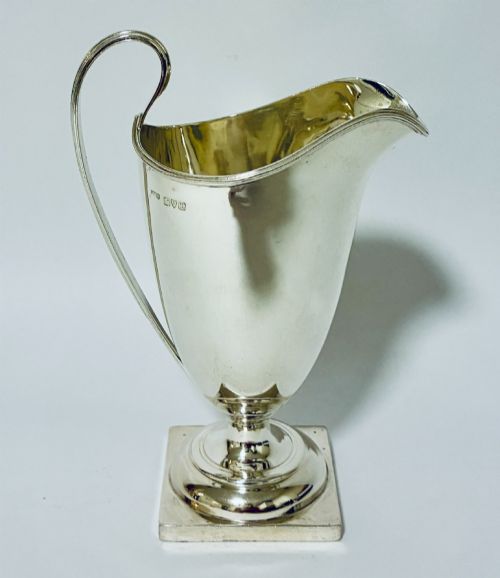
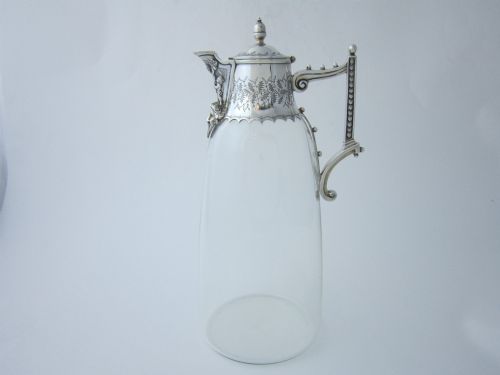
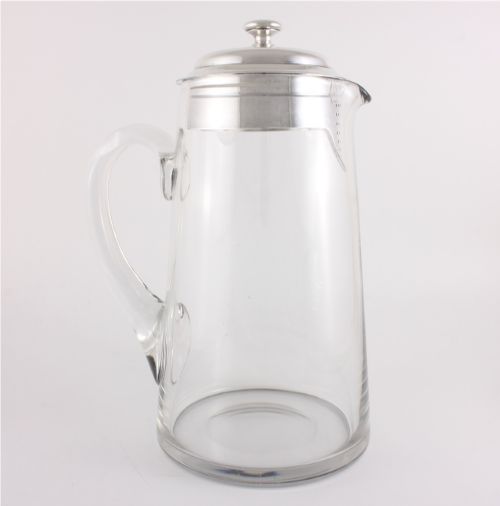
A silver tableware jug serves a functional role in dining, covering forms like cream jugs, milk jugs, sauce boats, coffee pots, and claret jugs. When you search for silver tableware jug, you encounter pieces designed for pouring liquids or serving sauces at the table.
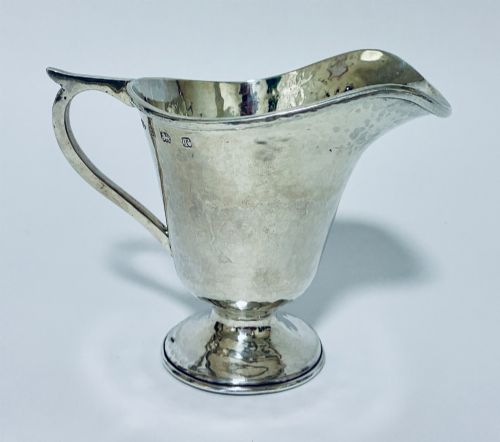
The selection on this page draws from multiple eras, with strong representation from the Georgian, Victorian, and Edwardian periods. Pieces range from small helmet cream jugs to large coffee pots and water jugs.
Materials span sterling silver, silver plate, Old Sheffield plate, and electroplated nickel silver, often combined with glass, wood, or copper. Makers utilise these diverse metals to shape serveware for daily dining and formal tea sets.
How they were made
Silversmiths formed these vessels from sterling silver or shaped silver plate over base metals like copper, utilising methods such as hammering, casting, and soldering. Old Sheffield plating fused a thin sheet of silver to a copper core, creating durable tableware with distinct edge lines.
Makers incorporated other materials into the design, pairing silver handles and mounts with glass bodies for claret jugs and water pitchers. Gold wash interiors frequently appear inside cream and milk jugs to protect the metal from acidic dairy.
Decoration relied on hand engraving, bright cutting, and applied cast borders, reflecting the aesthetic preferences of periods from the eighteenth century through the twentieth century.
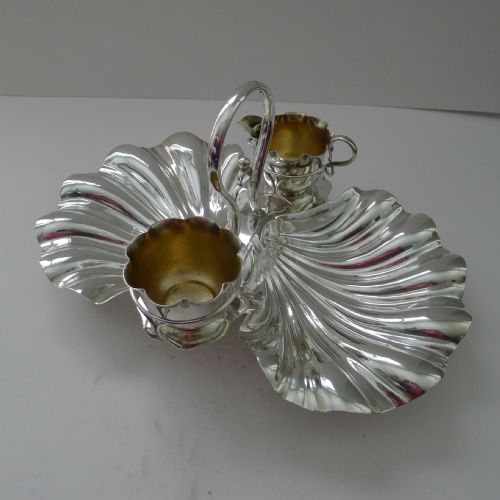
Some nineteenth century sets included matching strawberry forks so diners could spear fruit before pouring cream.
What varies in quality
The calibre of a silver tableware jug depends on the weight of the metal and the crispness of the chased or engraved detail. Heavier gauge silver provides a substantial feel in the hand and resists dents better than thinner alternatives.
Craftsmanship shows in the seamless integration of handles, spouts, and feet, where soldered joints remain clean and structurally sound. Maker marks and hallmarks stamped into the metal indicate the origin, standard of purity, and workshop responsibility.
Daniel Arter·Walker and Hall·James Gordon·Matthew Boulton·John Hoyland·Peter and Ann Bateman·John Mackfarlan·John Rawlings
The Silver Tableware Jug Glossary
- Sterling silver
- A silver alloy containing 92.5 percent pure silver and 7.5 percent other metals, usually copper. This standard ensures durability while maintaining a bright metallic lustre.
- Old Sheffield plate
- An early form of plated metal produced by fusing a layer of silver to a copper ingot before rolling them into sheets. This technique results in a rich appearance where the underlying copper occasionally shows through wear.
- Bright cut
- An engraving technique utilising faceted V-shaped cuts to reflect light from multiple angles. It creates sparkling geometric or floral patterns on the surface of the silver.
- Sauce boat
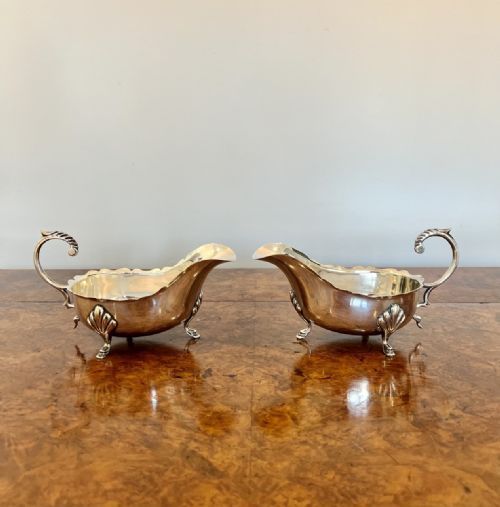
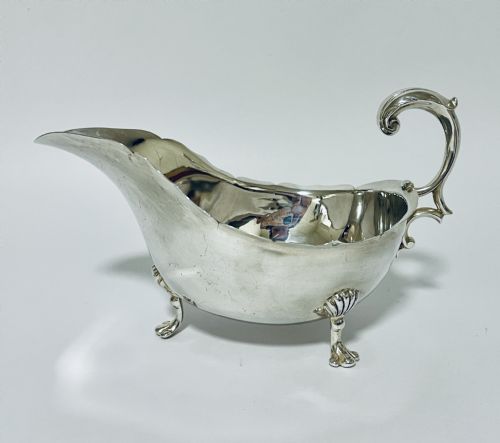
- A small pitcher with an oval body, lip, and handle, designed for serving gravies and sauces. They often rest on attached saucers or three small feet.
- Electroplated nickel silver
- A base metal alloy of copper, nickel, and zinc coated with a thin layer of silver through an electrolytic process. It became common in the nineteenth century as an affordable alternative to solid silver.
Silver Tableware Jug: Frequently Asked Questions
What is the difference between a cream jug and a milk jug?
Cream jugs and milk jugs both serve dairy at the tea table, though milk jugs tend to have a larger capacity for family use.
Cream jugs often feature more compact proportions and narrower spouts suited for pouring rich cream into small cups.
How do I clean antique silver tableware?
Wash silver pieces gently in warm soapy water using a soft cloth, avoiding harsh abrasive dips that strip away desirable patination.
Dry the metal thoroughly with a lint-free cloth to prevent water spots and maintain its reflective shine.
Can I use a silver plated jug every day?
Silver plated tableware withstands regular use provided you handle it with care and clean it promptly after dining.
Avoid leaving acidic liquids like lemon or dairy inside plated vessels for extended periods to protect the surface finish.
How do I identify a Georgian silver jug?
Georgian silver jugs display stylistic cues from the reigns of Georges I through IV, including neoclassical shapes and bright cut engraving.
Examining the hallmarks stamped on the base reveals date letters and town marks that confirm the period of manufacture.