



Silver Table Piece
A silver table piece brings polished elegance and formal structure to dining and dressing spaces, spanning centuries of British and continental craftsmanship.
Silver Table Piece
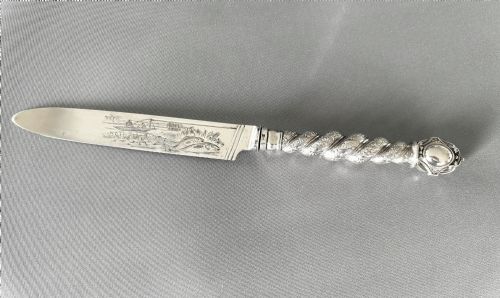
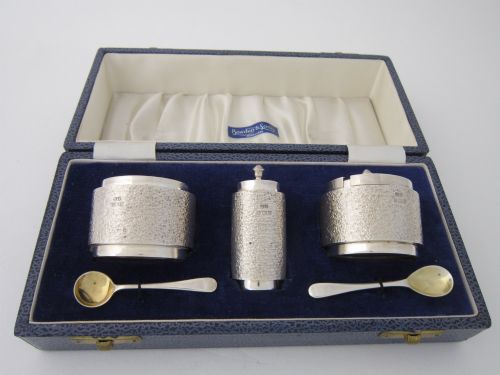
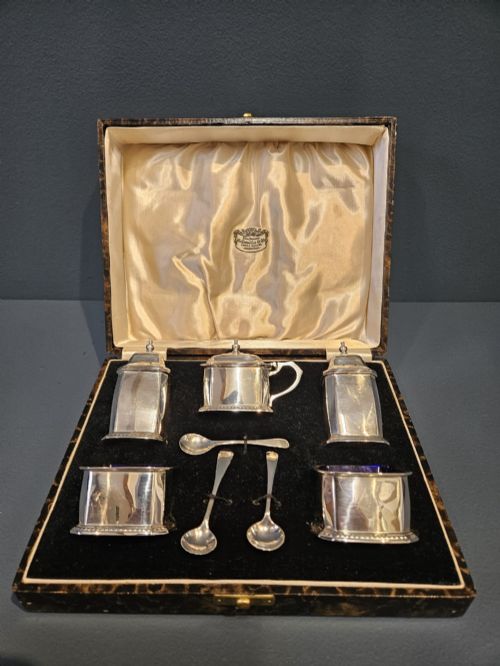
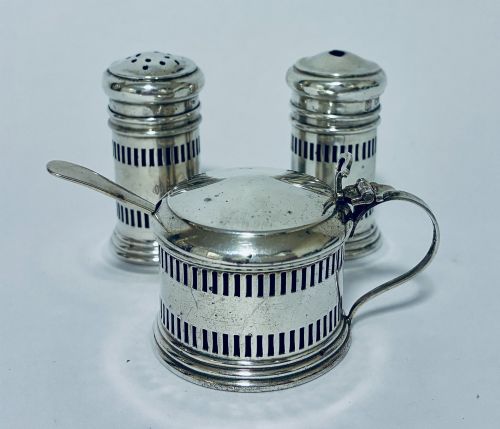
A silver table piece encompasses functional and decorative items designed for dining, display, and personal grooming, appearing across multiple eras from the eighteenth century to the mid-twentieth century. When searching for a silver table piece, buyers encounter a diverse array of forms ranging from multi-piece cruet sets and condiment holders to candelabra and mantel clocks.
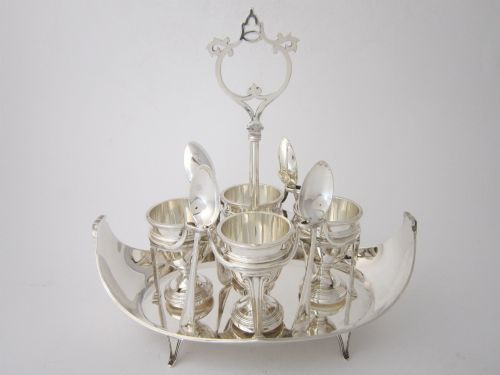
The selections on this page heavily feature Edwardian, Victorian, and George V expressions, alongside notable mid-century and earlier Georgian examples. Common functional forms include egg cruets, spoon warmers, hatpin stands, and extensive cutlery canteens suited for formal hospitality.
Continental pieces and specialised items like carriage clocks and marble clock sets also populate the selection, providing variety for collectors of specific periods. Each silver table piece reflects the domestic rituals and social customs of its respective era, from elaborate Victorian dining to the clean lines of Art Deco.
Judging quality and provenance
Quality in these items is determined by the crispness of the chasing and embossing, the weight and purity of the metal, and the completeness of matched sets. Pieces bearing clear hallmarks from established makers demonstrate verifiable provenance and adherence to strict assay standards.
The integrity of secondary materials, such as undamaged cut glass inserts in condiment sets or well-preserved gilt finishes on spoon warmers, separates standard utility items from superior collector pieces. The survival of original fitted cases and canteens further elevates the desirability of any grouping.
Silver Table Piece Retail Price Guide 2026
Typical asking prices for silver table piece among the pieces listed under this phrase on Sellingantiques today, from the lower quarter to the upper quarter. They describe what is for sale here now, not the wider market.
Listings feature items spanning the eighteenth, nineteenth, and twentieth centuries, incorporating sterling silver, silver plate, glass, and marble forms.
Goldsmith & Silversmith's·Christofle Marly·Crisford & Norris·Elkington & Co·Jonathan Douglas·Le Roy et Fils·Viners
The Silver Table Piece Glossary
- Cruet set
- A matched collection of bottles or containers designed to hold condiments like oil, vinegar, salt, and pepper at the dining table. These assemblies often sit within a dedicated silver or silver-plated stand.
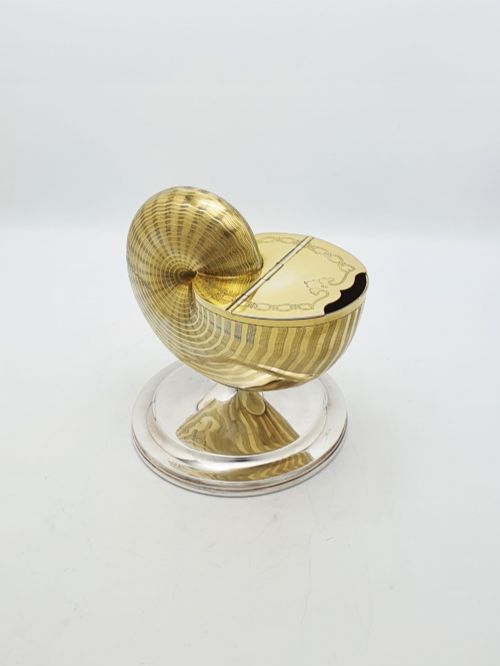
- Spoon warmer
- A specialised Victorian vessel designed to hold hot water and keep serving spoons warm during formal courses. They frequently take imaginative shapes such as marine buoys or nautilus shells.
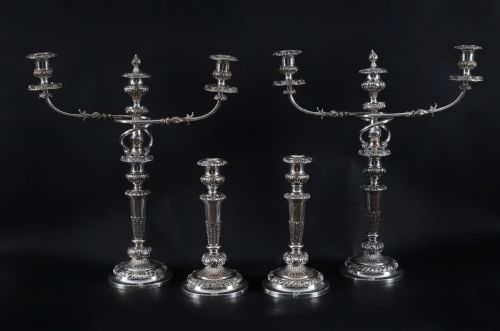
- Candelabra
- A branched candlestick holder designed to support multiple tapers for dining table or sideboard illumination. These pieces often form part of large suites alongside matching centrepieces.
- Hallmark
- An official stamp applied by an assay office to indicate the purity of the metal, the maker, and the year of production. British sterling silver marks are essential for dating and authenticating antique items.
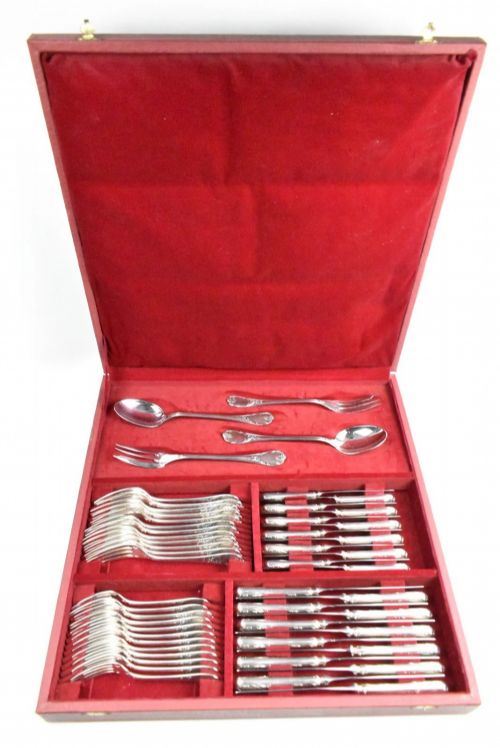
- Canteen
- A fitted box, chest, or cabinet designed to securely store a complete service of cutlery. These sets often span dozens of individual pieces matched in pattern.
Silver Table Piece: Frequently Asked Questions
What is a silver table piece used for?
These items served practical functions in dining, serving, and domestic organisation, ranging from holding condiments to telling time or warming spoons.
Over generations, their roles shifted from daily dining room utilities to decorative focal points on sideboards, mantelpieces, and display tables.
How do I identify the date of a silver table piece?
Dating relies heavily on official hallmarks stamped into the metal, which indicate the specific assay office and year of production.
Stylistic cues, such as the geometric lines of Art Deco or the ornate curves of Rococo Revival, also help narrow down the era when hallmarks are absent or rubbed.
How should I clean antique silver?
Maintenance requires gentle cleaning with specialised silver cloth or mild, non-abrasive silver polish to preserve the original patina and fine details.
Harsh chemical dips should be avoided, particularly on pieces with silver plating, gilt highlights, or integrated velvet and glass components.
What is the difference between sterling silver and silver plate?
Sterling silver consists of solid silver alloyed with other metals for durability, traditionally meeting a specific high standard of purity.
Silver plate involves a thin layer of silver bonded to a base metal core, a technique widely utilised in the nineteenth and twentieth centuries to create accessible luxury goods.