

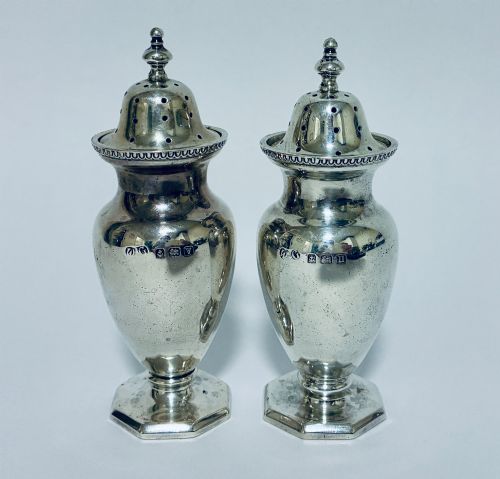
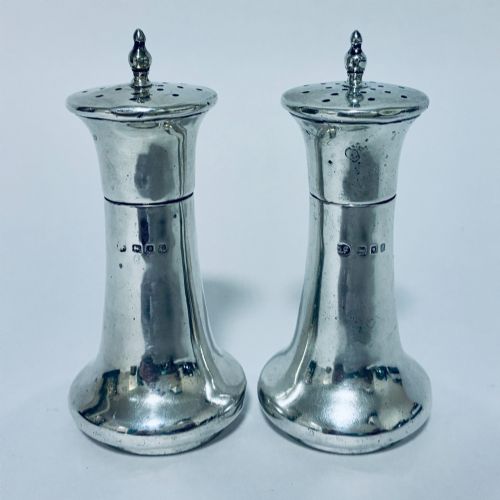
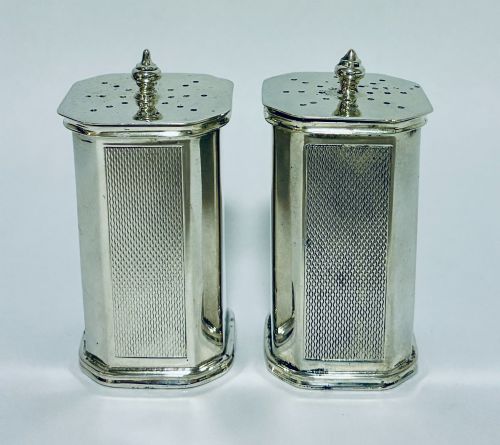


Silver Table Casters Pair
These silver table casters pair sets bring genuine historical character to the dining table, offering both decorative elegance and practical utility.
Silver Table Casters Pair
A silver table casters pair provides matching vessels traditionally used for dispensing pepper, salt, or other fine seasonings at the dining table. The selection spans the 18th Century, Victorian, Edwardian, and 1920 periods, showing how table arrangements evolved over generations.
The forms vary widely, from standard pepper pots and pepperettes to novelty figural designs such as Mr Punch's Dog Toby and pheasant shapes. Buyers will also encounter table salts and salt and pepper shaker sets within these groupings.
Originating in periods like the Georgian Revival and George II era, these items reflect both formal dining customs and whimsical Victorian tastes. Each pair brings distinct craftsmanship from silversmiths working in London and beyond.
How they were made
Pieces are fashioned from sterling silver and solid silver, often incorporating components such as cobalt glass liners within salt cellars. Metalsmiths utilised traditional casting techniques, particularly evident in the detailed novelty figural peppers.
Hallmarking provides clear evidence of origin, dating production precisely through stamped London assay marks. Pierced or perforated tops were carefully worked to allow fine seasoning to be shaken evenly onto food.
Silver Table Casters Pair Retail Price Guide 2026
Typical asking prices for silver table casters pair among the pieces listed under this phrase on Sellingantiques today, from the lower quarter to the upper quarter. They describe what is for sale here now, not the wider market.
Listings feature sterling silver and solid silver items spanning the 18th Century up to the 1920 period, alongside cobalt glass.
What varies in quality
The distinction between standard tableware and exceptional items often lies in the depth of detail found in cast novelty pieces, such as modelled animal figures or character depictions. Crisply pierced tops and legible hallmarks indicate superior execution by skilled silversmiths.
Matching consistency within the pair and the retention of original interior elements like cobalt glass liners contribute significantly to the overall integrity of the set.
Thomas Johnson·Charles Alchorne
The Silver Table Casters Pair Glossary
- Casters
- Small cylindrical vessels with perforated lids used for sprinkling sugar, pepper, or dry spices over food. They typically feature a removable pierced top for refilling.
- Pepperette
- A small container designed specifically for holding and dispensing ground pepper at the dining table. These often mirror the form of larger casters on a reduced scale.
- Hallmark
- A series of official marks stamped on precious metals showing the standard of purity, the assay office, and the date letter. This system provides reliable chronological data for antique silver.
- Cobalt glass
- A deep blue glass used frequently as liners in open salt cellars to protect the silver from corrosion by salt. It adds a striking visual contrast when viewed through pierced or openwork designs.
Silver Table Casters Pair: Frequently Asked Questions
What are silver table casters?
These are matching pairs of small containers designed to hold table seasonings like pepper and salt. They sit on the dining table for guests to dispense flavouring during a meal.
Historically, they formed part of a matched cruet set or matching table service. Over time, designs shifted from functional cylinders to decorative novelty shapes.
How were salt and pepper used?
Salt was typically held in open cellars where diners used small spoons to sprinkle it onto their plates. Pepper was shaken directly from pierced casters.
Wealthy households used multiple matching pairs across long dining tables to ensure seasoning was within reach of every guest.
How do I date silver pieces?
Dating relies heavily on the stamped hallmarks showing maker marks, assay office symbols, and annual date letters. Style and form also offer strong clues to the manufacturing period.
For instance, George II items display distinct Georgian proportions, whereas Victorian pieces often embrace elaborate or novelty designs.
How do I care for antique silver?
Antique silver benefits from gentle cleaning with a specialised non-abrasive polish to remove tarnish without wearing away the fine details. Storing pieces in a dry environment prevents rapid re-tarnishing.
Avoid using harsh chemical dips, which can strip away original patination and damage delicate soldered joints.