

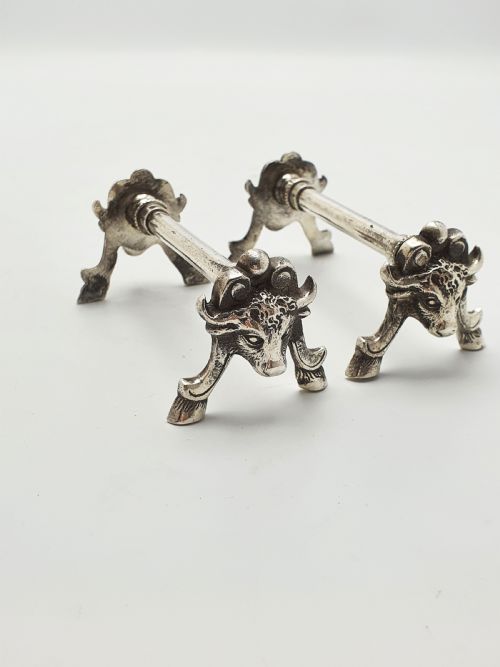


Silver Table Accessories Pair
These silver table accessories pair selections bring decorative function to dining, offering matched items from the Victorian, Edwardian and later periods.
Silver Table Accessories Pair
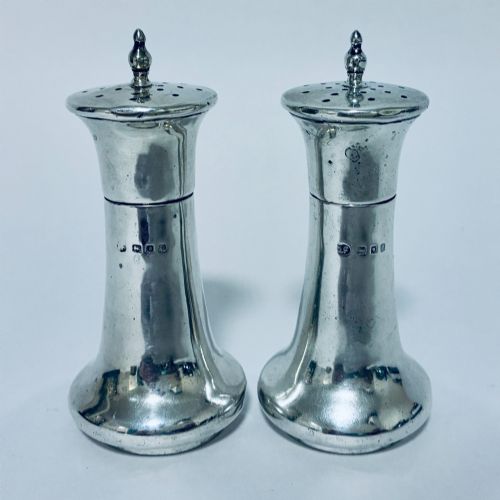
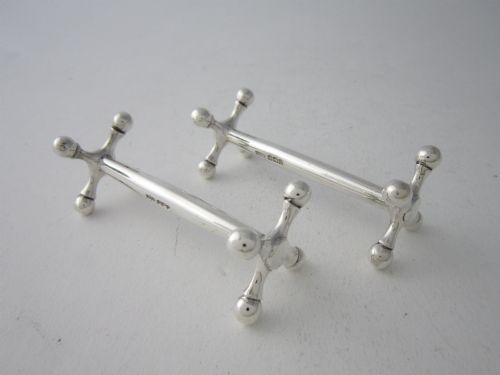
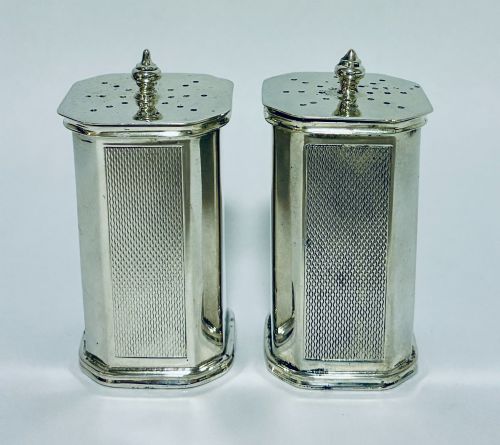
A silver table accessories pair comprises matched dining items designed for formal settings, appearing frequently as napkin rings, menu holders, salt cellars and knife rests. These objects span periods from the mid-nineteenth century through the Edwardian era and into the twentieth century, reflecting shifting dining customs.
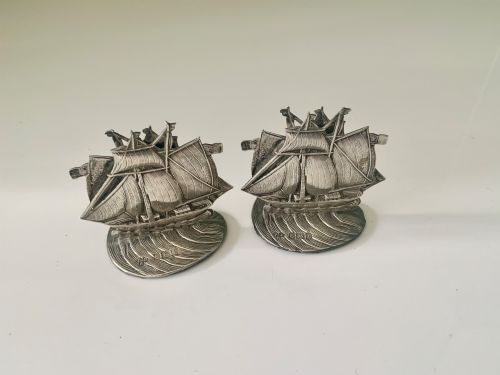
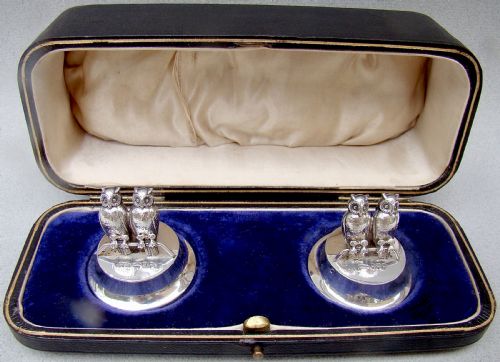
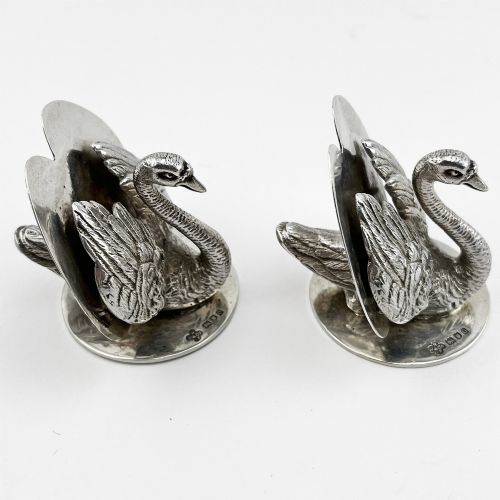
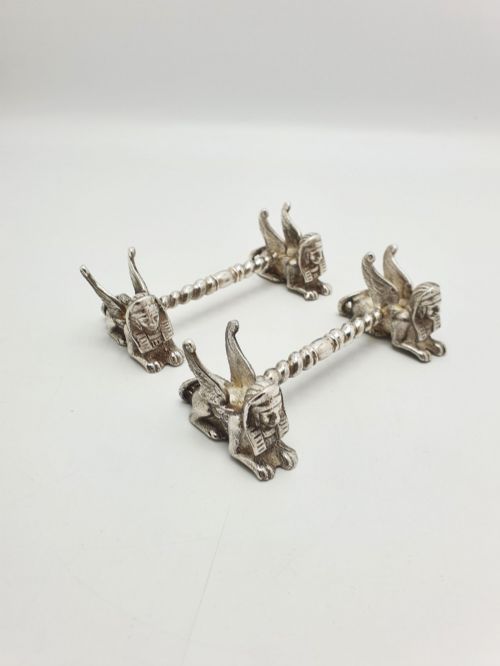
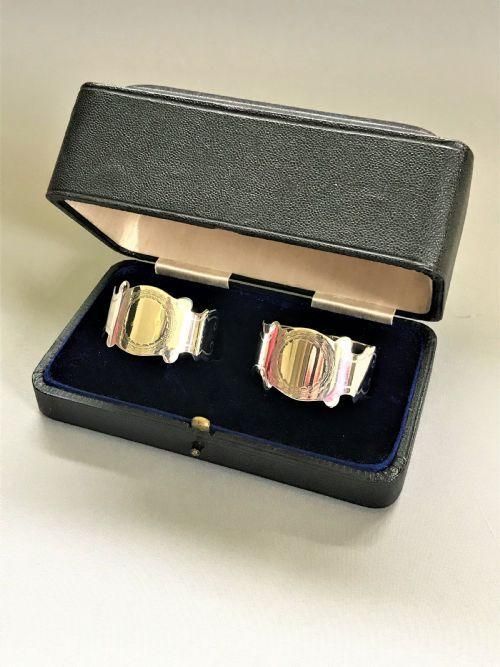
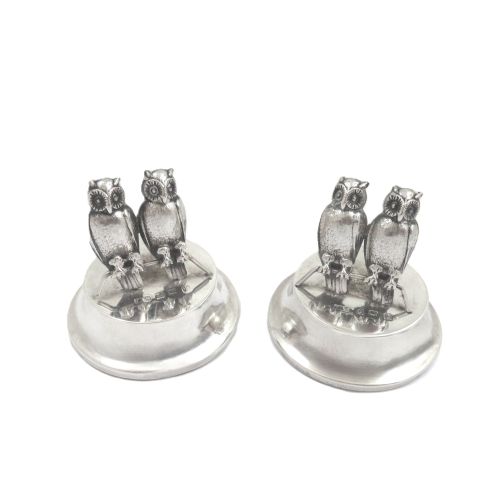
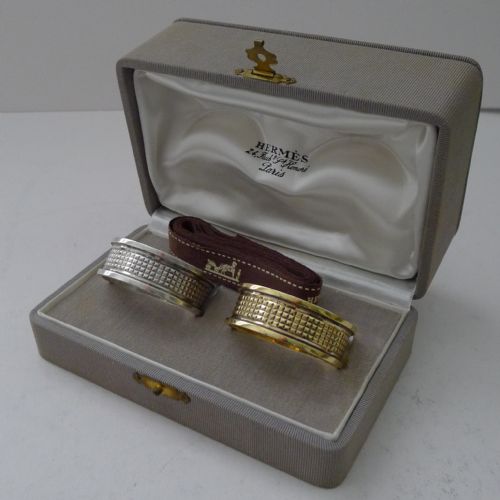
Napkin rings and menu holders dominate the selections, often encountered in original presentation boxes or cased sets. Novelty forms depicting owls, swans, sphinxes and galleons provide distinct decorative character alongside conventional domestic tableware.
The materials encompass sterling silver, silver plate and pewter, occasionally combined with mahogany, glass, silk and velvet linings. Pieces originate from British makers in centres such as Birmingham, Sheffield and London, alongside continental workshops.
Manufacturing methods and materials
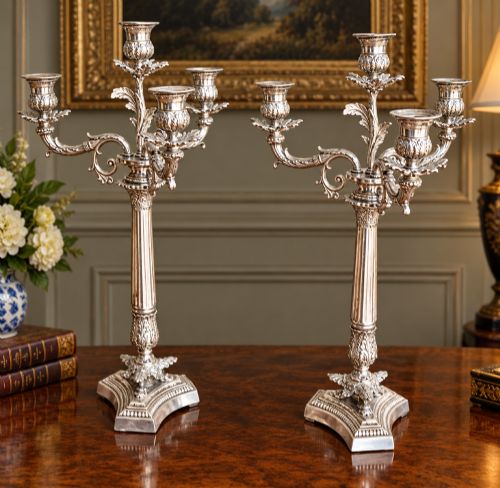
Solid sterling silver items utilise standard hallmarked metal, shaped through casting, stamping and hand-chasing to achieve detailed forms such as birds, animals and figural napkin rings. Silver plated items apply a thin layer of silver over a base metal, frequently seen on nineteenth-century candlesticks, wine coasters and knife rests.
Specialised decorative effects incorporate silver gilt, enamel work and combination with materials like turned mahogany for wine coasters. Fitted presentation cases utilise leatherette, silk and velvet interiors tailored to house the paired objects securely.
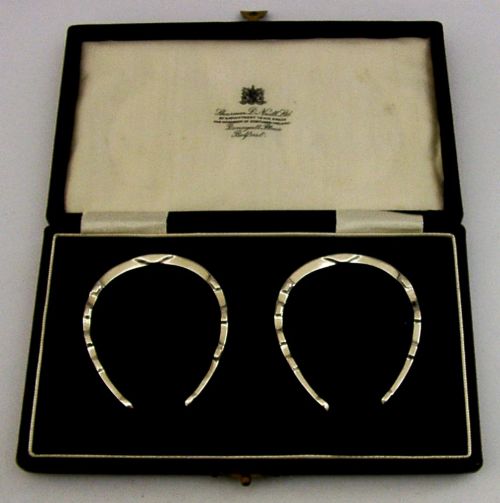
Dining tables gained animated character through miniature silver owls, sphinxes, swans and lucky horseshoes keeping watch beside the plates.
Distinctions in standard and execution
Execution relies heavily on the crispness of detail in cast figures and engraved ornamentation, distinguishing finely modelled animal and figural forms from simpler utilitarian items. The presence of clear hallmarks, original fitted cases and reputable maker attribution elevates the standing of individual pairs.
Substantial weight in solid sterling silver pieces and the preservation of original gilding or enamel indicate superior manufacture. The integration of complementary materials, such as mahogany bases on wine coasters, demonstrates careful construction.
Levi & Salaman·Mappin & Webb·Cartier·Liberty & Co·Christofle·Thomas Johnson
The Silver Table Accessories Pair Glossary
- Sterling silver
- A silver alloy containing 92.5 percent pure silver and 7.5 percent other metals, typically copper. This standard composition is marked with specific assay office hallmarks on British items.
- Silver plate
- A base metal object coated with a thin layer of silver. Sheffield plating and later electroplating methods achieved this finish.
- Menu holder
- A small upright desk-like accessory used to display dining menus or place cards on a table. These often take figural or novelty shapes.
- Knife rest
- A small horizontal support designed to keep carving or dining knife blades off the tablecloth between courses. They frequently appear in matched pairs.
- Silver gilt
- Sterling silver that has been coated with a thin layer of gold on its surface. This technique provides a contrasting two-tone finish.
- Hallmark
- An official stamp applied by an assay office to indicate metal purity, origin and year of manufacture. British pieces feature specific town marks and date letters.
Silver Table Accessories Pair: Frequently Asked Questions
What are menu holders used for?
Menu holders display individual meal courses or guest names at formal dining settings. They hold small cards upright on the table.
Victorian and Edwardian examples often feature decorative novelty designs, including animals and ships, to complement the table arrangement.
How do I identify sterling silver pairs?
Sterling silver items bear official hallmarks stamped into the metal indicating the standard, assay office and year. British pieces show a lion passant or standard marks.
Silver plated items lack these specific hallmarks and generally reveal base metal underneath where wear occurs.
Were these items originally sold together?
Many pairs were retailed in dedicated velvet or silk-lined presentation cases specifically made to hold the two matching pieces. Maker marks inside the boxes often match the stamps on the silver.
Some items, particularly salt cellars and napkin rings, were produced as part of larger matching dining services.
How should I clean silver table accessories?
Cleaning requires a soft microfibre cloth and specialised silver polish formulated to remove tarnish without scratching delicate chased details. Avoid abrasive materials that damage hallmarks and gilt surfaces.
Items containing velvet, silk, glass or mahogany require careful handling to avoid exposing these secondary materials to liquid cleaners.