
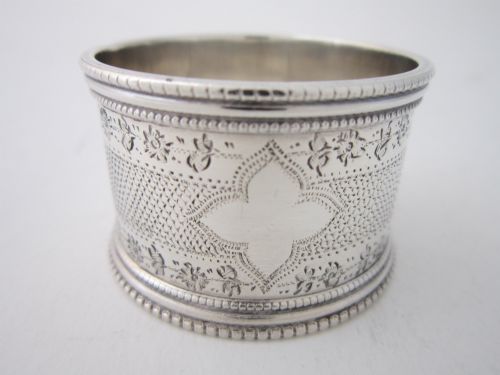
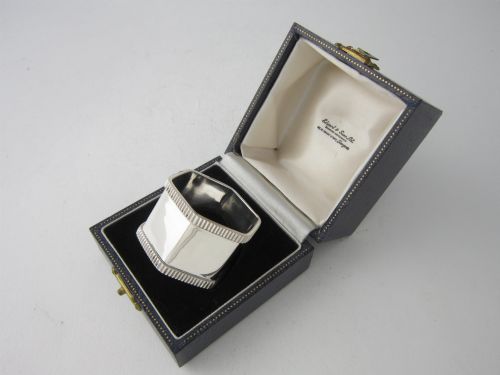


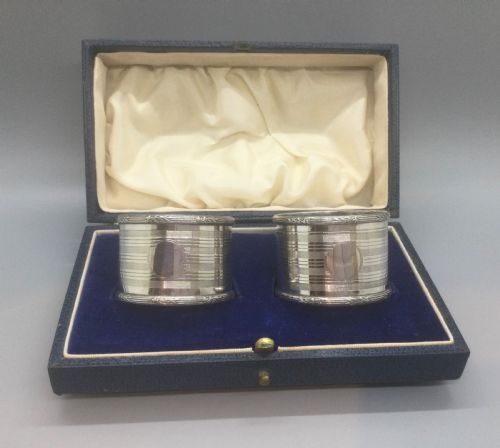


Engine Turned Napkin Ring
These engine turned napkin ring pieces are classic silver tableware items prized for their crisp geometric patterns and formal dining utility.
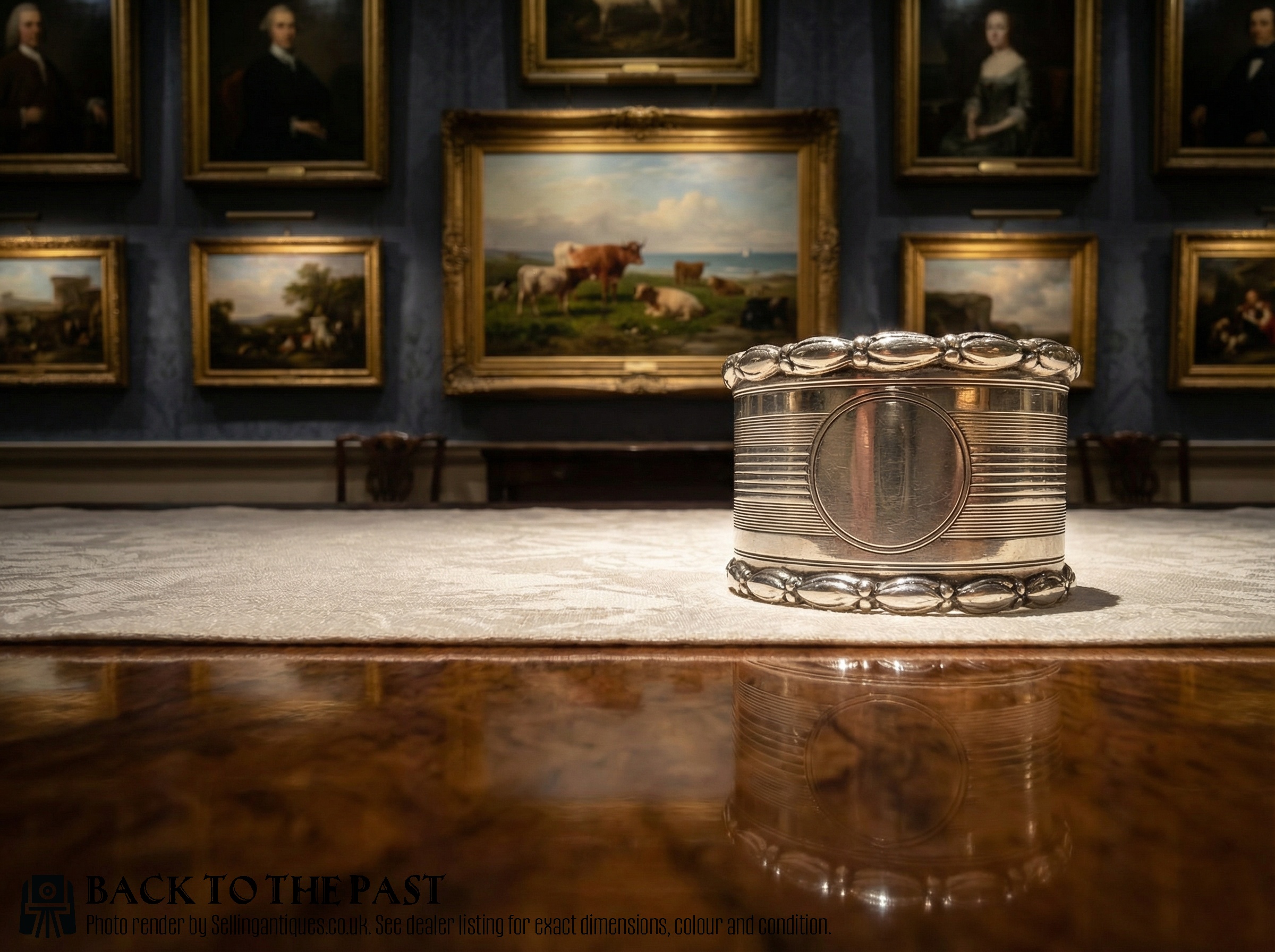
What an engine turned napkin ring is
An engine turned napkin ring is a small circular or oval band designed to hold individual table napkins at formal meals. These items appear primarily from the early twentieth century, spanning the Edwardian, George V, and George VI periods.
Buyers encounter single examples alongside matched sets of four, six, or pairs. The dominant form is solid sterling silver, alongside occasional silver plate or electroplated nickel silver variants.
How they were made
Silversmiths constructed these napkin rings from solid sterling silver or base metals with silver plate and electroplated nickel silver coatings. Artisans shaped sheet metal into cylinders or ovals and soldered the seams.
The distinct linear patterns arise from mechanical engraving executed on a lathe. Many pieces incorporate a blank rectangular or shield shaped cartouche left smooth for personal engraving.
Listings show sterling silver and silver plate examples spanning the Edwardian, George V, and George VI periods.
What varies in quality
Quality rests upon the weight of the metal and the precision of the mechanical engraving. Heavier sterling silver pieces maintain their structural integrity and resistance to dents far better than thin silver plate versions.
The crispness of the geometric line work separates standard production from finer workshop output. Sharp, deep cuts retain their definition through decades of handling and polishing.
Ernest W Haywood·Henry Griffith and Sons
The Engine Turned Napkin Ring Glossary
- Engine turning
- A mechanical decoration technique that etches precise geometric patterns into metal surfaces using a lathe. This method creates repetitive linear designs across the body of the ring.
- Cartouche
- A framed panel on the surface of the ring left blank for personal initials or crests. These spaces allow owners to customise generic tableware.
- Sterling silver
- A silver alloy consisting of significant silver content combined with other metals for durability. British pieces typically carry hallmarks verifying this standard.
- Silver plate
- A thin layer of silver applied over a base metal core such as nickel silver. This technique offered a bright finish at a lower cost than solid silver.
Frequently Asked Questions
How do I clean tarnished silver napkin rings?
Use a soft cloth and a dedicated silver polish to remove tarnish without harming the engraved lines.
Avoid abrasive materials that wear down the raised edges of the mechanical patterns over time.
Are these napkin rings made of solid silver?
Many examples are solid sterling silver and carry standard British hallmarks to verify the metal purity.
Other items consist of silver plate or electroplated nickel silver over a base metal core.
Why do some rings feature blank panels?
The smooth rectangular or shield shaped spaces act as cartouches for personal initials or family crests. Owners originally had their monogram engraved by hand into this blank area.
What periods do these napkin rings date from?
The available evidence records examples from the Edwardian, George V, and George VI eras, spanning the early to mid twentieth century.
Art Deco styling also appears frequently among the geometric designs of the period.