



Silver Sweet Basket
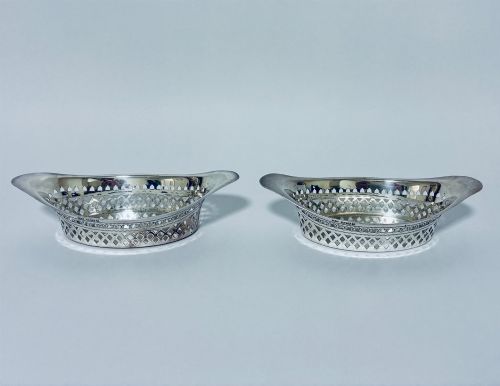
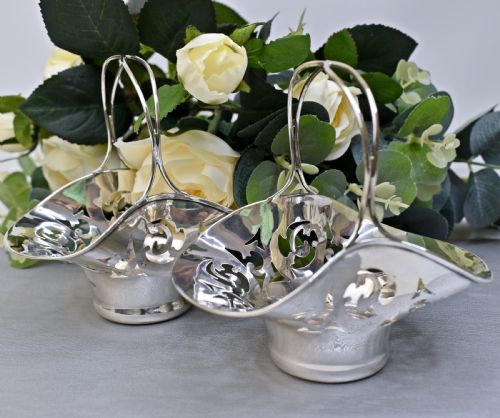
A silver sweet basket holds small confections on a dining table, bringing pierced metalwork and coloured glass together with tactile charm.
Silver Sweet Basket
A silver sweet basket serves delicate sweetmeats and preserves, appearing frequently in Victorian designs and later twentieth-century forms. These pieces range from open pierced dishes to pedestal bowls paired with glass liners.
Makers produced these vessels in sterling silver and silver plate, frequently incorporating cranberry glass, cut crystal, or pink opaque glass to contrast with the polished metal.
How they were made
Silversmiths shaped sterling silver and silver plate through piercing, hammering, and casting, creating intricate openwork patterns across the body of the basket. Piercing allowed light to pass through the metal walls, lightening the visual weight of the tableware.
Glass liners, including cranberry glass and cut crystal, were blown and shaped to fit snugly within the silver framework. Gilding was occasionally applied to the interior of silver bowls to protect the metal from acidic preserves.
Silver Sweet Basket Retail Price Guide 2026
Typical asking prices for silver sweet basket among the pieces listed under this phrase on Sellingantiques today, from the lower quarter to the upper quarter. They describe what is for sale here now, not the wider market.
Listings feature sterling silver and silver plate alongside glass inserts in cranberry and pink opaque tones.
What varies in quality
The crispness of the pierced decoration and the gauge of the silver distinguish heavier, sturdier baskets from lighter stampings. Substantial metal thickness prevents bending and gives the piece a reassuring weight in the hand.
The integration between the glass liner and the silver basket indicates the care taken in manufacture. A well-fitted, undamaged glass insert or a crisp hallmark adds clarity to the origin and integrity of the object.
Fenton Brothers·Roberts and Belk·John Langlands II·Charles Stuart Harris·Blow and Co·Goldsmiths and Silversmiths Co
The Silver Sweet Basket Glossary
- Bonbon dish
- A small vessel designed to hold sweets or confections. These often feature low sides and decorative pierced rims.
- Silver gilt
- Silver covered with a thin layer of gold on its surface. This technique provided a rich interior finish safe for holding sugary preserves.
- Cranberry glass
- A deep red transparent glass coloured with gold chloride. It appears frequently in nineteenth-century sweet baskets as a removable liner.
- Pierced work
- Metal perforated with patterns to create an open lattice effect. This technique required steady hand-sawing or punching by skilled silversmiths.
- Sweetmeat
- An archaic term for a confection, sweet, or preserved fruit. Serving them required specialised small dishes on the formal table.
Silver Sweet Basket: Frequently Asked Questions
What were silver sweet baskets used for?
These vessels held small sweets, bonbons, and preserved fruits during formal dinners and drawing-room gatherings. Guests selected confections directly from the table using small utensils.
They functioned both as practical tableware and as decorative centrepieces that displayed the host's taste and silver collection.
How do I clean a silver sweet basket?
Warm water, mild soap, and a soft cloth keep sterling silver and silver plate bright without wearing down the raised details. Avoid harsh abrasive dips that strip the character from older metal surfaces.
Glass liners should be removed and washed separately to prevent moisture from becoming trapped against the metal framework.
Can I use them for modern dining?
These baskets hold modern sweets, small chocolates, or fresh fruit with ease. Their compact sizes suit coffee tables and sideboards just as well as formal dining settings.
Care should be taken with acidic foods if the basket lacks a protective glass liner or a gold-gilt interior.
How do I identify a Victorian sweet basket?
Victorian examples frequently display hallmarks indicating Birmingham or Sheffield assay offices alongside date letters from the mid to late nineteenth century. The presence of dense floral piercing, Aesthetic Movement motifs, or cranberry glass liners often points to this era.
Comparing the style of the handle and feet to known period forms helps confirm the date of manufacture.