




Silver Spirit Caddy
These silver spirit caddy pieces combine silver plate, oak, and glass to secure and display your favourite bottles with period elegance.
Silver Spirit Caddy
When you search for a silver spirit caddy, you encounter secure drinking cabinets and frames designed to hold decanters and bottles safely under lock or within decorative metalwork. These items serve as functional barware that transitioned from Victorian dining rooms into the twentieth century.
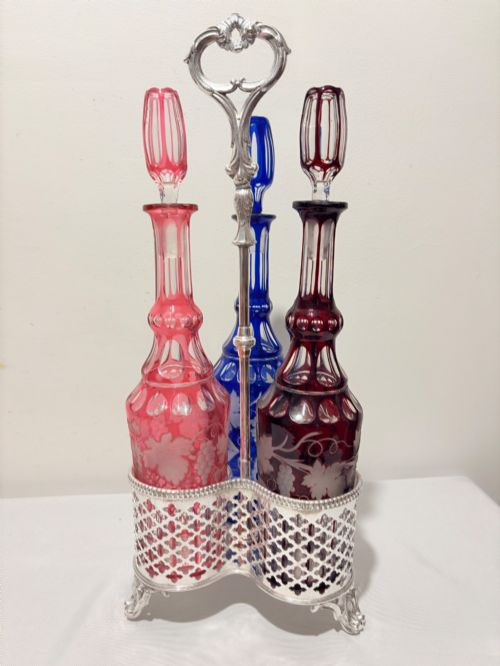
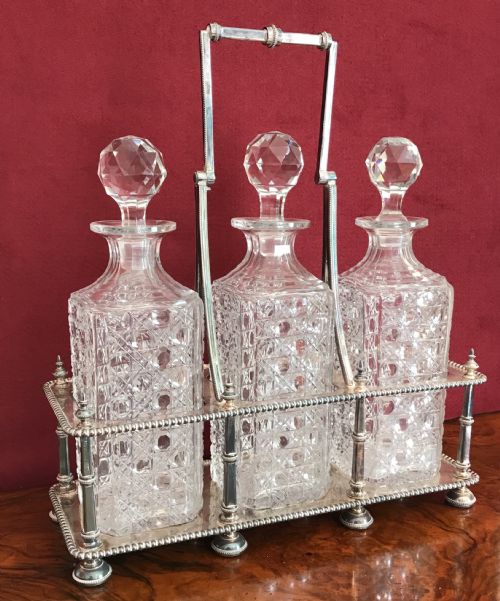
The versions most likely to appear on this page include silver plated decanter stands, oak frames fitted with multiple glass bottles, and locking tantalus systems from the Victorian and Edwardian eras. Pieces range from simple two bottle frames to elaborate three bottle setups with frosted crystal barrels.
Later examples bring Art Deco styling into the mix, incorporating chrome and glass alongside French cocktail shaker sets. Each object reflects the social drinking habits of its decade, housing anything from whisky carafes to liqueur sets.
How they were made
Maker workshops built these frames using substantial oak bases fitted with cast and plated metal mounts to hold the weight of heavy glass decanters. Silver plate was applied over base metal to give the appearance of solid silver while providing structural durability for daily handling.
The glass components were produced through cutting, moulding, and frosting techniques to create decanters, barrels, and crystal inserts that fit precisely into their metal housings. Ceramic carafes also appear, demonstrating the variety of materials utilised by period manufacturers.
What varies in quality
The standard of a piece rests in the weight of the metal plating, the crispness of the framing, and the integrity of the fitted glass bottles. Heavier oak construction and robust locking mechanisms distinguish superior examples from lighter utilitarian frames.
Subtleties in the design of the silver plate mountings and the quality of the cut or frosted crystal determine the visual impact of the assembly. Pieces that retain matching decanters and functioning locks hold greater coherence than those assembled from mismatched parts.
Maison Barra
The Silver Spirit Caddy Glossary
- Tantalus
- A locking drink cabinet or frame that secures decanters so the contents remain visible yet inaccessible without a key. The name derives from the mythological figure who was kept just out of reach of food and water.
- Silver Plate
- A manufacturing technique where a thin layer of silver is bonded to a base metal core. This method allowed makers to produce substantial decorative items at a lower cost than solid silver.
- Decanter Stand
- An open frame or caddy designed to hold one or more serving bottles for the table or sideboard. These stands often incorporate handles for easy transport during gatherings.
- Frosted Crystal
- Glass that has been treated to create a translucent, matte surface texture. It appears frequently on nineteenth century barrels and dispensers.
- Art Deco
- A design style emerging in the early twentieth century characterised by streamlined geometric forms and modern materials like chrome. Pieces from this period often depart from traditional oak and silver plate combinations.
Silver Spirit Caddy: Frequently Asked Questions
What is a tantalus?
A tantalus is a locking frame designed to hold spirit decanters securely while displaying the bottles within. The mechanism prevents unauthorised access to the contents.
These devices became popular in the Victorian period for keeping expensive spirits safe from domestic staff.
How do you open an old tantalus?
Most antique tantalus frames require a working key to release the locking bar that secures the stoppers in place. Turning the key lowers or slides the bar so the decanters can be lifted free.
Lacking a key, many period locks require professional assistance from a locksmith to avoid damaging the surrounding silver plate.
Are the decanters original to the stand?
Determining originality involves checking whether the glass bases match the cutouts in the silver plated frame and share the same period of manufacture. Slight variations in glass tint or cutting style can indicate replacement bottles.
Finding a complete set with matching stoppers is typical for well preserved examples from the Edwardian era.
How should I clean silver plate?
Silver plate requires gentle cleaning with a specialised non abrasive polish to preserve the thin metal coating over the base metal. Harsh scrubbing will wear away the plating and expose the underlying material.
Glass components should be washed separately in warm soapy water and dried thoroughly before returning them to the caddy.