

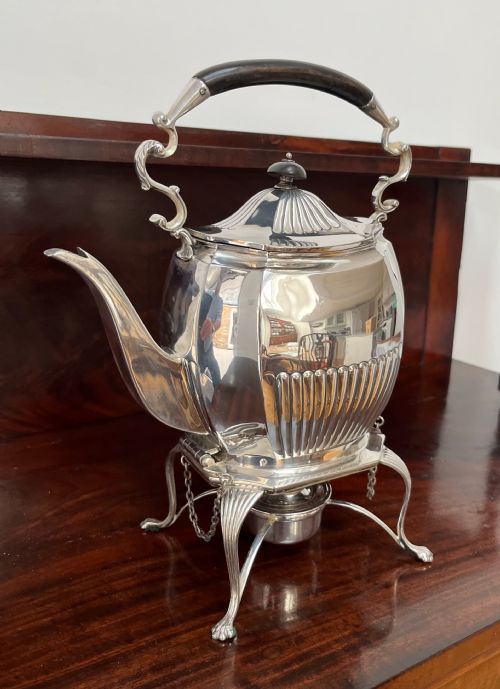


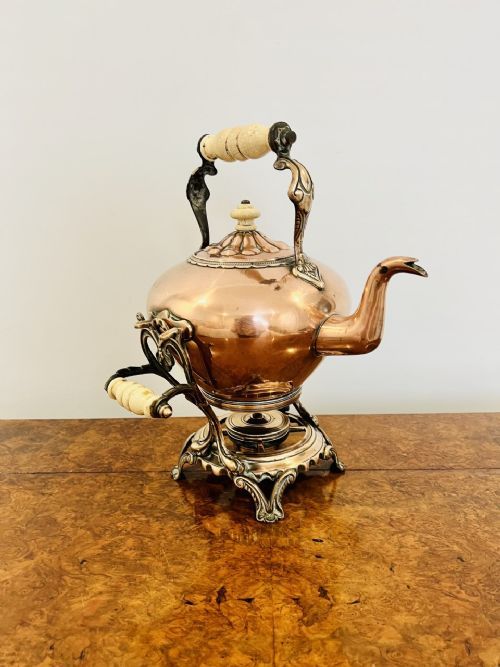


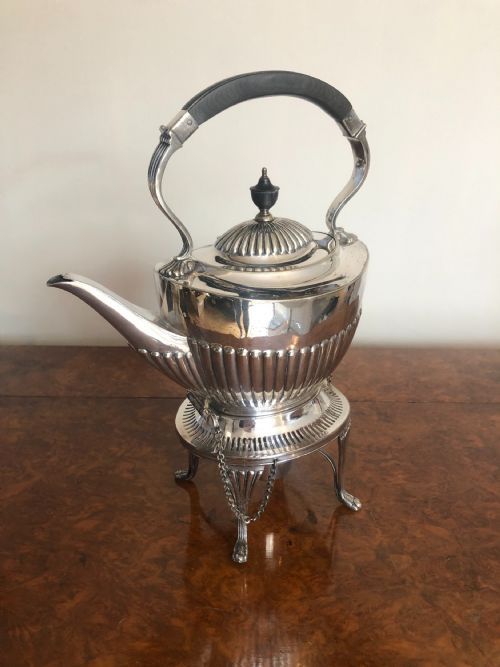
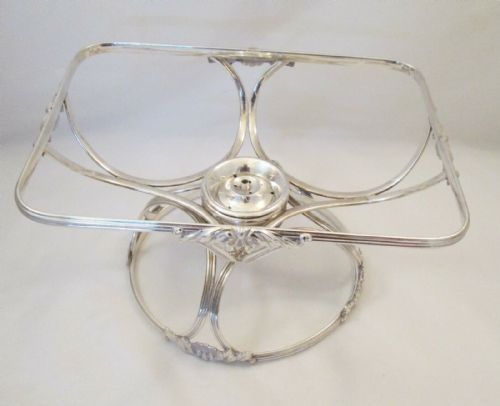
Silver Spirit Burner Stand
These silver spirit burner stand examples bring together polished metals and clever heating mechanics to keep tea and coffee hot at the table.
Silver Spirit Burner Stand
A silver spirit burner stand supports vessels designed to keep liquids warm at the table, drawing from Victorian, Edwardian, and Georgian styles.
The objects seen here range from spirit kettles and teaware to serving dishes and coffee pots raised above a small flame.
Edwardian pieces in silver plate dominate the selection, alongside sterling silver and copper iterations spanning the eighteenth to the twentieth centuries.
Materials and Construction
Makers utilised sterling silver and silver plate over base metals, occasionally incorporating elements of bone, wood, and ebony for insulation on handles and stands.
Metalworking techniques produced sturdy frames, rotating rings, and hinged burners designed to hold liquid containers securely over an open flame.
Judging Quality
Quality rests on the integrity of the original joints, the balance of the stand, and the retention of the plating across high-wear areas.
Maker attribution and the inclusion of matching original burners elevate certain examples above standard utilitarian pieces.
Mappin and Webb·Paul Storr·Fenton Brothers·Frederik Ellis Tim and Co
The Silver Spirit Burner Stand Glossary
- Silver Plate
- A thin layer of silver fused to a base metal foundation. This method offered the visual appeal of solid silver at a lower cost.
- Spirit Burner
- A small lamp fuelled by alcohol, housed within the stand beneath the kettle or dish. It maintained a steady heat for the contents above.
- Dish Cross
- An adjustable frame used to elevate serving dishes over a heater. George III examples often featured sliding arms to accommodate various vessel sizes.
- EPNS
- Electroplated Nickel Silver. A common base metal composition for late nineteenth and twentieth century tableware.
Silver Spirit Burner Stand: Frequently Asked Questions
Are these stands suitable for daily dining?
Many silver plated and metal stands remain robust enough for regular table service. Careful handling preserves the plating and any delicate wooden or bone fittings.
Hand washing with mild soap and warm water prevents damage to older finishes, avoiding abrasive cleaners that strip the metal.
How do I distinguish Edwardian from Victorian pieces?
Edwardian items often display lighter proportions and neoclassical revival motifs, reflecting the tastes of the early twentieth century. Victorian designs tend to be heavier and more ornate.
Maker marks and registration numbers stamped into the metal help narrow down the exact production era.
Can I replace a missing burner?
Finding an exact match for a lost burner requires matching the collar dimensions and fuel capacity of the original stand. Many period pieces rely on specific fitting sizes.
Universal replacements exist, though period-correct components maintain the integrity and balance of the ensemble.