





Nineteenth Century Silver Plate
Nineteenth century silver plate offers substantial dining and decorative items produced through pioneering plating methods across the Victorian era.
Nineteenth Century Silver Plate
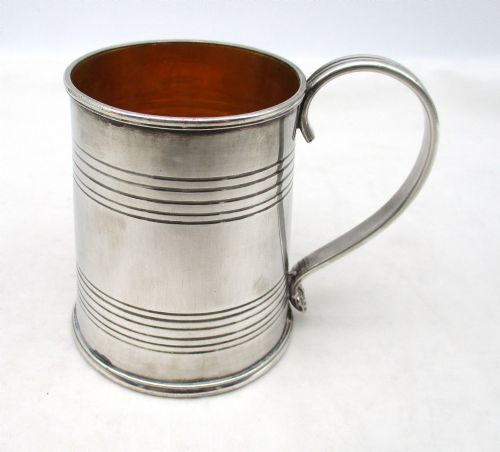
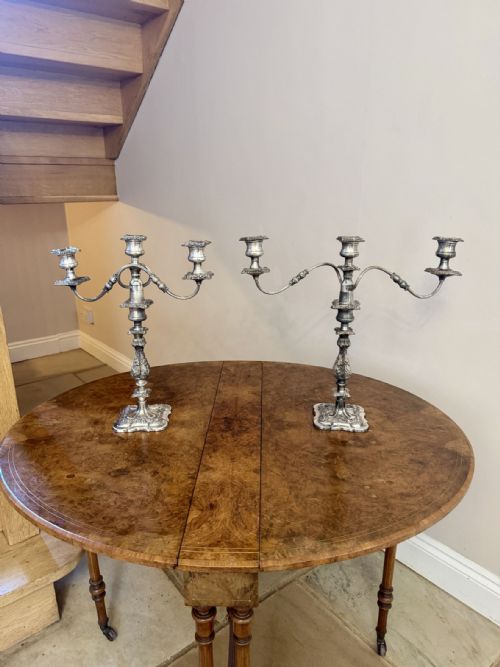
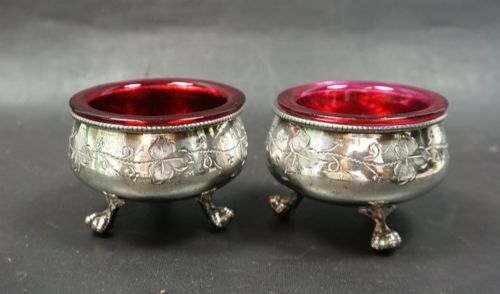
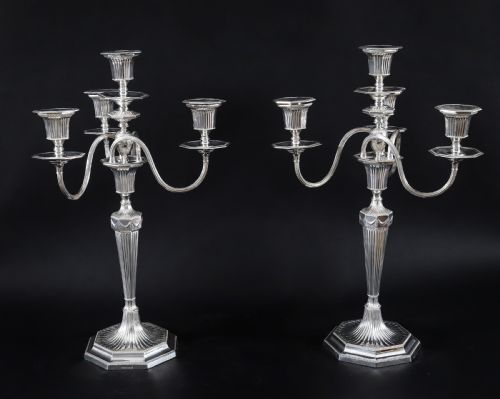
Nineteenth century silver plate encompasses a wide variety of functional and decorative household items, from elaborate candelabras and table lamps to serveware, tankards, and salt cellars. Buyers exploring nineteenth century silver plate will frequently encounter domestic metalwork spanning the Georgian, early Victorian, and later decades of the nineteenth century.
The objects listed display diverse forms shaped by changing social habits, including specialised dining accessories such as claret jugs, knife trays, and biscuit barrels. These pieces reflect the evolving tastes of the period, drawing on Regency, Victorian Neoclassical, and Napoleon III design influences.
Assessing quality
Quality in these plated objects is determined by the crispness of the chased and cast ornamentation, particularly on complex candelabras, figural cruets, and centrepieces. Superior items retain their underlying silver layer intact without extensive base metal telegraphing through heavy wear.
Maker attribution and structural integrity also separate standard production wares from important signed works by prominent makers like Elkington, Walker & Hall, or Hawksworth Eyre. The weight of the metal and the precision of fitted components, such as glass inserts or hinged lids, further distinguish finer examples.
Farmyard animals occasionally oversee the dining table in the form of whimsical Victorian novelty cruets.
Hawksworth Eyre·Tiffany and Co·Hukin and Heath·Box Fenton Brothers·Walker and Hall·Elkington
The Nineteenth Century Silver Plate Glossary
- Old Sheffield plate
- An early form of silver plating produced by fusing a sheet of silver to a copper base before rolling and shaping. This method creates a distinct edge where the copper core shows.
- Electroplate
- A later nineteenth century technique that uses an electrical current to deposit a uniform layer of silver onto a base metal object. This process largely replaced earlier fusing methods.
- Claret jug
- A table vessel designed for serving wine, typically combining a silver plated mount, handle, and hinged lid with a moulded glass body. These jugs are frequently associated with late Victorian dining.
- Cruet
- A small stand or set holding bottles, casters, or containers for condiments and sauces at the table. Novelty farmyard versions also appear in Victorian dining contexts.
- Candelabra
- A branched candlestick holding multiple lights, often designed as a substantial centrepiece for dining tables. Nineteenth century examples frequently feature ornate casting and figural details.
Nineteenth Century Silver Plate: Frequently Asked Questions
How do I clean silver plate?
Clean silver plate gently using a specialised silver cloth or mild, non-abrasive polish designed for plated items. Avoid aggressive scrubbing that can wear through the thin silver layer to the base metal beneath.
Store pieces in dry environments and handle them carefully to preserve any original glass liners or delicate applied ornamentation.
What is Old Sheffield plate?
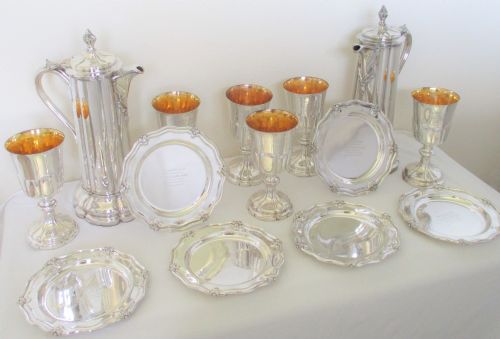
Old Sheffield plate is an early manufacturing method where a thin sheet of silver is fused to a copper ingot through heat and pressure. The combined metal is then rolled out and worked into items like tankards and communion sets.
This technique predates nineteenth century electroplating and is identified by subtle copper seams visible along cut edges or high wear points.
How do I date these items?
Dating relies on a combination of stylistic clues, manufacturing techniques, and maker marks stamped into the metal. Electroplated items generally point to the post-1840s Victorian period, while fused Old Sheffield plate typically suggests earlier Georgian or Regency origins.
Inscriptions, crests, and design motifs such as Neoclassical columns or Napoleon III flourishes provide further chronological context.
Are glass inserts original?
Glass inserts, such as cranberry glass liners in salt cellars or claret jug bodies, are frequently original to the silver plated mount. Matching the dimensions, glass colour, and period manufacturing traits helps confirm their authenticity.
Replacements do occur due to accidental breakage over the decades, though period-appropriate glass is often utilised in restoration.